

 Eelvaade
 Saada
Saada Jaga
Jaga
 Teave teose kohta
 Juhend

 Laadi alla
 Sarnased teosed
 Röntgenuuring
 Slaidietendus
 KÜSIMUSED JA VASTUSID
 Statistika
Les Epoux


 Loe lähemalt
Sellel lehel kuvatav kunstiteos on kaitstud autoriõigusega, mis tähendab, et meil ei ole seaduslikku õigust luua või müüa identset reproduktsiooni. Seda kaitset rakendatakse rahvusvaheliste kokkulepete alusel, nagu näiteks Berne konventsioon ning riiklike seadustega, sealhulgas nendega, mida on sätestatud USA autoriõiguse seadus – 17. peatükk.
See meetod järgib täielikult autoriõiguse reegleid, kuna see ei põhine kaitstud kunstiteose kopeerimisel või dupliteerimisel. Selle asemel on tegu loova reinterpreetatsiooniga – uue maaldisega, mis on algteosest inspireeritud, kuid ei ole sellest identiline.
Giclée / Kunstiprint
Muuseumikvaliteediga giclée- või kangasprint kiire tootmisega ja paindlikud viimistlusvõimalused. ( Osta käsitsi maalatud teos Lülita digitaalse pildi juurde)




P118B €10

P118H €10

P118W €10

P438Z €10

P508JH €12

P508YH €12

P805H €10

P805Z €10

P919BZ €10

P919G €10

P919XJ €10

P959ZH €10

P968JZ €12

W106C €8

W218G €10

W218JH €8

W218Y €10

W307PJ €10

W316G €10

W316PJ €8

W316Y €10

W398PJ €8

W4111J €10

W500HY €15

W500JH €15

W692G €12

W849H €8

W940BG €15

W953PJ €8




Vali meie eelmääratud suurused, mis vastavad teose algupärastele proportsioonidele.

Sisestage vajalik laius ja kõrgus, et see sobiks teie raamile või seinale. Trükki saab ainult lõigata, seda ei saa kunagi pildist suuremaks teha, seega ka erineva mustega suurus kaotab osa pildist. Enne trükkimist saadame teile kinnitamiseks digitaalse näidisprojektsiooni. Sellel lehel näidatud pilt ei kujuta reaalset lõiget — seda näitab ainult näidisprojektsioon.
Ülemaailmne tarne () 2 nädala jooksul, tavalise 4/5 nädala asemel. (4 november)

Tasuta ekspresssaatmine üle maailma

Kõrgekvaliteediline lina-kangas

Täielik transpordikindlustus

Tollimaksude tagastamise garantii

Värvitoime täpsuse garantii

100 päeva tagastusõigus (ainult valmistusdefektide korral)

100% raha tagasi garantii

Hulgusoodustus
 Klaasivalik on saadaval ainult kuni 110 cm suuruses teostes

Les Epoux
Giclée / Kunstiprint
Reproduktsiooni suurus
-


Koguhind
€ 56
The Enigmatic Embrace: De Chirico’s “Les Époux”
Giorgio de Chirico's "Les Époux" (1926) isn’t merely a depiction of two figures; it’s an immersion into the unsettling, dreamlike realm of his Metaphysical art. This black and white drawing, housed within ArtsDot’s meticulously crafted reproductions, immediately draws the viewer in with its stark simplicity and profound sense of isolation. The composition is deceptively straightforward: two faces, one on either side, seemingly locked in a silent, unwavering gaze. Yet, beneath this surface lies a complex tapestry of philosophical inquiry and psychological depth—a testament to de Chirico’s unique vision. The image itself, captured with an almost photographic precision, hints at the artist's fascination with urban spaces, particularly those imbued with a sense of melancholy and forgotten grandeur. The buildings in the background, rendered with a subtle yet powerful perspective, contribute to this atmosphere of detachment, suggesting a world both familiar and profoundly alien. Even the inclusion of a book—a small detail that anchors the scene—feels deliberately placed, adding another layer of enigmatic symbolism.The Roots of Metaphysical Realism
To truly appreciate “Les Époux,” one must understand de Chirico’s broader artistic project: Metaphysical art. Emerging in the early 20th century, this movement sought to capture not just what *is* seen, but what *might be* felt—the hidden anxieties and irrational desires lurking beneath the surface of everyday reality. De Chirico, born in Greece to Italian parents, drew heavily from his diverse influences: the classical architecture of Athens, the philosophical writings of Schopenhauer and Nietzsche, and the unsettling imagery of Arnold Böcklin. He deliberately manipulated perspective, creating impossible spaces and jarring juxtapositions that challenged conventional notions of representation. His work wasn’t about literal depiction; it was an attempt to evoke a specific mood—a sense of unease, nostalgia, and the feeling of being adrift in a world devoid of meaning. The stark black and white palette further amplifies this effect, stripping away any potential distractions and focusing entirely on form and emotion.Symbolism and the Silent Dialogue
The faces themselves are central to the painting’s power. They aren't expressive or animated; instead, they possess a disconcerting stillness, as if frozen in an eternal moment of contemplation. Their averted gazes suggest a profound disconnection—a silent dialogue that speaks volumes about loneliness, alienation, and perhaps even unrequited love. The mannequins, frequently appearing in de Chirico’s work, are often interpreted as representing idealized figures, devoid of genuine emotion or connection. Here, they subtly reinforce the sense of detachment, highlighting the artificiality of human relationships. The background buildings—often reminiscent of Roman facades—add to this atmosphere of timelessness and decay, hinting at a lost past and an uncertain future. The book, positioned near the bottom left corner, could symbolize knowledge, memory, or perhaps simply the futile attempt to find answers in a world filled with enigmas.A Reproduction for the Soul
ArtsDot’s hand-painted reproductions of “Les Époux” capture the essence of de Chirico's vision with remarkable fidelity. The meticulous attention to detail—from the subtle shading to the precise rendering of the architectural elements—is a testament to our commitment to preserving and celebrating this pivotal work of art. Unlike digital prints, these reproductions possess an unparalleled depth and texture, bringing the painting’s haunting atmosphere to life in a truly immersive way. Whether adorning a contemporary interior or serving as a focal point in a classic setting, “Les Époux” offers a powerful reminder of the enduring power of art to provoke thought, evoke emotion, and transport us to another realm—a realm where reality itself feels subtly distorted and profoundly unsettling. Explore the full depth of this masterpiece through ArtsDot’s exquisite reproductions – a perfect addition for collectors and admirers alike.Korduvad küsimused
Kas teose "Les Epoux" allalaadimine on võimalik?
Teose „Les Epoux“, autor Giorgio De Chirico digitaalset pilti vormatsis kõrge resolutsiooniga digitaalse pildi allalaadimine saab alla laadida selle Laadi alla lehelt.
Millisele kunstnikule on teos "Les Epoux" atribuutseeritud?
Teose "Les Epoux" looja on Giorgio De Chirico. Teos on kataloogitud nime Giorgio De Chirico all.
Kas ma saan teost „Les Epoux“, autor Giorgio De Chirico enne tellimist eelvaatata?
Leht Eelvaade teose "Les Epoux" kohta võimaldab teil teost enne tellimist eelvaatata.
Sarnased teosed


Kunstniku elulugu
Giorgio de Chirico: A Dreamscape of the Mind
Giorgio de Chirico (10. mai 1888 Volos, Kreeka – 20. november 1978 Rooma, Itaalia) oli itaalia maalikunstnik, kes koos Carlo Carràga ja Giorgio Morandiaga asutas metafüüsilise maalilise stiili. Ta õppis Ateena polütehnikumis ja Müncheni Kunstiakadeemias. De Chirico oli mõjutatud Arnold Böcklini loomingu poolest ja Friedrich Nietzsche filosoofiast. Tema esimeste tööde perioodil olid tema huvid keskendunud klassikalisele arhitektuurile ning müüdi kunstniku Carlo Carràga koosolemusele metafüüsilise maalilise stiili põhimõtete kohta, mis ilmnevad de Chirico kõrgaja (1910–1918) teostes. Tema töö oli täielikult mõjutatud Arnold Böcklini ja Max Klingeri kunstniku tööd ning Friedrich Nietzsche filosoofiast.- Varane Elu ja Haridus: Giorgio de Chirico sündis Volos, Kreegas 1888. aastal itaalia päritoluga perele – Genoese ema ja Sicilian isa. Tema varased õppetööd Ateena polütehnikumis pakkusid talle klassikalise tehnika baasi, kuid Müncheni Kunstiakadeemia oli tema loomingulisele mõtete arengule kriitilise tähtsusega koht.
- Müncheni Kunstiakadeemia ja Esimese Maailmasööda Algus: Müncheni Kunstiakadeemias õppis de Chirico kunstniku Carlo Carràga koosolemusele metafüüsilise maalilise stiili põhimõtete kohta, mis ilmnevad de Chirico kõrgaja (1910–1918) teostes.
Metafüüsiline Maal ja Tema Põhimõtted
De Chirico püsis otsingutes sellega, kuidas saada täielikult mõjutatud Arnold Böcklini ja Max Klingeri kunstniku tööd ning Friedrich Nietzsche filosoofiast. Ta oli erityötegija metafüügilise maalilise stiili põhimõtete kohta koos Carlo Carràga ning Giorgio Morandiaga. Tema esimeste tööde perioodil olid tema huvid keskendunud klassikalisele arhitektuurile ning müüdi kunstniku Carlo Carràga koosolemusele metafüüsilise maalilise stiili põhimõtete kohta, mis ilmnevad de Chirico kõrgaja (1910–1918) teostes. Tema töö oli täielikult mõjutatud Arnold Böcklini ja Max Klingeri kunstniku tööd ning Friedrich Nietzsche filosoofiast. Ta püsis otsingutes sellega, kuidas saada täielikult mõjutatud Arnold Böcklini ja Max Klingeri kunstniku tööd ning Friedrich Nietzsche filosoofiast. Tema esimeste tööde perioodil olid tema huvid keskendunud klassikalisele arhitektuurile ning müüdi kunstniku Carlo Carràga koosolemusele metafüüsilise maalilise stiili põhimõtete kohta, mis ilmnevad de Chirico kõrgaja (1910–1918) teostes. Tema töö oli täielikult mõjutatud Arnold Böcklini ja Max Klingeri kunstniku tööd ning Friedrich Nietzsche filosoofiast.- “Sügisõhtu Mõistatus” ja Ühe Tänavaga Saladus: De Chirico suurim saavutus oli “Sügisõhtu Mõistatus”, mis kujutab endast täielikult mõjutatud Arnold Böcklini ja Max Klingeri kunstniku tööd ning Friedrich Nietzsche filosoofiast.
Surrealismi Ühine Põhimõte ja De Chirico Vägede Ühendamine
De Chirico oli erityötegija Surrealismi ühise põhimõtte kohta koos Pablo Picasso ja Guillaume Apollinairega ning Giorgio Morandiaga. Tema esimeste tööde perioodil olid tema huvid keskendunud klassikalisele arhitektuurile ning müüdi kunstniku Carlo Carràga koosolemusele metafüüsilise maalilise stiili põhimõtete kohta, mis ilmnevad de Chirico kõrgaja (1910–1918) teostes. Tema töö oli täielikult mõjutatud Arnold Böcklini ja Max Klingeri kunstniku tööd ning Friedrich Nietzsche filosoofiast. Ta püsis otsingutes sellega, kuidas saada täielikult mõjutatud Arnold Böcklini ja Max Klingeri kunstniku tööd ning Friedrich Nietzsche filosoofiast. Tema esimeste tööde perioodil olid tema huvid keskendunud klassikalisele arhitektuurile ning müüdi kunstniku Carlo Carràga koosolemusele metafüüsilise maalilise stiili põhimõtete kohta, mis ilmnevad de Chirico kõrgaja (1910–1918) teostes. Tema töö oli täielikult mõjutatud Arnold Böcklini ja Max Klingeri kunstniku tööd ning Friedrich Nietzsche filosoofiast.Pärand ja Tähtsus Kunstilises Histoorias
Giorgio de Chirico jäi maha mitte ainult suurepääradena maalitud tööde kogu, vaid ka uus nägemisviis – nägemisviis, mis väljendub metafüüsilise maalilise stiili põhimõtete kohta koos Pablo Picasso ja Guillaume Apollinairega ning Giorgio Morandiaga. Tema suurim saavutus oli “Sügisõhtu Mõistatus”, mis kujutab endast täielikult mõjutatud Arnold Böcklini ja Max Klingeri kunstniku tööd ning Friedrich Nietzsche filosoofiast. Ta püsis otsingutes sellega, kuidas saada täielikult mõjutatud Arnold Böcklini ja Max Klingeri kunstniku tööd ning Friedrich Nietzsche filosoofiast. Tema esimeste tööde perioodil olid tema huvid keskendunud klassikalisele arhitektuurile ning müüdi kunstniku Carlo Carràga koosolemusele metafüüsilise maalilise stiili põhimõtete kohta, mis ilmnevad de Chirico kõrgaja (1910–1918) teostes. Tema töö oli täielikult mõjutatud Arnold Böcklini ja Max Klingeri kunstniku tööd ning Friedrich Nietzsche filosoofiast. Ta püsis otsingutes sellega, kuidas saada täielikult mõjutatud Arnold Böcklini ja Max Klingeri kunstniku tööd ning Friedrich Nietzsche filosoofiast. Tema esimeste tööde perioodil olid tema huvid keskendunud klassikalisele arhitektuurile ning müüdi kunstniku Carlo Carràga koosolemusele metafüüsilise maalilise stiili põhimõtete kohta, mis ilmnevad de Chirico kõrgaja (1910–1918) teostes. Tema töö oli täielikult mõjutatud Arnold Böcklini ja Max Klingeri kunstniku tööd ning Friedrich Nietzsche filosoofiast.
Giorgio De Chirico
1888 - 1978 , Kreeka
Lühikest infot
- Artistic Movement Or Style: Metafüüsiline kunst
- Artists Who Influenced This Artist:
- Arnold Böcklin
- Max Klinger
- Friedrich Nietzsche
- Date Of Birth: 10. mai 1888
- Date Of Death: 20. novembril 1978
- Full Name: Giorgio de Chirico
- Nationality: Itaalia
- Notable Artworks:
- Väsimuse mõistatus
- Talvepäev õhtul
- Armastuselu
- Place Of Birth: Volos, Kreeka
Sarnased artiklid

Francisco Goya Parimad Teosed: Hingematvad Kunstiteosed Kodudesse – ArtsDot
Avastage Francisco Goya 25 parimat teost! Sukelduge Hispaania kunsti, romantismisse ja portree maalide maailma. Leidke inspiratsiooni kodudekoriks ArtsDot.com-is – kvaliteetsed kunstireproduktsioonid ja kollektsioonid.

Beyond Reality's Veil: Exploring the Enigmatic World of Metaphysical Art
Explore the captivating world of Metaphysical art with ArtsDot. Discover Giorgio de Chirico's iconic paintings, philosophical influences & lasting impact on Surrealism. Expert insights for collectors.

White on Canvas: 10 Masterpieces & Timeless Elegance for Your Home Decor
Explore 10 iconic white paintings by Monet, Whistler & Rothko! Discover the stories behind these serene masterpieces and their impact on art history. Find museum-quality reproductions for your home decor at .

Dark Masterpieces: 10 Iconic Paintings Dominated by Black Tones |
Explore 10 iconic paintings dominated by black tones, from Rembrandt’s chiaroscuro to Goya's dark expressions. Discover the stories behind these masterpieces & find museum-quality art reproductions for your home at .
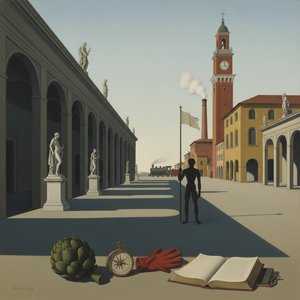
Giorgio de Chirico: Metaphysical Realities & the Poetics of Absence
Explore the captivating world of Giorgio de Chirico and his groundbreaking Metaphysical painting movement. Discover the philosophical depths & surreal imagery that influenced generations of artists. Learn more at ArtsDot.


