


The picture follows your choices: , .
Kogumisobjekti kirjeldus
Explore Gerhard Richter’s ‘Portrait Schmela,’ a series of unsettling photographic portraits in a grid format. Discover its unique style & layered meaning – a captivating work by a modern master.
 Loe lähemalt
Kunstniku elulugu
Gerhard Richter oli üks maailma suurimatest ja mõjutavamaid kunstnike, kes kasutasid fotorealistlikku ja abstrakti stiili ning pakkus tänu oma kriitilise lähenemuse ja innovatsioonile suurepäärasele kunstilisele ekspressioonile.
Käsitsi valmistatud õlimaalireproduktsioon
Meie kunstnike poolt tellimusel valmistatud käsitsi maalitud õli-kainaste teos teie soovitud suuruses ja raamis. ( Lülita trükkitoodetele Lülita digitaalse pildi juurde)
See teos on autoriõigusega kaitstud
Sellel lehel kuvatav kunstiteos on kaitstud autoriõigusega, mis tähendab, et meil ei ole seaduslikku õigust luua või müüa identset reproduktsiooni. Seda kaitset rakendatakse rahvusvaheliste kokkulepete alusel, nagu näiteks Berne konventsioon ning riiklike seadustega, sealhulgas nendega, mida on sätestatud USA autoriõiguse seadus – 17. peatükk.
Austasena ja seaduslikuna alternatiivina pakume originaalist inspireeritud, käsitsi maalitud isikupärastatud teoseid. Meie osutavad ja professionalsed kunstnikud uurivad hoolikalt originaali stiili, meelemoi ja kunstilist olemust, et luua uus, ainulaadne teos, mis tekitab sama tunnet – olles samal ajal omaette originaalne looming.
See meetod järgib täielikult autoriõiguse reegleid, kuna see ei põhine kaitstud kunstiteose kopeerimisel või dupliteerimisel. Selle asemel on tegu loova reinterpreetatsiooniga – uue maaldisega, mis on algteosest inspireeritud, kuid ei ole sellest identiline.
More about this painting
 Eelvaade
 Saada
Saada Jaga
Jaga
 Teave teose kohta
 Juhend

 Laadi alla
 Sarnased teosed
 Röntgenuuring
 Slaidietendus
 Q&A
Q&A Statistika
Order your painting in four simple steps
Take your time. You can change any answer; the price in your order card follows each choice.
1 Step one of four
Which size would you like?
These sizes keep the proportions of the original painting. The drawing shows your choice on a wall, above a two-metre sofa.
Or give your own measurements
Vali meie eelmääratud suurused, mis vastavad teose algupärastele proportsioonidele.

Sisestage vajalik laius ja kõrgus, et teos sobiks teie raamile või seinale. Kuna tegu on käsipainatud teosega, siis erineva kujuga suuruse korral võib kunstnik jätta pildi ümber veidi rohkem marginaali või lõigata osa ära — valik on teie. Enne maali alustamist saadame teile kinnitamiseks digitaalse näidisprojektsiooni. Sellel lehel näidatud pilt ei kajasta tegelikku tulemust — seda näitab ainult näidisprojektsioon.
2 Step two of four
How should it be prepared: rolled, stretched or framed?
The prices below are for the size you chose in step one.
Choose the edges of the stretched canvas
Choose your frame

White €1

Blurside €1

Extended €1

P118B €10

P118H €10

P118W €10

P438Z €10

P508JH €12

P508YH €12

P805H €10

P805Z €10

P919BZ €10

P919G €10

P919XJ €10

P959ZH €10

P968JZ €12

W106C €8

W218G €10

W218JH €8

W218Y €10

W307PJ €10

W316G €10

W316PJ €8

W316Y €10

W398PJ €8

W4111J €10

W500HY €15

W500JH €15

W692G €12

W849H €8

W940BG €15

W953PJ €8

H24-GOLD €30

H24-SILVER €30

H36-GOLD €45

H36-SILVER €45
Raamitud
Moulding: . Overall size with the frame: .
3 Step three of four
Would you like anything changed in the painting?
Most people answer no. Because each painting is made by hand, our artist can also adapt it for you.
After order, ArtsDot.com team will email client for instructions and provide a mockup preview
4 Step four of four
A few finishing options
All of them are optional. The answers already selected cost nothing extra.
Who paints it?
Maailmline tarne 3–4 nädala jooksul tavalise 5 nädala asemel. (3 november). Kvaliteedis kompromisse ei tehta.
A nameplate, as in a museum?
Graveeritud pronksplaadi üksikasjad
This elegant plaque features the artist's name and the title of the artwork, finely engraved for a timeless presentation.
It is made from bronze with a refined, elegant finish. The text is precisely laser-engraved for a sharp and permanent result. Measuring 9x2 cm, the plaque is compact yet easy to read. It's built to be durable and scratch-resistant, offering a professional, museum-quality look. Mounting is simple thanks to the included adhesive backing.
Läbipaistva akrüülplaadi üksikasjad
The plaque includes essential engraved details such as the artist's name, the title of the artwork, the date it was created, the type of media used-like oil on canvas or watercolor-a brief description of the piece, and a QR code that links to the complete artwork information.
It is crafted from clear acrylic, offering a sleek, modern appearance. The text is UV-engraved in black to ensure strong visual contrast. With a size of 10x15 cm, it ensures optimal readability. It comes equipped with two metal hooks for secure wall mounting. The plaque is designed to be weather-resistant, making it suitable for various environments, and it includes interactive features that work seamlessly with smartphone scanning.
Musta akrüülplaadiรายละเอียด (Note: The user provided "Musta akrüülplaadi detailid" as the current translation and asked for an improved version. Since "Musta akrüülplaadi
This elegant plaque includes engraved information such as the artist's name, the title of the artwork, the date it was created, the type of media used (like oil on canvas or watercolor), a short description of the artwork, and a QR code for quick access to more information.
The plaque itself is made from refined black acrylic with a premium finish. The text is laser-engraved in white for high contrast and readability. Its size is 10x15 cm, designed to be easy to read. It comes with two metal hooks for professional mounting. The design is sleek and fits any interior style. It is also weather-resistant and durable, with built-in digital integration for mobile compatibility.
A protective varnish?
When do you need it?
✓ Check and order
Your painting, as you ordered it

Self portrait
Reproduktsiooni tehnika
Reproduktsiooni suurus
-

Eelistatud tippkunstnik
Rohkem detaile, peenust ja lisatootmisaega
-

Reproduktsiooni raamivalikud
-
-
Kunstiteoste või reproduktsioonide puhul, mille üks külg on üle 105 cm (umbikmolt 41 tolli), saadetakse raam kirjal asendis, la Dismantlitud komplektina. See meetod tagab ohutuse kohaletoimetamisel ja väldib transpordil tekkivaid kahjustusi.
Vajalik professionaalne kokkupanek – see ei ole isetegevusega valmistamiseks mõeldud toode.
Komplekt tuleb kokku panna ja lõvet pingutada kogemusega professionaalse raamija, kasutades puiduliim (ei kuulu komplekti), lõvetpingi ja klempe, et hoida raami kande mustad õigena liimi kuivamisaja jooksul. Vale kokkupanek või ebaühtlane lõvetping võib kunstiteost püsivalt kahjustada ning seda
 Kunstiteoste või reproduktsioonide puhul, mille üks külg on üle 105 cm (umbikmolt 41 tolli), saadetakse raam kirjal asendis, la Dismantlitud komplektina. See meetod tagab ohutuse kohaletoimetamisel ja väldib transpordil tekkivaid kahjustusi.
Kaasatud on kõik tahked puidust liistud, täpselt lõigatud vastavaks suuruseks.
Kokku panemiseks kasutatakse lisatud kruvisid ning nurkade liimamiseks vajalikku puuliima, mida ei ole komplektis ja mida peab raamivalmistaja ise hankima.
Vajalik on kasutada professionaalseid tööriistu, mis ei kuulu komplekti: lõvetelapide pingist (pingutaja) ja klambreid, et hoida raami puidu nurgas õigena liimi kuivamisaja jooksul.
Oluline:
Nurgaliimamiseks on vaja puiduliim, liimimine peab toimuma klempide all kuni liim on täielikult kuivanud ning kokku monteeritud raami kanga pingutamiseks on vajalik kanga pingutustang. Kumbki neist ei kuulu komplekti. Palun veenduge enne selle suuruse tellimist, et teil on saadaval kogenud professionaalne raamistaja.

Nimesildikiri
-
-

Kaitsevärnitsus
Läikiv lakk (muudab värvid elavamaks ning kaitseb valgust ja niiskust eest)
-

Kohanda oma teost
Näiteid muudatuste kohta: Asenda nägu kliendi fotoga; Lisa lemmikloom (nt asenda kass koeraga); Lisa taustale peidetud sõnum; Muuda tausta maastikku või elemente.
-

Kiire tarne
Ülemaailmne tarne riiki 3–4 nädalaga tavalise 5 nädala asemel. (3 november). Kvaliteedis kompromisse ei tehta.
-
Kiirsaatmine
Ülemaailmne tarne () 5 nädala jooksul. (10 november).
Sisse kuuluv
Koguhind
€ 234
Klaasivalik on saadaval ainult kuni 110 cm suuruses teostes
Included with every order
- Tasuta ekspresssaatmine üle maailma
- Kõrgekvaliteediline lina-kangas
- Täielik transpordikindlustus
- Tollimaksude tagastamise garantii
- Värvitoime täpsuse garantii
- 100 päeva tagastusõigus (ainult valmistusdefektide korral)
- 100% raha tagasi garantii
- Hulgusoodustus


A Fragmented Reflection: Examining Gerhard Richter’s ‘Self Portrait’
Gerhard Richter's 'Self Portrait,' painted in 1996, isn’t merely a depiction of the artist himself; it’s a profound meditation on memory, perception, and the elusive nature of identity—themes that resonate powerfully within Richter’s broader oeuvre. The photograph itself – a stark black and white image capturing Richter's gaze directly at the viewer – immediately establishes a sense of intimacy while simultaneously conveying an underlying tension. This deliberate choice of medium speaks volumes about Richter’s artistic philosophy: he eschews illusionistic representation, favoring instead a technique that captures fleeting impressions rather than striving for photographic realism.- Style & Technique: Richter employs a method known as ‘photographic abstraction,’ layering translucent resin onto canvas and then applying thin coats of oil paint. This process creates a surface that resembles photographic emulsion, blurring the boundaries between image and materiality. The resulting texture is subtly grainy, mirroring the imperfections inherent in memory itself—a characteristic that distinguishes it from traditional portraiture.
- Historical Context: Painted during a period marked by significant political upheaval – the reunification of Germany following decades of division – ‘Self Portrait’ reflects Richter's preoccupation with confronting trauma and acknowledging the complexities of historical narrative. The artist himself has spoken about wanting to capture “the feeling of what it is like to remember,” suggesting that the painting operates on a level beyond mere visual representation.
Symbolism Beyond Appearance
The seemingly simple composition belies a deeper symbolic significance. Richter’s gaze—direct, unwavering, yet slightly melancholic—commands attention and invites contemplation. It's not an idealized portrait; there’s no attempt to sanitize or embellish the subject’s features. Instead, it presents a face weathered by experience, hinting at the burdens of history and the anxieties associated with confronting one’s own past. The monochromatic palette reinforces this sense of solemnity, stripping away distracting colors and focusing solely on tonal variations—a stylistic choice that underscores the painting's emotional core.- Emotional Impact: ‘Self Portrait’ evokes a feeling of quiet introspection. It compels viewers to confront their own perceptions of selfhood and memory, prompting questions about how we construct our identities through experience. Richter’s masterful manipulation of texture and color contributes to this emotional resonance, creating an image that feels both tangible and intangible—a testament to the artist's ability to convey profound psychological states.
A Legacy of Uncertainty
Richter’s artistic trajectory has been defined by a consistent refusal to offer definitive answers or impose singular interpretations. Like ‘Self Portrait,’ his work embodies a spirit of questioning and acknowledges the inherent limitations of representation. It stands as an enduring reminder that art can illuminate not only what we see but also what lies beneath—the unspoken anxieties, unresolved traumas, and elusive fragments of experience that shape our understanding of ourselves and the world around us. Its reproduction offers a captivating glimpse into Richter’s artistic vision and invites collectors and interior designers alike to appreciate its understated beauty and intellectual depth.Korduvad küsimused
Kust saan osta teose „Self portrait“, autor Gerhard Richter trükki?
Teose „Self portrait“, autor Gerhard Richter trüket saab tellida otse selle Kvaliteetne kunstutrüki print lehelt: kunstiprint puuvillalõikel kangas või arhiveeritaval kangaspaberil.
Kust saan leida sarnaseid teoseid kui „Self portrait“, autor Gerhard Richter?
Teose „Self portrait“, autor Gerhard Richter lehel Sarnased teosed on esiletõstetud sarnased teosed.
Millist emotsionaalset toonikut saadab endale kuulutada teose "Self portrait" Contemporary Realism stiil?
"Self portrait" kannab endas Reflective emotsionaalset toonist, mis on omane Contemporary Realism suunale.
Sarnased teosed


Gerhard Richter
1932 - , Saksa
Kunstniku elulugu
A Life Shaped by Division: The Early Years and Artistic Formation of Gerhard Richter
Gerhard Richter’s artistic journey began amidst the turbulent backdrop of postwar Germany, a nation scarred by war and grappling with the ideological divisions of the Cold War. Born in Dresden in 1932, his formative years were profoundly impacted by the rise of Nazism and the subsequent devastation inflicted upon his hometown during World War II. This early exposure to conflict instilled within him an inherent skepticism—a questioning spirit that would become a cornerstone of his artistic worldview for decades to come. His father, Wilhelm Richter, was a schoolteacher who navigated the challenges of life under Nazi rule with quiet resilience, while his mother, Gisela Richter, nurtured a love for literature and music within their family home – fostering an environment rich in cultural stimulation. These familial influences subtly shaped Richter’s artistic sensibilities, contributing to his distinctive blend of pragmatism and intellectual curiosity. Initially trained in socialist realism at the Dresden Academy of Fine Arts—a stylistic mandate imposed by the East German state—Richter quickly recognized the limitations inherent in adhering rigidly to ideological dogma. Even within this constrained environment, however, a yearning for artistic freedom persisted, fueled by a growing dissatisfaction with prescribed aesthetic conventions and an ardent desire to explore more expansive creative horizons. This burgeoning discontent propelled him toward experimentation—a deliberate dismantling of stylistic boundaries that would define his formative years. He sought inspiration from artists who challenged established norms, embracing dissonance as a catalyst for innovation. Pablo Picasso’s fragmented imagery and Jean Arp’s geometric abstractions served as crucial touchstones during this period, shaping Richter's evolving artistic vocabulary.Escaping Constraints: Düsseldorf and the Exploration of Style
The pivotal moment arrived in 1961 when Richter made the courageous decision to abandon East Germany—seeking refuge in the vibrant art scene of Düsseldorf. This relocation represented a radical transformation in his artistic trajectory, liberating him from the constraints of socialist realism and immersing him in an environment brimming with intellectual ferment. Düsseldorf’s artistic community welcomed Richter's arrival with open arms, fostering an atmosphere conducive to experimentation and challenging conventional artistic perspectives. Recognizing the need for stylistic independence—a rejection of prescribed aesthetic formulas—Richter embarked on a period of intense exploration that would solidify his early mature work. He swiftly dismantled socialist realism’s rigid conventions, embracing diverse approaches simultaneously. Photorealism—characterized by meticulous replication of photographic images with astonishing precision—stood alongside abstract compositions infused with bold colors and dynamic brushstrokes. This duality wasn't about finding *a* style; it was about questioning the very notion of stylistic coherence, accepting contradiction as a fundamental principle. His collaboration with Sigmar Polke yielded the provocative term ‘Capitalist Realism,’ encapsulating their shared critique of artistic institutions and their appropriation of imagery from advertising and mass media. This period wasn’t merely about stylistic innovation; it was about confronting broader societal anxieties—a reflection of the anxieties prevalent during the Cold War era. Richter's technique evolved dramatically, incorporating innovative methods like squeegee printing—a process utilizing tools typically employed for window cleaning—to manipulate paint on canvas in unpredictable ways. This embrace of chance and spontaneity underscored his artistic philosophy—allowing him to relinquish control and invite unforeseen outcomes. He meticulously studied the work of Picasso and Arp, absorbing their stylistic innovations and integrating them into his own evolving visual language.Blurring Boundaries: Photorealism, Abstraction, and the Power of Chance
Richter’s artistic repertoire expanded throughout the 1960s and beyond—embracing a remarkable spectrum of techniques and thematic concerns. His photorealistic paintings—based on family photographs or newspaper images—were not mere reproductions; they were investigations into perception and representation. By rendering these images with clinical detachment, he compelled viewers to confront the inherent ambiguity of photographic truth—a deliberate provocation designed to unsettle conventional assumptions about visual reality. Simultaneously, Richter pursued abstraction—creating canvases layered with vibrant hues and gestural marks—often utilizing squeegee printing to manipulate paint on canvas in ways that defied control. This embrace of spontaneity mirrored his artistic ethos—yielding unexpected results while rejecting stylistic rigidity. His ‘Color Charts,’ systematic arrangements of colored squares—challenged the notion of painting as purely decorative expression—examining color’s organizational potential and questioning its role in artistic communication. His influence extended far beyond Düsseldorf, inspiring countless artists who adopted his innovative methods and embraced his unwavering commitment to artistic exploration. Richter's legacy transcends stylistic trends; it resides in his profound engagement with historical and political themes—a reflection of the anxieties inherent in navigating a fragmented world. He didn’t offer definitive answers but posed compelling questions—prompting viewers to scrutinize their own preconceptions and engage in critical dialogue. Richter’s art continues to resonate today, demonstrating the enduring power of artistic experimentation and intellectual rigor. His unwavering dedication to pushing boundaries solidified his position as one of Germany's most celebrated artists—a figure whose work remains a testament to the transformative potential of creative vision.


Sarnased artiklid
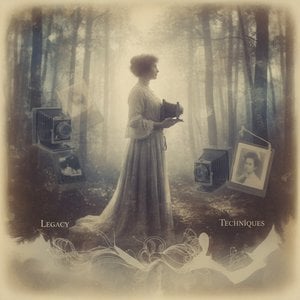
Pictorialism: A Search for Artistic Photography's Soul – Aesthetics, Techniques & Legacy
Explore the captivating world of Pictorialism – a pivotal movement that transformed photography into fine art. Discover key artists like Stieglitz & Käsebier, techniques, and collecting tips from experts.

White on Canvas: 10 Masterpieces & Timeless Elegance for Your Home Decor
Explore 10 iconic white paintings by Monet, Whistler & Rothko! Discover the stories behind these serene masterpieces and their impact on art history. Find museum-quality reproductions for your home decor at .

Beyond the Lens: Photography's Enduring Influence on Modern & Contemporary Art
Explore photography's pivotal role in shaping modern & contemporary art. Discover key movements, influential artists like Stieglitz, and expert collecting advice from ArtsDot.