

 Eelvaade

 Saada
 Jaga
 Teave teose kohta
 Juhend


 Laadi alla
 Sarnased teosed
 Röntgenuuring
 Slaidietendus
 KÜSIMUSED JA VASTUSID
 Statistika
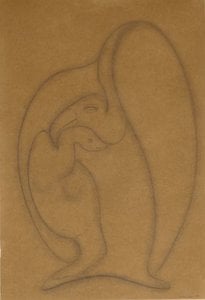
Sofia

- 30.0 x 80.0cm

 Loe lähemalt
Giclée / Kunstiprint
Muuseumikvaliteediga giclée- või kangasprint kiire tootmisega ja paindlikud viimistlusvõimalused. ( Osta käsitsi maalatud teos Lülita digitaalse pildi juurde)




































Vali meie eelmääratud suurused, mis vastavad teose algupärastele proportsioonidele.

Sisestage vajalik laius ja kõrgus, et see sobiks teie raamile või seinale. Trükki saab ainult lõigata, seda ei saa kunagi pildist suuremaks teha, seega ka erineva mustega suurus kaotab osa pildist. Enne trükkimist saadame teile kinnitamiseks digitaalse näidisprojektsiooni. Sellel lehel näidatud pilt ei kujuta reaalset lõiget — seda näitab ainult näidisprojektsioon.
Ülemaailmne tarne () 2 nädala jooksul, tavalise 4/5 nädala asemel. (19 november)

Tasuta ekspresssaatmine üle maailma

Kõrgekvaliteediline lina-kangas

Täielik transpordikindlustus

Tollimaksude tagastamise garantii

Värvitoime täpsuse garantii

100 päeva tagastusõigus (ainult valmistusdefektide korral)

100% raha tagasi garantii

Hulgusoodustus
 Klaasivalik on saadaval ainult kuni 110 cm suuruses teostes

Sofia
Giclée / Kunstiprint
Reproduktsiooni suurus
-


Koguhind
€ 56
Sarnased teosed




Kunstniku elulugu
A Life of Observation
Born in Budapest to a wealthy Jewish family, Felix Philipp Kanitz lived a life defined by the details he gathered from the earth and its people. His path began in earnest when he enrolled in art at the University of Vienna in 1846. While his training was rooted in the visual arts, his curiosity pulled him far beyond the studio walls. After 1850, he moved through Germany, France, Belgium, and Italy, but it was his arrival in the Balkans that would define his legacy.
In 1856, he settled in Vienna, a city that would serve as his base for much of his professional life. His travels took him into the heart of Dalmatia, Bosnia, Herzegovina, Montenegro, Serbia, Bulgaria, and Macedonia. He did not merely visit these places; he studied them with the precision of a scientist. As a naturalist, geographer, and ethnographer, he looked at the world through a lens of careful documentation.
The Art of Documentation
Kanitz was much more than a painter. He worked as an engraver, cartographer, and archaeologist, using his hands to record what his eyes saw. His work often took the form of black and white drawings and engravings that captured the daily existence of the South Slavs. These were not mere sketches; they were records of life. He produced maps so accurate that the Russian General Staff used them for military operations during the Liberation War of 1877–1878.
His artistic output included:
- Detailed engravings of Bulgarian folk dances, such as the Bulgarian horo.
- Sketches and paintings of national costumes from Bulgaria.
- Watercolors capturing landscapes and views of towns like Vidin, Lom, and Nikopol.
- Precise drawings of archaeological monuments and Roman finds in Serbia.
He often worked from original sketches that were later enlarged or colored by other artists in Vienna. This process helped bring his observations of distant landscapes to a wider European audience.
A Legacy of Knowledge
The weight of his research is found in the many books he authored. Through titles like Reise in Südserbien und Nordbulgarien and Donau-Bulgarien und der Balkan, he shared the ethnographic and historical realities of the regions he explored. His work helped define a distinct place for Bulgarian culture within the European consciousness. He was a man who felt the spirit of the lands he visited, even as a foreigner.
His contributions earned him respect across borders. He became a member of the Serbian Academy of Sciences and Arts and an honorary member of the Bulgarian Literary Society. In Vienna, he served as the first custodian of the Anthropologisch-Urgeschichtliches Museum between 1870 and 1874. When he passed away in Vienna on January 8, 1904, he left behind a massive collection of manuscripts, maps, and drawings that remain vital to the history of the Balkans today.

Felix Philipp Kanitz
1829 - 1904 , Hungary
Lühikest infot
- Artistic Movement Or Style: Naturalism
- Full Name: Felix Philipp Kanitz
- Nationality: Hungarian, Jewish, Austrian
- Notable Artworks:
- National costumes of Bulgaria
- Bulgarian horo
- Bulgarian emigrants
- Place Of Birth: Budapest, Hungary
- Date Of Birth: 1829
- Date Of Death: 1904