


 Telli trükis Osta digipilt
 Saada
Saada
 Jaga
Jaga
 Details
 Lisa lemmikutesse

 Laadi alla
 Sarnased teosed
 X-Ray
X-Ray
 Slaidietendus
M. Loulou
 Oil On Canvas
- WallArt
- Post-Impressionism
 1890
1890- 19th Century
 55.0 x 46.0 cm
Käsitsi valmistatud õlimaalireproduktsioon
Meie kunstnike poolt tellimusel valmistatud käsitsi maalitud õli-kainaste teos teie soovitud suuruses ja raamis.




P118B $10

P118H $10

P118W $10

P438Z $10

P508JH $12

P508YH $12

P805H $10

P805Z $10

P919BZ $10

P919G $10

P919XJ $10

P959ZH $10

P968JZ $12

W106C $8

W218G $10

W218JH $8

W218Y $10

W307PJ $10

W316G $10

W316PJ $8

W316Y $10

W398PJ $8

W4111J $10

W500HY $15

W500JH $15

W692G $12

W849H $8

W940BG $15

W953PJ $8




 Loe lähemalt
Vali meie eelmääratud suurused, mis vastavad teose algupärastele proportsioonidele.

Sa võite sisestada oma mõõtmed konkreetse raami või ruumi sobivuse tagamiseks. Kui teie valitud suurus ei vasta originaalpildi proportsioonidele, siis kärvime kunstiteost või laiendame maali täiendavate käsitsi maalitud elementidega. Enne tootmise algust saadetakse teile heakskiitmiseks digitaalne eelvaade.
Palun pidage meeles, et ekraanil kuvatav eelvaade ei kajasta tegelikku kärpimist või laiendamist. Ainult eelvaade näitab täpselt lõplikku kompositsiooni.
Kuigi on saadaval kohandatud suurused, soovitame originaalproportsioonide säilimiseks valida mõõdud eelmääratletud nimekirjast.
Pärast tellimust saadab ArtsDot.com meeskond kliendile e-posti juhised ning esitab eelvaate kavandi.
Maailmline tarne 3–4 nädala jooksul tavalise 5 nädala asemel. (1 juuli). Kvaliteedis kompromisse ei tehta.

Tasuta ekspresssaatmine üle maailma

Kõrgekvaliteediline linakangas

Täielik transpordikindlustus

Tollimaksude tagastamise garantii

Värvitoime täpsuse garantii

60-päevane tagastusõig: ainult tootmisdefektide korral

100% raha tagasi garantii

Hulgusoodustus
 Klaasivalik on saadaval ainult suuruses kuni 110 cm

M. Loulou
Reproduktsiooni tehnika
Reproduktsiooni suurus
-


Kogusumma
-
Teose kirjeldus
Captivating Subject and Introspective Mood
This striking portrait captures a young girl seated gracefully amidst a vibrant, decorative setting. Her gentle, contemplative expression invites viewers into a moment of quiet introspection, evoking a sense of innocence and inner thoughtfulness. The girl's delicate features, framed by dark hair and clasped hands, serve as a focal point that exudes calmness and emotional depth. Surrounded by stylized floral and fruit motifs, including a prominent pomegranate, the composition hints at themes of fertility, life, and the cycle of nature, adding layers of symbolic richness to the work.Distinctive Style and Artistic Technique
Created in 1890, this artwork exemplifies the bold, expressive qualities of Post-Impressionism combined with elements of Symbolism. The artist employs simplified, stylized forms and a vivid, contrasting color palette to evoke emotion and decorative appeal. Thick, black outlines define the figure and floral motifs, emphasizing their flatness and decorative nature. The brushwork is lively and energetic, with visible strokes that add texture and movement, creating a dynamic surface that captures the viewer’s eye. The flat perspective and diffuse lighting further enhance the work’s emphasis on symbolic and emotional expression over realistic spatial depth.Historical Context and Artistic Significance
Produced during a period of artistic experimentation, this piece reflects the transition from Impressionism to more expressive, symbolic approaches. The artist’s use of bold colors and simplified shapes aligns with the Post-Impressionist movement’s desire to convey deeper emotional and spiritual truths. The inclusion of symbolic elements like the pomegranate connects to broader themes of vitality, mortality, and renewal, resonating with the Symbolist movement’s focus on conveying complex ideas through visual allegory. This work stands as a testament to the artist’s innovative approach to portraiture and decorative art, influencing generations of modern artists.Emotional Impact and Decorative Appeal
With its vibrant color scheme and harmonious composition, this artwork radiates warmth, introspection, and a sense of quiet strength. It invites viewers to reflect on themes of innocence, inner life, and the natural world, making it a meaningful addition to any collection or interior space. Its decorative qualities, characterized by stylized floral motifs and bold outlines, make it an ideal piece for enhancing contemporary or traditional interiors. Whether displayed in a private collection, gallery, or sophisticated home, this reproduction offers a captivating visual experience that inspires admiration and emotional connection.Sarnased teosed


Kunstniku elulugu
Eugène Henri Paul Gauguin: A Revolutionary Post-Impressionist Painter
Paul Gauguin, a name synonymous with bold color and defiant individualism, stands as one of the most influential figures in the artistic landscape of the late nineteenth century—a pivotal innovator who irrevocably altered the course of modern art. Born June 7, 1848, in Paris, France, his life unfolded far from the conventional paths expected of a young man of his time, marked by an upbringing steeped in intellectual curiosity and shaped by encounters with cultures radically different from those of Europe. His father, a journalist, instilled in him a passion for storytelling and observation—traits that would prove invaluable to Gauguin’s artistic endeavors—while his mother descended from Peruvian aristocracy, carrying within her lineage the spirit of exploration and questioning established norms. This heritage profoundly impacted Gauguin's worldview, fostering an unwavering belief in the importance of authenticity and fueling his lifelong quest to capture the essence of human experience through art.Early Years & Influences
Gauguin’s formative years were spent absorbing the intellectual currents of Parisian society—a city buzzing with artistic ferment—yet he harbored a deep yearning for something beyond the confines of academic convention. His fascination with exotic landscapes and cultures began to blossom during his childhood travels in Peru, where he witnessed firsthand the vibrancy of Andean traditions and the stark contrast between European civilization and indigenous life. This experience instilled in him a profound appreciation for simplicity and directness—values that would permeate his artistic style throughout his career. Returning to France after his father’s untimely death, Gauguin pursued formal education but quickly realized that academic pursuits did not satisfy his creative impulses. Instead, he gravitated toward the burgeoning financial world, securing a position as a stockbroker—a profession seemingly incongruous with his artistic aspirations—but one that provided him with the resources to indulge in his passion for painting during his spare moments. Early exposure to Impressionist painters like Monet and Renoir undeniably influenced Gauguin’s initial stylistic explorations. He meticulously studied their techniques of capturing fleeting light and color, attempting to emulate their mastery of optical perception. However, Gauguin soon recognized that Impressionism's preoccupation with capturing the ephemeral nature of reality ultimately limited its expressive potential—a realization that propelled him toward a more profound engagement with emotion and symbolism. The influence of Japanese prints—Japonisme—was equally transformative. Gauguin was captivated by the flattened perspectives, bold outlines, and decorative patterns characteristic of Japanese woodblock prints, which challenged Western artistic conventions and encouraged him to experiment with unconventional compositional strategies.The Breakthrough: Brittany & Cézanne
Before embarking on his groundbreaking journey into Polynesian culture, Gauguin honed his skills in rural Brittany—a region renowned for its rugged landscapes and Celtic traditions. During this period, he meticulously observed the textures of Breton soil, the hues of twilight skies, and the expressive gestures of local peasants—capturing these elements with remarkable precision and sensitivity. His canvases from Brittany bear the unmistakable imprint of Cézanne’s influence—particularly his use of geometric forms and shading techniques—demonstrating Gauguin's willingness to absorb lessons from other artists and synthesize them into his own distinctive style. This careful study of Cézanne’s approach to depicting natural subjects foreshadowed Gauguin’s later embrace of a more simplified, expressive aesthetic.Tahiti & Symbolist Expression
The pivotal moment in Gauguin’s artistic evolution arrived with his arrival in Tahiti—French Polynesia—in 1891. Seeking refuge from the pressures and complexities of Parisian society, he envisioned Tahiti as an antidote to Western materialism—a place where he could reconnect with primal instincts and explore the spiritual dimensions of human existence. Inspired by Primitivism—the artistic movement that championed non-Western cultures—Gauguin rejected academic conventions altogether, prioritizing subjective experience over objective representation. He abandoned traditional pigments and brushes in favor of earthy tones and expressive strokes—techniques that conveyed not merely what he *saw*, but what he *felt*. Iconic paintings like “Vahine no te miti” and “The Vision After the Sermon” exemplify Gauguin’s Symbolist style—characterized by flattened perspectives, bold outlines, and a deliberate disregard for naturalistic color palettes. These works are imbued with mystical symbolism—reflecting Gauguin's belief that art could transcend mere visual perception and communicate profound spiritual truths. ### Legacy & Influence Paul Gauguin died May 8, 1903, on Hiva Oa—a remote island in the Marquesas archipelago—leaving behind a legacy that continues to inspire artists worldwide. His uncompromising artistic vision—his rejection of convention and his unwavering commitment to authenticity—established him as a towering figure in the history of modern art. He profoundly influenced subsequent generations of painters—including Pablo Picasso, Henri Matisse, and Edvard Munch—who adopted his stylistic innovations and explored similar thematic concerns. Gauguin’s enduring impact lies not only in his groundbreaking paintings but also in his courageous assertion of artistic freedom—a testament to the transformative power of imagination and the importance of pursuing one's own creative path. His work remains a beacon of inspiration for artists striving to express emotion, explore spirituality, and challenge societal norms—solidifying his place as an undisputed icon of modern art.
Eugène Henri Paul Gauguin
1848 - 1903 , Prantsusmaa
Lühikesed faktid
- Artistic Movement Or Style: Post-Impressionism ja Symbolism
- Artists Who Influenced This Artist: ['Camille Pissarro']
- Date Of Birth: 1848
- Date Of Death: 1903
- Full Name: Eugène Henri Paul Gauguin
- Nationality: Prantsuse
- Notable Artworks:
- Clearing
- Vahine no te miti
- Manao Tupapau
- Little Breton Shepherd
- Place Of Birth: Paris, France
Seotud artiklid

Masterful Portraits: 10 Artworks That Define a Genre | ArtsDot
Explore 10 iconic portrait paintings – from Mona Lisa to Van Gogh’s self-portraits. Discover the stories behind these masterpieces, artistic techniques & find museum-quality art reproductions for your home at ArtsDot.com.


Capturing Fleeting Moments: Light, Color & Emotion in Impressionistic Art
Explore the captivating world of Impressionism! Discover the techniques, artists (Monet, Renoir, Degas), and enduring legacy of this revolutionary art movement. Expert insights for collectors & enthusiasts.

Beyond Impressionism: Exploring the Emotional Depth of Post-Impressionist Painting
Explore the profound emotional depth & innovative techniques of Post-Impressionism with ArtsDot. Discover Cézanne, Van Gogh, Gauguin & more – and their lasting impact on modern art.

Chromatic Resonance: Exploring the Emotional Impact of Vibrant Color Palettes in Painting
Explore the fascinating relationship between color & emotion in art history. Discover how master artists like Matisse & Gauguin used vibrant hues to evoke feelings and cultural meanings. A deep dive for classic art enthusiasts.
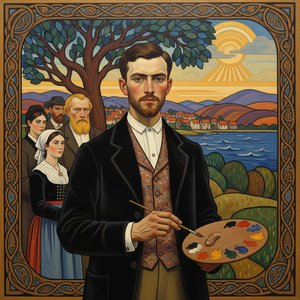
Émile Bernard: Pioneering Synthetism & the Post-Impressionist Quest for Essence
Explore the life & work of Émile Bernard, a pivotal Post-Impressionist pioneer of Synthetism. Discover his influence on Van Gogh & Gauguin and learn about collecting his art with ArtsDot.



