

 Eelvaade
 Saada
Saada Jaga
Jaga
 Teave teose kohta

 Laadi alla
 Sarnased teosed
 Röntgenuuring
 Slaidietendus
 Statistika
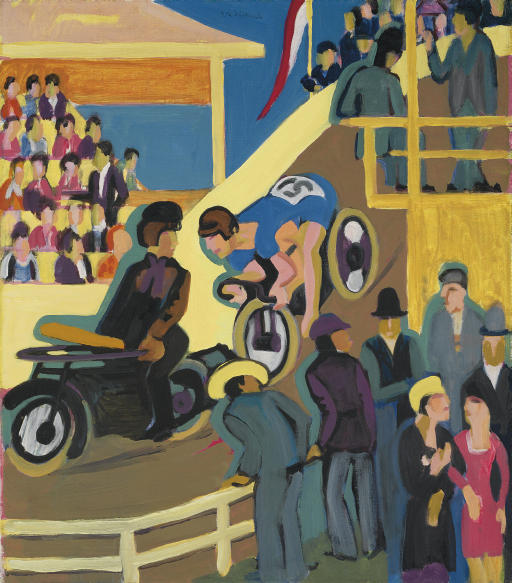
Motor cycle race with preload


 Loe lähemalt
Käsitsi valmistatud õlimaalireproduktsioon
Meie kunstnike poolt tellimusel valmistatud käsitsi maalitud õli-kainaste teos teie soovitud suuruses ja raamis. ( Lülita trükkitoodetele Ülemineks digitaalse pildiga müügi kanalisse)




P118B $10

P118H $10

P118W $10

P438Z $10

P508JH $12

P508YH $12

P805H $10

P805Z $10

P919BZ $10

P919G $10

P919XJ $10

P959ZH $10

P968JZ $12

W106C $8

W218G $10

W218JH $8

W218Y $10

W307PJ $10

W316G $10

W316PJ $8

W316Y $10

W398PJ $8

W4111J $10

W500HY $15

W500JH $15

W692G $12

W849H $8

W940BG $15

W953PJ $8




Vali meie eelmääratud suurused, mis vastavad teose algupärastele proportsioonidele.

Sa võite sisestada oma mõõtmed konkreetse raami või ruumi sobivuse tagamiseks. Kui teie valitud suurus ei vasta originaalpildi proportsioonidele, siis kärvime kunstiteost või laiendame maali täiendavate käsitsi maalitud elementidega. Enne tootmise algust saadetakse teile heakskiitmiseks digitaalne eelvaade.
Palun pidage meeles, et ekraanil kuvatav eelvaade ei kajasta tegelikku kärpimist või laiendamist. Ainult eelvaade näitab täpselt lõplikku kompositsiooni.
Kuigi on saadaval kohandatud suurused, soovitame originaalproportsioonide säilimiseks valida mõõdud eelmääratletud nimekirjast.
Pärast tellimust saadab ArtsDot.com meeskond kliendile e-posti juhised ning esitab eelvaate kavandi.
Maailmline tarne 3–4 nädala jooksul tavalise 5 nädala asemel. (13 september). Kvaliteedis kompromisse ei tehta.

Tasuta ekspresssaatmine üle maailma

Kõrgekvaliteediline linakangas

Täielik transpordikindlustus

Tollimaksude tagastamise garantii

Värvitoime täpsuse garantii

100 päeva tagastusõigus (ainult tootmisdefektide korral)

100% raha tagasi garantii

Hulgusoodustus
 Klaasivalik on saadaval ainult suuruses kuni 110 cm

Motor cycle race with preload
Reproduktsiooni tehnika
Reproduktsiooni suurus
-


Kogusumma
$ 613
A Frenetic Vision of Modernity: Exploring Kirchner’s “Motorcycle Race with Preload”
Ernst Ludwig Kirchner's "Motorcycle Race with Preload," painted in 1927-1928, isn’t merely a depiction of a sporting event; it’s a visceral embodiment of the anxieties and dynamism inherent in early 20th-century urban life. This work, rendered in oil on canvas, pulsates with an Expressionist energy—a deliberate distortion of reality designed to convey raw emotion rather than photographic accuracy. Kirchner, a founding member of Die Brücke (The Bridge), sought to capture not just what he saw, but how it *felt*, and this painting is a prime example of that ambition. The scene unfolds within a compressed space, dominated by the chaotic energy of the race itself, yet simultaneously hinting at the claustrophobia and relentless pace of modern existence.
The composition immediately grabs the viewer with its tilted perspective—a deliberate destabilization that mirrors the frenetic movement of the motorcycles. Diagonal lines, most notably those created by the track barriers and the receding architecture, generate a powerful sense of tension and forward momentum. Figures are densely packed, almost merging into one another, creating a visual cacophony that reflects the overwhelming nature of the event. Kirchner masterfully employs color to heighten this effect; vibrant yellows and oranges blaze across the canvas, contrasted sharply with the darker tones used for the racers and the shadowy background. This deliberate clash of hues isn’t simply aesthetic—it's a symbolic representation of the jarring realities of modern life, where pleasure and anxiety coexist in a turbulent dance.
Expressionist Techniques: Brushstrokes as Emotional Signifiers
Kirchner’s technique is central to understanding the painting’s emotional impact. He eschews smooth blending and meticulous detail, opting instead for thick, visible brushstrokes—an impasto application of paint that lends a raw, almost tactile quality to the work. These deliberate marks aren't accidental; they are expressive tools, conveying movement, energy, and the artist’s subjective experience. The painting feels unfinished in a way that deliberately amplifies its intensity. Notice how the brushwork intensifies around the racers, suggesting their speed and urgency, while remaining looser and more diffused in the background, creating a sense of distance and disorientation.
The simplification of forms—blocky figures and stylized motorcycles—further contributes to the painting’s Expressionist character. Kirchner wasn't interested in rendering realistic details; he was focused on capturing the essence of the subject – its energy, its chaos, its emotional weight. The lack of precise anatomical accuracy reinforces this impression, transforming the racers into archetypal figures representing the relentless drive and competitive spirit of the era. The use of color is equally symbolic: the bright yellows and oranges evoke a sense of excitement and danger, while the darker tones hint at the underlying anxieties and uncertainties of modern life.
Symbolism and the Urban Landscape
Beyond its depiction of a motorcycle race, “Motorcycle Race with Preload” offers a broader commentary on urban life in the early 20th century. Kirchner was deeply concerned with the alienation and fragmentation he observed in cities—the sense of isolation amidst crowds, the relentless pace of industrialization, and the loss of connection to nature. The densely packed composition can be interpreted as a metaphor for the overwhelming nature of modern society, while the blurred figures suggest a lack of individual identity within this chaotic environment. The painting’s energy mirrors the anxieties of a rapidly changing world—a world grappling with modernity's promises and its unsettling consequences.
Consider also the historical context: Kirchner was working during a period of significant social and political upheaval in Germany, marked by increasing industrialization, urbanization, and growing social unrest. “Motorcycle Race with Preload” can be seen as a reflection of these anxieties—a visual expression of the tensions and uncertainties that characterized this era. It’s a powerful reminder of how art can serve not just as a representation of reality, but as a vehicle for exploring complex emotions and ideas.
Sarnased teosed


Kunstniku elulugu
Ernst Ludwig Kirchner (1880-1938): A Life Forged in Expression
Ernst Ludwig Kirchner, a name synonymous with the raw emotional power of German Expressionism, was born into a world poised on the brink of dramatic change. His arrival in Aschaffenburg, Bavaria, in 1880, marked the beginning of a life deeply intertwined with artistic innovation and personal turmoil. The shifting landscapes of his childhood – dictated by his father’s profession – instilled within him a sense of displacement that would later become a recurring theme in his art. From Frankfurt to Perlen, and finally settling in Chemnitz, young Kirchner absorbed the burgeoning anxieties of a rapidly modernizing Germany. Though initially steered towards architecture at the Königliche Technische Hochschule in Dresden, it was the profound conviction that painting could convey inner experience—a rejection of academic conventions—that ultimately defined his artistic path. He found kinship with fellow rebels – Fritz Bleyl, Karl Schmidt-Rottluff, and Erich Heckel – forging bonds that would irrevocably alter the course of 20th-century art.Early Life and Artistic Beginnings
Kirchner’s formative years were shaped by a family preoccupied with intellectual pursuits. His father, a chemical technician specializing in paper production, instilled in him a meticulous attention to detail—a characteristic that would later translate into his exacting artistic technique. Maria Kirchner, his mother, descended from Huguenot ancestry, fostering within him an appreciation for cultural heritage and a sensitivity to the nuances of human emotion. From Aschaffenburg he moved to Frankfurt/Main and Perlen nr. Lucerne where he attended secondary school alongside Karl Schmidt-Rottluff and Erich Heckel—artists who would become lifelong companions and collaborators. These formative relationships profoundly influenced his artistic worldview, shaping his belief in the importance of shared experience and mutual inspiration. Recognizing his innate talent for drawing and painting, Kirchner pursued architectural studies at Dresden’s Königliche Technische Hochschule, but simultaneously enrolled in courses focused on figurative art, honing his skills in life drawing and composition—skills that would prove invaluable to his subsequent artistic endeavors.Die Brücke: A Revolutionary Collective
The genesis of Kirchner's artistic breakthrough occurred in 1905 when he joined *Die Brücke* (“The Bridge”), a groundbreaking collective dedicated to forging a new aesthetic language rooted in emotional intensity and psychological exploration. Alongside Bleyl, Schmidt-Rottluff, and Heckel, Kirchner established a studio in Dresden where they experimented with innovative techniques—primarily woodblock printing—drawing inspiration from sources far removed from the prevailing artistic trends of the time. The group’s manifesto articulated a radical rejection of academic idealism, advocating instead for an uncompromising confrontation with reality—a stance that mirrored their broader philosophical convictions. They drew heavily upon influences from primitive art – particularly African and Oceanic sculpture – recognizing its expressive power and its ability to bypass rational thought. Furthermore, they embraced the bold chromatic palette pioneered by Vincent van Gogh, utilizing vibrant hues to convey emotional states rather than merely representing visual appearances. This stylistic fusion—characterized by distortion, simplified forms, and emotionally charged brushwork—became synonymous with Die Brücke’s distinctive artistic vision.Berlin and Artistic Maturity
In 1911 Kirchner relocated to Berlin, establishing a studio in Wilmersdorf alongside fellow artist Max Pechstein—a partnership that would endure until Pechstein's departure from the group in 1913. Berlin became Kirchner’s epicenter of artistic activity, fostering connections with writers, intellectuals, and artists who shared his commitment to challenging conventional norms. He meticulously documented the urban landscape—particularly the gritty streets and tenements of Berlin—capturing not only their physical appearance but also the psychological atmosphere they engendered. His paintings conveyed a palpable sense of alienation and unease—reflecting the anxieties prevalent in German society during the period leading up to World War I. Kirchner’s artistic style evolved throughout his career, embracing increasingly expressive techniques while retaining a steadfast dedication to conveying inner experience. He continued to explore themes of solitude, vulnerability, and psychological torment—subjects that would resonate powerfully with audiences across generations.Legacy and Recognition
Kirchner's contribution to German Expressionism is undeniable. His uncompromising artistic vision—characterized by bold color palettes, distorted forms, and emotionally resonant imagery—established him as one of the movement’s foremost figures. Despite facing persecution during the Nazi era—when over 600 of his artworks were confiscated and deemed “degenerate”—Kirchner's legacy persists as a testament to the enduring power of art to confront societal injustices and champion artistic freedom. His paintings continue to inspire artists today, serving as a poignant reminder of the importance of emotional honesty and stylistic innovation. Ernst Ludwig Kirchner’s oeuvre remains an invaluable resource for understanding the complexities of early 20th-century art—a beacon illuminating the path toward authentic expression and unwavering conviction in one's artistic beliefs.
Ernst Ludwig Kirchner
1880 - 1938 , Saksa
Lühikesed faktid
- Artistic Movement Or Style: Ekspressionism
- Artists Who Influenced This Artist:
- Albrecht Dürer
- Vincent van Gogh
- Edvard Munch
- Date Of Birth: 6 mai 1880
- Date Of Death: 15 juuni 1938
- Full Name: Ernst Ludwig Kirchner
- Nationality: Saksa
- Notable Artworks:
- The Street (1908)
- Leaping Dancer (1912)
- Self-Portrait (1910)
- Place Of Birth: Aschaffenburg, Saksamaa
Seotud artiklid

Ernst Ludwig Kirchner: Expressionism's Urban Anxiety & the Fragmentation of Modern Identity
Explore the powerful world of Ernst Ludwig Kirchner and German Expressionism. Discover his iconic paintings, Die Brücke group, and the movement's exploration of urban anxiety & modern identity. Expert analysis for collectors & enthusiasts.

Bold Strokes & Powerful Visions: 10 Artworks That Command Attention | ArtsDot
Experience art's raw power! Explore 10 iconic paintings – Van Gogh, Kahlo & more – that define 'bold'. Discover the stories behind these expressive masterpieces and find museum-quality reproductions for your home at ArtsDot.com.

German Expressionism's 10 Defining Masterpieces | Art for Your Home
Explore 10 defining German Expressionism masterpieces – from Munch's 'The Scream' to Kandinsky’s abstracts. Discover the artists, stories & bold colors behind this powerful art movement. Find museum-quality reproductions at ArtsDot.com.
Figurative Expressionism: Emotional Intensity & Subjective Reality in 20th-Century Art
Explore the powerful world of Figurative Expressionism with ArtsDot. Discover key artists like Kirchner & Beckmann, understand its emotional depth, and learn how to collect this influential 20th-century art movement.
The Resonance of Boldness: Exploring Emotional Impact & Artistic Expression
Explore the powerful world of Expressionism with ArtsDot. Discover key artists like Kirchner & Rothko, understand its emotional impact, and learn how to collect this influential art movement. Expert insights for discerning collectors.


