


 Vaata sisu
 Jaga teost
 Jaga
Jaga
 Detailid
 Õppekate juhend

 Laadi alla
 Sarnased teosed
 Röntgenuuring
 Slaidietendus
 Statistika
Coffee Table


 Loe lähemalt
Käsitsi valmistatud õlimaalireproduktsioon
Meie kunstnike poolt tellimusel valmistatud käsitsi maalitud õli-kainaste teos teie soovitud suuruses ja raamis. ( Lülita trükkitoodetele Ülemineku digitaalse pildi müügi kanalisse)




P118B €10

P118H €10

P118W €10

P438Z €10

P508JH €12

P508YH €12

P805H €10

P805Z €10

P919BZ €10

P919G €10

P919XJ €10

P959ZH €10

P968JZ €12

W106C €8

W218G €10

W218JH €8

W218Y €10

W307PJ €10

W316G €10

W316PJ €8

W316Y €10

W398PJ €8

W4111J €10

W500HY €15

W500JH €15

W692G €12

W849H €8

W940BG €15

W953PJ €8




Vali meie eelmääratud suurused, mis vastavad teose algupärastele proportsioonidele.

Sisestage vajalik laius ja kõrgus, et teos sobiks teie raamile või seinale. Kuna tegu on käsipainatud teosega, siis erineva kujuga suuruse korral võib kunstnik jätta pildi ümber veidi rohkem marginaali või lõigata osa ära — valik on teie. Enne maali alustamist saadame teile kinnitamiseks digitaalse näidisprojektsiooni. Sellel lehel näidatud pilt ei kajasta tegelikku tulemust — seda näitab ainult näidisprojekttsioon.
Pärast tellimust saadab ArtsDot.com meeskond kliendile e-posti juhised ning esitab eelvaate kavandi
Maailmline tarne 3–4 nädala jooksul tavalise 5 nädala asemel. (23 oktoober). Kvaliteedis kompromisse ei tehta.

Tasuta ekspresssaatmine üle maailma

Kõrgekvaliteediline lina-kangastest muld

Täielik transpordikindlustus

Tollimaksude tagastamise garantii

Värvitoime täpsuse garantii

100 päeva tagastusõigus (ainult defektide korral)

100% raha tagasi garantii

Hulgusoodustus
 Klaasivalik on saadaval ainult kuni 110 cm suuruses teostes

Coffee Table
Reproduktsiooni materjal
Reproduktsiooni mõõtmed
-


Lõppsumma
€ 231
A Moment Frozen in Expressionist Color
Ernst Ludwig Kirchner’s “Coffee Table” is far more than a mere depiction of an interior scene; it is a distilled essence of the anxieties and profound complexities inherent in German Expressionism. Painted circa 1923, during a pivotal period when Kirchner had relocated to Davos alongside his wife, Erna Schilling, the artwork captures a snapshot of daily life infused with deep psychological resonance. The painting invites us into a modest restaurant setting, where a dining table is occupied by six individuals—including the artist himself and his wife—whose identities remain deliberately obscured. This ambiguity fosters a sense of quiet contemplation, allowing the viewer to peer into the unspoken dialogues and inner lives of these figures as they exist within a shared, yet deeply personal, moment.
The composition unfolds with a meticulous eye for detail that balances domestic intimacy with artistic tension. One can almost feel the weight of the atmosphere through the rendering of cups brimming with drink, plates laden with food, and cutlery arranged with purposeful precision. Yet, Kirchner’s true focus lies not in these tangible objects, but in the human presence itself. The figures are positioned in close proximity, their arrangement conveying a sense of closeness that is simultaneously interrupted by an underlying tension. This duality makes the piece particularly captivating for collectors who appreciate art that offers both aesthetic beauty and intellectual depth.
The Vibrancy of Technique and Style
Kirchner’s signature Expressionist style dominates every inch of the canvas, creating a textured surface that seems to vibrate with its own internal energy. His use of bold, rhythmic brushstrokes is characteristic of the movement, rejecting the polished perfection of academic idealism in favor of a raw, emotive truth. The color palette is masterfully balanced; while it favors earthy, grounded tones, these are punctuated by sudden, brilliant splashes of vibrant reds and yellows. This deliberate use of color mirrors the emotional intensity of the scene, transforming a simple meal into a luminous event that commands attention.
For interior designers and lovers of fine art, the technical brilliance of this piece offers incredible versatility. The painting’s ability to harmonize muted, sophisticated tones with energetic highlights allows it to serve as a powerful focal point in a variety of modern settings. Whether placed in a minimalist gallery-style room or a more textured, eclectic space, a high-quality reproduction of “Coffee Table” brings a sense of historical gravity and artistic vitality to any wall.
Historical Resonance and Symbolic Depth
To understand the emotional impact of this work, one must look toward the historical context of post-World War I Germany. The era was defined by a pervasive sense of disillusionment and a search for meaning amidst reconstruction. Kirchner and his contemporaries sought to confront uncomfortable truths about the human experience, using art as a vessel for expressing inner turmoil. Within this piece, the inclusion of a carved bench frame bearing a figural relief of a mother and child serves as a poignant symbol of maternal care and stability amidst the pervasive anxieties of the time. This motif aligns perfectly with the broader Expressionist exploration of familial bonds and the vulnerability of life.
Ultimately, “Coffee Table” is an invitation to join the conversation. It captures a moment of intimate familiarity and serene tranquility that, despite its underlying tension, remains profoundly inviting. For those seeking to adorn their homes with a piece that speaks of history, emotion, and the enduring beauty of the human spirit, this masterpiece stands as a timeless choice. Owning a reproduction of such a significant work allows one to bring a fragment of the German Expressionist soul into the contemporary living space, fostering an environment of constant inspiration and reflection.
Küsimused ja vastused
Millisse hegemoonias ja millises ajastus에는 „Coffee Table“, autor Ernst Ludwig Kirchner kuulub?
Teos „Coffee Table“, autor Ernst Ludwig Kirchner kuulub German Expressionism suunasse ning on loodud autori Modernism ajastul.
Kui eraldavad teose "Coffee Table" värvid?
Teose "Coffee Table" värvitoon on kroomi方面 Balanced Soft ja intensiivsuse方面 Vivid.
Millisesse ruumi on teose „Coffee Table“, autor Ernst Ludwig Kirchner värvide tõttu soovituslik paigutada?
Teose „Coffee Table“, autor Ernst Ludwig Kirchner Dark toonid sobivad suurepäraselt selle soovituslikule ruumile: Living Room.
Sarnased teosed


Kunstniku elulugu
Ernst Ludwig Kirchner (1880-1938): A Life Forged in Expression
Ernst Ludwig Kirchner, a name synonymous with the raw emotional power of German Expressionism, was born into a world poised on the brink of dramatic change. His arrival in Aschaffenburg, Bavaria, in 1880, marked the beginning of a life deeply intertwined with artistic innovation and personal turmoil. The shifting landscapes of his childhood – dictated by his father’s profession – instilled within him a sense of displacement that would later become a recurring theme in his art. From Frankfurt to Perlen, and finally settling in Chemnitz, young Kirchner absorbed the burgeoning anxieties of a rapidly modernizing Germany. Though initially steered towards architecture at the Königliche Technische Hochschule in Dresden, it was the profound conviction that painting could convey inner experience—a rejection of academic conventions—that ultimately defined his artistic path. He found kinship with fellow rebels – Fritz Bleyl, Karl Schmidt-Rottluff, and Erich Heckel – forging bonds that would irrevocably alter the course of 20th-century art.Early Life and Artistic Beginnings
Kirchner’s formative years were shaped by a family preoccupied with intellectual pursuits. His father, a chemical technician specializing in paper production, instilled in him a meticulous attention to detail—a characteristic that would later translate into his exacting artistic technique. Maria Kirchner, his mother, descended from Huguenot ancestry, fostering within him an appreciation for cultural heritage and a sensitivity to the nuances of human emotion. From Aschaffenburg he moved to Frankfurt/Main and Perlen nr. Lucerne where he attended secondary school alongside Karl Schmidt-Rottluff and Erich Heckel—artists who would become lifelong companions and collaborators. These formative relationships profoundly influenced his artistic worldview, shaping his belief in the importance of shared experience and mutual inspiration. Recognizing his innate talent for drawing and painting, Kirchner pursued architectural studies at Dresden’s Königliche Technische Hochschule, but simultaneously enrolled in courses focused on figurative art, honing his skills in life drawing and composition—skills that would prove invaluable to his subsequent artistic endeavors.Die Brücke: A Revolutionary Collective
The genesis of Kirchner's artistic breakthrough occurred in 1905 when he joined *Die Brücke* (“The Bridge”), a groundbreaking collective dedicated to forging a new aesthetic language rooted in emotional intensity and psychological exploration. Alongside Bleyl, Schmidt-Rottluff, and Heckel, Kirchner established a studio in Dresden where they experimented with innovative techniques—primarily woodblock printing—drawing inspiration from sources far removed from the prevailing artistic trends of the time. The group’s manifesto articulated a radical rejection of academic idealism, advocating instead for an uncompromising confrontation with reality—a stance that mirrored their broader philosophical convictions. They drew heavily upon influences from primitive art – particularly African and Oceanic sculpture – recognizing its expressive power and its ability to bypass rational thought. Furthermore, they embraced the bold chromatic palette pioneered by Vincent van Gogh, utilizing vibrant hues to convey emotional states rather than merely representing visual appearances. This stylistic fusion—characterized by distortion, simplified forms, and emotionally charged brushwork—became synonymous with Die Brücke’s distinctive artistic vision.Berlin and Artistic Maturity
In 1911 Kirchner relocated to Berlin, establishing a studio in Wilmersdorf alongside fellow artist Max Pechstein—a partnership that would endure until Pechstein's departure from the group in 1913. Berlin became Kirchner’s epicenter of artistic activity, fostering connections with writers, intellectuals, and artists who shared his commitment to challenging conventional norms. He meticulously documented the urban landscape—particularly the gritty streets and tenements of Berlin—capturing not only their physical appearance but also the psychological atmosphere they engendered. His paintings conveyed a palpable sense of alienation and unease—reflecting the anxieties prevalent in German society during the period leading up to World War I. Kirchner’s artistic style evolved throughout his career, embracing increasingly expressive techniques while retaining a steadfast dedication to conveying inner experience. He continued to explore themes of solitude, vulnerability, and psychological torment—subjects that would resonate powerfully with audiences across generations.Legacy and Recognition
Kirchner's contribution to German Expressionism is undeniable. His uncompromising artistic vision—characterized by bold color palettes, distorted forms, and emotionally resonant imagery—established him as one of the movement’s foremost figures. Despite facing persecution during the Nazi era—when over 600 of his artworks were confiscated and deemed “degenerate”—Kirchner's legacy persists as a testament to the enduring power of art to confront societal injustices and champion artistic freedom. His paintings continue to inspire artists today, serving as a poignant reminder of the importance of emotional honesty and stylistic innovation. Ernst Ludwig Kirchner’s oeuvre remains an invaluable resource for understanding the complexities of early 20th-century art—a beacon illuminating the path toward authentic expression and unwavering conviction in one's artistic beliefs.
Ernst Ludwig Kirchner
1880 - 1938 , Saksa
Lühikest infot
- Artistic Movement Or Style: Ekspressionism
- Artists Who Influenced This Artist:
- Albrecht Dürer
- Vincent van Gogh
- Edvard Munch
- Date Of Birth: 6 mai 1880
- Date Of Death: 15 juuni 1938
- Full Name: Ernst Ludwig Kirchner
- Nationality: Saksa
- Notable Artworks:
- The Street (1908)
- Leaping Dancer (1912)
- Self-Portrait (1910)
- Place Of Birth: Aschaffenburg, Saksamaa
Sarnased artiklid
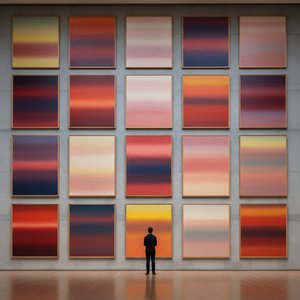
Mark Rothko 25 Parimat Teost: Emotsionaalsed Värvid ja Sügav Sisu | ArtsDot
Avastage Mark Rothko 25 parimat teost! Sukelduge ekspressionismi sügavustesse, emotsionaalsetesse värvimaalid ja kunstniku lugudesse. Leidke täiuslik seinakaunistus ArtsDot.com-ist – kvaliteetsed reproduktsioonid ja interjööride inspiratsioon.

Earthy Hues & Masterpieces: Top 10 Paintings with 'Mushroom' Tones |
Explore 10 iconic paintings with captivating 'mushroom' tones! Discover Van Gogh, Monet & Rembrandt’s masterpieces—earthy palettes, rich history & artistic techniques. Find museum-quality art reproductions and curated decor ideas at

German Expressionism's 10 Defining Masterpieces | Art for Your Home
Explore 10 defining German Expressionism masterpieces – from Munch's 'The Scream' to Kandinsky’s abstracts. Discover the artists, stories & bold colors behind this powerful art movement. Find museum-quality reproductions at ArtsDot.com.

Earthy Hues & Masterpieces: Top 10 Paintings Dominated by Clay Tones |
Explore 10 iconic paintings dominated by rich clay tones – from Rembrandt's warmth to Van Gogh’s earthy landscapes. Discover art history, techniques & find museum-quality reproductions at . Explore the full collection online!

Sandstone & Sunlight: 10 Masterpieces of Earth-Toned Art |
Journey through 10 iconic paintings bathed in 'sand' tones – from Van Gogh to Monet. Explore the stories, techniques & warm palettes of these timeless masterpieces. Find museum-quality art reproductions at and bring classic beauty home.


