


Teos järgib teie valikuid: , .
Kogumisobjekti kirjeldus
Discover "Sandø" by Eilif Peterssen (1894), a serene Norwegian landscape painting in an impressionistic style. Explore its muted colors, soft brushstrokes & connection to nature.
Kunstniku elulugu
Explore the landscapes & portraits of Eilif Peterssen, a Norwegian painter known for realism & impressionism. Discover his Munich school influence & iconic works like ‘Summer Evening.’
 Loe lähemalt
Käsitsi valmistatud õlimaalireproduktsioon
Meie kunstnike poolt tellimusel valmistatud käsitsi maalitud õli-kainaste teos teie soovitud suuruses ja raamis. ( Lülita trükkitoodetele Lülita digitaalse pildi juurde)
Lisateavet selle maali kohta
 Eelvaade
 Saada
Saada Jaga
Jaga
 Teave teose kohta
 Juhend

 Laadi alla
 Sarnased teosed
 Röntgenuuring
 Slaidietendus
 KÜSIMUSED JA VASTUSID
 Statistika
Tellige oma maali neljas lihtsas sammus
Ärge kiirustage. Saate igal hetkel vastuseid muuta; tellimuskarril kuvatav hind muutub vastavalt tehtud valikutele.
1 Esimene samm neljast
Millist suurust soovite?
Need suurused säilitavad originaalteose proportsioonid. Joonis näitab teie valikut seina küljel, kaheMeetise diivani kohal.
Või sisesta oma mõõdud
Vali meie eelmääratud suurused, mis vastavad teose algupärastele proportsioonidele.

Sisestage vajalik laius ja kõrgus, et teos sobiks teie raamile või seinale. Kuna tegu on käsipainatud teosega, siis erineva kujuga suuruse korral võib kunstnik jätta pildi ümber veidi rohkem marginaali või lõigata osa ära — valik on teie. Enne maali alustamist saadame teile kinnitamiseks digitaalse näidisprojektsiooni. Sellel lehel näidatud pilt ei kajasta tegelikku tulemust — seda näitab ainult näidisprojektsioon.
2 Teine samm neljast
Kuidas see peaks valmistatud olema: rullitud, pingutatud või raamitud?
Alljadevad hinnad kehtivad esimeses sammus valitud suuruse kohta.
Vali pingutatud kanga servade stiil
Vali oma raam

Valge serv €1

häguse servaga lõppviimistlus €1

Laiendatud €1

P118B €10

P118H €10

P118W €10

P438Z €10

P508JH €12

P508YH €12

P805H €10

P805Z €10

P919BZ €10

P919G €10

P919XJ €10

P959ZH €10

P968JZ €12

W106C €8

W218G €10

W218JH €8

W218Y €10

W307PJ €10

W316G €10

W316PJ €8

W316Y €10

W398PJ €8

W4111J €10

W500HY €15

W500JH €15

W692G €12

W849H €8

W940BG €15

W953PJ €8

H24-GOLD €30

H24-SILVER €30

H36-GOLD €45

H36-SILVER €45
Raamitud
Kujund: . Kogumõõt koos raamiga: .
3 Kolmandas sammis neljast
Kas soovite maalis midagi muuta?
Enamik inimesi vastab ei. Kuna iga maali on käsitsi valmistatud, saab meie kunstnik seda ka teie soovidega kohandada.
Pärast tellimust saadetab ArtsDot.com meeskond klientile e-posti juhised ning esitab ette tasandatud eelvaate
4 Neljas samm neljast
Mõned lõppviimistlusvõimalused
Kõik need on valimiste korral vabatahtlikud. Juba valitud vastustele ei rakendu täiendav kulu.
Kes selle maalis?
Maailmline tarne 3–4 nädala jooksul tavalise 5 nädala asemel. (6 november). Kvaliteedis kompromisse ei tehta.
Nimetelis, nagu muuseumis?
Graveeritud pronksplaadi üksikasjad
This elegant plaque features the artist's name and the title of the artwork, finely engraved for a timeless presentation.
It is made from bronze with a refined, elegant finish. The text is precisely laser-engraved for a sharp and permanent result. Measuring 9x2 cm, the plaque is compact yet easy to read. It's built to be durable and scratch-resistant, offering a professional, museum-quality look. Mounting is simple thanks to the included adhesive backing.
Läbipaistva akrüülplaadi üksikasjad
The plaque includes essential engraved details such as the artist's name, the title of the artwork, the date it was created, the type of media used-like oil on canvas or watercolor-a brief description of the piece, and a QR code that links to the complete artwork information.
It is crafted from clear acrylic, offering a sleek, modern appearance. The text is UV-engraved in black to ensure strong visual contrast. With a size of 10x15 cm, it ensures optimal readability. It comes equipped with two metal hooks for secure wall mounting. The plaque is designed to be weather-resistant, making it suitable for various environments, and it includes interactive features that work seamlessly with smartphone scanning.
Musta akrüülplaadiรายละเอียด (Note: The user provided "Musta akrüülplaadi detailid" as the current translation and asked for an improved version. Since "Musta akrüülplaadi
This elegant plaque includes engraved information such as the artist's name, the title of the artwork, the date it was created, the type of media used (like oil on canvas or watercolor), a short description of the artwork, and a QR code for quick access to more information.
The plaque itself is made from refined black acrylic with a premium finish. The text is laser-engraved in white for high contrast and readability. Its size is 10x15 cm, designed to be easy to read. It comes with two metal hooks for professional mounting. The design is sleek and fits any interior style. It is also weather-resistant and durable, with built-in digital integration for mobile compatibility.
Kaitsev lakikih?
Millal te seda vajate?
✓ Kontrolli ja telli
Teie maalid vastavalt tellimusele

Sandø
Reproduktsiooni tehnika
Reproduktsiooni suurus
-

Eelistatud tippkunstnik
Rohkem detaile, peenust ja lisatootmisaega
-

Reproduktsiooni raamivalikud
-
-
Kunstiteoste või reproduktsioonide puhul, mille üks külg on üle 105 cm (umbikmolt 41 tolli), saadetakse raam kirjal asendis, la Dismantlitud komplektina. See meetod tagab ohutuse kohaletoimetamisel ja väldib transpordil tekkivaid kahjustusi.
Vajalik professionaalne kokkupanek – see ei ole isetegevusega valmistamiseks mõeldud toode.
Komplekt tuleb kokku panna ja lõvet pingutada kogemusega professionaalse raamija, kasutades puiduliim (ei kuulu komplekti), lõvetpingi ja klempe, et hoida raami kande mustad õigena liimi kuivamisaja jooksul. Vale kokkupanek või ebaühtlane lõvetping võib kunstiteost püsivalt kahjustada ning seda
 Kunstiteoste või reproduktsioonide puhul, mille üks külg on üle 105 cm (umbikmolt 41 tolli), saadetakse raam kirjal asendis, la Dismantlitud komplektina. See meetod tagab ohutuse kohaletoimetamisel ja väldib transpordil tekkivaid kahjustusi.
Kaasatud on kõik tahked puidust liistud, täpselt lõigatud vastavaks suuruseks.
Kokku panemiseks kasutatakse lisatud kruvisid ning nurkade liimamiseks vajalikku puuliima, mida ei ole komplektis ja mida peab raamivalmistaja ise hankima.
Vajalik on kasutada professionaalseid tööriistu, mis ei kuulu komplekti: lõvetelapide pingist (pingutaja) ja klambreid, et hoida raami puidu nurgas õigena liimi kuivamisaja jooksul.
Oluline:
Nurgaliimamiseks on vaja puiduliim, liimimine peab toimuma klempide all kuni liim on täielikult kuivanud ning kokku monteeritud raami kanga pingutamiseks on vajalik kanga pingutustang. Kumbki neist ei kuulu komplekti. Palun veenduge enne selle suuruse tellimist, et teil on saadaval kogenud professionaalne raamistaja.

Nimesildikiri
-
-

Kaitsevärnitsus
Läikiv lakk (muudab värvid elavamaks ning kaitseb valgust ja niiskust eest)
-

Kohanda oma teost
Näiteid muudatuste kohta: Asenda nägu kliendi fotoga; Lisa lemmikloom (nt asenda kass koeraga); Lisa taustale peidetud sõnum; Muuda tausta maastikku või elemente.
-

Kiire tarne
Ülemaailmne tarne riiki 3–4 nädalaga tavalise 5 nädala asemel. (6 november). Kvaliteedis kompromisse ei tehta.
-
Kiirsaatmine
Ülemaailmne tarne () 5 nädala jooksul. (13 november).
Sisse kuuluv
Koguhind
€ 235
Klaasivalik on saadaval ainult kuni 110 cm suuruses teostes
Säli iga tellimusega
- Tasuta ekspresssaatmine üle maailma
- Kõrgekvaliteediline lina-kangas
- Täielik transpordikindlustus
- Tollimaksude tagastamise garantii
- Värvitoime täpsuse garantii
- 100 päeva tagastusõigus (ainult valmistusdefektide korral)
- 100% raha tagasi garantii
- Hulgusoodustus


Sarnased teosed


Eilif Peterssen
1852 - 1928
Kunstniku elulugu
A Legacy of Light and Line: The Life of Eilif Peterssen
In the heart of nineteenth-century Norway, a period defined by a burgeoning national identity and a profound connection to the rugged Nordic landscape, Eilif Peterssen emerged as a transformative force. Born Hjalmar Eilif Emanuel Peterssen in 1852 within the vibrant cultural atmosphere of Christiania, now Oslo, his very lineage was steeped in the artistic traditions of his homeland. From his early years in the district of Frogner, Peterssen demonstrated an innate sensitivity to the world around him, a trait that would later manifest in his ability to capture both the monumental scale of Norwegian nature and the intimate nuances of the human soul. His journey was not merely one of personal growth but a sophisticated odyssey through Europe’s most prestigious art capitals, each stop adding a new layer of complexity to his brushwork.
The foundation of his technical mastery was laid in his native Norway, where he studied at the Johan Fredrik Eckersberg School of Painting. However, the true expansion of his artistic vocabulary occurred as he ventured beyond the borders of his birth nation. His travels through Copenhagen and Germany brought him into contact with the rigorous academic traditions of the Royal Danish Academy of Fine Arts and the innovative spirit of the Weimar Saxon-Grand Ducal Art School in Karlsruhe. It was during these formative years that Peterssen began to move away from strict realism, absorbing the experimental energies of his contemporaries. His time in Munich proved particularly transformative; under the guidance of masters like Wilhelm von Diez and Franz von Lenbach, he embraced the bold, expressive color palettes and plein air techniques characteristic of the Munich School, a movement that would forever alter his approach to light and atmosphere.
The Mastery of Portraiture and Landscape
Peterssen’s oeuvre is a breathtaking duality of subject matter, oscillating between the grandiosity of historical narrative and the quiet intimacy of portraiture. He gained early acclaim with his powerful history painting, Christian II signing the Death Warrant of Torben Oxe, a work that showcased his ability to command dramatic tension and historical weight. Yet, it was in the realm of portraiture that he truly established himself as one of Norway's most revered chroniclers of character. His portraits were more than mere likenesses; they were psychological studies that captured the essence of the era's most influential figures. Through his brush, the contemplative moods of legendary composer Edvard Grieg and the intellectual depth of playwright Henrik Ibsen were rendered with a profound, lifelike dignity.
Parallel to his success in portraiture was his deep, spiritual connection to the Norwegian landscape. As a prominent figure within the circle of the Skagen Painters, Peterssen sought to capture the ephemeral qualities of light as it danced across the Nordic terrain. His landscapes are characterized by an Impressionistic sensibility, where the boundaries between earth and sky often blur into a cohesive, atmospheric whole. Whether depicting the serene stillness of Sevilosen or the evocative, muted tones of The Salmon Fisher, his work evokes a sense of solitude and reverence for the natural world. His ability to translate the rugged textures of Norway into soft, luminous compositions allowed him to become a pioneer of Norwegian Landscape Impressionism.
A Lasting Contribution to National Identity
Beyond the canvas, Eilif Peterssen’s influence extended into the very fabric of Norwegian national symbolism. In 1905, a year of immense political significance for Norway, he was tasked with designing the nation's new coat of arms. His creation, featuring the iconic Norwegian lion, became a permanent fixture of the state's identity, used by both the government and the royal house to this day. This achievement underscores his role not just as an observer of culture, but as an active participant in the construction of a national aesthetic.
The significance of Peterssen’s career lies in his ability to bridge the gap between traditional academic realism and the modern, emotive impulses of Impressionism. His life's work serves as a vital link in the evolution of Nordic art, reflecting a period of intense transition and creative flowering. To look upon a Peterssen painting is to witness a master navigating the delicate balance between the tangible reality of the physical world and the intangible beauty of light and emotion. His legacy remains etched in the landscapes he loved and the faces he immortalized, standing as a testament to the enduring power of the Norwegian spirit.
Sarnased artiklid

Impressionistic Landscapes: 10 Masterpieces That Changed Art & Decor
Journey into the heart of Impressionism! Explore 10 masterpieces by Monet, Renoir & Degas that revolutionized landscape art. Discover their stories, techniques & find museum-quality reproductions to elevate your home decor on ArtsDot.com.

Romantilise Maastikukunsti 10 Meisterteost: Kunstiteosed Koduks ArtsDot.com'ist
Avastage 10 romantilise maastikukunsti meistriteost! Tutvuge Caspar David Friedrichi, J.M.W. Turneri ja teiste suurte kunstnike loominguga ArtsDot.com-is. Leidke täiuslik õlimaal või reproduktsioon koduks – inspireeriv kollektsioon ootab!
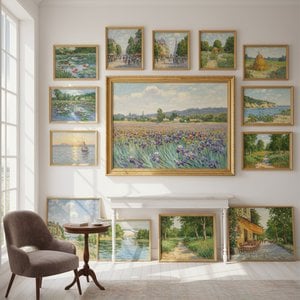
Impressionistliku Maastiku Tipp 10 Meisterteost: Kunsti ja Disaini Klassika
Avasta impressionistliku maastikukunstiga 10 legendaarset meistriteost! Monet, Renoir jt. värvilised maailmad ja kunstnike lood – ArtsDot.com pakub kaunite kunstide ajaloo klassikat seinakaunistuseks. Uuri kollektsiooni!