


 Jaga teost
 Jaga
Jaga
 Detailid
 Juhend

 Laadi alla
 Sarnased teosed
 Slaidietendus
 Statistika
Bearded Prophet (detail)


 Loe lähemalt
Giclée / Kunstiprint
Muuseumikvaliteediga giclée- või kangasprint kiire tootmisega ja paindlikud viimistlusvõimalused. ( Telli käsitsi maalitud reproduktsioon Ülemineku digitaalse pildi müügi kanalisse)




































Vali meie eelmääratud suurused, mis vastavad teose algupärastele proportsioonidele.

Saate sisestada oma mõõdud, et need sobiks konkreetse raami või ruumi sisse. Kui valitud suurus ei vasta originaalteose proportsioonidele, lõigame teose ära või laiendame pilti peegeldatud või ühtlase servaga. Enne tootmisprotsessi algust saadetakse Teie kinnitamiseks digitaalne näidis.
Palun märka, et ekraanil kuvatav eelvaade ei kajasta tegelikku lõigamist või laiendamist. Ainult näidis kujutab täpselt lõplikku kompositsiooni.
Kuigi erimõõdu on saadaval, soovitame originaaproportsioonide säilitamiseks valida mõõt ette määratud nimekirjast.
Ülemaailmne tarne () 2 nädala jooksul, tavalise 4/5 nädala asemel. (22 september)

Tasuta ekspresssaatmine üle maailma

Kõrgekvaliteediline lina-kangastest muld

Täielik transpordikindlustus

Tollimaksude tagastamise garantii

Värvitoime täpsuse garantii

100 päeva tagastusõigus (ainult defektide korral)

100% raha tagasi garantii

Hulgusoodustus
 Klaasivalik on saadaval ainult kuni 110 cm suuruses teostes

Bearded Prophet (detail)
Giclée / Kunstiprint
Reproduktsiooni mõõtmed
-


Lõppsumma
$ 62
The Silent Prophet: Donatello’s Bearded Messenger
Donatello's "Bearded Prophet" – often referred to as “Pensieroso,” meaning “the Thinker” – stands not merely as a sculpture, but as a profound meditation on humanity’s relationship with the divine and the weight of existence. Crafted in gleaming white marble between 1418 and 1420 during the nascent years of the Florentine Renaissance, this remarkable piece transcends its material form to embody an era's burgeoning spirit of individualism and intellectual inquiry. It resides today within the Museo dell’Opera del Duomo in Florence, a testament to Donatello’s enduring legacy as one of the movement’s most revolutionary figures.
The sculpture depicts a figure caught in a moment of intense introspection – a man seemingly lost in contemplation, his gaze fixed on some distant horizon. He is not engaged in action or proclaiming a message; instead, he embodies a quiet dignity and profound melancholy. Donatello masterfully captures this stillness through the subtle curve of the spine, the downturned mouth hinting at sorrow, and the closed eyes that suggest an absorption within the depths of his own thoughts. This wasn’t simply a portrait of a man; it was a representation of the human condition itself – grappling with questions of faith, mortality, and purpose.
A Renaissance Revival: Style and Technique
Donatello's "Bearded Prophet" represents a pivotal shift in sculptural style. Moving away from the stylized elegance of the International Gothic tradition that dominated Florence at the time, Donatello embraced the principles of classical antiquity – particularly those of Greek sculpture. He sought to achieve a greater sense of realism and naturalism, evident in the meticulously rendered details of the figure’s face, hands, and clothing. The drapery is not merely decorative; it flows realistically around the body, revealing subtle musculature and creating a dynamic interplay of light and shadow.
The sculpture's technique is equally noteworthy. Donatello employed a “basso rilievo,” or low relief, which means that the figures are sculpted slightly away from the background plane. This creates an illusion of depth and volume, drawing the viewer into the scene. The use of white marble itself was deliberate; its purity and luminosity enhance the figure’s solemnity and spiritual quality. Donatello's mastery of carving is evident in the incredibly fine detail of the beard – each strand meticulously sculpted to convey texture and weight.
Symbolism and Context: A Prophet for His Time
The identity of the prophet depicted remains deliberately ambiguous, adding to the sculpture’s universal appeal. He could represent any figure from the Bible, or indeed, any individual grappling with profound questions of faith and morality. However, many scholars believe he embodies a contemporary Florentine ideal – a man of intellect and virtue striving for spiritual enlightenment. The scroll held in his hand is a potent symbol of wisdom and divine revelation.
Created during a period of intense political and social upheaval in Florence, the sculpture reflects the city’s growing interest in humanism and its rediscovery of classical learning. The Medici family, powerful patrons of the arts, commissioned the work, recognizing its potential to embody the values of civic virtue and intellectual pursuit. The placement of the sculpture within the Duomo's campanile – a prominent landmark overlooking Florence – further emphasized its significance as a symbol of the city’s aspirations.
Emotional Resonance: A Timeless Reflection
Despite being over six centuries old, Donatello’s “Bearded Prophet” continues to resonate deeply with viewers today. Its quiet intensity and profound sense of melancholy evoke a powerful emotional response – a recognition of our shared humanity and the enduring mysteries of existence. The sculpture invites us to contemplate our own place in the world, to grapple with our own questions of faith and purpose, and to find solace in the beauty and dignity of the human spirit.
Reproductions of this iconic work offer an exceptional opportunity to bring its timeless message into any setting, serving as a focal point for contemplation and conversation. Its subtle power and enduring appeal make it a treasured addition to both private collections and public spaces alike.
Sarnased teosed


Kunstniku elulugu
varaj varaj ja karjäär
Donato di Niccolò di Betto Bardi, tuntud maailmas kui Donatello, sündis umbes aastal 1386 Italias, Florentis. Tema õpingud klassikalises skulptuuris avaldas sügavat mõju tema varajase renessansstiili arengule, luues uue suuna kunstile ja kultuurile, mis sai hiljem kogu florentlase renessanssi üks peamisi sümboleid.olulised teosed ja uuendused
Donatello kõige kuulsam teos, David, oli pärast antiigi aegu esimene iseseisva, alast meises skulptuur. Medici perekonna tellimusena ilmus see teos, demonstreerides tema innovatiivset stiili ja tehnilist meistriklassi. Teisi märkimisväärseid teoseid on:- Püha Louis Toulouse'ist (praegu Santa Crocen basilica muuseumis), mis sisaldas Donatello enda poolt loodud klassikalist raami.
- Isaaki ohverdamine, mis loodi Florentis Santa Maria del Fiore campanile jaoks, iseloomustades tugevaid portreemaisia detaile.
- Ristiloom (1425) Santa Crocelle, mis kujutas Kristust vaevatud hetkel.
kunstiline stiil ja pärand
Donatello stiili võib jagada laadeks, alates ekspressiivsuse ja klassikalise monumentaalsuse arendamisest. Kuigi tema tööde eest ei võetud kogukond kohe vastu, sai ta lõpuks üks populaarsemaid kunstnereid, mõjutades nii teisi itaalseid õukondi kui ka kogu Euroopa kunstnikke. peamised kunstiliikumid:isiklik elu ja tööstiil
Donatello oli tuntud oma sõbralikkuse ja meeldivuse poolest, kuid tema karjääri äriosa oli keeruline. Ta tenditesid võtma vastu rohkem tellimusi, kui suutsid teostada, lõpetades töud sageli hiljaks või delegeerides need teistele skulptureйдеle. olulised teosed ja kunstnikud:- Leonardo da Vinci: Annunciation (detail)
- Amico Aspertini: Pan statue/leone che azzanna un cavallo
- Michelangelo Buonarroti: Tondo Pitt
muuseumid ja kunstikolektsioonid:
- Museo della Collegiata (Empoli, Itaalia): renessanssi peidetud pärl, mis esitleb Francesco Botticini ja Raffaello Botticini teoseid.
- Varajase itaalse renessanssi kunstiliikumine

Donatello
1386 - 1466 , Italia
Lühikest infot
- Artistic Movement Or Style: Vararenessanss
- Artists Or Movements Influenced By This Artist:
- Itaalia renessanss
- Vararenessanss
- फ्लोरेंटine renessanss
- Artists Who Influenced This Artist: ['Klassiline skulptuur']
- Date Of Birth: u 1386
- Date Of Death: 1466
- Full Name: Donatello di Niccolò
- Nationality: Itaalia
- Notable Artworks:
- David
- Saint Louis of Toulouse
- Iisaaki ohverdamine
- Ristiloomine
- Place Of Birth: Firenze, Itaalia
Sarnased artiklid

The Enduring Form: Sculpture Across History, Technique & Emotional Resonance
Explore the rich history of sculpture with ArtsDot. Discover key techniques, influential artists & investment potential for discerning collectors. Expert insights into valuing and collecting timeless masterpieces.

Bronze Age to Modern Masters: 10 Sculptures That Redefined Art | ArtsDot
Journey through art history with 10 legendary bronze sculptures – from Michelangelo's David to Rodin’s Thinker. Explore the stories, techniques & timeless beauty of these masterpieces. Find museum-quality reproductions & elevate your home decor on ArtsDot.com.

The Enduring Form: Exploring Themes & Techniques in Sculpture Across Historical Periods
Explore the rich history of sculpture from ancient masterpieces to contemporary innovations. Discover key techniques, influential artists & investment potential for discerning art collectors.

Bronze Sculptures That Defined Art History | ArtsDot
Journey through art history with our Top 10 bronze sculptures! Explore masterpieces by Rodin, Michelangelo & more. Discover stories behind iconic statues and find museum-quality reproductions for your home decor at ArtsDot.com.
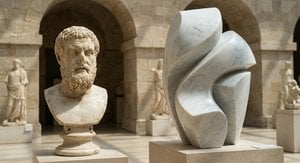
The Enduring Allure of Marble in Art History: From Classical Sculpture to Modern Abstraction
Explore the captivating history of marble sculpture from ancient Greece to modern art. Discover renowned artists like Canova & Michelangelo, carving techniques, and investment insights at ArtsDot.