


 Vaata sisu
 Jaga teost
 Jaga
Jaga
 Detailid
 Õppekate juhend

 Laadi alla
 Sarnased teosed
 Röntgenuuring
 Slaidietendus
 Statistika
untitled (4374)

 Loe lähemalt
Käsitsi valmistatud õlimaalireproduktsioon
Meie kunstnike poolt tellimusel valmistatud käsitsi maalitud õli-kainaste teos teie soovitud suuruses ja raamis. ( Lülita trükkitoodetele Ülemineku digitaalse pildi müügi kanalisse)




P118B €10

P118H €10

P118W €10

P438Z €10

P508JH €12

P508YH €12

P805H €10

P805Z €10

P919BZ €10

P919G €10

P919XJ €10

P959ZH €10

P968JZ €12

W106C €8

W218G €10

W218JH €8

W218Y €10

W307PJ €10

W316G €10

W316PJ €8

W316Y €10

W398PJ €8

W4111J €10

W500HY €15

W500JH €15

W692G €12

W849H €8

W940BG €15

W953PJ €8




Vali meie eelmääratud suurused, mis vastavad teose algupärastele proportsioonidele.

Sisestage vajalik laius ja kõrgus, et teos sobiks teie raamile või seinale. Kuna tegu on käsipainatud teosega, siis erineva kujuga suuruse korral võib kunstnik jätta pildi ümber veidi rohkem marginaali või lõigata osa ära — valik on teie. Enne maali alustamist saadame teile kinnitamiseks digitaalse näidisprojektsiooni. Sellel lehel näidatud pilt ei kajasta tegelikku tulemust — seda näitab ainult näidisprojekttsioon.
Pärast tellimust saadab ArtsDot.com meeskond kliendile e-posti juhised ning esitab eelvaate kavandi
Maailmline tarne 3–4 nädala jooksul tavalise 5 nädala asemel. (25 oktoober). Kvaliteedis kompromisse ei tehta.

Tasuta ekspresssaatmine üle maailma

Kõrgekvaliteediline lina-kangastest muld

Täielik transpordikindlustus

Tollimaksude tagastamise garantii

Värvitoime täpsuse garantii

100 päeva tagastusõigus (ainult defektide korral)

100% raha tagasi garantii

Hulgusoodustus
 Klaasivalik on saadaval ainult kuni 110 cm suuruses teostes

untitled (4374)
Reproduktsiooni materjal
Reproduktsiooni mõõtmed
-


Lõppsumma
€ 231
A Moment Captured: Monet’s Evocative Landscape
Claude Monet's "untitled (4374)," though shrouded in the mystery of its exact provenance and date, offers an immediate and deeply resonant experience – a glimpse into the heart of Impressionist philosophy. This landscape, dominated by a serene field punctuated by scattered cows and the comforting presence of hay bales, isn’t merely a depiction of rural France; it's a carefully constructed meditation on light, atmosphere, and the fleeting beauty of everyday life. The scene unfolds with an almost palpable sense of tranquility, inviting the viewer to step into this quiet corner of Normandy and lose themselves in its gentle rhythms.
Monet’s signature technique is immediately apparent. He eschews sharp lines and precise detail in favor of a broken brushstroke approach – a deliberate scattering of color that captures the shimmering quality of light on water, grass, and hay. Notice how he doesn't attempt to render the individual blades of grass; instead, he builds up layers of green, yellow, and blue, creating an impression of movement and vibrancy. This technique, honed through his pioneering work with Eugène Boudin, exemplifies *plein air* painting – working directly from nature, a revolutionary concept at the time that prioritized capturing the immediate sensory experience over meticulous representation.
The Language of Light: Impressionism in Action
Monet’s fascination with light is central to understanding his work. He wasn't interested in portraying a static scene; he sought to capture the *impression* of a moment, the way light transforms everything it touches. The painting’s palette – dominated by soft blues, greens, and yellows – reflects this obsession. Observe how the sunlight seems to bounce off the hay bales, creating halos of color that dissolve into the hazy distance. This deliberate blurring of edges and forms is characteristic of Impressionism, a movement that rejected academic conventions in favor of subjective perception. The artist isn’t simply painting what he *sees*; he's conveying what he *feels* – the warmth of the sun on his skin, the scent of hay in the air, the quiet contentment of a rural afternoon.
The inclusion of the figures—a solitary observer near the center—adds another layer of intrigue. While their identity remains unknown, they serve as anchors within this expansive landscape, prompting us to consider our own relationship with nature and the act of observation itself. Are they contemplating the scene? Perhaps tending to the hay? Their presence subtly elevates the painting beyond a simple depiction of rural life, suggesting a deeper connection between humanity and the natural world.
Historical Context & Symbolism
Created during Monet’s most prolific period – roughly from 1874 to 1890 – this work aligns perfectly with the core tenets of Impressionism. The movement emerged in response to the rigid academic standards of the Salon, challenging established notions of beauty and representation. Monet, along with fellow artists like Renoir and Pissarro, sought to capture the fleeting effects of light and atmosphere, often painting outdoors to directly observe their subjects. The rural setting itself carries symbolic weight; it represents a retreat from the increasingly industrialized and urbanized world of 19th-century France – a longing for simplicity and connection with nature that resonated deeply with many at the time.
A Timeless Resonance: Reproduction & Beyond
"untitled (4374)" speaks to a fundamental human desire: the appreciation of beauty in the commonplace. ArtsDot offers meticulously crafted, hand-painted reproductions that faithfully capture Monet’s delicate brushwork and luminous palette. These aren't simply prints; they are faithful recreations, imbued with the same spirit of observation and emotion as the original. Whether adorning a contemporary living space or serving as a cherished addition to an art collection, this reproduction provides a tangible connection to one of Impressionism’s most beloved masters – a reminder that even in the simplest landscapes, profound beauty can be found.
Küsimused ja vastused
Milline on teose „untitled (4374)“, autor Claude Monet värvitoon intensiivsus?
Teose „untitled (4374)“, autor Claude Monet värvid on Balanced intensiivsusega.
Kuidas ma saan alla laadida teose „untitled (4374)“, autor Claude Monet pildi?
Teose „untitled (4374)“, autor Claude Monet tehes digitaalset pilti saab alla laadida selle Laadi alla lehelt vormatsis kõrge resolutsiooniga digitaalse pildi allalaadimine.
Mis tüüpi teos on „untitled (4374)“, autor Claude Monet?
"untitled (4374)" on WallArt teos.
Sarnased teosed


Kunstniku elulugu
Valgusest Üleandev Elu: Claude Monet Maailm
Oscar-Claude Monet, nimi, mis on sünkronneeritud impressionismiga, ei olnud pelgalt maastikumaalija; ta oli hävetavate hetkede kroonik, valguse ja värvi poet. Sündinud Pariisis 14. novembril 1840, võttis tema varane elu ootamatut suunda, kui tema pere kolis viieaastaselt Normandiasse, Le Havre’i. Kuigi isa lootis algselt poja suunduvat ärikarjäärile, tõusel noore Claude loomulik kunstiline talent kiiresti üles, välendudes esialgselt kohalikult müüdavate südamlikute südametutega füüsiliste karikatuuride näol – see oli tunnistus nii tema oskustest kui ka ettevõtlusvaimust. Siiski oli just kohtumine Eugène Boudiniga otsustav hetk. Boudin ei õpetanud Monetile lihtsalt seda, *kuud* maalida; ta sisemaas talle revolutsioonilise idee maalistamast en plein air – otse loodusest – praktikat, mis määras tema kogu kunstilist teekonda.
Moneti ametlik õpe algas Pariisis, esmalt lühikese aja Académie Suisse'is ja hiljem Charles Gleyre juhendamisel. Just siin sõlmis ta püsivaid sõprussuhteid teiste kunstnikega, nagu Auguste Renoir, luues sideme, mis põhines ühistel kunstilistel muredel ja soovil vabaneda traditsioonilise akadeemilise maali piirangutest. Tema varased teosed, kuigi näitasid tehnilist oskust, puudusid sellest eristavast häälest, mis peagi tema stiili iseloomustaks. Järgnes turbulente aega – Prantsus-Prantsia sõda sundis Monetit otsima peitu Londonist, kus ta süvenes inglise maastikukunstnike, nagu J.M.W. Turner, tööde uurimisele, imeldes nende atmosfäärilisi efekte ja värvi innovaatilist kasutamist.
Esteetilise revolutsiooni sünn\",\"p
Pärast Prantsusmaale naasmist sai Monet keskseks figuuriks kasvavas kunstilises rebelluses. Erinevalt konservatiivsetest standardidest Salonis, ühendas ta jõudud teiste sarnaste vaadanetega kunstnikud, et korraldada iseseisvaid näitusi. Näitus 1974. aastal tõuus esile murdepunktina mitte ainult Monetile, vaid kogu kunstimaailmale. Just siin eksponeeriti tema teost „Impression, soleil levant“ (Mulhet, tõuslev päike) – hämarat kujutlust Le Havre’i sadamast koit\", ning sellest sündis ka halvatud termin "impressionism". Kuid nimi juurdus ja arenes auastuseks liikumisele, mis püüdis tabada stseenist subjektiivset *muljet* rather than selle täpset esitamist.
Moneti iseloomulik stiil õitsines selle perioodi jooksul: lahtised, nähtavad pintooned, vibrantne ja sageli segamatu värv, mida rakendati külmikülgedele (tehnika tuntud kui „murdetud värv“) ning vankumatu keskendumine valguse ajutuste omaduste tabamisele. Ta jälgi väsimatult oma plein air praktikat, töötades kiiresti, et ülesvõtta oma vahetud tajumised enne kui muutuva olukord stseenit muutaks. See pühendumus ei olnud pelgalt selle kirjeldamine, mida ta *nägi*, vaid pigem selle, kuidas ta seda *tundis* – radikaalne kõrvalekaldumine kunstilistest konventsioonidest.
Giverny: Valguse ja peegelduste paradies
1883. aastal asustas Monet Pariisi loodvestas Givernys, raamatupaduna lootes luua kodu ja aia, mis saaks olla nii tema varjupaik kui ka suurim inspiratsiooniallikas. Ta transformaeritud kinnistus põhjalikult elaboraatseks paradisaks, täidetud eksootiliste lillede, nutrade ja kõige kuulsama veepudiga, mida sildas Jaapani sild. See ei olnud pelgalt dekoratiivne aed; see oli elav laboratoorium, kus Monet sai kontrollitud tingimustes uurida valguse mõju veele, lehtedele ja peegeldustele.
udTema elu viimased aastakümed olid peaaegu täielikult pühendatud Givernys asuva veepudaga maaliamisele. Ta alustas monumentaalset veepudide sarja (Nymphéas), luues hiiglaslikke linate, mis kujutasid veepudingu pindast pidevalt muutuvana värvide ja valguse kanga.
Pärand: Püsiv mõju kunstiloojale
Claude Moneti mõjul kunstiloojale on mõõdamatu. Ta ei olnud pelgalt impressionismi asutaja; ta muuts fundamentaalselt viisi, kuidas kunstnikud tajusid ja esitasid enda ümber olevat maailma. Tema rõhuasetus subjektiivsele kogemusele, plein air maaliarmastus ja innovatiivsed tehnikad tegid teed kaasaegse kunsti avastustele abstraksioonide ja mitte-esitavate vormide suunas.
Monet saavutas oma elu jooksul märkimisväärset kommersialist edu – see on oma ajastu avantgardistide puhul haruldane. Tema töö inspireerib edasi hämmasti ja võlustab publikut üle maailma, kinnitades tema positsiooni ühe olulisema West-Euroopa kunsti kujutajana. Ta surmas 5. detsembril 1926, jättes järele pärandi, mis kõlab läbi põlvkonnade kunstnike ja kunstihuviliste. Tema meistriteoste olulised kogumikud on säilitatud prestiižsetes institutsioonides nagu Musée d'Orsay ja Musée Marmottan Monet Pariisis, tagades, et tema visioon jätkab maailma valgustamist.
Olulised kunstilised tehnikad
- Plein Air maaliarmastus: Tema arengu keskne element, mis võimaldas otsest valguse ja atmosfääri jälgimist.
- Murdetud värv: Puhtade värvitoonide väikeste tõlgenduste rakendamine külmikülgedele optilise segunemise saavutamiseks.
- Sarjamaalimine: Sama teema kujutamine erinevates valgus- ja ilmastikuoludes – demonstreerides aja ja valguse transformatiivset jõudu.

Claude Monet
1840 - 1926 , Prantsusmaa
Lühikest infot
- Artistic Movement Or Style: Impressionism
- Artists Or Movements Influenced By This Artist: ['Modern Art']
- Artists Who Influenced This Artist:
- Eugène Boudin
- J.M.W. Turner
- Date Of Birth: 14. november 1840
- Date Of Death: 5. detsember 1926
- Full Name: Claude Monet
- Nationality: Prantsuse
- Notable Artworks:
- Impressioon, Tõusev päike
- Veilised
- Rukikuhilad
- Roueni katedraal
- Place Of Birth: Pariis, Prantsusmaa
Sarnased artiklid

Claude Monet: 25 Meisterteost Valgusest ja Värvidest | ArtsDot.com
Avastage Claude Monet 25 kõige ikoonilisemat teost! Sukelduge valgusest ja värvidest tulvil impressionismi maailma. Kunstiteosed, maalid ja seinakaunistused ArtsDot.com-is. Avasta täielik kollektsioon online!
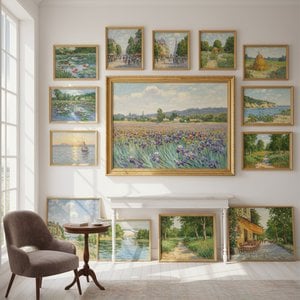
Impressionistliku Maastiku Tipp 10 Meisterteost: Kunsti ja Disaini Klassika
Avasta impressionistliku maastikukunstiga 10 legendaarset meistriteost! Monet, Renoir jt. värvilised maailmad ja kunstnike lood – ArtsDot.com pakub kaunite kunstide ajaloo klassikat seinakaunistuseks. Uuri kollektsiooni!

John Constable: 25 Suurimat Teost Inglise Maastikumaali Tippu
Avastage John Constable'i 25 suurimat teost! Sukeldu inglise maastikumaali romantismisse, imetlege Dedham Vale ilu ja leia inspiratsiooni kodukaunistuseks. Kvaliteetsed kunstireprodutsioonid ArtsDot.com-is. Vaata kohe!

Impressionistic Landscapes: 10 Masterpieces That Changed Art & Decor
Journey into the heart of Impressionism! Explore 10 masterpieces by Monet, Renoir & Degas that revolutionized landscape art. Discover their stories, techniques & find museum-quality reproductions to elevate your home decor on ArtsDot.com.

Impressionism's Masterpieces: 10 Paintings That Defined a Movement | ArtsDot
Journey through Impressionism's heart with 10 iconic paintings by Monet, Renoir & Degas. Explore light, color & the stories behind these masterpieces. Find museum-quality art reproductions and elevate your home decor on ArtsDot.com.


