


 Vaata sisu
 Jaga teost
 Jaga
Jaga
 Detailid
 Õppekate juhend

 Laadi alla
 Sarnased teosed
 Röntgenuuring
 Slaidietendus
 Statistika
Polygon
 Geometric Abstraction
 1938
1938- Modern
 44.0 x 45.0 cm
 McNay Art Museum
 Loe lähemalt
Sellel lehel kuvatav kunstiteos on kaitstud autoriõigusega, mis tähendab, et meil ei ole seaduslikku õigust luua või müüa identset reproduktsiooni. Seda kaitset rakendatakse rahvusvaheliste kokkulepete alusel, nagu näiteks Berne konventsioon ning riiklike seadustega, sealhulgas nendega, mida on sätestatud USA autoriõiguse seadus – 17. peatükk.
Austasena ja seaduslikuna alternatiivina pakume originaalist inspireeritud, käsitsi maalitud isikupärastatud teoseid. Meie osutavad ja professionalsed kunstnikud uurivad hoolikalt originaali stiili, meelemoi ja kunstilist olemust, et luua uus, ainulaadne teos, mis tekitab sama tunnet – olles samal ajal omaette originaalne looming.
See meetod järgib täielikult autoriõiguse reegleid, kuna see ei põhine kaitstud kunstiteose kopeerimisel või dupliteerimisel. Selle asemel on tegu loova reinterpreetatsiooniga – uue maaldisega, mis on algteosest inspireeritud, kuid ei ole sellest identiline.
Käsitsi valmistatud õlimaalireproduktsioon
Meie kunstnike poolt tellimusel valmistatud käsitsi maalitud õli-kainaste teos teie soovitud suuruses ja raamis. ( Lülita trükkitoodetele Ülemineku digitaalse pildi müügi kanalisse)




































Vali meie eelmääratud suurused, mis vastavad teose algupärastele proportsioonidele.

Sisestage vajalik laius ja kõrgus, et teos sobiks teie raamile või seinale. Kuna tegu on käsipainatud teosega, siis erineva kujuga suuruse korral võib kunstnik jätta pildi ümber veidi rohkem marginaali või lõigata osa ära — valik on teie. Enne maali alustamist saadame teile kinnitamiseks digitaalse näidisprojektsiooni. Sellel lehel näidatud pilt ei kajasta tegelikku tulemust — seda näitab ainult näidisprojekttsioon.
Pärast tellimust saadab ArtsDot.com meeskond kliendile e-posti juhised ning esitab eelvaate kavandi
Maailmline tarne 3–4 nädala jooksul tavalise 5 nädala asemel. (21 oktoober). Kvaliteedis kompromisse ei tehta.

Tasuta ekspresssaatmine üle maailma

Kõrgekvaliteediline lina-kangastest muld

Täielik transpordikindlustus

Tollimaksude tagastamise garantii

Värvitoime täpsuse garantii

100 päeva tagastusõigus (ainult defektide korral)

100% raha tagasi garantii

Hulgusoodustus
 Klaasivalik on saadaval ainult kuni 110 cm suuruses teostes

Polygon
Reproduktsiooni materjal
Reproduktsiooni mõõtmed
-


Lõppsumma
€ 230
The Geometry of Silence: A Study in Abstract Form
In the quiet, contemplative realm of geometric abstraction, Charles Shaw’s Polygon stands as a profound testament to the power of simplified form. Created in 1938, this evocative piece invites the viewer into a world where the chaos of the external universe is distilled into a rhythmic arrangement of shapes. The composition is anchored by a deliberate interplay between triangles and circles, set against a textured backdrop that suggests the organic warmth of wood. While the original visual experience may be captured in monochrome, the structural integrity of the work remains unshakable, offering a masterclass in balance and spatial tension. Each element—from the primary geometric anchors to the smaller, scattered circular motifs—functions as a note in a silent, visual symphony, guiding the eye through a carefully choreographed dance of light and shadow.
The technique employed by Shaw reflects his deep-seated transition from the literary observations of the Jazz Age to the disciplined rigor of American abstraction. In Polygon, we see the influence of his training at the Art Students League, where the precision of line meets a painterly sensitivity to texture. The way the shapes interact with the underlying surface creates a sense of depth that transcends the two-dimensional plane; it is as if the geometry is not merely painted onto the canvas, but emerging from within the very grain of the medium itself. This fusion of mathematical precision and organic texture provides a tactile quality that makes the work feel both intellectually structured and emotionally grounded.
A Legacy of Modernist Vision
To understand Polygon is to understand the evolution of American Modernism. As a pioneer who moved from the social satires of New York’s literary circles toward the pure exploration of shape, Shaw brought a unique poetic sensibility to his abstract works. This piece, dating from the late 1930s, captures a moment in art history when artists were seeking a new language to express the complexities of a changing world—a language stripped of narrative clutter and focused on the essential truths of form and proportion. For the collector or the interior designer, this work offers more than mere decoration; it provides a sophisticated focal point that embodies the intellectual elegance of the pre-war era.
Integrating a high-quality reproduction of Polygon into a contemporary space allows for a seamless blend of historical depth and modern aesthetic. Its minimalist composition makes it an ideal companion for mid-century modern interiors, industrial lofts, or even highly curated minimalist galleries. The piece possesses a rare ability to command attention through its subtle complexity, acting as a meditative anchor in any room. Whether viewed as a study in mathematical harmony or as an emotional exploration of space, Shaw’s Polygon remains a timeless masterpiece, offering an enduring sense of calm and structural beauty to those who appreciate the profound impact of the abstract.
Küsimused ja vastused
Kas teos „Polygon“, autor Charles Shaw sobib kingituseks ja kellele?
"Polygon" on soovituslik kingitus Corporate Gift, silmamiljule lugades Geometry.
Kui eraldavad teose "Polygon" värvid?
Teose „Polygon“, autor Charles Shaw värvitoit on Subtle Color kütkusega ja Balanced intensiivsusega.
Kas saan teose "Polygon" näha täiskuunil slideshowina?
Saadaval on diavorama: „Polygon“, autor Charles Shaw teose Slideshow leht.
Sarnased teosed


Kunstniku elulugu
The Architect of Abstraction: The Life and Vision of Charles Green Shaw
In the vibrant, pulse-quickening atmosphere of 1920s New York, where the jazz age roared through smoky cafés and theatrical halls, a unique creative spirit began to emerge. Charles Green Shaw was not merely an observer of this era but a chronicler of its wit and social complexity. Before he became a titan of American geometric abstraction, Shaw established himself as a sharp-witted writer and illustrator, lending his pen to prestigious publications such as The New Yorker, Vanity Fair, and Smart Set. His early literary career allowed him to navigate the intellectual currents of Manhattan, documenting the theatrical world with a precision that would later translate into his meticulous approach to canvas and form.
While his initial inclinations were rooted in the written word and the social satire of the urban landscape, a profound artistic metamorphosis was simmering beneath the surface. His formal training at the Art Students League, particularly under the guidance of Thomas Hart Benton in 1927, provided the structural discipline necessary to transition from prose to paint. This period of study, supplemented by private lessons with the legendary George Luks, instilled in Shaw a deep respect for observation and the fundamental mechanics of composition. Yet, it was his transformative journey through Europe between 1930 and 1933 that would forever alter his artistic trajectory.
A Journey Through Form and Geometry
Traveling through Italy, France, and Spain, Shaw encountered the burgeoning movements of Modernism that were reshaping the global art landscape. The influence of Piet Mondrian and Josef Albers became palpable in his evolving technique, as he moved away from representational narratives toward a profound exploration of geometric abstraction. He began to embrace a language of polygons and intersecting planes, creating small, meticulously crafted works that possessed an almost architectural weight. These canvases often seemed to echo the soaring, structural grandeur of the New York skyscrapers he knew so well, distilling the chaotic energy of the metropolis into a rhythmic, balanced arrangement of shapes.
This period marked the birth of his most celebrated stylistic contributions, where the boundaries between organic life and mathematical precision began to blur. His work often navigated the delicate space between Concretionism and a more biomorphic abstraction, a tension that gave his paintings a breathing, vital quality despite their rigid geometric foundations. Through his mastery of color and form, Shaw achieved a sense of "plasticity" within the polygon, making each shape feel as though it possessed its own internal volume and light.
Legacy and the Geometry of Silence
As his career progressed into the mid-20th century, Shaw’s work became a cornerstone of the American Abstract Artists movement. His ability to synthesize the structural rigor of the Bauhaus with a uniquely American sensibility ensured his place in the pantheon of modern masters. His paintings, characterized by their contemplative depth and rhythmic precision, found permanent homes in the world's most esteemed institutions, including:
- The Metropolitan Museum of Art
- The Museum of Modern Art (MoMA)
- The Smithsonian American Art Museum
- The Whitney Museum of American Art
- The Art Institute of Chicago
Beyond the technical brilliance of his 'Plastic Polygon' series, Shaw’s historical significance lies in his role as a bridge between the social realism of his contemporaries and the pure abstraction that would define much of post-war art. He transformed the visual noise of the modern age into a "geometry of silence," inviting viewers to find peace within the structured interplay of triangles, circles, and light. Today, Charles Green Shaw remains a pivotal figure whose work continues to resonate as a testament to the power of distilled form and the enduring beauty of the abstract intellect.

Charles Shaw
1892 - 1974
Lühikest infot
- Full Name: Charles Green Shaw
- Nationality: American
- Date Of Birth: 1892
- Date Of Death: 1974
- Notable Artworks:
- Plastic Polygon
- Space Curve
- Artistic Movement Or Style: Geometric Abstraction, Concretionism
- Artists Who Influenced This Artist: ['Thomas Hart Benton']
- Artists Or Movements Influenced By This Artist: ['Minimal Art']
Sarnased artiklid

Beyond Form & Color: Geometric Abstraction's Enduring Legacy in Art History
Explore the captivating world of geometric abstraction! Discover its origins, key artists like Malevich & Mondrian, and why this movement remains highly valued by art collectors today. Expert insights at ArtsDot.
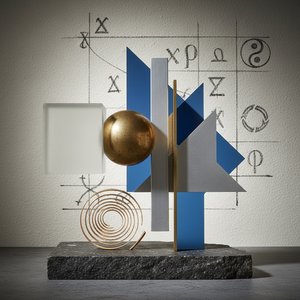
Beyond Form: Exploring the Philosophical Foundations of Geometric Abstraction
Explore the philosophical roots & artistic evolution of geometric abstraction with ArtsDot. Discover Mondrian, Malevich, De Stijl & more. Expert insights for collectors and art enthusiasts.

Kandinsky's Masterpieces: 25 Paintings That Define Abstract Art | ArtsDot
Journey through Wassily Kandinsky's 25 most iconic abstract paintings. Explore his revolutionary use of color, form & spiritual expressionism. Find museum-quality Kandinsky reproductions and elevate your home decor with ArtsDot.com. Discover all masterpieces on ArtsDot.com!

Beyond Form & Color: Geometric Abstraction's Evolution in 20th/21st Century Art
Explore the evolution of geometric abstraction from Cubism to contemporary art. Discover key artists like Malevich & Mondrian, investment insights, and expert collecting advice at ArtsDot.

Geomeetrilise Abstraktsiooni 10 Meisterteost: Kunst ja Kodukaunistus ArtsDot.com-is
Avastage geomeetrilise abstraktsiooni 10 suurteost – Kandinsky, Mondrian ja teised. Lugege kunstiteoste lugusid ning leidke inspiratsiooni kodukaunistuseks ArtsDot.com-is! Kunstikollektsioon ja reprodutsioonid.