


 Vaata sisu
 Jaga teost
 Jaga
Jaga
 Detailid
 Õppekate juhend

 Laadi alla
 Sarnased teosed
 Röntgenuuring
 Slaidietendus
 Statistika
Self-portrait


 Loe lähemalt
Käsitsi valmistatud õlimaalireproduktsioon
Meie kunstnike poolt tellimusel valmistatud käsitsi maalitud õli-kainaste teos teie soovitud suuruses ja raamis. ( Lülita trükkitoodetele Ülemineku digitaalse pildi müügi kanalisse)




































Vali meie eelmääratud suurused, mis vastavad teose algupärastele proportsioonidele.

Sisestage vajalik laius ja kõrgus, et teos sobiks teie raamile või seinale. Kuna tegu on käsipainatud teosega, siis erineva kujuga suuruse korral võib kunstnik jätta pildi ümber veidi rohkem marginaali või lõigata osa ära — valik on teie. Enne maali alustamist saadame teile kinnitamiseks digitaalse näidisprojektsiooni. Sellel lehel näidatud pilt ei kajasta tegelikku tulemust — seda näitab ainult näidisprojekttsioon.
Pärast tellimust saadab ArtsDot.com meeskond kliendile e-posti juhised ning esitab eelvaate kavandi
Maailmline tarne 3–4 nädala jooksul tavalise 5 nädala asemel. (25 oktoober). Kvaliteedis kompromisse ei tehta.

Tasuta ekspresssaatmine üle maailma

Kõrgekvaliteediline lina-kangastest muld

Täielik transpordikindlustus

Tollimaksude tagastamise garantii

Värvitoime täpsuse garantii

100 päeva tagastusõigus (ainult defektide korral)

100% raha tagasi garantii

Hulgusoodustus
 Klaasivalik on saadaval ainult kuni 110 cm suuruses teostes

Self-portrait
Reproduktsiooni materjal
Reproduktsiooni mõõtmed
-


Lõppsumma
€ 231
Sarnased teosed


Kunstniku elulugu
Alexander Clarot: A Viennese Romantic Portraitist
Alexander Clarot (1796 – 1842) stands as a pivotal figure in the landscape of Austrian art during the first half of the nineteenth century. Born in Vienna, Austria, he embarked on an artistic journey that would solidify his reputation as a masterful miniaturist and portrait painter—a testament to the enduring allure of Romanticism’s meticulous observation and emotive expression. His formative years were spent honing his skills at the Vienna Academy of Fine Arts, where he absorbed the stylistic conventions of his time and established himself as a respected member by 1829.- Early Influences: Clarot's artistic sensibilities were profoundly shaped by the prevailing Romantic movement, which championed emotion, imagination, and an idealized depiction of nature. Artists like Eugène Delacroix and Caspar David Friedrich served as significant inspirations, encouraging him to prioritize expressive color palettes and dramatic compositions.
- Technique & Style: Clarot’s distinctive style was characterized by painstaking detail—a hallmark of Viennese miniature painting—combined with a Romantic sensibility. He meticulously rendered textures and nuances in his portraits, capturing subtle expressions and conveying psychological depth. His brushstrokes were deliberate and controlled, prioritizing accuracy alongside artistic vision.
- Notable Works: Clarot’s oeuvre comprises numerous captivating pieces that exemplify the Romantic spirit. Among his most celebrated works are “Karl Artaria, Viennese Art Dealer” (1835), a portrait of a prominent art dealer reflecting Vienna's cultural vibrancy; "A portrait of a woman in a bonnet with a pink ribbon" (1837), showcasing exquisite craftsmanship and capturing the gracefulness of Victorian femininity; and “Self-portrait” (1825), offering an intimate glimpse into Clarot’s artistic identity.
Vienna Academy & Artistic Recognition
His enrollment at the Vienna Academy of Fine Arts proved instrumental in furthering his artistic development and securing recognition within the Viennese art community. The academy fostered a competitive environment that encouraged experimentation and refinement, allowing Clarot to hone his technique and broaden his stylistic horizons. Furthermore, membership signaled acceptance into the established artistic hierarchy—a crucial step toward establishing himself as a respected artist of his era.Legacy & Historical Significance
Alexander Clarot’s contribution to Austrian art extends beyond his individual masterpieces; he embodies the spirit of Romantic Vienna – a period marked by intellectual ferment and artistic innovation. His meticulous portraits not only documented the faces of prominent figures but also served as conduits for conveying psychological complexity and capturing the essence of Victorian ideals. Today, Clarot's works continue to resonate with audiences worldwide, representing an enduring legacy of Romantic artistry and demonstrating the power of observation combined with emotional resonance.Resources
- Further Research:ULAN Full Record Display (Getty Research)

Alexander Clarot
1796 - 1842 , Austria
Lühikest infot
- Full Name: Alexander Clarot
- Nationality: Austrian
- Date Of Birth: 1796
- Date Of Death: 1842
- Place Of Birth: Vienna, Austria
- Notable Artworks:
- Karl Artaria, Viennese Art Dealer
- A portrait of a woman in a bonnet with a pink ribbon
- Artistic Movement Or Style: Romanticism
Sarnased artiklid

Värviliste varjundite kunst: Akvarellimaali ajalugu, tehnikad ja kaasaegne praktika
Avastage akvarellimaali rikkalik ajalugu ja tehnikad! Lugege meie juhendit kuulsatest kunstnikutest, kaasaegsetest trendidest ja praktilistest nõuannetest. Alustage oma maalimisreisi juba täna!

Ephemeral Visions: Exploring the Artistic Legacy & Contemporary Practice of Watercolor Painting
Explore the captivating world of watercolor painting! Discover its rich history, essential techniques, influential artists & collecting tips. A comprehensive guide for art enthusiasts from ArtsDot.

Watercolor Wonders: 10 Masterpieces That Redefined Art History | ArtsDot
Journey through 10 legendary watercolor masterpieces by Sargent, Turner & Homer! Explore iconic landscapes, portraits & floral art that redefined history. Find museum-quality reproductions and curated decor ideas at ArtsDot.com.
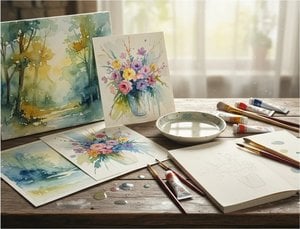
Ephemeral Visions: Exploring the Artistic Legacy & Nuances of Watercolor Painting
Explore the captivating world of watercolor painting! Discover its rich history, essential techniques, influential artists & collecting tips from art experts. A comprehensive guide for enthusiasts.

Ephemeral Visions: Exploring the History & Emotional Resonance of Watercolor Painting
Explore the captivating history of watercolor painting, from ancient techniques to modern masters like Kandinsky & Blake. Discover essential artists, collecting tips & the emotional power of this luminous medium. Expert insights for art enthusiasts.