

 Eelvaade
 Saada
Saada Jaga
Jaga
 Teave teose kohta
 Juhend

 Laadi alla
 Sarnased teosed
 Röntgenuuring
 Slaidietendus
 KÜSIMUSED JA VASTUSID
 Statistika
City

- 138.0 x 168.0 cm


 Loe lähemalt
Sellel lehel kuvatav kunstiteos on kaitstud autoriõigusega, mis tähendab, et meil ei ole seaduslikku õigust luua või müüa identset reproduktsiooni. Seda kaitset rakendatakse rahvusvaheliste kokkulepete alusel, nagu näiteks Berne konventsioon ning riiklike seadustega, sealhulgas nendega, mida on sätestatud USA autoriõiguse seadus – 17. peatükk.
See meetod järgib täielikult autoriõiguse reegleid, kuna see ei põhine kaitstud kunstiteose kopeerimisel või dupliteerimisel. Selle asemel on tegu loova reinterpreetatsiooniga – uue maaldisega, mis on algteosest inspireeritud, kuid ei ole sellest identiline.
Giclée / Kunstiprint
Muuseumikvaliteediga giclée- või kangasprint kiire tootmisega ja paindlikud viimistlusvõimalused. ( Osta käsitsi maalatud teos Lülita digitaalse pildi juurde)




P118B €10

P118H €10

P118W €10

P438Z €10

P508JH €12

P508YH €12

P805H €10

P805Z €10

P919BZ €10

P919G €10

P919XJ €10

P959ZH €10

P968JZ €12

W106C €8

W218G €10

W218JH €8

W218Y €10

W307PJ €10

W316G €10

W316PJ €8

W316Y €10

W398PJ €8

W4111J €10

W500HY €15

W500JH €15

W692G €12

W849H €8

W940BG €15

W953PJ €8




Vali meie eelmääratud suurused, mis vastavad teose algupärastele proportsioonidele.

Sisestage vajalik laius ja kõrgus, et see sobiks teie raamile või seinale. Trükki saab ainult lõigata, seda ei saa kunagi pildist suuremaks teha, seega ka erineva mustega suurus kaotab osa pildist. Enne trükkimist saadame teile kinnitamiseks digitaalse näidisprojektsiooni. Sellel lehel näidatud pilt ei kujuta reaalset lõiget — seda näitab ainult näidisprojektsioon.
Ülemaailmne tarne () 2 nädala jooksul, tavalise 4/5 nädala asemel. (10 november)

Tasuta ekspresssaatmine üle maailma

Kõrgekvaliteediline lina-kangas

Täielik transpordikindlustus

Tollimaksude tagastamise garantii

Värvitoime täpsuse garantii

100 päeva tagastusõigus (ainult valmistusdefektide korral)

100% raha tagasi garantii

Hulgusoodustus
 Klaasivalik on saadaval ainult kuni 110 cm suuruses teostes

City
Giclée / Kunstiprint
Reproduktsiooni suurus
-


Koguhind
€ 56
The Geometry of Unease
A road stretches toward a distant vanishing point, cutting through a landscape of sharp angles and heavy shadows. Under a sky that transitions from a warm, orange-yellow glow to a cool blue horizon, the city sits in a state of permanent dusk. Traffic signs—arrows pointing in conflicting directions and a stark 'STOP' sign—disrupt the visual flow, creating a sense of sudden, mechanical chaos. A tram, the Number 6 Malvern, moves through this space, driven by an anguished male figure. The composition relies on the tension between the rigid, geometric shapes of buildings and railway gates and the fluid, unsettling presence of bird-like figures and a stylized female form.
The paint is applied with deliberate intent, layering synthetic polymer to build a sense of depth and texture. Sharp lines dominate the scene, particularly where the railway crossing gates slice through the atmosphere. These hard edges contrast with the soft gradient of the sky, creating a world that feels both structured and broken. Light emanates from the cityscape in a warm, artificial glow, casting long shadows that emphasize the disorientation of the urban setting.
Symbols of the Urban Void
The iconography of the work speaks to a profound sense of isolation. The traffic signs and signals act as symbols of control and restriction, attempting to dictate movement in a space that feels increasingly unpredictable. The arrows suggest a loss of direction, a confusion inherent to the modern metropolis. In the foreground, the presence of the stylized female form and the profiled human head, known as the Antipodean head, introduces a layer of psychological weight. These figures appear as phantom-like entities, caught between the physical reality of Melbourne and a more surreal, internal landscape.
This nocturnal view of the city reflects a preoccupation with the human condition amidst social upheaval. The interplay of light and shadow suggests a world of moral ambiguity, where the familiar structures of urban life—trams, street lights, and commercial buildings—become tools of alienation. The painting captures a moment of tension, where the order of the grid meets the chaos of the individual.
The city waits in the twilight.
Korduvad küsimused
Kui hele on teos "City" üldiselt?
Perseptsioonilt on teose „City“, autor Albert Tucker ereonim deep_shadow.
Kas teosele „City“, autor Albert Tucker on saadaval diapositatsioon?
Teost „City“, autor Albert Tucker saab vaadata diapositena teose Pildikava lehel.
Kuna teose kuupäev on teada, millesse Albert Tucker karjääri etappi kuulub teos "City"?
"City", mis loodi aastal 1973, kuulub Albert Tucker loomingulise karjääri perioodi Mature Period.
Sarnased teosed


Kunstniku elulugu
Albert Tucker: A Life Bridging Mathematics and Art
- Born: Oshawa, Canada (1905)
- Died: 1995
Albert William Tucker was a remarkable figure whose life defied easy categorization. While primarily recognized as a distinguished Canadian mathematician, his legacy extends into the realm of art and intellectual history. He is celebrated for significant contributions to topology, game theory (particularly for popularizing the "Prisoner's Dilemma"), and non-linear programming, while also leaving behind a body of artistic work that reflects themes of alienation, morality, and social commentary.
Early Life and Education: A Foundation in Mathematics
Tucker’s journey began in Oshawa, Ontario. His upbringing emphasized education, fostering an early aptitude for mathematics. He pursued his undergraduate studies at the University of Toronto, earning a B.A. in 1928 and an M.A. in 1929. His pursuit of advanced knowledge led him to Princeton University where he earned his Ph.D. under the guidance of Solomon Lefschetz in 1932 with a dissertation titled *An Abstract Approach to Manifolds*. This period laid the groundwork for his future contributions, establishing a strong foundation in abstract mathematics.
Mathematical Contributions and Legacy
- The Prisoner's Dilemma: Tucker is widely known for giving name and interpretation to Merrill M. Flood and Melvin Dresher’s model of cooperation and conflict, solidifying its place as a cornerstone of game theory.
- Karush-Kuhn-Tucker Conditions: His work on the Karush-Kuhn-Tucker conditions significantly advanced non-linear programming.
- Mathematical Education: Tucker was deeply committed to mathematics education, serving as chair of the AP Calculus committee for the College Board (1960-1963) and actively participating with the Committee on the Undergraduate Program in Mathematics (CUPM). He also served as president of the Mathematical Association of America (MAA) from 1961-1962.
- Mentorship: Tucker’s influence extended through his mentorship of numerous prominent figures, including Nobel Prize winners John Nash and Lloyd Shapley, and Turing Award winner Marvin Minsky. His collaborations with Harold W. Kuhn further enriched the mathematical landscape.
Tucker's legacy is not solely confined to his direct contributions; it also encompasses his role as a vital source for oral histories within the mathematics community, solidifying his position as a respected and influential figure.
Artistic Expression: Themes of Isolation and Social Commentary
While primarily known for his mathematical achievements, Tucker was also an artist. His paintings, often characterized by expressive figurative styles, explored themes of alienation, morality, and the complexities of human existence. His artistic output reflects a keen observation of social issues and wartime experiences, offering poignant commentary on the human condition.
- Style: Expressionism
- Recurring Themes: Isolation, contemplation, moral dilemmas, depictions of city life, wartime experiences.
Notable artworks such as "Philosopher" exemplify his ability to convey profound emotions through bold lines, dramatic lighting, and a rich color palette. His artistic vision provides another layer to understanding the multifaceted nature of Albert Tucker's intellectual pursuits.

Albert Tucker
1905 - 1995 , Canada
Lühikest infot
- Full Name: Albert William Tucker
- Nationality: Canadian
- Date Of Birth: 1905
- Date Of Death: 1995
- Place Of Birth: Oshawa, Canada
- Notable Artworks:
- Philosopher
- Memory of Leonski
- Artistic Movement Or Style: Expressionism
Sarnased artiklid

Urban Visions: A Historical & Artistic Exploration of the Cityscape in Painting
Explore the evolution of cityscape painting from historical maps to Impressionist masterpieces. Discover artists like Caillebotte & Utrillo. Find museum-quality reproductions at ArtsDot.

Urban Visions: A Historical & Artistic Exploration of the Cityscape in Painting
Explore the evolution of cityscape painting from historical maps to Impressionist masterpieces. Discover artists like Caillebotte, Utrillo & Matsumoto Shunsuke. Find museum-quality reproductions at ArtsDot.

Concrete Visions: Exploring the Urban Landscape in Painting – From Realism to Contemporary Art
Explore the evolution of cityscape painting from Realism to contemporary art with ArtsDot. Discover key artists & invest in timeless urban visions. Expert guidance, museum-quality reproductions.
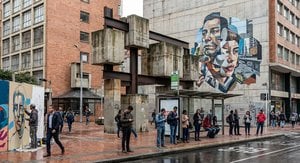
Concrete Narratives: Exploring Urban Life in Modern & Contemporary Art
Explore the evolution of cityscape painting with ArtsDot. Discover key artists from Realism to contemporary movements & invest in timeless urban visions. Expert guidance, museum-quality reproductions.

Concrete Visions: Exploring Representations of Urban Life in Modern & Contemporary Art
Explore the evolution of cityscape painting from Realism to contemporary art. Discover key artists & invest in timeless urban visions with ArtsDot's expert guidance and museum-quality reproductions.