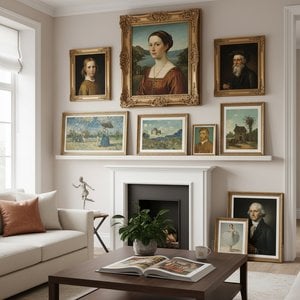
The National Gallery: A Tapestry of Time
The National Gallery in Prague isn’t simply a repository for art; it's an unfolding narrative woven through centuries of Czech history and European artistic evolution. Unlike many grand, singular institutions, the gallery breathes across the city itself, inhabiting a constellation of historic palaces each whispering tales of bygone eras. To wander its halls is to embark on a journey not merely *through* art, but *within* it—a deeply immersive experience where masterpieces resonate with the very stones that surround them. Founded in 1920 from the amalgamation of several existing institutions, this unique distribution allows for an intimate encounter with creativity, enhancing the emotional power of each work and offering a perspective rarely found within monolithic museum structures. The gallery’s story began much earlier, however, tracing its roots back to 1796, born from the patriotic vision of Bohemian aristocrats and intellectuals determined to elevate what they called the “debased artistic taste” of the local population. What started as an effort to cultivate public appreciation blossomed into a guardian of cultural heritage, weathering political storms—from the Austro-Hungarian Empire through two World Wars and decades under communist rule—and consistently expanding its collection through acquisitions, donations, and long-term loans.
The heart of this extraordinary institution lies in its remarkable distribution across six distinct architectural gems. The Trade Fair Palace, a striking monument to functionalist architecture completed in 1928, stands in bold contrast to its surroundings yet provides the perfect stage for showcasing the revolutionary movements that defined modernism. Here, visitors encounter iconic works by Picasso, Van Gogh, and Klimt alongside pivotal Czech artists who challenged conventions and pushed boundaries. The sheer scale of this space—once the largest building of its kind in the world—allows for a comprehensive exploration of 20th- and 21st-century art, offering a powerful dialogue between international trends and local expression. In stark contrast, Sternberg Palace transports visitors centuries back in time with its opulent display of European paintings from the 14th to 18th centuries. Imagine standing before a Rembrandt or an El Greco within these baroque walls, feeling the grandeur and spiritual intensity that characterized those eras. The gallery’s commitment extends beyond traditional painting; the Špinarova Salon offers a focused experience dedicated to modern glass art—a testament to Czechia's long-standing tradition of craftsmanship and innovation in this delicate medium. But perhaps the most celebrated treasure resides elsewhere: Alfons Mucha’s *Slav Epic*, a monumental cycle of twenty canvases depicting key moments in Slavic history and mythology, is an experience unto itself – a vibrant, emotionally charged panorama that embodies national identity and artistic ambition.
A Balancing Act: Czech Masters & International Icons
What truly distinguishes the National Gallery Prague is its masterful balance between showcasing Czech art and celebrating international masters. It’s not merely about presenting canonical works; it's about revealing the unique evolution of artistic styles within the Czech lands, uncovering hidden gems alongside familiar icons. This commitment to both local and global perspectives provides a uniquely enriching experience for visitors. The gallery doesn’t shy away from exploring complex narratives—the struggles for national identity during periods of political upheaval, the impact of historical events on artistic expression, and the enduring power of art as a form of resistance and cultural preservation. The collections themselves are not static; they continue to grow and evolve, reflecting ongoing research and scholarship. The gallery actively seeks to acquire new works that complement its existing holdings and expand its representation of diverse artistic voices.
Palaces as Portals: Architectural Echoes & Artistic Treasures
The architectural diversity – the juxtaposition of historic palaces with modern structures – creates an unparalleled atmosphere. Each building tells a story, mirroring the art it houses. The Trade Fair Palace, for example, with its sleek lines and expansive spaces, provides a fitting backdrop for the gallery’s collection of 20th-century masterpieces, while Sternberg Palace, a testament to Baroque opulence, envelops visitors in the grandeur of European painting from the Renaissance through the 18th century. The Špinarova Salon, with its intimate setting and focus on glass art, offers a contemplative experience that highlights the skill and artistry involved in this challenging medium. The gallery’s location within these historic structures is not merely decorative; it's integral to the visitor’s understanding of the artwork. The very walls seem to whisper tales of the artists who created them, adding layers of meaning and context to the viewing experience.
Beyond the Canvas: A Legacy Forged in Culture
The National Gallery Prague is more than just a museum; it’s a cultural landmark, a repository of collective memory, and a vibrant hub for artistic exploration. It invites you to lose yourself in the stories woven into each canvas, sculpture, and glass creation—and to discover the enduring power of art to connect us across time and cultures. The gallery regularly hosts temporary exhibitions that delve deeper into specific themes or artists, offering fresh perspectives on its permanent collections. It also provides a wealth of educational resources, including guided tours, audio guides, and interactive programs for visitors of all ages. From its humble beginnings as a patriotic initiative to its current status as one of Europe’s leading art institutions, the National Gallery Prague stands as a testament to the enduring value of art and culture in shaping our understanding of ourselves and the world around us.