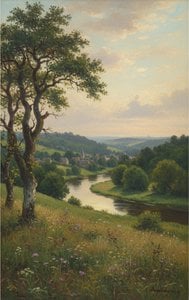
primeros años y formación
pierre étienne théodore rousseau, pintor francés, nació en París el 15 de abril de 1812. Su familia, aunque no eran artistas, fomentó su temprano interés por el arte. Inicialmente, recibió una formación básica, pero pronto demostró una notable aptitud para la pintura. Su padre, quien en un principio se había arrepentido de la decisión de abandonar los negocios, más tarde se reconcilió con este destino y apoyó la carrera de théodore.trayectoria artística
théodore rousseau fue una figura líder en el desarrollo de la pintura de paisaje y un personaje central de la escuela de Barbizon. Era reconocido por su meticulosa observación de la naturaleza, la cual solía estudiar durante largas horas para grabarla en su memoria. Este enfoque le permitió crear pinturas detalladas y profundamente realistas.obras notables y estilo
el arte de théodore rousseau se caracteriza por una compleja mezcla de realismo y romanticismo. Algunas de sus obras más destacadas incluyen:- les chênes d'apremont, un testimonio de su atención al detalle.
- le printemps, que muestra su capacidad para capturar la esencia de la naturaleza.
- la gorge aux loups, reflejando su profunda conexión con el mundo natural.
legado e influencia
el legado de théodore rousseau se extiende más allá de su propia obra. Influyó en toda una generación de artistas con su enfoque único hacia la pintura de paisajes. Su énfasis en la observación de la naturaleza ha inspirado a muchos, convirtiéndolo en una figura fundamental en la historia del arte. ve las obras de théodore rousseau en ArtsDot: [https://ArtsDot.com/@/pierre étienne théodore rousseau](https://ArtsDot.com/@/pierre%20étienne%20théodore%20rousseau) explora la escuela de Barbizon y su influencia en wikipedia: [https://en.wikipedia.org/wiki/barbizon_school](https://en.wikipedia.org/wiki/barbizon_school)conclusión
la vida y el arte de théodore rousseau sirven como un recordatorio del poder de la dedicación y la observación para crear obras maestras atemporales. Su legado continúa inspirando tanto a artistas como a entusiastas del arte, convirtiéndolo en una parte indispensable de la historia del arte. descubre más sobre théodore rousseau en ArtsDot: /es/art/show/art-d3av5h-es/Preguntas y respuestas
¿Cómo puedo seguir la obra de Théodore Rousseau año tras año?
Las obras de Théodore Rousseau pueden verse en orden cronológico en la página de Cronología de obras del artista.
¿Cómo puedo encontrar obras de Théodore Rousseau sobre un tema específico?
Las obras de Théodore Rousseau pueden explorarse por palabra clave en la página de Por palabras clave del artista. Cada palabra clave agrupa las obras relacionadas.
¿Puedo explorar las obras de Théodore Rousseau por técnica?
Para encontrar todas las obras de Théodore Rousseau en una técnica determinada, utilice la página de Todos los medios del artista.