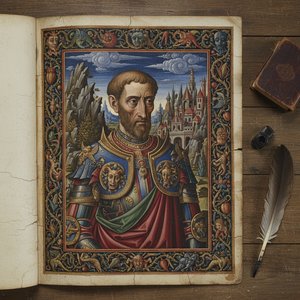
El pintor del mito y la fe: La vida de Lorenzo Costa
Lorenzo Costa (1460–1535) se erige como una figura fundamental dentro del floreciente paisaje artístico del Renacimiento italiano, encarnando el dinamismo intelectual de las escuelas de Ferrara y Bolonia. Nacido en la vibrante ciudad de Ferrara, Costa emergió durante un periodo en el que las fronteras entre la devoción espiritual y la indagación humanista se desdibujaban con una belleza singular. Su obra se caracteriza por una mezcla distintiva de elegancia estilística y profunda contemplación, una cualidad que le permitió navegar las complejas exigencias tanto de las instituciones religiosas como de las cortes seculares más sofisticadas de su época. A través de su pincel, la luz etérea de lo divino se encontró con la gracia estructurada de la mitología clásica, creando un lenguaje visual que resonó profundamente con el espíritu renacentón.Años formativos y el dominio de la luz
Aunque los registros de archivo de los primeros años de Costa siguen siendo algo esquivos, su ADN artístico fue forjado claramente en los talleres del norte de Italia. Es ampliamente reconocido que se sometió a un riguroso entrenamiento bajo la tutela del maestro Francesco Francia en Bolonia. Este aprendizaje fue transformador, inculcándole una meticulosa atención al detalle y una fascinación temprana por la técnica del sfumato, esa sutil y brumosa transición de tonos popularizada por Leonardo da Vinci. De Francia, Costa heredó una profunda comprensión de la perspectiva y el uso dramático del chiaroscuro, lo que le permitió esculpir figuras a partir de las sombras e imbuir sus composiciones con un sentido de profundidad y peso emocional sin precedentes. Esta base técnica le permitió ir más allá de la mera representación, buscando en su lugar capturar la atmósfera misma que envolvía a sus sujetos.El esplendor de la corte de Mantua
El cenit de la carrera de Costa estuvo inextricablemente ligado a su prestigioso nombramiento como pintor de cámara de Isabella d'Este, la marquesa de Mantua. Como una de las mecenas más formidables y exigentes de la historia europea, Isabella d'Este demandaba un arte que funcionara tanto como triunfo estético como enigma intelectual. Bajo su mirada vigilante, la obra de Costa evolucionó para abrazar complejas alegorías mitológicas e ideales humanistas. Sus pinturas se convirtieron en mucho más que iconos religiosos; eran narrativas sofisticadas diseñadas para una audiencia de eruditos y aristócratas. Este periodo de su vida estuvo marcado por:- La integración de los mitos clásicos griegos y romanos en la pintura italiana contemporánea.
- Un enfoque intensificado en el significado simbólico, donde cada gesto y detalle botánico poseía un peso propio.
- El refinamiento de un estilo suave y atmosférico capaz de transmitir la delicada gracia requerida por el gusto cortesano.
Legado y trascendencia histórica
A medida que el Renacimiento progresaba, la influencia de Costa se extendió por las comunidades artísticas de Ferrara y Bolonia, dejando una huella indeleble en el desarrollo de la escuela italiana. Su capacidad para armonizar las tradiciones robustas y emotivas de los maestros ferrareses con el estilo más lírico y pulido de los pintores boloñeses creó un puente estilístico único. Incluso cuando comenzaron a surgir nuevos movimientos, la dedicación de Costa al equilibrio entre la belleza y la narrativa permaneció como un estándar para sus sucesores. Hoy en día, se le recuerda no solo como un artesano hábil, sino como un visionario que capturó el alma de una era: un artista capaz de hacer que los mitos antiguos se sintieran tan inmediatos y vivos como las figuras sagradas de la fe cristiana.Preguntas y respuestas
¿En qué ciudad y país nació Lorenzo Costa?
Lorenzo Costa nació en Ferrara, en Italia.
¿De dónde es Lorenzo Costa?
Lorenzo Costa nació en Italia.
¿Existe una lista completa de las obras de Lorenzo Costa?
Todas las obras de Lorenzo Costa en este sitio web pueden explorarse desde la página de Todas las obras del artista.
¿Puedo explorar las obras de Lorenzo Costa por movimiento?
Los movimientos en los que trabajó Lorenzo Costa pueden verse en la página de Todos los movimientos del artista, que agrupa las obras por movimiento.
¿Cuál es el lugar y el año de nacimiento de Lorenzo Costa?
Lorenzo Costa nació en Ferrara en 1460.
¿Puedo explorar las obras de Lorenzo Costa por palabra clave?
Para encontrar obras de Lorenzo Costa sobre un tema específico, utilice la página de Por palabras clave del artista, que agrupa las obras por palabra clave.
¿Cómo puedo seguir la obra de Lorenzo Costa año tras año?
La página de Cronología de obras del artista presenta las obras de Lorenzo Costa ordenadas por fecha, año tras año.