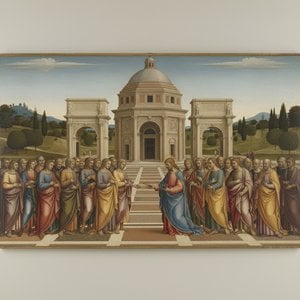
El Enigmático Maestro del Crepúsculo Umbro
En la edad dorada del Renacimiento italiano, mientras nombres como Perugino y Pinturicchio dominaban los escenarios más grandiosos de la historia, un genio más sutil y profundo moldeaba silenciosamente el alma estética de Perugia. Fiorenzo Di Lorenzo (c. 1445–1522) sigue siendo uno de los enigmas más fascinantes de la escuela umbra. Aunque el legendario biógrafo Giorgio Vasari ofreció pocos elogios directos, el tejido mismo del arte de la época lleva su huella inconfundible. Estudiar a Fiorenzo es despojar las capas de un período definido por la transición, descubriendo a un artista que no se limitó a seguir tendencias, sino que proporcionó el vocabimo fundacional para los maestros que le sucedieron.
Los primeros años de Fiorenzo Di Lorenzo están envueltos en las suaves brumas del siglo XV. Si bien los registros precisos de su nacimiento y formación son esquivos, su presencia en Perugia es innegable. Fue un hombre profundamente arraigado en la vida cívica y espiritual de su ciudad; los documentos históricos incluso revelan que ejerció como decemvir en 1472, lo que sugiere una persona de gran posición social y responsabilidad. Esta conexión con el corazón de la sociedad umbra probablemente le proporcionó el mecenazgo necesario para cultivar un estilo que era, a la vez, profundamente devocional y técnicamente sofisticado. Aunque no podemos señalar el taller de un maestro específico con absoluta certeza, los ecos estilísticos encontrados en sus primeras obras sugieren que respiró el mismo aire creativo que Benedetto Bonfigli, absorbiendo las tradiciones locales de claridad y gracia que se convertirían en su sello distintivo.
Un Estilo Definido por la Resonancia Emocional
Lo que realmente distingue a Fiorenzo de la gracia más célebre y a menudo más "afectada" de su contemporáneo Perugino, es un sentido palpable de intensidad humana. Donde otros buscaban un desapego sereno, casi etéreo, Fiorenzo perseguía una profundidad expresiva que anclaba sus temas religiosos en una realidad tangible. Su dominio del espacio y la luz le permitió crear composiciones que se sentían tanto monumentales como íntimas. En sus manos, lo sagrado no era distante; estaba presente, respirando con un carácter que resonaba con un profundo poder emocional.
Su destreza técnica es más evidente en su manejo del temple sobre tabla, un medio que requiere una disciplina inmensa para lograr luminosidad. Su obra, aunque comprende alrededor de cincuenta piezas supervivientes, muestra una notable versatilidad en su temática:
- La Madonna della Raccomandazione (1476): Una obra maestra luminosa que sirve como una de sus firmas más vitales, demostrando un dominio temprano de la luz y una tierna emoción maternal.
- La Adoración de los Magos (c. 1490): Una composición más grande y compleja que resalta su capacidad para organizar grandes grupos de figuras dentro de un espacio coherente y arquitectónicamente sólido.
- <Retablos y Polípticos: Su trabajo para iglesias como Santa Maria Nuova muestra su habilidad en el formato de políptico, donde utilizó intrincadas predelas y lunetas para tejer compleíamos narrativas teológicas.
Legado y Significado Histórico
La verdadera medida de la importancia de Fiorenzo Di Lorenzo no reside en la cantidad de sus lienzos supervivientes, sino en su profunda influencia en la trayectoria del Renacimiento umbro. Es ampliamente aceptado por los estudiosos que las primeras obras tanto de Perugino como de Pinturicchio contienen manierismos y matices estilísticos que apuntan directamente a la influencia de Fiorenzo. Actuó como un puente vital, traduciendo las estructuras rígidas del temprano Quattrocento al lenguaje más fluido y emotivo del Alto Renacimiento. Fue el arquitecto silencioso de un movimiento estético, proporcionando el andamiaje técnico sobre el cual los grandes maestros construyeron su fama.
Hoy en día, gran parte de su legado se preserva en las sagradas salas de la Galleria Nazionale dell'Umbria. Situarse ante un original de Fiorenzo es presenciar un momento en el tiempo donde lo espiritual y lo humano convergieron con una sinceridad sin igual. Él permanece como un testimonio de la idea de que la grandeza no siempre requiere la voz más fuerte, sino la visión más perdurable: un pintor que, a través de su maestría del carácter y el espacio, ayudó a definir la esencia misma del Renacimiento italiano.
Preguntas y respuestas
¿Cómo puedo ver todas las obras de Fiorenzo Di Lorenzo?
Puede explorar todas las obras de Fiorenzo Di Lorenzo en este sitio web desde la página de Todas las obras de arte del artista.
¿Puedo explorar las obras de Fiorenzo Di Lorenzo por estado de ánimo?
Puedes explorar las obras de Fiorenzo Di Lorenzo por estado de ánimo en su página Rincón de emociones, donde las piezas se organizan según la emoción que transmiten.
¿Qué obras de Fiorenzo Di Lorenzo son las más vistas?
Puedes consultar la página de Estadísticas de Fiorenzo Di Lorenzo, donde se presentan estadísticas sobre sus obras en este sitio web.