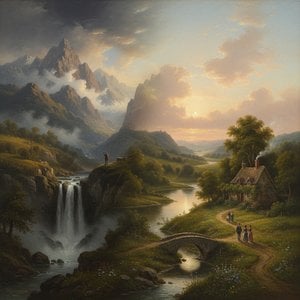
El alma del paisaje alemán: La vida de August Albert Zimmermann
August Albert Zimmermann se erige como un profundo testimonio del espíritu perdurable del Romanticismo alemán, una era en la que el lienzo se convirtió en una ventana hacia el alma humana a través del medio de la naturaleza. Nacido en 1808 en Zittau, Silesia —una región que hoy forma parte de Polonia—, la trayectoria artística de Zimmermann se desarrolló bajo un trasfondo de mareas culturales cambiantes que priorizaban la emoción pura y la imaginación sin límites sobre las rígidas convenciones académicas del pasado. Sus primeros años estuvieron profundamente entrelazados con un rico tapiz familiar de talento; era hermano de los consumados pintores Max, Richard y Robert Zimmermann. Este linaje compartido le proporcionó una comprensión fundamental de los principios artísticos, pero fue su sensibilidad única hacia lo sublime lo que eventualmente distinguiría su mano de la de sus parientes.
Si bien su formación formal incluyó estudios prestigiosos en la Academia de Bellas Artes de Dresde y la Academia de Bellas Artes de Múnich, la verdadera brillantez de Zimmermann emergió a través de una exploración autodidacta. Poseía un espíritu inquieto y curioso que buscaba inspiración mucho más allá de los límites establecidos, lo que le permitió cultivar un estilo distintivo caracterizado por el realismo atmosférico. Este período de desarrollo estuvo marcado por un intenso estudio de la luz y la sombra, mientras aprendía a traducir las cualidades efímeras del mundo natural en pinturas al óleo permanentes y evocadoras, así como en delicadas acuarelas. Su capacidad para combinar la precisión técnica con una profunda conexión espiritual con sus sujetos le permitió trascender la mera representación, convirtiendo los paisajes en profundas experiencias emocionales.
Maestría de la luz y lo sublime romántico
La obra de Zimmermann es celebrada primordialmente por su capacidad para capturar tanto la grandeza como la tranquila serenidad del paisaje alemán, con un enfoque particular en los impresionantes escenarios de Baviera. Sus lienzos no son meramente imágenes estáticas, sino entornos pulsantes donde colores vibrantes y una pincelada magistral convergen para narrar una historia sobre el poder de la naturaleza. Fue un maestro del claroscuro, utilizando el dramático juego entre la luz y la sombra para intensificar la profundidad atmosférica y evocar sentimientos de asombro, contemplación e incluso un toque de melancolía. A través de sus ojos, una simple vista montañosa podía convertirse en un enfrentamiento monumental con lo infinito.
Los motivos recurrentes en su obra sirven como ventanas a la preocupación romántica por lo sublime. Un espectador podría encontrarse perdido entre:
- Cumbres nevadas que evocan la majestuosidad silenciosa y gélida de los altos Alpes;
- Ríos caudalosos y cascadas que capturan la energía indómita de la naturaleza salvaje;
- Vastas vistas bañadas por el crepúsculo, donde el suave resplandor del sol poniente crea una sensación de belleza fugaz y nostalgia;
- Íntimos estudios naturalistas, como sus detalladas representaciones de aves como el carpintero de frente dorada, que muestran sus agudas habilidades de observación.
Esta dualidad —la capacidad de moverse entre la escala épica de un macizo montañoso y el detalle delicado de una sola rama— es lo que define su legado técnico. Ya fuera pintando la silueta distante del Monte Etna o la quietud silenciosa de una escena invernal con recogedores de leña, Zimmermann mantuvo un compromiso inquebrantable con la verdad atmosférica.
Legado y trascendencia histórica
A medida que el siglo XIX avanzaba, la obra de Zimmermann se convirtió en una piedra angular de la tradición del paisaje romántico. Su influencia se extendió a través de su papel como maestro —sirviendo notablemente como mentor de su hermano Max— y mediante su capacidad para capturar el rostro cambiante de Europa, desde los terrenos accidentados de Alemania hasta los ritmos pastorales de la vida rural. Sus pinturas hacen más que documentar la geografía; documentan una era de profunda indagación filosófica sobre la relación entre la humanidad y el mundo natural.
Hoy en día, las obras de August Albert Zimmermann continúan resonando tanto en coleccionistas como en historiadores del arte. Su capacidad para evocar lo sublime —esa mezcla específica de belleza y terror que se encuentra en la grandeza de la naturaleza— asegura su lugar en el canon de los grandes maestros alemanes. A través de su maestría de la luz, su profundidad emocional y su inquebrantable devoción al paisaje, Zimmermann dejó un legado visual que continúa invitándonos a detenernos, respirar y contemplar la magnífica, y a menudo abrumadora, belleza del mundo que nos rodea.
Preguntas y respuestas
¿Qué colores utilizaba con más frecuencia August Albert Zimmermann?
El uso del color de August Albert Zimmermann en las obras listadas en este sitio web puede estudiarse en la página Genoma de la Paleta del artista.
¿Cómo puedo seguir la obra de August Albert Zimmermann año tras año?
La página de Cronología de obras del artista presenta las obras de August Albert Zimmermann ordenadas por fecha, año tras año.
¿Dónde se encuentran las obras de August Albert Zimmermann agrupadas por técnica?
La página Todos los medios agrupa las obras de August Albert Zimmermann por técnica.