Vista previa
 Compartir
 Compartir
 Ver detalles
 Guía
Guía

 Descargar
 Ver artículos similares
 Radiografía
 Presentación de diapositivas
 Estadísticas
Burnt Mountain


 Leer más
Reproducción al óleo hecha a mano
Óleo sobre lienzo pintado a mano en el tamaño y marco de su elección, realizado por encargo por nuestros artistas. ( Cambiar a formato impreso Ver versión en imagen digital)




P118B $10

P118H $10

P118W $10

P438Z $10

P508JH $12

P508YH $12

P805H $10

P805Z $10

P919BZ $10

P919G $10

P919XJ $10

P959ZH $10

P968JZ $12

W106C $8

W218G $10

W218JH $8

W218Y $10

W307PJ $10

W316G $10

W316PJ $8

W316Y $10

W398PJ $8

W4111J $10

W500HY $15

W500JH $15

W692G $12

W849H $8

W940BG $15

W953PJ $8




Elija entre nuestros tamaños predefinidos que respetan las proporciones originales de la obra.

Puede ingresar sus propias dimensiones para adaptarse a un marco o espacio específico. Si el tamaño seleccionado no coincide con las proporciones de la imagen original, recortaremos la obra o extenderemos la pintura con elementos adicionales pintados a mano. Se le enviará una maqueta digital para su aprobación antes de comenzar la producción.
Tenga en cuenta que la vista previa en pantalla no refleja el recorte o la extensión reales. Solo la maqueta mostrará con precisión la composición final.
Si bien existen tamaños personalizados, recomendamos seleccionar una dimensión de la lista predefinida para preservar las proporciones originales.
Tras realizar el pedido, el equipo de ArtsDot.com enviará un correo electrónico al cliente para solicitar instrucciones y proporcionarle una vista previa del boceto.
Envío a todo el mundo () en 3-4 semanas en lugar de las 5 semanas estándar. (21 septiembre). Sin comprometer la calidad.

Envío exprés gratuito a todo el mundo

Lienzo de lino de alta calidad

Seguro de envío completo

Garantía de reembolso de impuestos aduaneros

Garantía de fidelidad cromática exacta

Política de devolución de 100 días (solo por defectos)

Garantía de devolución del 100% del dinero

Oferta por volumen
 La opción de vidrio solo está disponible en tamaños inferiores a 110 cm.

Burnt Mountain
Técnica de reproducción
Tamaño de la reproducción
-


Precio total
$ 288
Winslow Homer’s “Burnt Mountain”: A Study in Light, Landscape, and Resilience
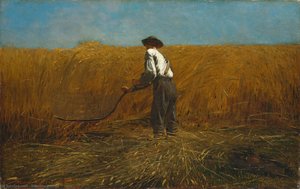
Winslow Homer's "Burnt Mountain," painted around 1892, isn’t merely a depiction of a rugged New England landscape; it’s a carefully constructed meditation on the interplay between nature’s power and human endurance. This oil painting, housed at The Metropolitan Museum of Art in New York City, captures a specific vista near Minerva, New York – a region deeply resonant with Homer's own artistic journey and personal experiences. The scene unfolds before us: two figures, rendered with quiet dignity, rest against a colossal fallen log within a vast, mountainous expanse. It’s a tableau of stillness amidst the drama of the sky, suggesting a moment of respite found within the embrace of nature’s formidable presence.
Homer's artistic evolution is inextricably linked to this work. Beginning his career as a commercial illustrator, he honed an extraordinary ability to capture scenes with remarkable clarity and detail – skills that would later inform his mature paintings. His early apprenticeship instilled in him a deep understanding of composition and visual storytelling, elements powerfully evident here. The painting’s horizontal emphasis—the log, the distant peaks, the horizon line—creates a sense of stability and groundedness, anchoring the viewer within this wild landscape. Yet, it's not a static scene; the swirling clouds above hint at an underlying energy, a reminder of nature’s unpredictable force.
Impressionistic Technique and Atmospheric Depth
The painting is executed in Homer’s signature style – a masterful blend of realism and impressionism. He eschews meticulous detail in favor of capturing the *feeling* of the scene: the diffused light, the subtle shifts in color, and the overall atmosphere. Brushstrokes are visible, layered upon one another to build texture and depth. The impasto technique—thickly applied paint—is particularly evident on the log and the distant mountains, lending a tactile quality to the canvas. Homer’s use of color is remarkably restrained, dominated by cool blues, grays, and greens that evoke the overcast weather and the rugged terrain. Subtle hints of warmth – in the figures' clothing and the highlights on the log—add a touch of humanity to this otherwise austere landscape.
Furthermore, Homer skillfully employs atmospheric perspective. The distant mountains are rendered paler and less distinct, creating an illusion of depth and suggesting the vastness of the wilderness. This technique, characteristic of plein air painting, emphasizes the immediate scene while simultaneously hinting at a larger world beyond. The flattened perspective contributes to the overall sense of stability and tranquility, inviting the viewer to linger within this carefully composed space.
Symbolism and the Human Spirit
Beyond its purely visual qualities, “Burnt Mountain” carries significant symbolic weight. The fallen log can be interpreted as a metaphor for resilience—a testament to nature’s ability to endure hardship and recover from devastation. The two figures resting against it represent humanity's capacity for quiet contemplation and finding solace in the natural world. They are not actively engaged in any particular task, but rather simply *being* within this landscape, absorbing its beauty and strength.
Considering Homer’s own life experiences – his early years as a commercial illustrator, his service during the Civil War, and his subsequent retreat to rural New York—the painting resonates with themes of perseverance and finding peace amidst adversity. It's a reflection on the enduring spirit of humanity in the face of nature's power, a sentiment deeply rooted in Homer’s own journey as an artist and a man.
A Legacy of American Landscape Painting
Winslow Homer remains one of America’s most celebrated landscape painters. “Burnt Mountain” stands as a prime example of his distinctive style—a masterful synthesis of realism, impressionism, and evocative storytelling. The painting's enduring appeal lies in its ability to transport the viewer to a remote corner of New England, inviting them to contemplate the beauty and power of nature while simultaneously reflecting on the resilience of the human spirit. Reproductions of this iconic work offer a window into Homer’s artistic vision and provide a timeless reminder of the profound connection between humanity and the natural world.
Obras relacionadas


Biografía del artista
**vida temprana y carrera**
Winslow Homer, una figura destacada del arte estadounidense del siglo XIX, nació el 3 de octubre de 1836 en Cambridge, Massachusetts. Su viaje artístico comenzó como ilustrador comercial, evolucionando finalmente hasta convertirse en un maestro pintor al óleo, celebrado por sus cautivadoras representaciones de paisajes y vistas marinas.**estilo artístico y obras notables**
Caracterizado por la solidez y textura de sus pinturas al óleo, el trabajo de Homer ofrece una perspectiva profunda sobre la vida y la naturaleza americana. Algunas de sus obras notables incluyen:- *Inocencia* (alrededor de 1890), un ejemplo conmovedor de su habilidad para capturar la esencia de las emociones humanas.
- *Bodegón con fruta* (1883), que muestra su atención al detalle y el uso del color.
- *El hombre de ciencia* (1895), un testimonio de su capacidad para representar la forma humana con profundidad y sutileza.
**contribución al arte americano**
Como artista auto-haciendo, la prolífica producción de Homer en pintura al óleo y acuarela ha dejado una huella indeleble en la historia del arte estadounidense. Su toque más ligero, particularmente en acuarela, captura hermosamente el ocio y el trabajo de sus frecuentes retiros de trabajo.**legado e influencia**
**La influencia de Winslow Homer en el realismo americano es innegable.** Su obra continúa inspirando a artistas y entusiastas del arte por igual, ofreciendo una ventana única al alma de América durante el siglo XIX. Como parte integral de la colección ArtsDot.com, sus obras ahora son accesibles a un público global.- Explore más de las obras de Winslow Homer en ArtsDot.com.
- Profundice en la historia del arte y su evolución en la historia de la pintura de Wikipedia.
- Descubra el impacto del realismo en el mundo del arte con la Galería Nacional Eslovaca (Eslovaquia), destacada en el sitio web de ArtsDot.
**conclusión**
El legado artístico de Winslow Homer sirve como una reflexión atemporal sobre la vida y la belleza de los paisajes americanos. A través de su obra, nos recuerda el poder perdurable del arte para capturar la esencia de la experiencia humana.- Visualice la extensa colección de Winslow Homer en ArtsDot.com.
- Aprenda más sobre la historia del arte y sus figuras influyentes en Wikipedia.
**referencias**

Winslow Homer
1836 - 1910 , Estados Unidos de América
Datos clave
- Artistas Influenciados: ['Posterior Realismo Americano']
- Artistas Que Influyeron:
- Barbizon School
- Gustave Courbet
- Jean-François Millet
- Fecha De Muerte: 1910
- Fecha De Nacimiento: 3 de octubre de 1836
- Lugar De Nacimiento: Boston, EE.UU.
- Movimiento Artístico: Realismo Americano
- Nacionalidad: Estadounidense
- Nombre Completo: Winslow Homer
- Obras Notables:
- Inocencia
- Bodegón con fruta
- El hombre de ciencia
- Breezing Up
- The Gulf Stream
Artículos relacionados

Evocations of Place: A Historical Journey Through Landscape Art
Explore the rich history of landscape art with ArtsDot. Discover renowned artists, movements like Impressionism & Romanticism, and expert guidance for collecting timeless pieces. Find your perfect serene escape today!

Grant Wood & American Regionalism: Identity, Myth & the Rural Landscape
Explore the world of Grant Wood & American Regionalism with ArtsDot. Discover the symbolism behind 'American Gothic', recurring themes, and the movement's lasting impact on art history. High-quality reproductions available.

Winslow Homer: Las 25 Obras Maestras del Alma Americana | ArtsDot
Descubre las 25 obras maestras de Winslow Homer, el pintor estadounidense del realismo y los paisajes marinos. Explora su técnica en óleo y acuarela, e inspírate para decorar tu hogar con arte atemporal. Reproducciones de alta calidad en ArtsDot.com.

Realismo Estadounidense: 10 Obras Maestras que Cambiaron el Arte y la Decoración
Descubre 10 obras maestras del Realismo Estadounidense: Winslow Homer, Edward Hopper y más. Explora la historia, técnica y emoción de estos icónicos cuadros. Encuentra reproducciones de arte de museo en ArtsDot.com.

Evocations of Place: A Historical Journey Through Landscape Art
Explore the rich history of landscape art with ArtsDot. Discover renowned artists, movements like Impressionism & tonalism, and expert guidance for collecting timeless pieces. Find your perfect serene escape today!