


 Vista previa
 Compartir
 Compartir
 Ver detalles
 Guía
Guía

 Descargar
 Ver artículos similares
 Radiografía
 Presentación de diapositivas
 Estadísticas
Julia Reading


 Leer más
Adquiera una imagen digital de alta resolución y optimizada, muy superior a la vista previa en línea.
Cada archivo es preparado meticulosamente por nuestros especialistas internos mediante el uso de herramientas avanzadas y un experto retoque manual. Nos aseguramos de que cada imagen posea una claridad excepcional, una precisión cromática impecable y un detalle minucioso.
El archivo final se entrega por correo electrónico en un plazo de 72 horas, optimizado para su uso inmediato en entornos profesionales, editoriales y de impresión. Esta es la misma calidad en la que confían los estudios de diseño, las editoriales y las galerías de primer nivel.
Imagen Digital
Descarga un archivo de alta resolución para exhibición personal, impresión y proyectos creativos. ( Cambiar a formato impreso Encargar reproducción pintada a mano)
Incluido en cada pedido de imágenes digitales
Entrega digital experta, garantizada.
Al elegir ArtsDot.com, no solo está adquiriendo una imagen; está recibiendo una obra de arte digital mejorada profesionalmente, elaborada con precisión y respaldada por una garantía de satisfacción. Esto es todo lo que incluye su pedido, automáticamente:

Entrega inmediata por email
Recibirá su archivo de imagen digital en alta resolución por correo electrónico en un plazo de 72 horas tras realizar su pedido, listo para su uso inmediato.

Archivo digital optimizado por IA
Su obra de arte se optimiza profesionalmente mediante herramientas avanzadas de IA y edición manual, garantizando el máximo detalle, claridad y precisión cromática.

Reenvío gratuito de por vida
¿Has borrado o perdido tu archivo por error? No te preocupes: te lo volveremos a enviar en cualquier momento, sin coste adicional.

Sin gastos de importación, siempre
Disfrute de su obra de arte al instante sin aduanas, aranceles ni gastos de envío; las descargas digitales siempre están libres de impuestos.

Garantía de precisión de color
Garantizamos que su imagen digital refleje los colores originales con la mayor fidelidad posible, mediante el uso de herramientas profesionales y gestión del color.

Garantía de satisfacción de 100 días
Si no está satisfecho con su imagen digital, la revisaremos o le reembolsaremos el 100% en un plazo de 100 días, sin preguntas.

100% Garantía de devolución de dinero
¿No está satisfecho? Obtenga un reembolso completo dentro de los 100 días posteriores a la recepción de su archivo digital, sin preguntas.

Descuentos por volumen
Compra 3 imágenes, ahorra 10% - Compra 5, ahorra 15% - Compra 10+, ahorra 20%. Ideal para proyectos creativos, galerías y agencias.
A Snapshot of Urban Life: Unveiling "Julia Reading"
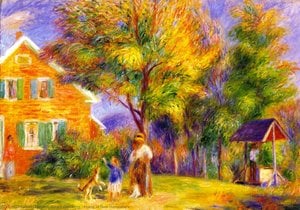
William James Glackens’ “Julia Reading,” painted in 1916, isn't merely a portrait; it’s a meticulously crafted window into the burgeoning dynamism and subtle social currents of early 20th-century New York City. Born during the height of the Ashcan School movement, Glackens rejected the idealized depictions favored by the National Academy of Design, instead choosing to capture the gritty reality of everyday life – the bustling streets, the casual interactions, and the quiet moments within a rapidly changing metropolis. “Julia Reading” exemplifies this approach, offering a glimpse into a specific scene that simultaneously feels intimate and profoundly connected to the larger urban narrative.
The painting immediately draws the eye to its central figure, a woman engrossed in a book. Her posture – slightly turned towards the viewer, her hand resting delicately on the page – conveys a sense of quiet contemplation amidst the implied activity around her. Glackens’ masterful use of light and shadow establishes a strong focal point, directing our gaze to Julia's face and highlighting the subtle details of her expression. The inclusion of two other individuals—a man standing behind her and another seated further back—adds layers of narrative complexity without disrupting the primary focus. These figures, though less defined, contribute to the sense of a shared space, a moment captured within the larger tapestry of urban life.
The Ashcan School: A Rejection of Tradition
Glackens was a key figure in the Ashcan School, a movement that challenged the established norms of American art. Rejecting the polished surfaces and grand narratives of academic painting, the Ashcan artists sought to depict the realities of urban life with honesty and immediacy. They favored working-class subjects, unvarnished scenes, and often employed a darker palette—a deliberate choice reflecting the sometimes bleak conditions of city living. “Julia Reading” embodies this spirit perfectly; it’s not a romanticized vision of New York, but rather a realistic portrayal of a woman finding solace in literature within its crowded streets.
The painting's style is characterized by loose brushstrokes and an emphasis on capturing the essence of the scene. Glackens employed a technique reminiscent of Impressionism, using broken color and subtle gradations to create a sense of movement and atmosphere. The composition itself—a slightly off-center arrangement with overlapping planes—adds to the painting’s dynamism and invites the viewer to become part of the scene.
Symbolism and Context: A Moment in Time
The book Julia is reading likely symbolizes escape, knowledge, or perhaps simply a moment of respite from the demands of city life. It's a small detail that speaks volumes about the human desire for intellectual stimulation amidst the chaos of urban existence. The setting itself—a public space filled with implied activity—suggests a sense of anonymity and connection within a large population. “Julia Reading” was painted during a period of rapid industrialization and urbanization in America, a time of significant social and economic change. The painting reflects this transformation, capturing the spirit of a city grappling with modernity while still retaining its inherent human qualities.
A Legacy of Realism: Glackens' Enduring Influence
William James Glackens’ work continues to resonate today because it offers a powerful and honest portrayal of American life. “Julia Reading” stands as a testament to his skill as an artist and his commitment to capturing the realities of the urban experience. His legacy extends beyond individual paintings; he helped pave the way for future generations of artists who sought to depict America with greater authenticity and social awareness. Reproductions of this evocative piece offer a valuable window into a bygone era, inviting viewers to contemplate the timeless themes of human connection, solitude, and the enduring power of art.
Preguntas y respuestas
¿A qué etapa de la carrera de William James Glackens pertenece "Julia Reading" (1916)?
"Julia Reading", creada en 1916, pertenece al Early Period de la trayectoria de William James Glackens.
¿Cómo puedo descubrir obras de arte similares a "Julia Reading" de William James Glackens?
Las obras similares a "Julia Reading" de William James Glackens se encuentran reunidas en la página de Similares de la obra.
¿Qué técnica se utilizó para "Julia Reading" de William James Glackens?
William James Glackens utilizó la técnica de Acrylic On Canvas para "Julia Reading". La técnica define la naturaleza material de la obra original.
Obras relacionadas


Biografía del artista
Un Pionero de la Escuela Ashcan
William James Glackens, una figura prominente en el arte americano, dejó una huella indeleble en la historia del arte con sus cautivadoras pinturas realistas. Nacido en Filadelfia, Pensilvania, en 1870, el viaje artístico de Glackens fue un testimonio de su inquebrantable pasión por capturar la esencia de la vida cotidiana.Vida Temprana e Influencias
Los primeros años de Glackens estuvieron marcados por una inclinación innata hacia el arte, lo que le llevó a inscribirse en la Academia de Bellas Artes de Pensilvania. Bajo la tutela de Thomas Anshutz, un renombrado realista, Glackens perfeccionó sus habilidades, convirtiéndose finalmente en uno de los fundadores de la Escuela Ashcan. Este movimiento rechazó las convenciones artísticas tradicionales, centrándose en cambio en las realidades ásperas de la vida metropolitana.Trayectoria Artística
El trabajo de Glackens se caracteriza por sus vibrantes escenas callejeras y representaciones de la vida cotidiana en el Nueva York y París pre-Primera Guerra Mundial, con tonos oscuros. Sus obras posteriores, influenciadas por Renoir, exhibieron un tono más brillante, reflejando su crecimiento como artista. Notablemente, Glackens también trabajó como ilustrador para periódicos y revistas en Filadelfia y Nueva York.- Vista de Haarlem con terrenos de blanqueo, una pintura de Jacob Isaakszoon van Ruisdael (Ruisdael), ejemplifica el nivel de detalle y artesanía que define el trabajo de Glackens. Esta pieza ahora forma parte de la colección del Museo Chrysler.
- La obra maestra de Glackens, Los Compradores, es un testimonio de su habilidad para capturar la esencia de la vida urbana. Esta pintura se puede encontrar en la colección del Nuevo Realismo en ArtsDot.com.
Legado e Impacto
Las contribuciones de Glackens al arte americano son multifacéticas, que se extienden más allá de su propio trabajo. Jugó un papel fundamental ayudando a Albert C. Barnes a adquirir pinturas europeas para la Fundación Barnes en Filadelfia. Esta colección se ha convertido en una piedra angular de la historia del arte americano. Obras clave y colecciones: * Los Compradores (Nuevo Realismo, óleo sobre lienzo, Museo Chrysler) * Vista de Haarlem con terrenos de blanqueo (Ruisdael, Castillo Sforza, Milán, Italia) Lecturas recomendadas: * [https://ArtsDot.com/@/william-james-glackens](https://ArtsDot.com/@/william-james-glackens) - explore la extensa colección de obras de Glackens en ArtsDot.com. * [https://en.wikipedia.org/wiki/william_glackens](https://en.wikipedia.org/wiki/william_glackens) - profundice en la biografía detallada de William James Glackens en Wikipedia.
William James Glackens
1870 - 1938 , Estados Unidos de América
Datos clave
- Artistas Influyentes:
- Thomas Anshutz
- Renoir
- Fecha De Nacimiento: 1870
- Lugar De Nacimiento: Filadelfia, EE. UU.
- Movimiento Artístico: Ashcan School, Realismo americano
- Nacionalidad: Estadounidense
- Nombre Completo: William James Glackens
- Nombres Alternativos: William J Glackens
- Obras Notables:
- The Shoppers
- Vista de Haarlem