Ver en contexto
 Enviar
 Compartir
 Detalles
 Guía
Guía

 Descargar
 Similares
 Radiografía
 Presentación de diapositivas
 Q&A
Q&A Estadísticas
Pink Lady

- 61.0 x 48.0 cm


 Ver más
La obra de arte que se muestra en esta página está protegida por las leyes de propiedad intelectual, lo que significa que no podemos crear ni vender legalmente una reproducción idéntica. Esta protección se hace cumplir en virtud de acuerdos internacionales como el Convenio de Berna y por las leyes nacionales, incluidas aquellas establecidas por el Ley de derechos de autor de los EE. UU. - Título 17.
Este método cumple plenamente con las normativas de derechos de autor, ya que no implica la copia ni la duplicación de la obra protegida. En su lugar, se trata de una reinterpretación creativa: una nueva pintura influenciada por la original, pero que no es idéntica a ella.
Giclée / Impresión de arte
Impresiones giclée o en lienzo de calidad de museo con producción rápida y opciones de acabado flexibles. ( Comprar pintura hecha a mano Cambiar a imagen digital)




P118B €10

P118H €10

P118W €10

P438Z €10

P508JH €12

P508YH €12

P805H €10

P805Z €10

P919BZ €10

P919G €10

P919XJ €10

P959ZH €10

P968JZ €12

W106C €8

W218G €10

W218JH €8

W218Y €10

W307PJ €10

W316G €10

W316PJ €8

W316Y €10

W398PJ €8

W4111J €10

W500HY €15

W500JH €15

W692G €12

W849H €8

W940BG €15

W953PJ €8




Elija entre nuestros tamaños predefinidos que respetan las proporciones originales de la obra.

Introduzca el ancho y el alto que necesite para adaptarse a su marco o pared. Una impresión solo puede recortarse, nunca hacerse más grande que la imagen original, por lo que un tamaño con una forma distinta perderá parte de la obra. Le enviaremos una maqueta digital para su aprobación antes de realizar cualquier impresión. La imagen que se muestra en esta página no refleja el recorte real; solo la maqueta lo hace.
Envío a todo el mundo () en 2 semanas en lugar de las 4/5 semanas estándar. (2 noviembre)

Envío exprés gratuito a todo el mundo

Lienzo de lino de alta calidad

Seguro de envío total

Garantía de reembolso de aranceles aduaneros

Garantía de fidelidad cromática exacta

Política de devolución de 100 días (solo por defectos)

Garantía de devolución del 100% del dinero

Descuento por cantidad
 La opción de vidrio solo está disponible en tamaños inferiores a 110 cm.

Pink Lady
Giclée / Impresión de arte
Dimensiones de la reproducción
-


Precio total final
€ 55
A Portrait of Turbulent Emotion: Willem de Kooning’s “Pink Lady”
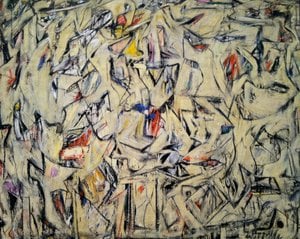
The painting "Pink Lady," created by Willem de Kooning in 1965, stands as a cornerstone of Abstract Expressionism and embodies the movement's preoccupation with raw emotion and spontaneous gesture. More than just a depiction of a woman—though undeniably present—it’s an exploration of psychological complexity rendered through a masterful blend of color and form that continues to captivate viewers decades after its creation. This striking artwork offers a glimpse into De Kooning’s artistic vision during his most prolific period, reflecting the anxieties and uncertainties of the Cold War era while simultaneously pushing boundaries of representational art.The Style and Technique: Embracing Gestural Abstraction
De Kooning's approach to painting was fundamentally antithetical to traditional academic conventions. He rejected meticulous detail in favor of a gestural style characterized by bold brushstrokes, drips, and smears—techniques that prioritized feeling over precise observation. “Pink Lady” exemplifies this ethos perfectly. The woman’s figure isn’t rendered with anatomical accuracy; instead, it's fragmented into amorphous shapes – swirls, patches, and angular protrusions – which convey a sense of dynamism and instability. These forms are layered with vibrant shades of pink—ranging from delicate blush tones to intense crimson hues—creating an illusion of skin texture and emphasizing the artist’s deliberate disregard for conventional realism. The yellow background serves as a counterpoint to the pink, amplifying the painting's emotional intensity and contributing to its overall visual impact.Historical Context: Navigating Anxiety in the Mid-Century
Painted during the height of the Cold War, “Pink Lady” reflects the pervasive anxieties surrounding geopolitical tensions and societal upheaval. De Kooning’s work aligns with a broader artistic impulse to confront uncomfortable truths about human experience—fear, aggression, and vulnerability—rather than offering comforting illusions. The painting's unsettling depiction of femininity speaks to anxieties about gender roles and identity during this period, mirroring broader cultural debates concerning female empowerment and psychological complexity. Furthermore, De Kooning’s stylistic choices can be interpreted as a reaction against the perceived sterility of postwar European art, asserting instead an uncompromising commitment to expressive freedom.Symbolism: Exploring Inner Landscape
While ostensibly portraying a woman, “Pink Lady” transcends literal representation, delving into realms of psychological symbolism. The pink skin tone itself is significant—often associated with femininity and vulnerability but also imbued with connotations of erotic desire and primal instinct. The fragmented form of the figure symbolizes the disintegration of identity and the struggle to maintain composure amidst turbulent emotions. Critics have noted parallels between De Kooning’s painting and Freud's theories on psychoanalysis, suggesting that “Pink Lady” represents an unconscious confrontation with repressed desires and anxieties.Emotional Impact: A Resonance of Raw Feeling
Ultimately, "Pink Lady" succeeds in conveying a profound emotional resonance. Its unsettling beauty stems from its refusal to sanitize or sentimentalize human experience. The painting compels viewers to confront uncomfortable truths about the complexities of emotion—passion, rage, despair—and invites contemplation on the nature of selfhood and psychological vulnerability. It’s a piece that lingers in the mind long after viewing, prompting reflection on themes of trauma, resilience, and the enduring power of art to express the deepest recesses of human consciousness. Its vibrant colors and energetic brushstrokes capture not just an image but also a palpable sense of unease—a testament to De Kooning's unparalleled ability to translate inner turmoil into visual form.Preguntas y respuestas
¿Qué edad tenía Willem de Kooning cuando creó "Pink Lady"?
Willem de Kooning creó "Pink Lady" a la edad de 61. El artista nació en 1904 y la obra data de 1965.
¿Qué forma y dimensiones tiene "Pink Lady" de Willem de Kooning?
"Pink Lady" de Willem de Kooning tiene las proporciones de una obra en Portrait de 61 x 48 cm.
¿"Pink Lady" de Willem de Kooning utiliza contrastes fuertes o armonías suaves?
La composición cromática de "Pink Lady" de Willem de Kooning combina un contraste Serene con una armonía Unified Palette.
Obras relacionadas


Biografía del artista
vida temprana y carrera
Willem de Kooning, un reconocido artista abstracto expresionista holandés-estadounidense, nació el 24 de abril de 1904 en Róterdam, Países Bajos. Sus padres, Leendert de Kooning y Cornelia Nobel, se divorciaron en 1907, y de Kooning vivió con su padre antes de mudarse a la atención de su madre. Dejó la escuela en 1916 y se convirtió en aprendiz en una firma de arte comercial.desarrollo artístico
De Kooning asistió a clases nocturnas en la Academia de Artes Visuales y Ciencias Aplicadas en Róterdam de 1916 a 1924. En 1927, se mudó a la ciudad de Nueva York, donde trabajó como pintor de casas y comenzó a desarrollar su estilo artístico único.expresionismo abstracto
El trabajo de De Kooning se inclinó hacia el expresionismo abstracto en la década de 1950, caracterizado por pinceladas audaces y colores vibrantes. Su pintura Mujer I (1950-1952) es una obra seminal en este movimiento, que combina la figuración con la espontaneidad y la intensidad emocional.obras notables y colecciones
* El Glazador (137 x 112 cm, óleo sobre lienzo): una sombría pintura en tonos tierra inspirada en los frescos de Boscoreale. * Puerta al río (expresionismo abstracto): una pintura con pinceladas anchas que recuerda a su pasado como pintor de casas. * Hombre de pie (expresionismo abstracto): un ejemplo característico del estilo expresionista abstracto de De Kooning.museos y colecciones
* Museo Boijmans Van Beuningen, Róterdam, Países Bajos: cuenta con una impresionante colección de más de 151.000 obras de arte. * Universiteitsbibliotheek, Leiden, Países Bajos: alberga un importante centro cultural con más de 5.200.000 volúmenes y 1.000.000 libros electrónicos. El legado de Willem de Kooning continúa inspirando a artistas y entusiastas del arte por igual, consolidando su lugar como pionero del expresionismo abstracto.
Willem de Kooning
1904 - 1997 , Países Bajos
Datos clave
- Artistas Que Influyeron: ['Arshile Gorky']
- Fecha De Muerte: 1997
- Fecha De Nacimiento: 24 de abril de 1904
- Lugar De Nacimiento: Rotterdam, Países Bajos
- Movimiento Artístico: Expresionismo abstracto
- Nacionalidad: Neerlandés-estadounidense
- Nombre Completo: Willem de Kooning
- Obras Notables:
- Mujer I
- El Vidriero
- Excavación
Artículos relacionados

Expresionismo Abstracto: 10 Obras Maestras que Transformaron el Arte |
Descubre las 10 obras maestras del Expresionismo Abstracto: Pollock, Rothko y más. Explora la historia, técnica y significado de estos lienzos icónicos. Reproducciones de arte exclusivas en .

Dominando la Abstracción: Las 25 Obras Más Icónicas de Wassily Kandinsky
Explora las 25 obras maestras de Kandinsky y su arte abstracto. Descubre reproducciones de museo en ArtsDot.com.

Dominando las Sombras: Las 25 Obras Maestras de Francisco de Goya
Explora las 25 obras maestras de Goya, del romanticismo a sus pinturas negras. ¡Descubre toda la colección en ArtsDot.com!

Willem de Kooning: Abstraction, Gesture & the Evolution of Post-War American Painting
Explore the evolution of Willem de Kooning's iconic Abstract Expressionist paintings. Discover his signature style, key themes & investment potential with expert insights for discerning art collectors.

Más Allá de la Representación: Explorando el Paisaje Emocional del Expresionismo Abstracto
Descubra el Expresionismo Abstracto en profundidad. Análisis de artistas clave como Rothko y Richter, su contexto histórico e inversión en arte. Guía experta para coleccionistas.