


 Vista previa
 Compartir
 Compartir
 Ver detalles
 Guía
Guía

 Descargar
 Ver artículos similares
 Radiografía
 Presentación de diapositivas
 Estadísticas
Kawachi


 Leer más
Giclée / Impresión de arte
Impresiones giclée o en lienzo de calidad de museo con producción rápida y opciones de acabado flexibles. ( Encargar reproducción pintada a mano Ver versión en imagen digital)




P118B €10

P118H €10

P118W €10

P438Z €10

P508JH €12

P508YH €12

P805H €10

P805Z €10

P919BZ €10

P919G €10

P919XJ €10

P959ZH €10

P968JZ €12

W106C €8

W218G €10

W218JH €8

W218Y €10

W307PJ €10

W316G €10

W316PJ €8

W316Y €10

W398PJ €8

W4111J €10

W500HY €15

W500JH €15

W692G €12

W849H €8

W940BG €15

W953PJ €8




Elija entre nuestros tamaños predefinidos que respetan las proporciones originales de la obra.

Introduzca el ancho y el alto que necesite para adaptarse a su marco o pared. Una impresión solo puede recortarse, nunca hacerse más grande que la imagen original, por lo que un tamaño con una forma distinta perderá parte de la obra. Le enviaremos una maqueta digital para su aprobación antes de realizar cualquier impresión. La imagen que se muestra en esta página no refleja el recorte real; solo la maqueta lo hace.
Envío a todo el mundo () en 2 semanas en lugar de las 4/5 semanas estándar. (23 octubre)

Envío exprés gratuito a todo el mundo

Lienzo de lino de alta calidad

Seguro de envío completo

Garantía de reembolso de impuestos aduaneros

Garantía de fidelidad cromática exacta

Política de devolución de 100 días (solo por defectos)

Garantía de devolución del 100% del dinero

Oferta por volumen
 La opción de vidrio solo está disponible en tamaños inferiores a 110 cm.

Kawachi
Giclée / Impresión de arte
Tamaño de la reproducción
-


Precio total
€ 54
A Mountain’s Breath: Utagawa Hiroshige's "Kawachi"
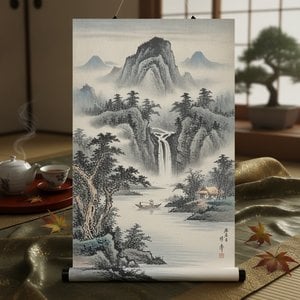
Utagawa Hiroshige’s “Kawachi,” painted in 1853, isn’t merely a landscape; it’s a distilled moment of profound serenity captured with the meticulous precision and poetic sensibility that defined his career. This woodblock print, rendered in rich Prussian blue and earthy ochre tones, transports us to the heart of Japan's mountainous interior – a region often overlooked yet brimming with spiritual significance. The scene unfolds along a gently flowing river, framed by the imposing silhouette of Mount Otoko rising majestically in the distance. The composition is deceptively simple, yet layered with subtle details that invite prolonged contemplation.
Hiroshige’s mastery lies not just in his technical skill but in his ability to imbue a static image with a sense of movement and atmosphere. The river itself seems to breathe, its surface reflecting the diffused light of the sky. The trees lining the banks are depicted with an almost frenetic energy – each leaf meticulously rendered, suggesting a constant rustle in the breeze. This isn’t a photograph; it's a carefully constructed illusion designed to evoke the feeling of being *there*, enveloped by the natural world.
The Edo Aesthetic and the Poetics of Place
“Kawachi” is deeply rooted in the aesthetic principles of the Edo period (1603-1868), a time of relative peace and prosperity in Japan. During this era, *ukiyo-e* – “pictures of the floating world” – flourished, offering a diverse range of subjects from courtesans and actors to landscapes and historical events. However, Hiroshige’s approach transcended mere entertainment; he sought to capture the essence of Japanese life and nature, imbuing his works with a sense of melancholy and transience—a core theme of *wabi-sabi*.
The title itself, “Kawachi,” refers to a province in western Japan, specifically the area surrounding present-day Osaka. Hiroshige wasn’t simply documenting this location; he was attempting to convey its spirit – a feeling of quiet contemplation and connection with the natural world. This focus on place, rather than grand historical narratives or dramatic events, distinguished his work from earlier *ukiyo-e* styles.
Technique: The Art of Prussian Blue and Karami-zuri
The print’s arresting blue hue is largely due to the innovative use of Prussian blue pigment, a relatively new import to Japan at the time. Hiroshige was one of the first Japanese artists to embrace this vibrant color, which allowed him to create dramatic skies and deep shadows with unprecedented intensity. The color palette is further complemented by subtle washes of ochre, umber, and grey, creating a sense of depth and atmospheric perspective.
The print was created using the *karami-zuri* (key block) technique, a complex process involving multiple woodblocks – one for the ink (mica), one for the colors, and one for the outlines. This allowed Hiroshige to achieve incredible detail and tonal variation within each color area. The careful layering of these blocks is evident in the subtle gradations of blue and the delicate rendering of the foliage.
Symbolism and Emotional Resonance
Beyond its technical brilliance, “Kawachi” resonates with a profound sense of emotional depth. The solitary figure on the riverbank – likely a traveler or pilgrim – suggests a yearning for connection and spiritual renewal. The vastness of the mountains in the distance evokes a feeling of humility and insignificance in the face of nature’s grandeur.
Hiroshige's landscapes weren't simply pretty pictures; they were invitations to contemplate the ephemeral nature of life, the beauty of impermanence, and the enduring power of the natural world. “Kawachi” stands as a testament to his artistic vision—a timeless masterpiece that continues to captivate viewers with its serene beauty and profound emotional resonance.
Preguntas y respuestas
¿Es Utagawa Hiroshige, creador de "Kawachi", conocido bajo otros nombres?
Utagawa Hiroshige también es conocido como Andō Tokutarō.
¿Qué paleta de colores se utiliza en "Kawachi" de Utagawa Hiroshige?
La paleta de "Kawachi" de Utagawa Hiroshige se describe como Neutrals. Es una descripción concisa de los colores de la obra.
¿Cómo se relacionan entre sí los colores de "Kawachi"?
La armonía cromática de "Kawachi" se describe como Softly Mixed Palette.
Obras relacionadas


Biografía del artista
biografía de un ícono del arte japonés
Utagawa Hiroshige, un renombrado artista ukiyo-e japonés, vivió de 1797 a 1858. Es ampliamente considerado como el último gran maestro de este género tradicional. La obra de Hiroshige se caracteriza por su enfoque poético y ambiental, lo que la distingue de las impresiones más audaces y formales de sus contemporáneos.estilo artístico y técnicas
El uso del color por parte de Hiroshige fue sutil pero esencial en sus grabados. A menudo empleaba múltiples impresiones en el mismo área, utilizando la técnica de bokashi (gradación de color), que era laboriosa pero resultó en un efecto visual único. Sus obras más famosas incluyen las cincuenta y tres estaciones del Tōkaidō y las cien vistas famosas de Edo, ambas mostrando su dominio de las series de paisajes.influencia en el arte occidental
La obra de Hiroshige tuvo un profundo impacto en el arte occidental, particularmente durante la tendencia japonista a finales del siglo XIX. Artistas como Édouard Manet y Claude Monet fueron influenciados por los grabados japoneses, mientras que los postimpresionistas como Vincent van Gogh coleccionaron y estudiaron las composiciones de Hiroshige.legado y desarrollo
Tras la muerte de Hiroshige en 1858, el género ukiyo-e experimentó un rápido declive debido a la occidentalización tras la restauración Meiji de 1868. Sin embargo, su influencia en el arte occidental sigue siendo significativa, con muchos artistas que continúan inspirándose en sus obras.- el movimiento artístico ukiyo-e - descubre más sobre el género que definió la obra de Hiroshige.
- ukiyo-e en wikipedia - explora la historia y la importancia del ukiyo-e en el arte japonés.
- museo de arte fuji - descubre un museo renombrado que exhibe tanto el arte japonés como el occidental, incluyendo obras inspiradas en el estilo de Hiroshige.

Utagawa Hiroshige
1797 - 1858 , Japón
Datos clave
- Artistas Que Influyeron: ['Katsushika Hokusai']
- Estilo Artístico: Ukiyo-e
- Fecha De Fallecimiento: 1858
- Fecha De Nacimiento: 1797
- Influencia En Artistas:
- Édouard Manet
- Claude Monet
- Vincent van Gogh
- Lugar De Nacimiento: Tokio, Japón
- Nacionalidad: Japonés
- Nombre Completo: Utagawa Hiroshige
- Obras Notables:
- Las 53 estaciones del Tokaido
- 100 vistas famosas de Edo
Artículos relacionados
Serenity on Canvas: A Guide to the Timeless Beauty of Japanese Landscape Painting
Discover the serene beauty of Japanese landscape painting. From Hokusai's iconic woodblock prints to meditative sumi-e ink washes, explore a visual journey through the 'floating world' and learn how to bring this timeless Zen aesthetic into your modern home decor.

Ukiyo-e's Poetic Visionary: Hiroshige Ando & the Transformation of Landscape in 19th-Century Japan
Explore the life & art of Ando Hiroshige, Japan's last great ukiyo-e master. Discover his iconic landscapes, poetic style, and profound influence on Western Impressionism. Learn about The Fifty-Three Stations & more!

Ukiyo-e: Un Viaje al Corazón del Mundo Flotante Japonés y su Legado Artístico
Descubre el fascinante mundo del Ukiyo-e, el arte japonés del Período Edo. Explora las técnicas de grabado, los maestros Hokusai y Hiroshige, y su legado perdurable. ¡Un viaje cultural inolvidable!

Floating World: The Captivating Art and Legacy of Japanese Ukiyo-e
Explore the profound beauty of Japanese Ukiyo-e. Discover the history, masters like Hokusai, and the enduring legacy of the 'Floating World' through an expert art-historical lens.

Katsushika Hokusai: Las 25 Obras Maestras del Ukiyo-e que Transformaron el Arte Japonés | ArtsDot
Descubre las 25 obras maestras de Katsushika Hokusai, el genio del ukiyo-e. Explora 'La Gran Ola', paisajes japoneses y su impacto en el arte moderno. Reproducciones de alta calidad para tu hogar en ArtsDot.com.


