


 Vista previa
 Compartir
 Compartir
 Ver detalles
 Guía
Guía

 Descargar
 Ver artículos similares
 Radiografía
 Presentación de diapositivas
 Estadísticas
Figure


 Leer más
Reproducción al óleo hecha a mano
Óleo sobre lienzo pintado a mano en el tamaño y marco de su elección, realizado por encargo por nuestros artistas. ( Cambiar a formato impreso Ver versión en imagen digital)




P118B $10

P118H $10

P118W $10

P438Z $10

P508JH $12

P508YH $12

P805H $10

P805Z $10

P919BZ $10

P919G $10

P919XJ $10

P959ZH $10

P968JZ $12

W106C $8

W218G $10

W218JH $8

W218Y $10

W307PJ $10

W316G $10

W316PJ $8

W316Y $10

W398PJ $8

W4111J $10

W500HY $15

W500JH $15

W692G $12

W849H $8

W940BG $15

W953PJ $8




Elija entre nuestros tamaños predefinidos que respetan las proporciones originales de la obra.

Puede ingresar sus propias dimensiones para adaptarse a un marco o espacio específico. Si el tamaño seleccionado no coincide con las proporciones de la imagen original, recortaremos la obra o extenderemos la pintura con elementos adicionales pintados a mano. Se le enviará una maqueta digital para su aprobación antes de comenzar la producción.
Tenga en cuenta que la vista previa en pantalla no refleja el recorte o la extensión reales. Solo la maqueta mostrará con precisión la composición final.
Si bien existen tamaños personalizados, recomendamos seleccionar una dimensión de la lista predefinida para preservar las proporciones originales.
Tras realizar el pedido, el equipo de ArtsDot.com enviará un correo electrónico al cliente para solicitar instrucciones y proporcionarle una vista previa del boceto.
Envío a todo el mundo () en 3-4 semanas en lugar de las 5 semanas estándar. (21 septiembre). Sin comprometer la calidad.

Envío exprés gratuito a todo el mundo

Lienzo de lino de alta calidad

Seguro de envío completo

Garantía de reembolso de impuestos aduaneros

Garantía de fidelidad cromática exacta

Política de devolución de 100 días (solo por defectos)

Garantía de devolución del 100% del dinero

Oferta por volumen
 La opción de vidrio solo está disponible en tamaños inferiores a 110 cm.

Figure
Técnica de reproducción
Tamaño de la reproducción
-


Precio total
$ 263
A Symphony of Motion: Unveiling Umberto Boccioni’s “Figure”
Umberto Boccioni's "Figure," painted in 1912, isn’t merely a depiction of a human form; it’s an embodiment of the Futurist ethos—a fervent celebration of dynamism, speed, and the fractured beauty of modern life. This artwork, rendered against a striking blue backdrop, immediately commands attention with its bold lines, fragmented composition, and palpable sense of movement. It's a window into the revolutionary artistic spirit that defined early 20th-century Italy, offering a glimpse into the mind of one of its most influential figures.
Boccioni’s approach to painting during this period was radically different from the established traditions of academic art. He rejected static representation in favor of capturing the fleeting essence of experience—the sensation of movement and change. “Figure” exemplifies this perfectly, utilizing a technique that anticipates elements of Cubism while firmly rooted within the tenets of Futurism. The figure itself is not presented as a solid, unified entity but rather as a collection of intersecting planes and angles, suggesting an ongoing process of becoming. This deliberate deconstruction mirrors the Futurist fascination with industrialization and the breakdown of traditional forms in the face of technological advancement.
The Language of Futurism
To truly understand “Figure,” one must appreciate the context of its creation – the explosive rise of Futurism. Spearheaded by Filippo Tommaso Marinetti in 1909, this movement rejected the past as a source of stagnation and embraced the future with unbridled enthusiasm. Futurist artists sought to capture the energy of machines, the speed of automobiles, and the dynamism of urban life. They celebrated violence, war, and all that was new and exciting. Boccioni, deeply involved in the movement, translated these ideals onto canvas, employing techniques designed to convey a sense of velocity and instability.
The use of color is particularly significant. The dominant blue serves not as a neutral background but rather as an active element, contributing to the overall feeling of motion. It’s a cool, almost vibrating hue that seems to push forward, drawing the viewer's eye into the fragmented form of the figure. Notice how the lines themselves are not smooth or continuous; they are broken and angular, mimicking the sharp edges of machinery and the fractured perspectives of modern urban landscapes. This deliberate disruption of traditional perspective was a key element of Futurist aesthetics – a rejection of illusionism in favor of conveying an immediate, visceral experience.
Symbolic Resonance and Emotional Impact
While “Figure” resists easy interpretation, it’s clear that the artist is exploring themes of transformation and dynamism. The elongated tail, reminiscent of a fish or perhaps a bird in flight, suggests movement, fluidity, and an escape from earthly constraints. It could be interpreted as representing the individual's journey through the complexities of modern life—a constant state of flux and change. The figure’s posture is ambiguous; it appears to be caught in a moment of transition, neither fully grounded nor entirely airborne.
Despite its fragmented composition, “Figure” evokes a powerful emotional response. It's not simply a depiction of an object or person but rather a representation of the *feeling* of movement—the exhilaration and disorientation that accompany rapid change. The artwork’s bold lines and vibrant colors create a sense of urgency and excitement, inviting the viewer to participate in this dynamic visual experience. It’s a testament to Boccioni's ability to capture the spirit of his time – a period of unprecedented technological advancement and social upheaval.
A Legacy of Innovation
Umberto Boccioni’s “Figure” stands as a pivotal work in the history of modern art. Its innovative use of line, color, and composition paved the way for subsequent movements such as Cubism and Constructivism. Reproductions of this artwork offer a unique opportunity to experience the energy and dynamism of Futurist aesthetics firsthand. ArtsDot’s hand-painted reproductions faithfully capture the original's intensity and detail, allowing you to bring this revolutionary masterpiece into your home or office – a vibrant reminder of a time when artists dared to challenge convention and embrace the future.
Obras relacionadas


Biografía del artista
vida temprana y formación
umberto boccioni, un pintor y escultor italiano fundamental, nació el 19 de octubre de 1882 en Reggio Calabria, Italia. El trabajo gubernamental de su padre llevó a frecuentes traslados por toda Italia, lo que influyó en la vida temprana de Boccioni. A los 15 años, se estableció en Catania, Sicilia, donde completó sus estudios. Más tarde se mudó a Roma para estudiar arte en la academía de bellas artes de Roma's escuela libre del nudo y bajo giovanni mataloni, un artista de carteles de estilo liberty.el movimiento futurista
El enfoque innovador de Boccioni en la forma y la desconstrucción de la masa tuvo un gran impacto en el mundo del arte. Se convirtió en el teórico principal del movimiento futurista, firmando el manifiesto de los pintores futuristas ("manifiesto de los pintores futuristas") en 1910. Sus obras se conservan en muchos museos de arte públicos, incluyendo una retrospectiva importante en el museo Metropolitano de Arte en la ciudad de Nueva York en 1988.obras notables y legado
- dinamismo de un cuerpo humano (futurismo, óleo sobre lienzo), una pintura que muestra el estilo único de Boccioni.
- formas dimensionales de un caballo (40 x 40 cm, futurismo, óleo sobre lienzo), otro ejemplo de su enfoque innovador en la forma.
- formas únicas de continuidad en el espacio (futurismo, bronce), una escultura que demuestra su desconstrucción de la masa sólida.
enlaces relevantes de ArtsDot.com
- pintura por 'umberto boccioni' | umberto boccioni:dinamismo de un cuerpo humano (futurismo, óleo sobre lienzo,)
- pintura por 'umberto boccioni' | umberto boccioni:formas dimensionales de un caballo (40 x 40 cm, futurismo, óleo sobre lienzo,)
- pintura por 'umberto boccioni' | umberto boccioni:Lanceros (futurismo, óleo sobre lienzo,)
wikipedia: umberto boccioni
umberto boccioni, un pintor y escultor italiano influyente. Ayudó a dar forma al estético revolucionario del movimiento futurista como una de sus figuras principales. nota: este artículo es una traducción del italiano, pero con fines analíticos, se ha traducido de nuevo al inglés. La pregunta original estaba en italiano.
Umberto Boccioni
1882 - 1916 , Italia
Datos clave
- Artistas Que Influyeron:
- Giovanni Mataloni
- Giacomo Balla
- Fecha De Nacimiento: 19 de octubre de 1882
- Influenció A Artistas/Movimientos:
- Constructivismo
- Expresionismo abstracto
- Lugar De Nacimiento: Reggio Calabria, Italia
- Movimiento Artístico: Futurismo
- Nacionalidad: Italiana
- Nombre Completo: Umberto Boccioni
- Obras Notables:
- Dinamismo de un cuerpo humano
- Formas únicas de continuidad
- La ciudad se eleva
- Dimensiones de un caballo
Artículos relacionados

Dinamismo y Disrupción: El Legado Perdurable del Futurismo
Descubre el fascinante mundo del Futurismo: su manifiesto revolucionario, artistas clave como Boccioni y Marinetti, y su impacto duradero en el arte moderno. Análisis experto y contexto histórico.

Las 10 Obras Maestras del Azul Pizarra: Arte, Historia y Decoración
Descubre las 10 pinturas más famosas dominadas por el azul pizarra. Explora la historia, técnica y belleza de Monet, Van Gogh y otros maestros. Encuentra reproducciones de arte exclusivas para decorar tu hogar en .

Umberto Boccioni: Dynamism, Futurist Ideals & the Evolution of Modern Sculpture
Explore the revolutionary art of Umberto Boccioni, a leading figure of Futurism. Discover his iconic sculptures & paintings, and delve into the movement's impact on modern art history with ArtsDot.

Serene Blue Backgrounds: Discover Soulful Art to Transform Your Space with Timeless Elegance
Transform your home with soulful blue art. From serene Monet impressions to modern textured sculptures, discover curated masterpieces designed to inspire calm. Explore expert art consultations and bespoke hand-painted reproductions to create your personal sanctuary.
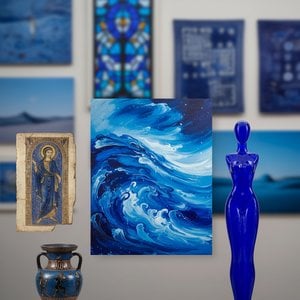
The Allure of Azure: Exploring the Symbolic & Aesthetic Depths of Blue in Art History
Explore the rich history of blue in art! Discover its symbolism, from ancient pigments to modern masterpieces by Kandinsky & Seurat. Uncover the psychological impact and cultural meanings behind this captivating hue.


