


 Vista previa
 Compartir
 Compartir
 Ver detalles
 Guía
Guía

 Descargar
 Ver artículos similares
 Radiografía
 Presentación de diapositivas
 Estadísticas
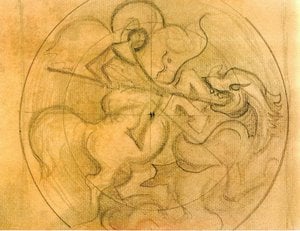
Eos, (1958)
 Leer más
La obra de arte que se muestra en esta página está protegida por las leyes de propiedad intelectual, lo que significa que no podemos crear ni vender legalmente una reproducción idéntica. Esta protección se hace cumplir en virtud de acuerdos internacionales como el Convenio de Berna y por las leyes nacionales, incluidas aquellas establecidas por el Ley de derechos de autor de los EE. UU. - Título 17.
Este método cumple plenamente con las normativas de derechos de autor, ya que no implica la copia ni la duplicación de la obra protegida. En su lugar, se trata de una reinterpretación creativa: una nueva pintura influenciada por la original, pero que no es idéntica a ella.
Giclée / Impresión de arte
Impresiones giclée o en lienzo de calidad de museo con producción rápida y opciones de acabado flexibles. ( Encargar reproducción pintada a mano Ver versión en imagen digital)




































Elija entre nuestros tamaños predefinidos que respetan las proporciones originales de la obra.

Introduzca el ancho y el alto que necesite para adaptarse a su marco o pared. Una impresión solo puede recortarse, nunca hacerse más grande que la imagen original, por lo que un tamaño con una forma distinta perderá parte de la obra. Le enviaremos una maqueta digital para su aprobación antes de realizar cualquier impresión. La imagen que se muestra en esta página no refleja el recorte real; solo la maqueta lo hace.
Envío a todo el mundo () en 2 semanas en lugar de las 4/5 semanas estándar. (23 octubre)

Envío exprés gratuito a todo el mundo

Lienzo de lino de alta calidad

Seguro de envío completo

Garantía de reembolso de impuestos aduaneros

Garantía de fidelidad cromática exacta

Política de devolución de 100 días (solo por defectos)

Garantía de devolución del 100% del dinero

Oferta por volumen
 La opción de vidrio solo está disponible en tamaños inferiores a 110 cm.

Eos, (1958)
Giclée / Impresión de arte
Tamaño de la reproducción
-


Precio total
€ 54
Obras relacionadas


Biografía del artista
Toni Stadler: A Master of German Portraiture
Toni Stadler (1888-1982) stands as a quietly influential figure in 20th-century German art, particularly recognized for her exceptional skill in capturing the essence of human character through meticulously crafted portraits. Born in Germany, Stadler’s artistic journey unfolded amidst the burgeoning Expressionist movement, though she ultimately forged her own distinctive path—one characterized by unwavering dedication to realism and a profound sensitivity to light and texture. Unlike many contemporaries who embraced bold stylistic gestures, Stadler favored a restrained approach, prioritizing observation and nuanced rendering to convey psychological depth within her canvases.Early Life & Artistic Training:
Influenced by Impressionism and Early Expressionism, Toni Stadler’s formative years instilled in him a foundational understanding of capturing fleeting moments and conveying emotion—principles that would permeate his subsequent oeuvre. His training encompassed both academic instruction and independent experimentation, allowing him to hone his technical abilities while simultaneously cultivating his unique artistic vision. This dual approach proved invaluable as he navigated the evolving landscape of German art during the turbulent years leading up to World War I. He began his artistic education at Munich School for Decorative Arts in 1906 where he studied under Hermann Hahn.Notable Works:
Among Stadler’s most celebrated works are ‘Karl amadeus Hartmann’ (1958) and ‘Heinrich Heine,’ 1958 – sculptures that exemplify his mastery of form and material. ‘Karl amadeus Hartmann,’ a serene portrait depicting a man seated beside a fountain, exemplifies Stadler’s ability to utilize light and shadow to illuminate the subject's inner life. The sculpture captures a moment of contemplative stillness, inviting viewers to contemplate Hartmann’s gaze and posture. Similarly, ‘Heinrich Heine,’ 1958—a dark stone sculpture—demonstrates Stadler’s commitment to textural realism, conveying the weight and solidity of human presence. These pieces showcase Stadler's meticulous attention to detail and his masterful manipulation of material to convey emotion.Technique & Style: Light, Texture & Psychological Insight
Stadler’s technique was rooted in meticulous observation and painstaking execution. She employed a palette knife extensively, layering thin glazes of pigment onto textured surfaces to achieve remarkable depth and luminosity. This method allowed her to capture subtle variations in skin tone and surface sheen—details that conveyed not only physical appearance but also psychological state. Her canvases often possessed an ethereal quality, achieved through masterful manipulation of light, mirroring the Impressionists’ fascination with capturing atmospheric effects. Stadler's dedication to realism combined with her profound understanding of psychology resulted in portraits that are both visually stunning and emotionally resonant.Legacy & Historical Significance:
Despite eschewing grand narratives or overtly symbolic imagery, Stadler’s work holds considerable historical significance. She represents a counterpoint to the expressive fervor of her era, demonstrating that profound artistic achievement could reside in quiet contemplation and unwavering fidelity to realism. Her sculptures continue to resonate today, serving as reminders of the enduring power of observation and the importance of conveying human emotion with sensitivity and precision. Toni Stadler’s legacy rests on her ability to transform ordinary subjects into compelling portraits—expressions of humanity rendered with unparalleled grace and artistry. She solidified her place in German art history as a champion of understated beauty and psychological depth, influencing generations of artists who followed.
Toni Stadler
1888 - 1982 , Alemania
Datos clave
- Artistic Movement Or Style: Retrato Artístico
- Date Of Birth: 1888
- Date Of Death: 1982
- Full Name: Toni Stadler
- Nationality: Germano
- Notable Artworks:
- Karl amadeus Hartmann
- Heinrich Heine
- Place Of Birth: Alemania