


 Vista previa
 Compartir
 Compartir
 Ver detalles
 Guía
Guía

 Descargar
 Ver artículos similares
 Radiografía
 Presentación de diapositivas
 Estadísticas
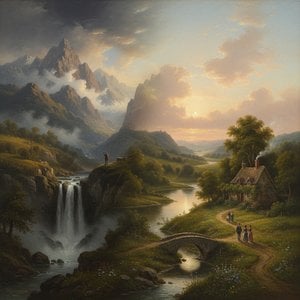
Landscape


 Leer más
Giclée / Impresión de arte
Impresiones giclée o en lienzo de calidad de museo con producción rápida y opciones de acabado flexibles. ( Encargar reproducción pintada a mano Ver versión en imagen digital)




































Elija entre nuestros tamaños predefinidos que respetan las proporciones originales de la obra.

Introduzca el ancho y el alto que necesite para adaptarse a su marco o pared. Una impresión solo puede recortarse, nunca hacerse más grande que la imagen original, por lo que un tamaño con una forma distinta perderá parte de la obra. Le enviaremos una maqueta digital para su aprobación antes de realizar cualquier impresión. La imagen que se muestra en esta página no refleja el recorte real; solo la maqueta lo hace.
Envío a todo el mundo () en 2 semanas en lugar de las 4/5 semanas estándar. (21 octubre)

Envío exprés gratuito a todo el mundo

Lienzo de lino de alta calidad

Seguro de envío completo

Garantía de reembolso de impuestos aduaneros

Garantía de fidelidad cromática exacta

Política de devolución de 100 días (solo por defectos)

Garantía de devolución del 100% del dinero

Oferta por volumen
 La opción de vidrio solo está disponible en tamaños inferiores a 110 cm.

Landscape
Giclée / Impresión de arte
Tamaño de la reproducción
-


Precio total
€ 54
Obras relacionadas


Biografía del artista
A Romantic Vision of the Welsh Landscape
Thomas Danby (1818–1886) stands as a luminous figure in the pantheon of Victorian landscape painting, a master who sought to bridge the gap between the physical reality of nature and the profound depths of human emotion. Born in Bristol into an artistic lineage that commanded respect, Danby was the son of the celebrated painter Francis Danby. This early immersion in a world of dramatic, emotionally charged canvases provided him with a foundational understanding of the power of atmosphere. However, where his father often leaned toward the theatrical and the imaginative, Thomas carved a distinct path, focusing his gaze upon the rugged, serene beauty of the natural world, particularly the evocative terrains of Wales.
His artistic journey was significantly shaped by his formative years in Paris during the 1820s and 30s. It was within the hallowed halls of the Louvre that Danby honed his technical prowess, earning a living by meticulously copying the masters. This period of intense study brought him into a deep, lifelong dialogue with the work of Claude Lorrain. From the French master, Danby adopted a devotion to atmospheric perspective and the use of light to create a sense of sublime grandeur. He did not merely seek to replicate the scenery he encountered; rather, he sought to capture what his contemporaries described as the "inner heart's feeling" of a view, prioritizing the spiritual resonance of a landscape over the mere recording of local facts.
The Spirit of Romanticism and Technical Mastery
As Danby’s career progressed, his work became a testament to the enduring spirit of Romanticism. His compositions often featured the sweeping vistas of the Welsh mountains, such as the majestic Moel Siabod or the tranquil reaches of Llyn Cynwch. In these works, one finds a masterful command of light and tone, whether rendered in the rich, textured layers of oil on canvas or the delicate, translucent washes of his later watercolor mastery. His ability to manipulate light—creating the soft glow of dusk or the diffused, misty atmosphere of a mountain morning—allowed him to imbue even the most pastoral scenes with a sense of quiet contemplation and awe.
The evolution of his technique is particularly evident in his transition toward watercolor painting in his later years. Having achieved significant recognition through exhibitions at the Royal Academy and the British Institution, Danby became an esteemed member of the Society of Painters in Watercolours. This shift allowed him to explore even more subtle gradations of color and light, further refining his ability to evoke the ephemeral qualities of nature. His friendship with Paul Falconer Poole also played a vital role in this development, as the two shared a deep-seated passion for the natural world that informed their respective approaches to landscape.
Legacy and Artistic Significance
The significance of Thomas Danby lies in his ability to transform the landscape into a vessel for emotional truth. He moved away from the purely idealized compositions of the past, instead finding the sublime within the actual, tangible beauty of the British Isles. His legacy is defined by several key contributions to 19th-century art:
- The Synthesis of Influence: Successfully blending the classical atmospheric techniques of Claude Lorrain with a uniquely British Romantic sensibility.
- Emotional Depth: Moving beyond mere topographical representation to capture the psychological and spiritual essence of the landscape.
- Mastery of Medium: Demonstrating exceptional versatility and skill in both the grand scale of oil painting and the intimate precision of watercolor.
- Cultural Connection: Elevating the Welsh landscape to a subject of profound artistic importance within the Victorian era.
Though he never attained the specific Academy honors he sought, Danby’s impact on the British landscape tradition remains undeniable. His works continue to resonate with viewers, offering a window into a period when art was deeply concerned with the intersection of the natural world and the human soul. Through his eyes, the mountains of Wales are not just geological formations, but enduring monuments to the beauty and mystery of existence.

Thomas Danby
1818 - 1886
Datos clave
- Full Name: Thomas Danby
- Nationality: English
- Date Of Birth: 1818
- Date Of Death: 1886
- Place Of Birth: Bristol, England
- Notable Artworks: ['Llyn Cynwch']
- Artistic Movement Or Style: Romantic Landscape Painting
- Artists Who Influenced This Artist: ['Claude Lorrain']
- Artists Or Movements Influenced By This Artist: ['Romanticism']
Artículos relacionados

Evocations of Place: A Historical Journey Through Landscape Art
Explore the rich history of landscape art with ArtsDot. Discover renowned artists, movements like Impressionism & Romanticism, and expert guidance for collecting timeless pieces. Find your perfect serene escape today!

Paisajes Románticos: 10 Obras Maestras que Definieron un Movimiento Artístico
Descubre los 10 paisajes románticos más influyentes de artistas como Caspar David Friedrich y Turner. Explora la belleza, el simbolismo y las técnicas del movimiento romántico. Reproducciones de arte exclusivas en ArtsDot.com.

El Sublime y lo Pintoresco: Explorando la Emoción y la Naturaleza en la Pintura Romántica de Paisaje
Explora la profunda conexión entre el arte romántico y la naturaleza. Descubre a Caspar David Friedrich, John Constable y otros maestros del sublime y lo pintoresco. Análisis experto e historia del movimiento.

Evoking Emotion & Transcendence: Romantic Landscape Painting (18th-19th Century)
Explore the emotional depth of Romantic landscape painting (18th-19th century). Discover key artists like Friedrich & Cole, and the concepts of the sublime. Expert insights for art lovers & collectors.
El Sublime y lo Pintoresco: Explorando la Emoción y la Naturaleza en la Pintura Romántica de Paisaje
Descubre la profunda emoción y el significado espiritual de la pintura romántica de paisaje. Explora las obras maestras de Friedrich, Turner y otros artistas clave con ArtsDot.