


 Vista previa
 Compartir
 Compartir
 Ver detalles
 Guía
Guía

 Descargar
 Ver artículos similares
 Radiografía
 Presentación de diapositivas
 Estadísticas
Falls at Catskill
 Graphite
- WallArt
- Hudson River School
 1829
1829- 19th Century
 27.0 x 22.0 cm
 Museo Smithsonian de Arte Americano
 Leer más
Giclée / Impresión de arte
Impresiones giclée o en lienzo de calidad de museo con producción rápida y opciones de acabado flexibles. ( Encargar reproducción pintada a mano Ver versión en imagen digital)




P118B $10

P118H $10

P118W $10

P438Z $10

P508JH $12

P508YH $12

P805H $10

P805Z $10

P919BZ $10

P919G $10

P919XJ $10

P959ZH $10

P968JZ $12

W106C $8

W218G $10

W218JH $8

W218Y $10

W307PJ $10

W316G $10

W316PJ $8

W316Y $10

W398PJ $8

W4111J $10

W500HY $15

W500JH $15

W692G $12

W849H $8

W940BG $15

W953PJ $8




Elija entre nuestros tamaños predefinidos que respetan las proporciones originales de la obra.

Puede introducir sus propias dimensiones para adaptarse a un marco o espacio específico. Si el tamaño seleccionado no coincide con las proporciones de la imagen original, recortaremos la obra de arte o extenderemos la imagen con un borde con efecto espejo o de color sólido. Se enviará una maqueta digital para su aprobación antes de que comience la producción.
Tenga en cuenta que la vista previa en pantalla no refleja el recorte o la extensión real. Solo la maqueta mostrará con precisión la composición final.
Aunque existen tamaños personalizados, recomendamos seleccionar una dimensión de la lista predefinida para preservar las proporciones originales.
Envío a todo el mundo () en 2 semanas en lugar de las 4/5 semanas estándar. (24 septiembre)

Envío exprés gratuito a todo el mundo

Lienzo de lino de alta calidad

Seguro de envío completo

Garantía de reembolso de impuestos aduaneros

Garantía de fidelidad cromática exacta

Política de devolución de 100 días (solo por defectos)

Garantía de devolución del 100% del dinero

Oferta por volumen
 La opción de vidrio solo está disponible en tamaños inferiores a 110 cm.

Falls at Catskill
Giclée / Impresión de arte
Tamaño de la reproducción
-


Precio total
$ 62
A Vision of Sublime Beauty: Exploring Thomas Cole’s ‘Falls at Catskill’
Thomas Cole's 'Falls at Catskill,' completed in 1829, stands as an emblem of the Hudson River School and a seminal achievement in American landscape painting. More than just a depiction of a picturesque waterfall—though undeniably stunning—the artwork embodies a profound philosophical engagement with nature and its capacity to inspire awe and contemplation. This meticulously crafted drawing captures not merely what Cole saw but what he felt, reflecting the burgeoning Romantic sensibility that championed emotion and imagination as pathways to understanding the divine order.Composition & Technique: Mastering Depth Through Line
The artist’s masterful use of line is central to conveying the grandeur of Catskill Mountain. Employing a vertical format, Cole prioritizes the height of the waterfall, immediately establishing visual dominance. However, this isn't merely about scale; it’s about directing the viewer’s gaze upwards, mirroring the spiritual ascent inherent in Romantic thought. Fine hatching and cross-hatching techniques dominate the drawing, painstakingly building up tonal variations to create convincing textures—the rough granite of the rocks and the dense foliage of the surrounding trees. These meticulous lines aren't simply descriptive; they actively sculpt the image, guiding the eye through a carefully orchestrated panorama. The overlapping elements – trees in the foreground obscuring those further back – skillfully manipulate perspective, reinforcing the impression of depth and immersing the viewer within the scene.Symbolism & Context: Reflecting America’s Soul
‘Falls at Catskill’ transcends its visual beauty to articulate a powerful symbolic message. As Cole himself articulated, he sought to portray “the sublime,” that elusive feeling of awe experienced when confronted with overwhelming natural grandeur. The waterfall itself symbolizes not only physical power but also spiritual purification—a recurring motif in Romantic art reflecting the belief that nature could elevate the human spirit. Situated within the context of early 19th-century America, Cole’s painting responded to the burgeoning debate about humanity's relationship with God and the wilderness. It championed a vision of America as a moral landscape, mirroring biblical narratives and asserting the importance of contemplation and reverence for creation.Color Palette & Light: Diffused Radiance Enhancing Emotion
Despite its monochrome palette—a deliberate choice reflecting the artistic conventions of the time—Cole’s masterful shading achieves remarkable luminosity. The artist skillfully utilizes subtle gradations of gray to simulate diffused sunlight, casting soft shadows that illuminate the contours of the rocks and foliage. This technique isn't merely about realism; it’s about conveying emotion – a sense of serenity mingled with reverence for the majesty of nature. The subdued colors contribute to an atmosphere of contemplative beauty, inviting viewers to immerse themselves in the scene’s tranquil grandeur.A Legacy Enduring Inspiration
‘Falls at Catskill’ remains a cornerstone of American art history and continues to inspire artists and designers alike. Its meticulous technique, profound symbolism, and evocative portrayal of the sublime exemplify the Romantic ideal—a belief that art could capture not just what is seen but what is felt. Reproductions of this iconic masterpiece offer an opportunity to experience firsthand the enduring power of Cole’s vision: a testament to the transformative potential of encountering the beauty and grandeur of the natural world.Obras relacionadas


Biografía del artista
Primeros años y carrera
Thomas Cole, un artista de origen británico-estadounidense, nació el 1 de febrero de 1801 en Bolton le Moors, Lancashire. En 1818, emigró con su familia a los Estados Unidos, estableciéndose en Steubenville, Ohio. A la edad de 22 años, Cole se mudó a Filadelfia y posteriormente, en 1825, a Catskill, Nueva York, donde vivió con su esposa e hijos hasta 1847.Estilo artístico e influencias
El trabajo de Cole se caracteriza por su representación romántica del paisaje salvaje americano. Fue en gran medida autodidacta como pintor, basándose en libros y estudiando la obra de otros artistas. En 1822, comenzó a trabajar como retratista y luego cambió su enfoque hacia el paisaje. Sus pinturas a menudo presentaban la Catskill Mountain House, las famosas Kaaterskill Falls y dos vistas de Cold Spring.Obras destacadas
- El curso del imperio, una serie de cinco pinturas creadas por Cole entre 1833 y 1836, es notable por reflejar los sentimientos populares americanos de la época.
- Una vista desde el monte Etna desde Taormina (78x120 pulgadas de óleo sobre lienzo) muestra la fascinación de Cole por el volcán activo más alto de Europa.
- El Oxbow (1836), que presenta un paisaje sereno, es otro ejemplo de la maestría de Cole en la pintura de paisajes.
Legado e influencia
La influencia de Cole en el arte americano es profunda. Es considerado como el fundador de la Escuela del Río Hudson, un movimiento artístico estadounidense a mediados del siglo XIX que surgió en el valle del río Hudson de Nueva York. Su trabajo ha inspirado a generaciones de artistas, incluyendo a Asher B. Durand y Frederic Edwin Church. Lecturas recomendadas: * La Escuela del Río Hudson * Thomas Cole en Wikipedia Vea más obras de Thomas Cole: Frederic Edwin Church’s Schoodic Peninsula from Mount Desert at Sunrise (para comparar con el estilo de Cole) Winslow Homer's Canoes in Rapids, Saguenay River (ejemplo de otro pintor paisajista americano)
Thomas Cole
1801 - 1848 , Reino Unido
Datos clave
- Artistas Que Influyeron: ['Otros artistas (auto-didacta)']
- Estilo Artístico: Romanticismo, Hudson River School
- Fecha De Fallecimiento: 1848
- Fecha De Nacimiento: 1 de febrero de 1801
- Influenciado A:
- Asher B. Durand
- Frederic Edwin Church
- Lugar De Nacimiento: Bolton, Reino Unido
- Nacionalidad: Británico-estadounidense
- Nombre Completo: Thomas Cole
- Obras Notables:
- El Curso del Imperio
- Una Vista desde el Etna
- El Oxbow
- Expulsión. Luna y Fogata
Artículos relacionados
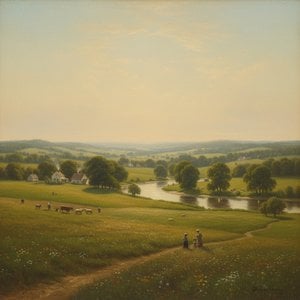
Thomas Worthington Whittredge: Capturing the American Pastoral Ideal with Luminist Light
Explore the luminous landscapes of Thomas Worthington Whittredge, a key figure in the Hudson River School and master of Luminism. Discover his captivating paintings & legacy with ArtsDot.

Los 10 Maestros del Río Hudson: Obras que Definieron un Movimiento Artístico
Descubre los 10 lienzos más emblemáticos de la Escuela del Río Hudson. Explora las obras maestras de Thomas Cole, Church y Bierstadt que capturan la belleza del paisaje americano. Encuentra reproducciones de arte exclusivas en ArtsDot.com.

El Sublime Paisaje Americano: Explorando el Movimiento de la Escuela del Río Hudson
Descubre la Escuela del Río Hudson: un movimiento artístico clave en la historia de la pintura estadounidense. Explora su estética romántica, sus artistas más destacados y el concepto del sublime paisaje americano.

Thomas Hudson: A Study in 18th-Century Portraiture & British Artistic Identity
Explore the life & work of Thomas Hudson, a leading 18th-century British portraitist. Discover his mastery of the 'Grand Manner,' influential style, and lasting impact on British art. Learn about his notable portraits like Judge William Noel & Alexander Van Aken.

Robert Spencer: Luminism, Narrative & the American Landscape Tradition
Explore the captivating world of Luminism & the Hudson River School with our expert analysis. Discover the history, artists, and enduring beauty of 19th-century American landscape painting. Find museum-quality reproductions at ArtsDot.


