


 Vista previa
 Compartir
 Compartir
 Ver detalles
 Guía
Guía

 Descargar
 Ver artículos similares
 Radiografía
 Presentación de diapositivas
 Estadísticas
Pentecost
 Oil On Canvas
- WallArt
- Early Renaissance
 1335
1335 35.0 x 27.0 cm
 Staatliche Museen zu Berlin
 Leer más
Giclée / Impresión de arte
Impresiones giclée o en lienzo de calidad de museo con producción rápida y opciones de acabado flexibles. ( Encargar reproducción pintada a mano Ver versión en imagen digital)




P118B €10

P118H €10

P118W €10

P438Z €10

P508JH €12

P508YH €12

P805H €10

P805Z €10

P919BZ €10

P919G €10

P919XJ €10

P959ZH €10

P968JZ €12

W106C €8

W218G €10

W218JH €8

W218Y €10

W307PJ €10

W316G €10

W316PJ €8

W316Y €10

W398PJ €8

W4111J €10

W500HY €15

W500JH €15

W692G €12

W849H €8

W940BG €15

W953PJ €8




Elija entre nuestros tamaños predefinidos que respetan las proporciones originales de la obra.

Introduzca el ancho y el alto que necesite para adaptarse a su marco o pared. Una impresión solo puede recortarse, nunca hacerse más grande que la imagen original, por lo que un tamaño con una forma distinta perderá parte de la obra. Le enviaremos una maqueta digital para su aprobación antes de realizar cualquier impresión. La imagen que se muestra en esta página no refleja el recorte real; solo la maqueta lo hace.
Envío a todo el mundo () en 2 semanas en lugar de las 4/5 semanas estándar. (24 octubre)

Envío exprés gratuito a todo el mundo

Lienzo de lino de alta calidad

Seguro de envío completo

Garantía de reembolso de impuestos aduaneros

Garantía de fidelidad cromática exacta

Política de devolución de 100 días (solo por defectos)

Garantía de devolución del 100% del dinero

Oferta por volumen
 La opción de vidrio solo está disponible en tamaños inferiores a 110 cm.

Pentecost
Giclée / Impresión de arte
Tamaño de la reproducción
-


Precio total
€ 54
The Tempestuous Descent: Taddeo Gaddi’s Pentecost
Taddeo Gaddi’s “Pentecost,” painted circa 1335-1340 in Florence, isn't merely a depiction of a pivotal biblical event; it’s a vibrant distillation of the burgeoning Renaissance spirit captured within the confines of early Gothic artistry. This walnut panel, measuring a modest 35 x 27 centimeters and now residing within the Staatliche Museen zu Berlin, pulsates with an energy that belies its diminutive size – a testament to Gaddi's mastery of conveying profound spiritual experience through carefully orchestrated form and color. The painting immediately draws the eye into a scene brimming with movement and divine presence, a microcosm of the transformative power unleashed upon the nascent Christian community.A Master’s Apprenticeship: Gaddi and Giotto
To fully appreciate “Pentecost,” one must understand its context within the workshop of Giotto di Bondone. Taddeo Gaddi, Giotto's most esteemed pupil, inherited not just technical skills but also a revolutionary approach to representation – a move away from the stylized, flattened forms of Byzantine art and towards a more naturalistic, emotionally resonant style. Gaddi’s work is characterized by a remarkable sensitivity to volume and space, achieved through subtle gradations of color and carefully rendered drapery. This influence is powerfully evident in “Pentecost,” where the figures are imbued with a palpable sense of weight and movement, far exceeding the static quality typical of earlier religious paintings. The composition itself echoes Giotto’s innovations, particularly his use of overlapping forms to create depth and a dynamic narrative flow – a technique that would profoundly shape the course of Italian painting for generations to come.The Drama of Divine Descent
The scene unfolds within what appears to be a simple, yet elegantly rendered room, its architecture suggesting a Florentine palazzo. At the heart of the composition, the Holy Spirit descends upon the assembled apostles as a torrent of fiery tongues – not depicted as literal flames, but rather as luminous, swirling forms that radiate outwards, enveloping the figures in an aura of ecstatic joy and divine inspiration. The central focus is undeniably Jesus Christ, positioned centrally within the group, radiating authority and benevolence. His gestures are welcoming and inclusive, directing attention towards the apostles who are caught mid-speech, their faces alight with astonishment and fervent proclamation. Note the careful detail given to each apostle’s expression – a range of emotions from bewildered wonder to joyful conviction. The inclusion of Mary, subtly positioned in the background, reinforces the narrative's sacredness and highlights her role as the embodiment of grace and faith.Symbolism and Spiritual Resonance
Beyond its immediate depiction of the Pentecost event, “Pentecost” is rich with symbolic meaning. The doves, traditionally associated with the Holy Spirit, are subtly integrated into the composition, adding to the sense of peace and divine blessing. The architectural setting itself—a refined, yet intimate space—represents the Church as a vessel for spiritual transformation. Gaddi’s masterful use of color – predominantly rich reds, blues, and golds – further enhances the painting's emotional impact, evoking feelings of reverence, joy, and the transformative power of faith. The overall effect is one of profound spiritual intensity, capturing not just a historical event but also the very essence of Pentecost—the birth of the Christian community and the promise of divine grace for all believers. It’s a painting that invites contemplation, reminding us of the enduring significance of this foundational moment in Christian history.A Legacy of Innovation
“Pentecost” by Taddeo Gaddi stands as a pivotal work in the transition from Gothic to Renaissance art. It showcases his remarkable skill and his profound understanding of Giotto’s revolutionary approach to representation, while simultaneously establishing his own distinctive artistic voice. The painting's enduring appeal lies not only in its technical brilliance but also in its ability to convey a powerful sense of spiritual experience – a testament to the transformative power of faith and the genius of one of Florence’s most influential artists. Reproductions of this piece offer a beautiful window into a pivotal moment in art history, capturing both the drama of the event and the quiet beauty of Gaddi's masterful technique.Preguntas y respuestas
¿Cuánta luz parecen reflejar los colores de "Pentecost"?
"Pentecost" de Taddeo Gaddi tiene una luminancia de Soft Shadow. La luminancia describe cuánta luz parecen reflejar los colores.
¿Cuántas personas ven "Pentecost"?
Existe una página de Estadísticas para "Pentecost". En ella se registran las visitas mensuales de la obra y de otras obras del artista, con desgloses por país e idioma.
¿Qué técnica y dimensiones tiene la obra original "Pentecost" de Taddeo Gaddi?
La obra original "Pentecost" de Taddeo Gaddi es una pieza de Oil On Canvas con unas dimensiones de 35 x 27 cm. La técnica y el tamaño describen la obra original.
Obras relacionadas


Biografía del artista
El visionario florentino: La vida y el legado de Taddeo Gaddi
En la atmósfera vibrante y floreciente de la Florencia del siglo XIV, un periodo definido por la transición de lo medieval al Renacimiento temprano, Taddeo Gaddi emergió como un maestro de la luz, la narrativa y la grandeza arquitectónica. Como uno de los discípulos más distinguidos del legendario Giotto di Bondone, Gaddi no se limitó a heredar un estilo; expandió el vocabulario visual de su era. Su obra sirve como un puente vital, transportando el peso monumental del naturalismo giottesco hacia un nuevo reino de complejidad decorativa y una narrativa luminosa. Estudiar a Gaddi es presenciar la evolución de la pintura florentina, donde las rígidas jerarquías de la tradición bizantina comenzaron a suavizarse bajo la influencia de la emoción humana y la profundidad espacial.
Los cimientos del arte de Gaddi estaban profundamente arraigados en el taller de Giotto, donde aprendió la profunda importancia del chiaroscuro y la capacidad de representar figuras con un sentido de presencia física. Sin embargo, Gaddi poseía una inclinación innata hacia un enfoque más ornamental y detallado que su maestro. Mientras que Giotto se centraba en la esencia cruda y escultórica de la humanidad, Gaddi introdujo una elegancia delicada y un uso sofisticado de la luz capaz de transformar una superficie plana en una ventana de resplandor divino. Esta síntesis única le permitió sobresalir en ciclos de frescos a gran escala, donde demostró una habilidad inigualable para organizar complejas narrativas teológicas dentro de entornos arquitectónicos que se sentían tanto sagrados como tangibles.
Maestría narrativa y la luz sagrada
Las contribuciones más perdurables de Gaddi a la historia del arte se encuentran en sus magníficos ciclos de frescos, especialmente en la Capilla Baroncelli en Santa Croce, Florencia. En estas obras, alcanzó un nivel asombroso de continuidad narrativa, guiando al espectador a través de las vidas de los santos con una gracia rítmica. Su técnica implicaba una meticulosa superposición de color y luz, utilizando a menudo acentos dorados y pigmentos ricos para evocar la atmósfera celestial de lo divino. Se puede observar su maestría en piezas como la Escena de la vida de San Francisco, donde el artista captura momentos de profunda intimidad espiritual. A través de estas representaciones, Gaddi no solo cuenta una historia; crea un entorno inmersivo donde aves, paisajes y figuras humanas coexisten en un estado de equilibrio sagrado.
Más allá de su devoción religiosa, la obra de Gaddi se caracteriza por varios elementos artísticos definitorios:
- Integración arquitectónica: Poseía un talento poco común para pintar estructuras arquitectónicas que parecían extender el espacio físico real de la capilla o la iglesia.
- Detalle narrativo: A diferencia de las composiciones más austeras de sus predecesores, Gaddi enriqueció sus escenas con detalles intrincados, desde la textura del hábito de un monje hasta el delicado movimiento de la naturaleza.
- Evolución de la luz: Desafió los límites de cómo la luz interactúa con las superficies, creando una sensación de atmósfera que presagiaba la perspectiva atmosférica de los maestros posteriores del Renacimiento.
Significancia histórica y herencia artística
La importancia histórica de Taddeo Gaddi reside en su papel como custodio e innovador. Preservó la dignidad monumental de la tradición giottesca mientras, simultáneamente, la infundía con la riqueza decorativa que caracterizaría al periodo gótico tardío. Su influencia se extendió mucho más allá de los muros de las capillas florentinas, impactando la forma en que las generaciones posteriores de pintores abordaron el concepto de espacio y luz. Al combinar la solidez estructural de su formación con una sensibilidad nueva y más lírica, Gaddi ayudó a preparar el paisaje artístico para el pleno florecimiento del Renacimiento.
Al contemplar su obra, vemos a un artista profundamente sintonizado con el pulso espiritual y cívico de su tiempo. Su capacidad para representar lo sagrado a través del lente de un naturalismo creciente aseguró que sus obras permanecieran no solo como objetos de veneración, sino también como obras maestras de logro técnico. Taddeo Gaddi sigue siendo una piedra angular de la historia del arte italiano, un pintor cuyas pinceladas capturaron el momento preciso en que el mundo medieval comenzó a mirar hacia la luz de una nueva era centrada en el ser humano.
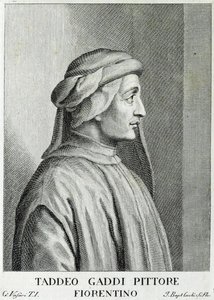
Taddeo Gaddi
1290 - 1366 , Italia
Datos clave
- Artistic Movement Or Style: Renacimiento temprano
- Artists Or Movements Influenced By This Artist:
- Giotto
- Protorenacimiento
- Artists Who Influenced This Artist:
- Simone Martini
- Arte italo-bizantino
- Date Of Birth: c. 1290
- Date Of Death: 1348
- Full Name: Ambrogio Lorenzetti
- Nationality: Italiano
- Notable Artworks:
- Alegoría del Buen Gobierno
- Alegoría del Mal Gobierno
- Place Of Birth: Siena, Italia
Artículos relacionados
Legado en las Paredes: Frescos Familiares que Trascienden el Tiempo
Descubre el arte del fresco muralístico para inmortalizar tu historia familiar. Expertos en frescos personalizados y técnicas ancestrales. Crea un legado visual único con .

The Enduring Legacy of Fresco: Technique, History & Artistic Expression Across Cultures
Explore the rich history & enduring legacy of fresco painting! Discover ancient techniques, Giotto's masterpieces, and modern applications. Expert insights for art lovers & professionals.

Giotto di Bondone: Las 25 Obras Maestras que Definieron el Renacimiento | ArtsDot
Descubre las 25 obras maestras de Giotto di Bondone, el pionero del Renacimiento. Explora la historia, técnica y simbolismo de sus frescos italianos más icónicos. Encuentra reproducciones de arte exclusivas para decorar tu hogar en ArtsDot.com.

The Enduring Legacy of Fresco Painting: Techniques, History & Contemporary Relevance
Explore the rich history & enduring artistry of fresco painting – from Giotto to Michelangelo! Discover techniques, conservation efforts, & modern applications. Learn how ArtsDot brings this timeless art form to your home.

Giotto di Bondone: Revolutionizing Late Medieval Painting through Narrative Innovation
Explore the revolutionary art of Giotto di Bondone! Discover his groundbreaking techniques, iconic frescoes like those in the Arena Chapel, and lasting impact on Renaissance painting. A deep dive for art enthusiasts.
