


 Vista previa
 Compartir
 Compartir
 Ver detalles

 Descargar
 Ver similares
 Radiografía
 Presentación de diapositivas
untitled (2854)

 Leer más
Giclée / Impresión de arte
Impresiones giclée o en lienzo de calidad de museo con producción rápida y opciones de acabado flexibles. ( Encargar reproducción pintada a mano Comprar descarga)




P118B $10

P118H $10

P118W $10

P438Z $10

P508JH $12

P508YH $12

P805H $10

P805Z $10

P919BZ $10

P919G $10

P919XJ $10

P959ZH $10

P968JZ $12

W106C $8

W218G $10

W218JH $8

W218Y $10

W307PJ $10

W316G $10

W316PJ $8

W316Y $10

W398PJ $8

W4111J $10

W500HY $15

W500JH $15

W692G $12

W849H $8

W940BG $15

W953PJ $8




Elija entre nuestros tamaños predefinidos que respetan las proporciones originales de la obra.

Puede introducir sus propias dimensiones para adaptarse a un marco o espacio específico. Si el tamaño seleccionado no coincide con las proporciones de la imagen original, recortaremos la obra de arte o extenderemos la imagen con un borde con efecto espejo o de color sólido. Se enviará una maqueta digital para su aprobación antes de que comience la producción.
Tenga en cuenta que la vista previa en pantalla no refleja el recorte o la extensión real. Solo la maqueta mostrará con precisión la composición final.
Aunque existen tamaños personalizados, recomendamos seleccionar una dimensión de la lista predefinida para preservar las proporciones originales.
Envío a todo el mundo () en 2 semanas en lugar de las 4/5 semanas estándar. (19 agosto)

Envío exprés gratuito a todo el mundo

Lienzo de lino de alta calidad

Seguro de envío completo

Garantía de reembolso de aranceles aduaneros

Garantía de fidelidad cromática exacta

Política de devolución de 60 días (solo por defectos)

Garantía de devolución del 100% del dinero

Oferta por volumen
 La opción de vidrio solo está disponible en tamaños inferiores a 110 cm.

untitled (2854)
Giclée / Impresión de arte
Tamaño de la reproducción
-


Precio total
$ 62
Descripción de la pieza
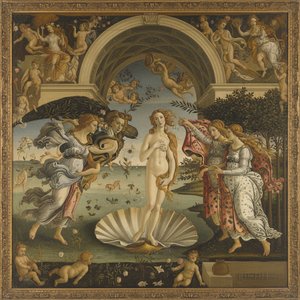
A Gathering Beneath an Uncertain Sky: Botticelli’s ‘Untitled (2854)’
Sandro Botticelli's “Untitled (2854),” a captivating depiction of figures huddled before an arched building, offers a glimpse into the vibrant social and artistic life of Renaissance Florence. Dating from around 1490 – a period marked by both burgeoning optimism and underlying political tension – this painting transcends mere representation; it’s a tableau brimming with narrative potential and imbued with a quiet, contemplative atmosphere. The scene unfolds beneath a sky hinting at impending rain, an element that immediately establishes a mood of intimacy and shared experience. The figures, dressed in clothing reminiscent of the late 15th century – a blend of practicality and subtle ornamentation – suggest a gathering of friends, perhaps merchants or members of a local guild, engaged in conversation and respite from the bustling city.
Botticelli’s masterful technique is immediately apparent. He employs a delicate *tempera* on wood panel, a medium favored for its luminosity and ability to capture subtle details. Notice how he renders the folds of fabric with an almost sculptural quality – each crease and pleat meticulously defined yet imbued with a sense of movement. The figures themselves are portrayed with a graceful elegance characteristic of Botticelli’s style, their poses relaxed and naturalistic, avoiding the rigid formality often found in earlier Renaissance works. The artist's use of color is restrained but effective; muted earth tones dominate, punctuated by the brighter hues of the umbrellas scattered throughout the scene – splashes of red, blue, and yellow that draw the eye and add a touch of visual interest.
Symbolism and Context: Florence in Transition
The setting itself—a building with prominent arches—is significant. Such architectural elements were common in Florentine civic buildings and churches, suggesting a public space or perhaps a gathering place for a specific community. The presence of the umbrellas isn’t merely decorative; it speaks to the unpredictable nature of Florentine weather – a recurring theme throughout Botticelli's work, often used to symbolize transience and the fragility of life. Furthermore, the clothing worn by the figures offers clues about their social standing and profession. The variety in attire hints at a diverse group, reflecting the complex social fabric of Renaissance Florence.
Botticelli’s artistic output during this period reflects the broader cultural shifts occurring in Italy. The early Renaissance was characterized by a renewed interest in classical antiquity, but also by a growing sense of individualism and secularism. His mythological paintings, such as “The Birth of Venus” and “Primavera,” demonstrate this fascination with classical themes while simultaneously exploring human emotions and experiences. "Untitled (2854)" can be viewed within this context – it’s not simply a portrait of a group of people; it's an exploration of social interaction, community, and the fleeting beauty of everyday life.
The Emotional Resonance: A Moment Frozen in Time
Despite its seemingly simple composition, “Untitled (2854)” possesses a remarkable emotional depth. The figures’ engaged expressions – smiles, thoughtful gazes, gestures of conversation – invite us to imagine their stories and connect with them on a human level. There's a sense of warmth and camaraderie in the scene, suggesting a shared moment of connection amidst the uncertainties of life. The muted palette and soft lighting contribute to this feeling of intimacy, creating an atmosphere that is both serene and evocative.
Botticelli’s ability to capture such nuanced emotions through his art is what makes “Untitled (2854)” so compelling. It's a painting that invites contemplation and offers a glimpse into the lives of ordinary people in Renaissance Florence – a world of beauty, intrigue, and profound human experience. A reproduction of this work would bring a touch of timeless elegance and quiet sophistication to any interior space, serving as a constant reminder of the enduring power of art to capture the essence of humanity.
Technical Details & Reproduction Considerations
As with many works by Botticelli, precise details regarding the dimensions and original materials used in “Untitled (2854)” remain somewhat elusive. ArtsDot’s meticulous hand-painted reproductions strive to faithfully recreate the painting's delicate *tempera* technique and subtle color palette. We utilize archival-quality pigments and canvas to ensure that our reproductions possess a remarkable level of detail and longevity, mirroring the original artwork as closely as possible.
The choice of canvas size is carefully considered to maintain the proportions and visual impact of the original painting. Our skilled artisans pay close attention to Botticelli’s characteristic brushstrokes and layering techniques, ensuring that each reproduction captures the artist's unique style and artistic vision. Whether you are a seasoned art collector or simply seeking a beautiful piece of artwork for your home, ArtsDot’s hand-painted reproductions offer an unparalleled opportunity to own a stunning representation of this iconic Renaissance masterpiece.
Obras relacionadas


Biografía del artista
vida temprana y formación
Sandro Botticelli, nacido Alessandro di Mariano di Vanni Filipepi alrededor de 1445, fue una figura clave en el Renacimiento temprano de la pintura italiana. Inicialmente eclipsado post mortem, la obra de Botticelli fue revitalizada a finales del siglo XIX por los pre-rafaelitas, lo que llevó a una reevaluación de sus contribuciones artísticas. Botticelli nació en Florencia, Italia, y vivió toda su vida en el mismo barrio. Su familia, incluyendo a su padre Mariano di Vanni d'Amadeo Filipepi, estuvo involucrada en diversas profesiones, lo que les permitió entrar en contacto con artistas. Giorgio Vasari informó que Botticelli fue inicialmente entrenado como joyero.Estilo artístico y obras notables
La obra de Botticelli se caracteriza por una elegante linealidad, que conecta el gótico tardío italiano con el Renacimiento temprano. Sus obras más famosas, El nacimiento de Venus y Primavera, se exhiben en la Galería Uffizi en Florencia, que alberga una importante colección de su arte. * El nacimiento de Venus (ver en ArtsDot) * Primavera (explorar el arte de Sandro Botticelli en ArtsDot) * La natividad mística (Galería Nacional, Londres), fechada en 1501, es la única obra de Botticelli con una fecha clara.Legado e influencia
El estilo de Botticelli evolucionó hacia un enfoque más personal en la década de 1490, divergente de sus contemporáneos como Leonardo da Vinci y el estilo del Alto Renacimiento emergente. Su obra ha sido reconocida como una contribución significativa al movimiento artístico del Renacimiento italiano. * El movimiento artístico del Renacimiento italiano * Sandro Botticelli en Wikipedia- Artistas notables del Renacimiento italiano incluyen a Sandro Botticelli, Leonardo da Vinci, Miguel Ángel y Tiziano.
- La Galería Uffizi de Florencia alberga una importante colección de arte de Botticelli.
- La obra de Botticelli ha sido reconocida como una figura clave en el Renacimiento temprano de la pintura italiana.

Sandro Botticelli
1445 - 1510 , Italia
Datos clave
- Artistas Que Influyeron:
- Fra Angelico
- Paolo Uccello
- Estilo Artístico: Renacimiento Temprano
- Fecha De Muerte: 1510
- Fecha De Nacimiento: c. 1445
- Influenciado A Artistas: ['Pre-Rafaelitas']
- Lugar De Nacimiento: Florencia, Italia
- Nacionalidad: Italiana
- Nombre Completo: Sandro Botticelli
- Obras Notables:
- El Nacimiento de Venus
- Primavera
- Natividad Mística
Artículos relacionados
Botticelli: Las 25 Obras Maestras del Renacimiento para Decorar con Arte y Elegancia
Descubre las 25 obras maestras de Sandro Botticelli, el genio del Renacimiento italiano. Explora 'El Nacimiento de Venus', 'Primavera' y más: historia, técnica y belleza clásica. Encuentra reproducciones de arte exclusivas en ArtsDot.com.

Los 25 Tesoros del Uffizi: Arte Renacentista para tu Hogar | ArtsDot
Descubre los 25 tesoros del Uffizi en Florencia: Botticelli, Leonardo da Vinci y más. Explora la historia, el arte renacentista y encuentra reproducciones de alta calidad para tu hogar. ¡Inspírate con ArtsDot.com!

Los 10 Maestros del Renacimiento Temprano: Arte que Transformó el Mundo |
Descubre los 10 maestros del Renacimiento Temprano: Botticelli, Leonardo da Vinci y más. Explora la historia, técnica y belleza de obras icónicas italianas. Reproducciones de arte exclusivas en .

10 Obras Maestras del Temple que Revolucionaron la Historia del Arte | ArtsDot
Descubre 10 obras maestras del temple sobre tabla que revolucionaron el arte medieval y renacentista. Explora la historia de Botticelli, Van Eyck y Giotto. Reproducciones de arte de museo para decorar tu hogar con elegancia en ArtsDot.com.

El Amanecer de una Nueva Visión: Explorando las Innovaciones Artísticas del Primer Renacimiento
Descubre las innovaciones artísticas del Primer Renacimiento italiano. Explora el humanismo, las técnicas revolucionarias y los maestros florentinos que marcaron una nueva era en la historia del arte. Análisis experto y obras clave.



