


 Vista previa
 Compartir
 Compartir
 Ver detalles
 Guía
Guía

 Descargar
 Ver artículos similares
 Radiografía
 Presentación de diapositivas
 Estadísticas
María y Niño

 Leer más
Reproducción al óleo hecha a mano
Óleo sobre lienzo pintado a mano en el tamaño y marco de su elección, realizado por encargo por nuestros artistas. ( Cambiar a formato impreso Ver versión en imagen digital)




P118B $10

P118H $10

P118W $10

P438Z $10

P508JH $12

P508YH $12

P805H $10

P805Z $10

P919BZ $10

P919G $10

P919XJ $10

P959ZH $10

P968JZ $12

W106C $8

W218G $10

W218JH $8

W218Y $10

W307PJ $10

W316G $10

W316PJ $8

W316Y $10

W398PJ $8

W4111J $10

W500HY $15

W500JH $15

W692G $12

W849H $8

W940BG $15

W953PJ $8




Elija entre nuestros tamaños predefinidos que respetan las proporciones originales de la obra.

Puede ingresar sus propias dimensiones para adaptarse a un marco o espacio específico. Si el tamaño seleccionado no coincide con las proporciones de la imagen original, recortaremos la obra o extenderemos la pintura con elementos adicionales pintados a mano. Se le enviará una maqueta digital para su aprobación antes de comenzar la producción.
Tenga en cuenta que la vista previa en pantalla no refleja el recorte o la extensión reales. Solo la maqueta mostrará con precisión la composición final.
Si bien existen tamaños personalizados, recomendamos seleccionar una dimensión de la lista predefinida para preservar las proporciones originales.
Tras realizar el pedido, el equipo de ArtsDot.com enviará un correo electrónico al cliente para solicitar instrucciones y proporcionarle una vista previa del boceto.
Envío a todo el mundo () en 3-4 semanas en lugar de las 5 semanas estándar. (27 septiembre). Sin comprometer la calidad.

Envío exprés gratuito a todo el mundo

Lienzo de lino de alta calidad

Seguro de envío completo

Garantía de reembolso de impuestos aduaneros

Garantía de fidelidad cromática exacta

Política de devolución de 100 días (solo por defectos)

Garantía de devolución del 100% del dinero

Oferta por volumen
 La opción de vidrio solo está disponible en tamaños inferiores a 110 cm.

María y Niño
Técnica de reproducción
Tamaño de la reproducción
-


Precio total
$ 263
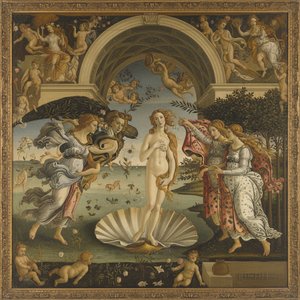
El Nacimiento Divino: Un Estudio Sobre la Maestría de Sandro Botticelli
Este cuadro, conocido como “El Nacimiento Divino”, representa una escena profundamente arraigada en el corazón del Renacimiento italiano temprano, específicamente entre 1480 y 1500. Pintado por Sandro Botticelli, un artista florentino cuya sensibilidad estética marcó una ruptura con las tradiciones medievales, esta obra maestra captura la esencia de la belleza idealizada y la espiritualidad religiosa de la época. Aunque los detalles específicos sobre el origen del cuadro permanecen envueltos en cierta oscuridad histórica –sus propietarios originales fueron los Medici– su impacto artístico sigue siendo indiscutible.Estilo y Técnica: Una Elegancia Floral Inspirada
Botticelli empleó una técnica pictórica caracterizada por líneas suaves y elegantes, que favorecen la creación de figuras armoniosas y expresivas. Su estilo distintivo se distingue por una meticulosa atención al detalle, especialmente en la representación de las hojas y flores que rodean a la Virgen María y el Niño Jesús. Esta elección estética no fue casual; reflejó la influencia del pensamiento humanista emergente, que buscaba inspiración en la naturaleza como símbolo de perfección divina y renovación espiritual. Además, Botticelli utilizó colores ricos y luminosos –predominantemente tonos cálidos como el rojo y el dorado– para transmitir una sensación de serenidad y solemnidad, cualidades esenciales para obras religiosas destinadas a elevar el espíritu contemplativo del espectador.Contexto Histórico: Florencia en el Auge Cultural
El cuadro fue creado durante un período crucial en la historia artística europea, cuando Florencia se encontraba en el centro de una explosión creativa impulsada por el patrocinio de la familia Medici y el florecimiento de las artes liberales. Botticelli estaba trabajando bajo la protección de Lorenzo II Medici, quien admiraba profundamente su talento artístico y le encargó numerosas obras religiosas que reflejaban los valores morales y religiosos de la época. Este contexto histórico influyó directamente en la composición del cuadro, donde se observa una clara referencia a las tradiciones iconográficas bizantinas y occidentales, pero también una innovación estilística que anticipó tendencias futuras en el arte renacentista.Simbolismo Religioso: Alegoría de Esperanza y Protección Divina
El Nacimiento Divino está cargado de simbolismo religioso que invita a la reflexión sobre temas fundamentales como la maternidad divina, la protección celestial y la promesa de salvación. La Virgen María, representada con una postura majestuosa y una mirada llena de amor maternal, sostiene al Niño Jesús en sus brazos, símbolo del Hijo Dios encarnado y fuente de luz espiritual para toda la humanidad. Las hojas y flores que rodean a los personajes principales representan la fertilidad y la renovación, elementos esenciales para la comprensión del mensaje cristiano sobre el nacimiento de Cristo como inicio de una nueva etapa en la historia humana. Incluso la posición del Niño Jesús sobre el trono simboliza su reinado eterno y su dominio sobre el mundo espiritual.Impacto Emocional: Una Imagen Inspiradora Para El Alma
Más allá de su valor artístico y histórico, “El Nacimiento Divino” posee un profundo impacto emocional que sigue resonando en los espectadores contemporáneos. La belleza idealizada de las figuras religiosas, la armonía compositiva y la luminosidad cromática evocan sentimientos de paz interior, esperanza y devoción espiritual. Esta obra maestra continúa siendo una fuente de inspiración para artistas y amantes del arte en todo el mundo, testimoniando así la capacidad del arte para transmitir valores universales y conectar al hombre con lo trascendente. Una reproducción de alta calidad puede aportar un toque de elegancia clásica y sofisticación a cualquier hogar, ofreciendo una ventana hacia la belleza sublime del Renacimiento italiano temprano.Obras relacionadas


Biografía del artista
vida temprana y formación
Sandro Botticelli, nacido Alessandro di Mariano di Vanni Filipepi alrededor de 1445, fue una figura clave en el Renacimiento temprano de la pintura italiana. Inicialmente eclipsado post mortem, la obra de Botticelli fue revitalizada a finales del siglo XIX por los pre-rafaelitas, lo que llevó a una reevaluación de sus contribuciones artísticas. Botticelli nació en Florencia, Italia, y vivió toda su vida en el mismo barrio. Su familia, incluyendo a su padre Mariano di Vanni d'Amadeo Filipepi, estuvo involucrada en diversas profesiones, lo que les permitió entrar en contacto con artistas. Giorgio Vasari informó que Botticelli fue inicialmente entrenado como joyero.Estilo artístico y obras notables
La obra de Botticelli se caracteriza por una elegante linealidad, que conecta el gótico tardío italiano con el Renacimiento temprano. Sus obras más famosas, El nacimiento de Venus y Primavera, se exhiben en la Galería Uffizi en Florencia, que alberga una importante colección de su arte. * El nacimiento de Venus (ver en ArtsDot) * Primavera (explorar el arte de Sandro Botticelli en ArtsDot) * La natividad mística (Galería Nacional, Londres), fechada en 1501, es la única obra de Botticelli con una fecha clara.Legado e influencia
El estilo de Botticelli evolucionó hacia un enfoque más personal en la década de 1490, divergente de sus contemporáneos como Leonardo da Vinci y el estilo del Alto Renacimiento emergente. Su obra ha sido reconocida como una contribución significativa al movimiento artístico del Renacimiento italiano. * El movimiento artístico del Renacimiento italiano * Sandro Botticelli en Wikipedia- Artistas notables del Renacimiento italiano incluyen a Sandro Botticelli, Leonardo da Vinci, Miguel Ángel y Tiziano.
- La Galería Uffizi de Florencia alberga una importante colección de arte de Botticelli.
- La obra de Botticelli ha sido reconocida como una figura clave en el Renacimiento temprano de la pintura italiana.

Sandro Botticelli
1445 - 1510 , Italia
Datos clave
- Artistas Que Influyeron:
- Fra Angelico
- Paolo Uccello
- Estilo Artístico: Renacimiento Temprano
- Fecha De Muerte: 1510
- Fecha De Nacimiento: c. 1445
- Influenciado A Artistas: ['Pre-Rafaelitas']
- Lugar De Nacimiento: Florencia, Italia
- Nacionalidad: Italiana
- Nombre Completo: Sandro Botticelli
- Obras Notables:
- El Nacimiento de Venus
- Primavera
- Natividad Mística
Artículos relacionados

Fra Angelico: Las 25 Obras Maestras del Renacimiento para Decorar con Arte y Fe
Descubre las 25 obras maestras de Fra Angelico, el pintor renacentista que llenó el arte sacro de luz y fe. Explora su técnica, simbolismo y belleza en frescos e iconos. Encuentra reproducciones de alta calidad para decorar tu hogar con ArtsDot.com.
Botticelli: Las 25 Obras Maestras del Renacimiento para Decorar con Arte y Elegancia
Descubre las 25 obras maestras de Sandro Botticelli, el genio del Renacimiento italiano. Explora 'El Nacimiento de Venus', 'Primavera' y más: historia, técnica y belleza clásica. Encuentra reproducciones de arte exclusivas en ArtsDot.com.

Los 25 Tesoros del Uffizi: Arte Renacentista para tu Hogar | ArtsDot
Descubre los 25 tesoros del Uffizi en Florencia: Botticelli, Leonardo da Vinci y más. Explora la historia, el arte renacentista y encuentra reproducciones de alta calidad para tu hogar. ¡Inspírate con ArtsDot.com!

Giotto di Bondone: Las 25 Obras Maestras que Definieron el Renacimiento | ArtsDot
Descubre las 25 obras maestras de Giotto di Bondone, el pionero del Renacimiento. Explora la historia, técnica y simbolismo de sus frescos italianos más icónicos. Encuentra reproducciones de arte exclusivas para decorar tu hogar en ArtsDot.com.

Los 10 Maestros del Renacimiento Temprano: Arte que Transformó el Mundo |
Descubre los 10 maestros del Renacimiento Temprano: Botticelli, Leonardo da Vinci y más. Explora la historia, técnica y belleza de obras icónicas italianas. Reproducciones de arte exclusivas en .


