


 Ver en contexto
 Enviar
 Compartir
 Detalles

 Descargar
 Similares
 Radiografía
 Presentación de diapositivas
La Lamentación de Cristo


 Ver más
Giclée / Impresión de arte
Impresiones giclée o en lienzo de calidad de museo con producción rápida y opciones de acabado flexibles. ( Comprar pintura hecha a mano Comprar imagen)




P118B $10

P118H $10

P118W $10

P438Z $10

P508JH $12

P508YH $12

P805H $10

P805Z $10

P919BZ $10

P919G $10

P919XJ $10

P959ZH $10

P968JZ $12

W106C $8

W218G $10

W218JH $8

W218Y $10

W307PJ $10

W316G $10

W316PJ $8

W316Y $10

W398PJ $8

W4111J $10

W500HY $15

W500JH $15

W692G $12

W849H $8

W940BG $15

W953PJ $8




Elija entre nuestros tamaños predefinidos que respetan las proporciones originales de la obra.

Puede introducir sus propias dimensiones para adaptarse a un marco o espacio específico. Si el tamaño seleccionado no coincide con las proporciones de la imagen original, recortaremos la obra de arte o extenderemos la imagen con un borde con efecto espejo o de color sólido. Se enviará una maqueta digital para su aprobación antes de que comience la producción.
Tenga en cuenta que la vista previa en pantalla no refleja el recorte o la extensión real. Solo la maqueta mostrará con precisión la composición final.
Aunque existen tamaños personalizados, recomendamos seleccionar una dimensión de la lista predefinida para preservar las proporciones originales.
Envío a todo el mundo () en 2 semanas en lugar de las 4/5 semanas estándar. (3 septiembre)

Envío exprés gratuito a todo el mundo

Lienzo de lino de alta calidad

Seguro de envío total

Garantía de reembolso de impuestos aduaneros

Garantía de fidelidad cromática exacta

Política de devolución de 60 días (solo por defectos)

Garantía de devolución del 100% del dinero

Descuento por cantidad
 La opción de vidrio solo está disponible en tamaños inferiores a 110 cm.

La Lamentación de Cristo
Giclée / Impresión de arte
Dimensiones de la reproducción
-


Precio total final
$ 62
The Lamentation Of Christ - A Symphony of Sorrow
Sandro Botticelli’s “The Lamentation of Christ” stands as an emblem of Renaissance piety and artistic innovation, capturing the profound grief experienced by Mary and Joseph following Jesus’ crucifixion. Executed around 1495, this monumental painting resides in the Galleria Sabauda of Turin, Italy, offering viewers a glimpse into a pivotal moment in Christian iconography.
- Composition & Structure: Botticelli masterfully employs pyramidal composition—a technique favored by artists of his era—to create visual stability and emphasize the central figures. The tightly interwoven drapery contributes to this effect, mirroring the interconnectedness of sorrow and compassion among those mourning Christ’s demise.
- Symbolism Richness: Beyond its formal structure, “The Lamentation” overflows with symbolic elements. The donkey serves as a poignant reminder of Jesus’ humble origins—a deliberate contrast to his divine majesty—while the clock hanging above symbolizes the inescapable passage of time and the inevitability of mortality.
- Technique & Material: Botticelli utilized oil paint on wood panel, allowing for exceptional luminosity and textural detail. His meticulous glazing technique—applying thin layers of translucent pigment—creates a breathtaking illusion of depth and enhances the emotional resonance of the scene.
Botticelli’s Artistic Legacy - Context Within The Renaissance
Botticelli's work aligns seamlessly with the broader artistic currents of the Early Renaissance, mirroring the humanist ideals that championed human emotion and intellectual contemplation alongside religious devotion. He was profoundly influenced by Fra Filippo Lippi, who taught him the fundamentals of painting—a formative experience that shaped his distinctive style.
- Influence of Savonarola: Botticelli’s artistic sensibilities were notably impacted by Girolamo Savonarola’s fervent sermons in Florence during 1481–82, which advocated for moral reform and challenged the opulent excesses of the Medici court. This spiritual fervor is palpable in his later paintings—particularly “The Lamentation”—where he abandons idealized beauty for a more introspective portrayal of grief.
- Comparison with Leonardo da Vinci: Botticelli’s artistic approach differed markedly from that of Leonardo da Vinci, who championed scientific observation and realism. Botticelli prioritized expressive gesture and stylized form—a stylistic divergence that reflects the contrasting temperaments of these two titans of Renaissance art.
Beyond Turin - Botticelli's Other Masterpieces
“The Lamentation” is but one facet of Botticelli’s prolific artistic output, which encompasses celebrated works such as “Primavera,” housed on /art/list/?Filter=9DJ97Q-Sandro-Botticelli-Primavera, and “The Birth of Venus,” displayed in the Uffizi Gallery.
- “Primavera” – Mythological Beauty: Botticelli’s depiction of springtime—a celebration of fertility and renewal—employs vibrant colors and graceful figures to convey a sense of idealized beauty.
- “The Birth Of Venus” - Symbolism & Ideal Form: Botticelli's “Birth of Venus” embodies the humanist fascination with classical mythology, portraying Venus emerging from the sea—a symbol of feminine virtue and divine grace—with unparalleled elegance and precision.
A Timeless Reflection on Grief – Relevance in Modern Times
The enduring appeal of “The Lamentation” transcends temporal boundaries, resonating with audiences today through its profound exploration of human emotion—specifically grief and compassion. Mariology—the study of Mary—continues to inspire artistic endeavors worldwide, reflecting the Catholic Church’s veneration for the Virgin Mother as a figure of maternal love and spiritual purity.
- Marian Art Traditions: The depiction of Mary mourning Christ embodies centuries-old traditions rooted in biblical scripture and theological contemplation.
- Contemporary Interpretations: Artists today revisit Botticelli’s masterpiece, reimagining its themes—such as loss, sorrow, and remembrance—within the framework of contemporary sensibilities.
Botticelli's legacy persists as a testament to art's capacity to convey universal human experiences—a poignant reminder that beauty can coexist with profound emotion.
Obras relacionadas


Biografía del artista
vida temprana y formación
Sandro Botticelli, nacido Alessandro di Mariano di Vanni Filipepi alrededor de 1445, fue una figura clave en el Renacimiento temprano de la pintura italiana. Inicialmente eclipsado post mortem, la obra de Botticelli fue revitalizada a finales del siglo XIX por los pre-rafaelitas, lo que llevó a una reevaluación de sus contribuciones artísticas. Botticelli nació en Florencia, Italia, y vivió toda su vida en el mismo barrio. Su familia, incluyendo a su padre Mariano di Vanni d'Amadeo Filipepi, estuvo involucrada en diversas profesiones, lo que les permitió entrar en contacto con artistas. Giorgio Vasari informó que Botticelli fue inicialmente entrenado como joyero.Estilo artístico y obras notables
La obra de Botticelli se caracteriza por una elegante linealidad, que conecta el gótico tardío italiano con el Renacimiento temprano. Sus obras más famosas, El nacimiento de Venus y Primavera, se exhiben en la Galería Uffizi en Florencia, que alberga una importante colección de su arte. * El nacimiento de Venus (ver en ArtsDot) * Primavera (explorar el arte de Sandro Botticelli en ArtsDot) * La natividad mística (Galería Nacional, Londres), fechada en 1501, es la única obra de Botticelli con una fecha clara.Legado e influencia
El estilo de Botticelli evolucionó hacia un enfoque más personal en la década de 1490, divergente de sus contemporáneos como Leonardo da Vinci y el estilo del Alto Renacimiento emergente. Su obra ha sido reconocida como una contribución significativa al movimiento artístico del Renacimiento italiano. * El movimiento artístico del Renacimiento italiano * Sandro Botticelli en Wikipedia- Artistas notables del Renacimiento italiano incluyen a Sandro Botticelli, Leonardo da Vinci, Miguel Ángel y Tiziano.
- La Galería Uffizi de Florencia alberga una importante colección de arte de Botticelli.
- La obra de Botticelli ha sido reconocida como una figura clave en el Renacimiento temprano de la pintura italiana.

Sandro Botticelli
1445 - 1510 , Italia
Datos clave
- Artistas Que Influyeron:
- Fra Angelico
- Paolo Uccello
- Estilo Artístico: Renacimiento Temprano
- Fecha De Muerte: 1510
- Fecha De Nacimiento: c. 1445
- Influenciado A Artistas: ['Pre-Rafaelitas']
- Lugar De Nacimiento: Florencia, Italia
- Nacionalidad: Italiana
- Nombre Completo: Sandro Botticelli
- Obras Notables:
- El Nacimiento de Venus
- Primavera
- Natividad Mística
Artículos relacionados
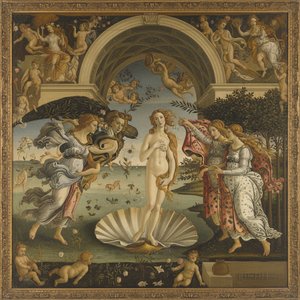
Botticelli: Las 25 Obras Maestras del Renacimiento para Decorar con Arte y Elegancia
Descubre las 25 obras maestras de Sandro Botticelli, el genio del Renacimiento italiano. Explora 'El Nacimiento de Venus', 'Primavera' y más: historia, técnica y belleza clásica. Encuentra reproducciones de arte exclusivas en ArtsDot.com.
Sacred Narratives Embodied: A Comprehensive Exploration of Religious Iconography in Art History
Explore the rich history of religious iconography in art! Discover symbolism, movements & masterpieces from Byzantine to Renaissance periods. Expert insights for collectors and enthusiasts at ArtsDot.

Los 25 Tesoros del Uffizi: Arte Renacentista para tu Hogar | ArtsDot
Descubre los 25 tesoros del Uffizi en Florencia: Botticelli, Leonardo da Vinci y más. Explora la historia, el arte renacentista y encuentra reproducciones de alta calidad para tu hogar. ¡Inspírate con ArtsDot.com!

Los 10 Maestros del Renacimiento Temprano: Arte que Transformó el Mundo |
Descubre los 10 maestros del Renacimiento Temprano: Botticelli, Leonardo da Vinci y más. Explora la historia, técnica y belleza de obras icónicas italianas. Reproducciones de arte exclusivas en .

Fra Angelico: Las 25 Obras Maestras del Renacimiento para Decorar con Arte y Fe
Descubre las 25 obras maestras de Fra Angelico, el pintor renacentista que llenó el arte sacro de luz y fe. Explora su técnica, simbolismo y belleza en frescos e iconos. Encuentra reproducciones de alta calidad para decorar tu hogar con ArtsDot.com.



