


 Vista previa
 Compartir
 Compartir
 Ver detalles
 Guía
Guía

 Descargar
 Ver artículos similares
 Radiografía
 Presentación de diapositivas
 Estadísticas
calumnia


 Leer más
Giclée / Impresión de arte
Impresiones giclée o en lienzo de calidad de museo con producción rápida y opciones de acabado flexibles. ( Encargar reproducción pintada a mano Ver versión en imagen digital)




P118B €10

P118H €10

P118W €10

P438Z €10

P508JH €12

P508YH €12

P805H €10

P805Z €10

P919BZ €10

P919G €10

P919XJ €10

P959ZH €10

P968JZ €12

W106C €8

W218G €10

W218JH €8

W218Y €10

W307PJ €10

W316G €10

W316PJ €8

W316Y €10

W398PJ €8

W4111J €10

W500HY €15

W500JH €15

W692G €12

W849H €8

W940BG €15

W953PJ €8




Elija entre nuestros tamaños predefinidos que respetan las proporciones originales de la obra.

Introduzca el ancho y el alto que necesite para adaptarse a su marco o pared. Una impresión solo puede recortarse, nunca hacerse más grande que la imagen original, por lo que un tamaño con una forma distinta perderá parte de la obra. Le enviaremos una maqueta digital para su aprobación antes de realizar cualquier impresión. La imagen que se muestra en esta página no refleja el recorte real; solo la maqueta lo hace.
Envío a todo el mundo () en 2 semanas en lugar de las 4/5 semanas estándar. (23 octubre)

Envío exprés gratuito a todo el mundo

Lienzo de lino de alta calidad

Seguro de envío completo

Garantía de reembolso de impuestos aduaneros

Garantía de fidelidad cromática exacta

Política de devolución de 100 días (solo por defectos)

Garantía de devolución del 100% del dinero

Oferta por volumen
 La opción de vidrio solo está disponible en tamaños inferiores a 110 cm.

calumnia
Giclée / Impresión de arte
Tamaño de la reproducción
-


Precio total
€ 54
Calumny Of Apelles - A Renaissance Masterpiece Decoded
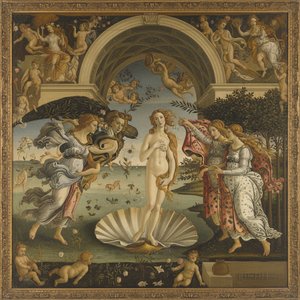
Sandro Botticelli’s *Calumny of Apelles*, painted around 1495, transcends mere visual beauty; it's a profound meditation on reputation, slander, and the persuasive power of deceit—themes that resonate powerfully even in our contemporary world. More than just a stunning depiction of mythological figures, this artwork serves as a compelling commentary on its time, reflecting anxieties surrounding artistic integrity and social standing.
Subject & Narrative: A Dramatic Encounter
The painting portrays a confrontation between Apelles, the celebrated sculptor and painter of Alexandria, and Calumny—a figure embodying malicious accusation. She’s flanked by two companions: Ignorance, depicted with donkey ears, eagerly absorbs every whispered insult; Suspicion casts a wary gaze upon the unfolding drama. At the center stands Venus, or Truth as she is often interpreted, gesturing upwards towards Alexander the Great, whom Apelles sought to impress with his artistic prowess. Beneath her gaze kneels Apelles himself, overwhelmed by despair and pleading for vindication.
Style & Technique: Botticelli’s Elegant Linearity
- Renaissance Linearity: Botticelli masterfully employs flowing lines that define the figures and architectural elements—a characteristic trait of his style that bridges the gap between Gothic grace and the burgeoning Renaissance emphasis on realism.
- Oil Painting & Detail: Executed in oil paints on canvas, the artwork showcases Botticelli’s meticulous attention to detail. The smooth rendering of skin contrasts with the textured drapery, creating a rich surface texture that captures the nuances of light and shadow.
- Compositional Complexity: The painting's layered composition draws the viewer's eye through various focal points—from Calumny’s menacing presence to Apelles’ poignant posture—creating a dynamic visual experience.
Historical Context & Inspiration
Botticelli created *Calumny* during Florence’s turbulent period under Savonarola, a fervent Dominican monk who instigated a moral crusade against artistic indulgence. The painting is believed to be a veiled defense of Botticelli himself and his patrons—particularly Lorenzo de' Medici—against accusations of heresy and immorality. Lucian’s tale of Apelles served as a springboard for exploring these anxieties about public perception and justice.
Symbolism & Meaning: Layers of Interpretation
- Calumny: Represented as an alluring yet monstrous beauty, Calumny embodies the destructive force of false accusations—a figure who thrives on deceit and undermines trust.
- Truth/Venus: Venus symbolizes Truth attempting to assert herself against the darkness of Calumny’s influence. Her gesture upwards signifies hope for divine intervention and moral righteousness.
- Ignorance & Suspicion: These figures illuminate how easily unfounded rumors can gain traction in minds susceptible to doubt—underscoring the importance of discernment and critical thinking.
Emotional Impact & Aesthetic Appeal
*Calumny* evokes a palpable sense of unease and moral contemplation. Botticelli’s masterful use of lighting—particularly dramatic chiaroscuro—creates an atmosphere of tension and drama, emphasizing Apelles' vulnerability and highlighting the pervasive threat posed by Calumny. The painting’s enduring beauty lies in its ability to provoke reflection on themes of honor, integrity, and the devastating consequences of slanderous libel. It remains a testament to Botticelli’s artistic genius—a masterpiece that continues to inspire awe and admiration.
This artwork is an exceptional addition to any collection, offering both aesthetic splendor and intellectual stimulation. Its intricate narrative and impeccable technique make it a captivating centerpiece for interior design projects, sparking conversation and fostering contemplation about the enduring power of art to convey profound moral truths.
Preguntas y respuestas
¿Se encuentra "calumnia" de Sandro Botticelli entre las obras más codiciadas del Renacimiento?
Dentro del movimiento Renacimiento, "calumnia" posee un nivel de popularidad Icónico.
¿Qué configuración de impresión se sugiere para "calumnia" de Sandro Botticelli?
Para "calumnia", la configuración de impresión recomendada es un tamaño de Gran formato y una orientación Formato vertical.
¿Cómo se sitúa históricamente "calumnia"?
Históricamente, "calumnia" es una obra Renacimiento de la más amplia era Renacimiento.
Obras relacionadas


Biografía del artista
vida temprana y formación
Sandro Botticelli, nacido Alessandro di Mariano di Vanni Filipepi alrededor de 1445, fue una figura clave en el Renacimiento temprano de la pintura italiana. Inicialmente eclipsado post mortem, la obra de Botticelli fue revitalizada a finales del siglo XIX por los pre-rafaelitas, lo que llevó a una reevaluación de sus contribuciones artísticas. Botticelli nació en Florencia, Italia, y vivió toda su vida en el mismo barrio. Su familia, incluyendo a su padre Mariano di Vanni d'Amadeo Filipepi, estuvo involucrada en diversas profesiones, lo que les permitió entrar en contacto con artistas. Giorgio Vasari informó que Botticelli fue inicialmente entrenado como joyero.Estilo artístico y obras notables
La obra de Botticelli se caracteriza por una elegante linealidad, que conecta el gótico tardío italiano con el Renacimiento temprano. Sus obras más famosas, El nacimiento de Venus y Primavera, se exhiben en la Galería Uffizi en Florencia, que alberga una importante colección de su arte. * El nacimiento de Venus (ver en ArtsDot) * Primavera (explorar el arte de Sandro Botticelli en ArtsDot) * La natividad mística (Galería Nacional, Londres), fechada en 1501, es la única obra de Botticelli con una fecha clara.Legado e influencia
El estilo de Botticelli evolucionó hacia un enfoque más personal en la década de 1490, divergente de sus contemporáneos como Leonardo da Vinci y el estilo del Alto Renacimiento emergente. Su obra ha sido reconocida como una contribución significativa al movimiento artístico del Renacimiento italiano. * El movimiento artístico del Renacimiento italiano * Sandro Botticelli en Wikipedia- Artistas notables del Renacimiento italiano incluyen a Sandro Botticelli, Leonardo da Vinci, Miguel Ángel y Tiziano.
- La Galería Uffizi de Florencia alberga una importante colección de arte de Botticelli.
- La obra de Botticelli ha sido reconocida como una figura clave en el Renacimiento temprano de la pintura italiana.

Sandro Botticelli
1445 - 1510 , Italia
Datos clave
- Artistas Que Influyeron:
- Fra Angelico
- Paolo Uccello
- Estilo Artístico: Renacimiento Temprano
- Fecha De Muerte: 1510
- Fecha De Nacimiento: c. 1445
- Influenciado A Artistas: ['Pre-Rafaelitas']
- Lugar De Nacimiento: Florencia, Italia
- Nacionalidad: Italiana
- Nombre Completo: Sandro Botticelli
- Obras Notables:
- El Nacimiento de Venus
- Primavera
- Natividad Mística
Artículos relacionados

The Enduring Legacy of Oil on Canvas: Technique, History & Aesthetic Impact
Explore the rich history & techniques of oil painting – from Renaissance masters to Impressionism. Discover pigments, layering methods, and why this timeless medium endures. Expert insights for artists & art enthusiasts.

El Óleo sobre Lienzo: Historia, Técnica y la Persistencia de un Medio Artístico Atemporal
Descubre la historia y técnica del óleo sobre lienzo. Explora reproducciones fieles hechas a mano, personalización artística y consejos de expertos con ArtsDot. ¡Colecciona arte con confianza!
Botticelli: Las 25 Obras Maestras del Renacimiento para Decorar con Arte y Elegancia
Descubre las 25 obras maestras de Sandro Botticelli, el genio del Renacimiento italiano. Explora 'El Nacimiento de Venus', 'Primavera' y más: historia, técnica y belleza clásica. Encuentra reproducciones de arte exclusivas en ArtsDot.com.

Los 25 Tesoros del Uffizi: Arte Renacentista para tu Hogar | ArtsDot
Descubre los 25 tesoros del Uffizi en Florencia: Botticelli, Leonardo da Vinci y más. Explora la historia, el arte renacentista y encuentra reproducciones de alta calidad para tu hogar. ¡Inspírate con ArtsDot.com!

Los 10 Maestros del Renacimiento Temprano: Arte que Transformó el Mundo |
Descubre los 10 maestros del Renacimiento Temprano: Botticelli, Leonardo da Vinci y más. Explora la historia, técnica y belleza de obras icónicas italianas. Reproducciones de arte exclusivas en .


