

- 160.0 x 137.0 cm


La imagen se ajusta a sus preferencias: , .
Descripción del objeto
Samuel Scott's "A Thames Wharf" (1757) captures a bustling London riverside scene—a vivid depiction of maritime trade and daily life along the River Thames.
 Ver más
Biografía del artista
Descubre a Samuel Scott, pintor inglés clave conocido por escenas fluviales y marinas impresionantes desde 1702-1772. Explora su arte de Londres y el conflicto de Jenkins Ear! ==== END RESPONSE ====
Reproducción al óleo hecha a mano
Óleo sobre lienzo pintado a mano en el tamaño y marco de su elección, realizado por encargo por nuestros artistas. ( Cambiar a impresiones Cambiar a imagen digital)
Más información sobre esta pintura
 Ver en contexto
 Enviar
 Compartir
 Detalles
 Guía
Guía

 Descargar
 Similares
 Radiografía
 Presentación de diapositivas
 Preguntas y respuestas
 Estadísticas
Pida su pintura en cuatro sencillos pasos
Tómese su tiempo. Puede cambiar cualquier respuesta; el precio en su carrito de compra se actualizará según cada elección.
1 Paso uno de cuatro
¿Qué tamaño desea?
Estos tamaños mantienen las proporciones de la pintura original. El dibujo muestra su elección en una pared, sobre un sofá de dos metros.
O introduce tus propias medidas
Elija entre nuestros tamaños predefinidos que respetan las proporciones originales de la obra.

Indique el ancho y el alto que necesite para adaptarse a su marco o pared. Al tratarse de una obra pintada a mano, si requiere un tamaño con una proporción distinta, el artista puede pintar un poco más alrededor de la imagen o recortarla ligeramente; usted elige. Le enviaremos una maqueta digital para su aprobación antes de comenzar la pintura. La imagen que se muestra en esta página no refleja el resultado real; solo la maqueta lo hace.
2 Paso dos de cuatro
¿Cómo desea recibirlo: enrollado, estirado o enmarcado?
Los precios que aparecen a continuación corresponden al tamaño seleccionado en el primer paso.
Elige el acabado de los bordes del lienzo
Elige tu marco

Blanco €1

Bordes difuminados €1

Continuación de imagen €1

P118B €10

P118H €10

P118W €10

P438Z €10

P508JH €12

P508YH €12

P805H €10

P805Z €10

P919BZ €10

P919G €10

P919XJ €10

P959ZH €10

P968JZ €12

W106C €8

W218G €10

W218JH €8

W218Y €10

W307PJ €10

W316G €10

W316PJ €8

W316Y €10

W398PJ €8

W4111J €10

W500HY €15

W500JH €15

W692G €12

W849H €8

W940BG €15

W953PJ €8

H24-GOLD €30

H24-SILVER €30

H36-GOLD €45

H36-SILVER €45
Con marco
Moldura: . Dimensiones totales con marco: .
3 Paso tres de cuatro
¿Desea realizar algún cambio en la pintura?
La mayoría de las personas responden que no. Debido a que cada pintura se realiza a mano, nuestro artista también puede adaptarla para usted.
Tras realizar el pedido, el equipo de ArtsDot.com enviará un correo electrónico al cliente para solicitar instrucciones y proporcionar una vista previa del boceto
4 Paso cuatro de cuatro
Algunas opciones de acabado
Todos ellos son opcionales. Las respuestas ya seleccionadas no tienen ningún coste adicional.
¿Quién lo pinta?
Envío a todo el mundo () en 3-4 semanas en lugar de las 5 semanas estándar. (4 noviembre). Sin comprometer la calidad.
¿Una placa de identificación, como en un museo?
Detalles de la placa de bronce grabada
This elegant plaque features the artist's name and the title of the artwork, finely engraved for a timeless presentation.
It is made from bronze with a refined, elegant finish. The text is precisely laser-engraved for a sharp and permanent result. Measuring 9x2 cm, the plaque is compact yet easy to read. It's built to be durable and scratch-resistant, offering a professional, museum-quality look. Mounting is simple thanks to the included adhesive backing.
Detalles de la placa de acrílico transparente
The plaque includes essential engraved details such as the artist's name, the title of the artwork, the date it was created, the type of media used-like oil on canvas or watercolor-a brief description of the piece, and a QR code that links to the complete artwork information.
It is crafted from clear acrylic, offering a sleek, modern appearance. The text is UV-engraved in black to ensure strong visual contrast. With a size of 10x15 cm, it ensures optimal readability. It comes equipped with two metal hooks for secure wall mounting. The plaque is designed to be weather-resistant, making it suitable for various environments, and it includes interactive features that work seamlessly with smartphone scanning.
Detalles de la placa de acrílico negro
This elegant plaque includes engraved information such as the artist's name, the title of the artwork, the date it was created, the type of media used (like oil on canvas or watercolor), a short description of the artwork, and a QR code for quick access to more information.
The plaque itself is made from refined black acrylic with a premium finish. The text is laser-engraved in white for high contrast and readability. Its size is 10x15 cm, designed to be easy to read. It comes with two metal hooks for professional mounting. The design is sleek and fits any interior style. It is also weather-resistant and durable, with built-in digital integration for mobile compatibility.
¿Un barniz protector?
¿Para cuándo lo necesita?
✓ Revisar y pedir
Su pintura, tal como la solicitó

A Thames Wharf
Técnica de reproducción
Dimensiones de la reproducción
-

Selección de artistas premium
Mayor nivel de detalle, delicadeza y tiempo de producción adicional
-

Enmarcado de reproducción
-
-
Para obras de arte o reproducciones que midan más de 105 cm (aproximadamente 41 pulgadas) en cualquiera de sus lados, el marco se enviará como un kit desmontado. Este método garantiza una entrega segura y evita daños durante el transporte.
Se requiere montaje profesional: este no es un producto para hacer usted mismo (DIY).
El kit debe ser ensamblado y el lienzo tensado por un enmarcador profesional con experiencia, utilizando cola para madera (no incluida), una tenaza para tensar lienzos y sargentos para mantener los bastidores alineados mientras la cola se seca. Un montaje incorrecto o una tensión desigual del lienzo pueden dañar la obra de arte de forma permanente y no están cubiertos por nuestra garantía.
 Para obras de arte o reproducciones que midan más de 105 cm (aproximadamente 41 pulgadas) en cualquiera de sus lados, el marco se enviará como un kit desmontado. Este método garantiza una entrega segura y evita daños durante el transporte.
Se incluyen todos los listones de madera maciza, cortados con precisión según las medidas.
Se ensambla con los tornillos incluidos, además de cola para madera para las uniones de las esquinas, la cual no se incluye y debe ser proporcionada por su enmarcador.
Se requieren herramientas profesionales que no están incluidas: un alicate para tensar lienzos (tensor) y abrazaderas para mantener los bastidores alineados mientras se seca el pegamento.
Importante:
Las uniones de las esquinas requieren cola para madera, los listones deben sujetarse con prensas hasta que la cola esté completamente seca, y para tensar el lienzo en el bastidor ensamblado se requiere una pinza para tensar lienzos. Ninguno de estos elementos está incluido en el kit. Por favor, contacte con un profesional del enmarcado con experiencia antes de realizar un pedido de este tamaño.

Cartela
-
-

Barniz protector
Barniz brillante (realza los colores y protege contra la luz y la humedad)
-

Personalizar mi obra
Ejemplos de lo que se puede personalizar: sustituir el rostro por una foto del cliente; añadir una mascota (por ejemplo, cambiar un gato por un perro); incluir un mensaje oculto en el fondo; cambiar el paisaje o los elementos del fondo.
-

Envío urgente
Envío a todo el mundo () en 3 o 4 semanas, en lugar de las 5 semanas habituales. (4 noviembre). Sin comprometer la calidad.
-
Envío urgente
Envío internacional () en 5 semanas. (11 noviembre).
Incluido
Precio total final
€ 235
La opción de vidrio solo está disponible en tamaños inferiores a 110 cm.
Incluido en cada pedido
- Envío exprés gratuito a todo el mundo
- Lienzo de lino de alta calidad
- Seguro de envío total
- Garantía de reembolso de aranceles aduaneros
- Garantía de fidelidad cromática exacta
- Política de devolución de 100 días (solo por defectos)
- Garantía de devolución del 100% del dinero
- Descuento por cantidad


A Thames Wharf by Samuel Scott – A Window into 18th Century London
Samuel Scott’s “A Thames Wharf,” painted circa 1757, isn't merely a depiction of a bustling riverside scene; it’s a meticulously crafted snapshot of daily life in burgeoning London. The painting transports us to the heart of maritime commerce and the rhythms of a city on the cusp of transformation, offering a rare glimpse into the world of the East India Company and the vital role the Thames played as its artery. Scott, often considered the “father of English watercolour,” masterfully captures this atmosphere with an almost palpable sense of energy and immediacy – a testament to his innovative approach to capturing light and texture.The Scene Unfolds: Commerce and Community
The composition immediately draws the eye into a vibrant tableau of activity centered around a wharf on the River Thames. The foreground is populated with figures engaged in various tasks: men loading goods onto boats, overseeing operations, and even a dog adding a touch of domesticity to the scene. Notice the careful attention to detail – the varied clothing styles, suggesting a diverse workforce; the sturdy treadwheel crane dominating the middle ground, a crucial piece of machinery for unloading cargo; and the smaller vessel moored in the background, hinting at the constant flow of trade. The buildings lining the wharf are rendered with a realistic yet subtly stylized approach, reflecting the architectural trends of the mid-18th century – brick construction and pitched roofs creating a sense of solidity and permanence. The sky, filled with billowing clouds, adds depth and drama to the scene, suggesting both the potential for inclement weather and the dynamic nature of the river itself.Technique and Style: The Dawn of Watercolour
Scott’s mastery lies in his innovative use of watercolour – a medium he championed during a period when oil painting was still considered the dominant technique. He skillfully employed layering, glazing, and scumbling to achieve remarkable luminosity and atmospheric perspective. Observe how light dances across the surfaces of the buildings and boats, creating an illusion of depth and movement. The artist’s loose brushstrokes and vibrant palette contribute to the overall sense of immediacy and spontaneity – a characteristic that distinguished his work from more formal, academic styles. The painting's realism is tempered by a certain romanticism; Scott wasn’t simply documenting a scene, but rather imbuing it with emotion and character.Historical Context: The East India Company and London’s Rise
“A Thames Wharf” provides invaluable insight into the economic and social landscape of 18th-century London. The painting directly references the East India Company, a powerful entity that controlled vast trade networks across Asia. The presence of the treadwheel crane – a relatively new invention at the time – highlights the increasing mechanization of port operations and the growing importance of London as a global trading center. Furthermore, the bustling activity depicted reflects the city’s rapid growth and transformation during this period, fueled by commerce, immigration, and innovation. The painting serves as a visual record of a pivotal moment in London's history – a time when it was becoming one of the world’s leading financial and commercial hubs.Symbolism and Emotional Resonance
Beyond its historical significance, “A Thames Wharf” resonates with a powerful sense of human connection and industriousness. The figures depicted are not merely anonymous laborers; they represent a community engaged in a vital economic activity. The painting evokes a feeling of energy, movement, and the relentless pursuit of prosperity. It’s a celebration of London's dynamism and its role as a gateway to the world. The slightly hazy atmosphere and the subtle play of light contribute to an overall mood of optimism and possibility – reflecting the belief in progress that characterized this era. This painting is more than just a depiction of a wharf; it’s a portrait of a city on the rise, capturing the spirit of innovation and ambition that defined 18th-century London.Preguntas y respuestas
¿A qué se debe el estado de los derechos de autor de "A Thames Wharf"?
"A Thames Wharf" de Samuel Scott es de en el dominio público: sus derechos de autor han expirado. Los términos de derechos de autor se calculan a partir del fallecimiento del artista, y Samuel Scott murió en 1772.
¿A qué etapa de la trayectoria de Samuel Scott pertenece "A Thames Wharf" (1757)?
"A Thames Wharf", creada en 1757, pertenece al Mature Period de la trayectoria de Samuel Scott.
¿Cuál es el color predominante en "A Thames Wharf" de Samuel Scott?
El color dominante de "A Thames Wharf" de Samuel Scott es Espresso (#605448).
Obras relacionadas


Samuel Scott
1702 - 1772, Reino Unido
Biografía del artista
El padre de la acuarela inglesa: El legado de Samuel Scott
Samuel Scott, nacido en Londres alrededor de 1702, permanece como una figura envuelta en un misterio artístico, un testimonio de los desafíos que enfrentaron los historiadores al documentar a los artistas de su época. A pesar de la escasez de detalles biográficos sobre sus años formativos y su formación, Scott emergió como uno de los pintores de paisajes más destacados de Gran Bretaña durante mediados del siglo XVIII, estableciéndose como un pionero en la técnica de la acuarela e influyendo profundamente en las generaciones posteriores de artistas británicos. Su estilo distintivo, caracterizado por serenas escenas ribereñas y dramáticos paisajes marítimos impregnados de una perspectiva atmosférica, capturó el espíritu de su tiempo y consolidó su legado como “el padre de la acuarela inglesa”.
La trayectoria artística de Scott comenzó aproximadamente en 1720, centrándose inicialmente en el arte marino. Como muchos artistas de su generación, se vio profundamente impactado por las obras de Willem van de Velde el Joven, poseyendo numerosas copias y absorbiendo un manejo magistral de la luz y la textura. Esta influencia es palpable en sus primeras obras que representan barcos de guerra en combate naval, demostrando una atención meticulosa al detalle y una comprensión de los principios compositivos arraigados en las tradiciones de la pintura marina holandesa. Su capacidad para traducir la fuerza bruta del mar en imágenes delicadas y evocadoras le permitió cerrar la brecha entre la rígida documentación marítima y las bellas artes.
Una visión de Londres y el Támesis
A medida que su carrera maduraba, Scott dirigió su mirada hacia el corazón del Imperio Británico, encontrando una profunda inspiración en las bulliciosas vías fluviales del río Támesis. Sus obras sirven como una ventana vívida al Londres del siglo XVIII, capturando el pulso rítmico del comercio marítimo y la vida cotidiana a orillas del río. En obras maestras como A Thames Wharf (1757), presenta una representación vibrante del comercio, donde el movimiento de las embarcaciones y la estructura de los muelles narran la historia de una ciudad en constante movimiento. Su talento residía en su habilidad para combinar la precisión topográfica con una atmósfera romántica, logrando que los aspectos industriales y comerciales de Londres parecieran tanto grandiosos como íntimos.
Más allá de los concurridos muelles, Scott poseía un don extraordinario para capturar la majestuosidad arquitectónica de los monumentos de Londres. Sus representaciones de la ciudad utilizaban a menudo el medio del óleo sobre lienzo para lograr una sensación de permanencia y grandeza, como se observa en The Thames at Westminster Bridge with Barges (146). En esta obra, muestra el detalle arquitectónico de Londres a través de un lente romántico, utilizando la luz y la sombra para crear una cautivadora atmósfera histórica. Del mismo modo, su View of Somerset House Looking Downstream from the York Water-Tower demuestra su destreza en la pintura topográfica, ofreciendo una mirada serena al paisaje urbano y a la cercana Torre de Londres, plasmada con una precisión que honra la elegancia estructural de la época.
Colaboraciones artísticas y trascendencia histórica
El desarrollo del estilo de Scott también se vio moldeado por importantes asociaciones profesionales. Su proyecto colaborativo con George Lambert en seis pinturas que retrataban los asentamientos de la Compañía de las Indias Orientales demostró su versatilidad y capacidad para sintetizar elementos artísticos dispares —la arquitectura junto al paisaje—, reflejando las corrientes intelectuales del periodo. Esta colaboración dio como resultado imágenes que transmitían tanto grandeza como intimidad, capturando la esencia de la empresa colonial mientras celebraban simultáneamente la belleza del entorno natural. Tales obras no eran meramente búsquedas estéticas, sino que servían como importantes registros históricos del creciente alcance global de Gran Bretaña.
La importancia perdurable de Samuel Scott reside en su papel como figura de transición que ayudó a elevar la acuarela de ser un medio de mero boceto a una forma respetada de bellas artes. Sus contribuciones pueden resumirse a través de varios pilares artísticos fundamentales:
- Técnica pionera: Introdujo un nivel de profundidad atmosférica y manipulación de la luz que definiría la tradición de la acuarela inglesa durante décadas.
- Maestría marítima: Al combinar las influencias marinas holandesas con temas británicos, creó un género único de arte naval y fluvial.
- Documentación topográfica: Sus detallados representaciones de los monumentos de Londres proporcionaron un archivo visual invaluable de la vida urbana y la arquitectura del siglo XVIII.
- Síntesis cultural: A través de sus colaboraciones, logró fusionar con éxito la documentación de la expansión colonial con la belleza estética de la pintura de paisaje.
A través de su dedicada observación del Támesis y el mar, Samuel Scott hizo más que simplemente pintar paisajes; capturó el alma misma de una nación marítima durante un período de inmenso crecimiento y transformación.
Artículos relacionados

Las 25 obras maestras imprescindibles de la National Gallery de Londres
Explora 25 joyas de la National Gallery, desde Van Gogh hasta Caravaggio. ¡Descubre estas obras maestras en ArtsDot.com!

Henry Scott Tuke: Sunlit Masculinity & the Pastoral Ideal in Victorian Painting
Explore the captivating world of Henry Scott Tuke's paintings – a master of British Impressionism renowned for his intimate depictions of youth and sunlit maritime scenes. Discover his legacy & aesthetic influence.
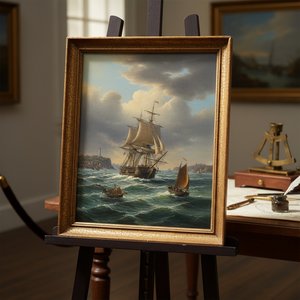
Samuel Walters: Capturing Victorian Maritime Life with Precision & Artistry
Explore the exquisite maritime paintings of Samuel Walters (1811-1882). Discover his mastery of detail, historical scenes & influence on Victorian art. Learn about collecting his works and find high-quality reproductions at ArtsDot.