


 Vista previa
 Compartir
 Compartir
 Ver detalles

 Descargar
 Ver similares
 Radiografía
 Presentación de diapositivas
Untitled (3)

 Leer más
Giclée / Impresión de arte
Impresiones giclée o en lienzo de calidad de museo con producción rápida y opciones de acabado flexibles. ( Encargar reproducción pintada a mano Comprar descarga)




































Elija entre nuestros tamaños predefinidos que respetan las proporciones originales de la obra.

Puede introducir sus propias dimensiones para adaptarse a un marco o espacio específico. Si el tamaño seleccionado no coincide con las proporciones de la imagen original, recortaremos la obra de arte o extenderemos la imagen con un borde con efecto espejo o de color sólido. Se enviará una maqueta digital para su aprobación antes de que comience la producción.
Tenga en cuenta que la vista previa en pantalla no refleja el recorte o la extensión real. Solo la maqueta mostrará con precisión la composición final.
Aunque existen tamaños personalizados, recomendamos seleccionar una dimensión de la lista predefinida para preservar las proporciones originales.
Envío a todo el mundo () en 2 semanas en lugar de las 4/5 semanas estándar. (15 agosto)

Envío exprés gratuito a todo el mundo

Lienzo de lino de alta calidad

Seguro de envío completo

Garantía de reembolso de aranceles aduaneros

Garantía de fidelidad cromática exacta

Política de devolución de 60 días (solo por defectos)

Garantía de devolución del 100% del dinero

Oferta por volumen
 La opción de vidrio solo está disponible en tamaños inferiores a 110 cm.

Untitled (3)
Giclée / Impresión de arte
Tamaño de la reproducción
-


Precio total
$ 62
Obras relacionadas


Biografía del artista
Rudolf Belling: A Sculptor of Paradoxes
Rudolf Belling (1886-1972) wasn’t merely a sculptor; he was a provocateur, a theorist, and ultimately, a visionary who fundamentally challenged the established norms of 20th-century art. Born in Berlin into a family with roots in metalworking, Belling's early exposure to craftsmanship laid the groundwork for his later explorations of form and space. However, it wasn’t simply technical skill that defined him; rather, it was an insistent questioning of conventional sculptural approaches – a desire, as he himself described, to “show only good views.” This seemingly simple statement belied a complex intellectual project, one rooted in the writings of Benvenuto Cellini and fueled by a deep dissatisfaction with the prevailing theories of his time. Belling’s career became inextricably linked with periods of intense political upheaval, marked by exile, persecution, and ultimately, a remarkable resilience.Early Influences and Theoretical Foundations
Belling's artistic journey began in the early 1900s, initially within the framework of traditional sculpture training. Yet, he quickly recognized limitations in the prevailing emphasis on creating a single, definitive viewpoint – the idea that a sculpture should be “comprehensible” and never force the observer to circle it, as articulated by Adolf von Hildebrandt. This critique resonated deeply with Belling’s own artistic sensibilities. He drew inspiration from the Renaissance sculptor Benvenuto Cellini, whose writings advocated for sculptures possessing multiple compelling perspectives, mirroring the way we naturally perceive objects in our environment. This concept of “good views” became a central tenet of Belling's theory – that sculpture should embrace complexity and offer a multitude of engaging viewpoints simultaneously. This theoretical framework wasn’t merely academic; it directly informed his creative process, leading him to develop innovative techniques and explore unconventional materials.The "Dreiklang" and the Rise of a Maverick
Belling's most famous work, the “Dreiklang” (Triad) created in 1919-1924, perfectly encapsulates his theoretical principles. This monumental sculpture, constructed from bronze, exemplifies Belling’s desire to present multiple perspectives within a single form. The piece is deliberately ambiguous, inviting viewers to approach it from various angles and discover new relationships between its constituent parts. The “Dreiklang” immediately generated considerable debate among critics and fellow artists, establishing Belling as a controversial figure in the burgeoning avant-garde scene of Berlin. He was lauded by figures like Carl Einstein and Paul Westheim for his radical ideas, yet simultaneously challenged by established artistic voices who dismissed his work as overly complex or lacking in traditional beauty. This tension – between innovation and acceptance – became a recurring theme throughout Belling’s career.Exile, Re-evaluation, and the Istanbul Years
The rise of Nazism dramatically altered Belling's trajectory. In 1933, his work was deemed “degenerate” by the regime, leading to its destruction or confiscation. Forced into exile, Belling sought refuge in New York City in 1935, where he exhibited a selection of his most significant works at the Weyhe Gallery. This period provided him with invaluable exposure and allowed him to continue developing his theories, lecturing on modern sculpture and space. However, the looming threat of war prompted him to return to Germany in 1937, driven by concerns for his nine-year-old son, Thomas. His subsequent years in Istanbul were particularly formative, where he served as a lecturer at the Academy of Fine Arts, introducing Turkish students to the principles of modern sculpture and fostering a new generation of artists. During this time, Belling created a striking bronze statue of Mustafa Kemal Atatürk, Turkey’s founder, solidifying his position as a respected figure within the country's artistic landscape.Legacy and Lasting Influence
Rudolf Belling’s impact on 20th-century sculpture is profound, despite the challenges he faced throughout his career. His insistence on multiple viewpoints, his embrace of ambiguity, and his willingness to challenge established conventions paved the way for subsequent generations of sculptors. His theoretical writings continue to be studied by art historians and critics, while his sculptures – often characterized by their dynamic forms and complex spatial relationships – remain powerful testaments to his unique vision. Belling’s story is not simply one of artistic achievement; it's a poignant reflection on the intersection of art, politics, and personal resilience—a testament to an artist who refused to compromise his principles in the face of adversity. His work serves as a reminder that true innovation often arises from questioning the status quo and embracing the inherent paradoxes of form and space.
rudolf belling
1886 - 1972
Datos clave
- Artistic Movement Or Style: Modern Sculpture
- Artists Or Movements Influenced By This Artist:
- Carl Einstein
- Paul Westheim
- Artists Who Influenced This Artist: ['Benvenuto Cellini']
- Date Of Birth: August 26, 1886
- Date Of Death: June 9, 1972
- Full Name: Rudolf Belling
- Nationality: German
- Notable Artworks:
- Dreiklang (Triad)
- Untitled Sculptures
- Place Of Birth: Berlin, Germany
Artículos relacionados

The Enduring Legacy of Bronze Sculpture: Technique, Symbolism & Cultural Impact
Explore the rich history & enduring appeal of bronze sculpture with expert insights for collectors. Learn about casting techniques, iconic artists, collecting tips & contemporary interpretations at ArtsDot.

Edgar Degas: Capturing Modern Life – A Study of Movement, Observation, and the Parisian Belle Époque
Explore the captivating world of Edgar Degas! Discover his innovative techniques, iconic ballet paintings, and unique portrayal of Parisian life in this insightful art history study.

El Legado Duradero de la Escultura en Bronce: Historia, Técnicas e Interpretaciones Contemporáneas
Descubra la historia, las técnicas y el valor de la escultura en bronce. Guía experta para coleccionistas e inversores. Explore obras maestras y aprenda sobre fundición a la cera perdida.
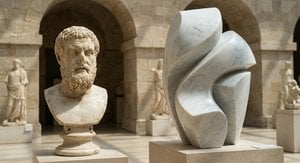
The Enduring Allure of Marble in Art History: From Classical Sculpture to Modern Abstraction
Explore the captivating history of marble sculpture from ancient Greece to modern art. Discover renowned artists like Canova & Michelangelo, carving techniques, and investment insights at ArtsDot.

The Enduring Legacy of Bronze Sculpture: A Collector's Guide to Form & Cultural Significance
Explore the rich history & enduring appeal of bronze sculpture with expert insights for collectors at ArtsDot. Learn about casting techniques, iconic artists, and collecting tips to build a discerning art collection.

