
- Inicio

- Impresión en lienzo
- Roy Lichtenstein
- Silver Frame
 Encargar reproducción Comprar imagen en alta resolución
 Enviar
 Compartir
 Detalles
 Añadir a favoritos

 Descargar
 Similares
 Radiografía
 Presentación de diapositivas
Silver Frame


 Ver más
Giclée / Impresión de arte
Impresión giclée o en lienzo de calidad de museo con producción rápida y opciones de acabado flexibles.




P118B $10

P118H $10

P118W $10

P438Z $10

P508JH $12

P508YH $12

P805H $10

P805Z $10

P919BZ $10

P919G $10

P919XJ $10

P959ZH $10

P968JZ $12

W106C $8

W218G $10

W218JH $8

W218Y $10

W307PJ $10

W316G $10

W316PJ $8

W316Y $10

W398PJ $8

W4111J $10

W500HY $15

W500JH $15

W692G $12

W849H $8

W940BG $15

W953PJ $8




Elija entre nuestros tamaños predefinidos que respetan las proporciones originales de la obra.

Puede introducir sus propias dimensiones para adaptarse a un marco o espacio específico. Si el tamaño seleccionado no coincide con las proporciones de la imagen original, recortaremos la obra de arte o extenderemos la imagen con un borde con efecto espejo o de color sólido. Se enviará una maqueta digital para su aprobación antes de que comience la producción.
Tenga en cuenta que la vista previa en pantalla no refleja el recorte o la extensión real. Solo la maqueta mostrará con precisión la composición final.
Aunque existen tamaños personalizados, recomendamos seleccionar una dimensión de la lista predefinida para preservar las proporciones originales.
Entrega mundial () en 2 semanas en lugar de las 4/5 semanas estándar. (19 julio)

Envío exprés gratuito a todo el mundo

Lienzo de lino de alta calidad

Seguro de envío total

Garantía de reembolso de impuestos aduaneros

Garantía de fidelidad de color

Política de devolución de 60 días (solo por defectos)

Garantía de devolución del 100% del dinero

Descuento por pedido múltiple
 La opción de vidrio solo está disponible en tamaños inferiores a 110 cm.

Silver Frame
Giclée / Impresión de arte
Tamaño de la reproducción
-


Precio total final
-
Descripción de la obra
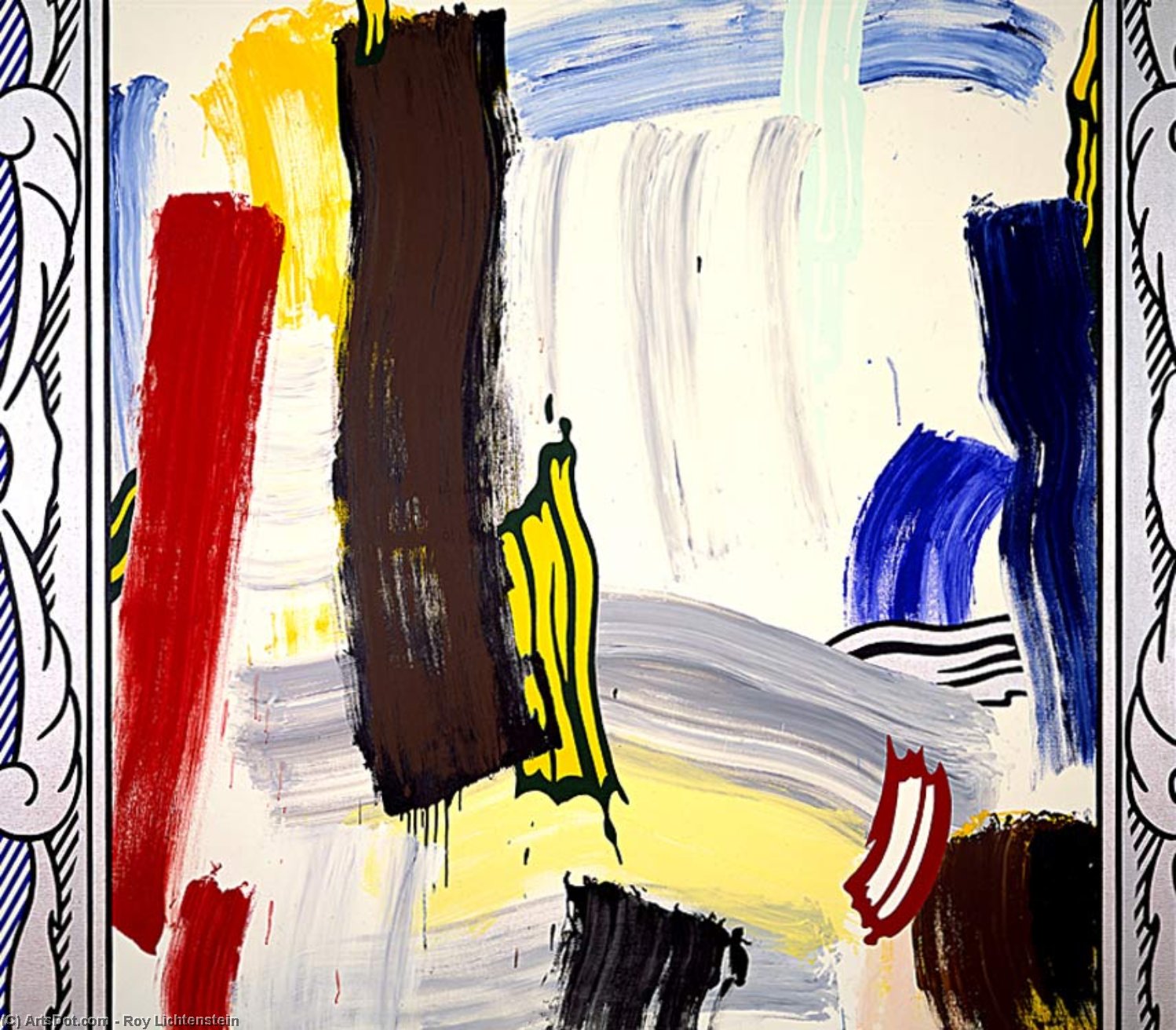
A Bold Exploration of Color and Collage: Roy Lichtenstein's "Silver Frame"
The year was 1984, and the art world was buzzing with excitement over the resurgence of Pop Art – specifically, the distinctive vision championed by Roy Lichtenstein. “Silver Frame,” a monumental canvas measuring approximately 60 x 72 inches, stands as a testament to Lichtenstein’s groundbreaking approach to painting and his masterful manipulation of collage techniques. It's not merely a depiction of an image; it’s an embodiment of the artist’s philosophy about how art can engage with popular culture and challenge traditional artistic conventions.The Style: Lichtensteinian Collage
At first glance, “Silver Frame” might appear to be a straightforward representation of a photograph – indeed, it is based on a print by Lichtenstein himself. However, this illusion quickly dissipates upon closer inspection. Lichtenstein’s signature technique involved meticulously layering printed images onto canvas, creating what he termed "collage." Unlike traditional painting where color and texture are blended seamlessly, collage embraces disparate elements—photographs, halftone patterns, and bold geometric shapes—resulting in a dynamic visual experience that pulsates with energy. The artist painstakingly positioned these components to achieve a harmonious balance between abstraction and recognizable imagery.Technique: Halftone Printing and Layered Composition
The core of Lichtenstein’s aesthetic lies in the halftone printing process – a technique borrowed from commercial illustration where dots of varying sizes are used to simulate shading and tonal variation. This method, perfected by Lichtenstein during his formative years as an illustrator, lends “Silver Frame” its characteristic mottled appearance. The artist meticulously applied halftone patterns over photographs, transforming them into stylized representations that retain their original visual information while simultaneously elevating them to the realm of art. Furthermore, Lichtenstein employed a layered compositional strategy—overlapping images and shapes—to create depth and complexity within the canvas. This layering technique contributes significantly to the artwork's overall impact, inviting viewers to explore multiple perspectives and engage in an active dialogue with the image.Historical Context: Challenging Artistic Boundaries
“Silver Frame” emerged during a period of significant artistic upheaval – the late 1980s saw artists increasingly questioning established hierarchies and embracing new forms of expression. Lichtenstein’s work directly confronted the elitism inherent in the art world, advocating for accessibility and engaging with themes prevalent in everyday life. He drew inspiration from comic strips and advertising campaigns—sources considered lowbrow by many critics at the time—demonstrating that artistic innovation could flourish outside of academic institutions. By appropriating imagery from popular culture, Lichtenstein asserted a powerful statement about the role of art in reflecting and shaping societal values.Symbolism: Bold Colors and Geometric Shapes
The artwork’s striking color palette – dominated by vibrant reds, yellows, blues, greens, and browns—serves as more than just aesthetic embellishment; it carries symbolic weight. Lichtenstein deliberately selected colors that evoke emotion and convey meaning beyond their literal appearance. The prominent red square, positioned centrally within the composition, represents passion, energy, and perhaps even aggression – mirroring themes explored in comic books and reflecting Lichtenstein’s own rebellious spirit. Similarly, the geometric shapes—squares and rectangles—symbolize order, stability, and rationality—contrasting with the chaotic layering of images that characterizes the collage technique. These deliberate choices underscore Lichtenstein's intention to provoke contemplation and stimulate intellectual engagement.Emotional Impact: A Celebration of Visual Stimulation
Ultimately, “Silver Frame” succeeds in captivating viewers through its sheer visual stimulation. The artwork’s bold colors, intricate patterns, and dynamic composition create an immersive experience that transcends mere representation—it invites the audience into Lichtenstein's artistic universe. It speaks to a desire for playful experimentation and challenges conventional notions of beauty. Viewing this piece evokes feelings of excitement, curiosity, and perhaps even amusement – mirroring the spirit of Pop Art itself. “Silver Frame” remains a powerful reminder that art can be both intellectually stimulating and emotionally resonant, cementing Lichtenstein’s legacy as one of the most influential artists of his generation.Obras similares


Biografía del artista
vida temprana y educación
Roy Fox Lichtenstein, un destacado artista pop estadounidense, nació el 27 de octubre de 1923 en la ciudad de Nueva York. Creció en una familia judía de clase media alta, con su padre como corredor de bienes raíces y su madre como ama de casa. El interés de Lichtenstein por el arte y el diseño comenzó como un pasatiempo durante sus años escolares.Carrera artística
Después de completar su educación secundaria en la Dwight School en 1940, Lichtenstein asistió a la Art Students League of New York bajo la tutela de Reginald Marsh. Luego continuó con una licenciatura en artes visuales de la Universidad de Ohio, que fue interrumpida por un servicio militar de tres años durante la Segunda Guerra Mundial.- Look Mickey (1961, Galería Nacional de Arte, Washington D.C.), una de las primeras obras pop art de Lichtenstein, marcó el comienzo de su influyente carrera.
- Su trabajo estuvo fuertemente influenciado por los estilos de publicidad y cómics populares, con obras notables como Wham!, Drowning Girl y Oh, Jeff... I love you too... but...
- La obra más cara de Lichtenstein, Masterpiece, se vendió por 165 millones de dólares en enero de 2017.
Enseñanza e influencias
Lichtenstein enseñó en varias instituciones, incluyendo la Universidad Estatal de Nueva York en Oswego y la Universidad Rutgers. Su trabajo fue influenciado por Allan Kaprow, un colega profesor en Rutgers, lo que reavivó su interés en las imágenes proto-pop. Exposiciones notables:- The Museum Chambre de Commerce (Tolosa, Francia), que presentaba varias obras de arte, incluyendo aquellas del movimiento pop art.
- El trabajo de Lichtenstein fue exhibido en la Leo Castelli Gallery en la ciudad de Nueva York, con su primera exposición individual en 1962 siendo comprada por completo por coleccionistas influyentes antes de que abriera.
Legado e impacto
Roy Lichtenstein falleció el 29 de septiembre de 1997, dejando atrás un legado como figura destacada del movimiento pop art. Su obra continúa siendo celebrada por su innovadora mezcla de arte alto y bajo, haciendo que sea accesible a una audiencia más amplia.- Explore más obras de Lichtenstein en ArtsDot.com
- Descubra el mundo del pop art y sus influyentes artistas en Pop Art y más allá: navegando los estilos contemporáneos con ArtsDot.com

Roy Lichtenstein
1923 - 1997 , Estados Unidos de América
Datos clave
- Artistas Que Influyeron:
- Reginald Marsh
- Allan Kaprow
- Fecha De Muerte: 29 de septiembre de 1997
- Fecha De Nacimiento: 27 de octubre de 1923
- Lugar De Nacimiento: Manhattan, EE. UU.
- Movimiento Artístico: Pop Art
- Nacionalidad: Estadounidense
- Nombre Completo: Roy Lichtenstein
- Obras Notables:
- Look Mickey
- Whaam!
- Drowning Girl
- Masterpiece
Artículos relacionados

Elevando los Interiores: Guía para una Curación Sofisticada del Arte Pop y la Expresión Madura de la Afición
Guía experta para integrar el vibrante Arte Pop en tu hogar con sofisticación. Descubre artistas clave, consejos de decoración y cómo invertir inteligentemente en arte. ¡Transforma tus espacios!

Desafiando las Convenciones: Orígenes, Evolución y Legado Duradero del Pop Art
Descubra la fascinante historia del Pop Art: orígenes, artistas clave como Warhol y Lichtenstein, técnicas innovadoras y su impacto duradero en el arte y la cultura. Guía experta para coleccionistas.

Gene Davis: Chromatic Explorations of Color Field Painting & the Washington Color School
Explore the vibrant world of Gene Davis and the Washington Color School. Discover his iconic stripe paintings, innovative techniques, and lasting impact on American abstract art. A deep dive for collectors & enthusiasts.

Chromatic Abundance: Exploring the Psychological Impact of Rich Color Palettes in Painting
Explore the fascinating world of color theory in painting! Discover how Impressionist & Post-Impressionist masters used vibrant hues to evoke emotion and create lasting impact. Expert insights for collectors & art enthusiasts.

Chromatic Resonance: Exploring the Emotional Impact of Vibrant Color Palettes in Painting
Explore the fascinating relationship between color & emotion in art history. Discover how master artists like Matisse & Gauguin used vibrant hues to evoke feelings and cultural meanings. A deep dive for classic art enthusiasts.



