


 Vista previa
 Compartir
 Compartir
 Ver detalles
 Guía
Guía

 Descargar
 Ver artículos similares
 Radiografía
 Presentación de diapositivas
 Estadísticas
Pajar -1


 Leer más
La obra de arte que se muestra en esta página está protegida por las leyes de propiedad intelectual, lo que significa que no podemos crear ni vender legalmente una reproducción idéntica. Esta protección se hace cumplir en virtud de acuerdos internacionales como el Convenio de Berna y por las leyes nacionales, incluidas aquellas establecidas por el Ley de derechos de autor de los EE. UU. - Título 17.
Este método cumple plenamente con las normativas de derechos de autor, ya que no implica la copia ni la duplicación de la obra protegida. En su lugar, se trata de una reinterpretación creativa: una nueva pintura influenciada por la original, pero que no es idéntica a ella.
Giclée / Impresión de arte
Impresiones giclée o en lienzo de calidad de museo con producción rápida y opciones de acabado flexibles. ( Encargar reproducción pintada a mano Ver versión en imagen digital)




P118B €10

P118H €10

P118W €10

P438Z €10

P508JH €12

P508YH €12

P805H €10

P805Z €10

P919BZ €10

P919G €10

P919XJ €10

P959ZH €10

P968JZ €12

W106C €8

W218G €10

W218JH €8

W218Y €10

W307PJ €10

W316G €10

W316PJ €8

W316Y €10

W398PJ €8

W4111J €10

W500HY €15

W500JH €15

W692G €12

W849H €8

W940BG €15

W953PJ €8




Elija entre nuestros tamaños predefinidos que respetan las proporciones originales de la obra.

Puede introducir sus propias dimensiones para adaptarse a un marco o espacio específico. Si el tamaño seleccionado no coincide con las proporciones de la imagen original, recortaremos la obra de arte o extenderemos la imagen con un borde con efecto espejo o de color sólido. Se enviará una maqueta digital para su aprobación antes de que comience la producción.
Tenga en cuenta que la vista previa en pantalla no refleja el recorte o la extensión real. Solo la maqueta mostrará con precisión la composición final.
Aunque existen tamaños personalizados, recomendamos seleccionar una dimensión de la lista predefinida para preservar las proporciones originales.
Envío a todo el mundo () en 2 semanas en lugar de las 4/5 semanas estándar. (10 octubre)

Envío exprés gratuito a todo el mundo

Lienzo de lino de alta calidad

Seguro de envío completo

Garantía de reembolso de impuestos aduaneros

Garantía de fidelidad cromática exacta

Política de devolución de 100 días (solo por defectos)

Garantía de devolución del 100% del dinero

Oferta por volumen
 La opción de vidrio solo está disponible en tamaños inferiores a 110 cm.

Pajar -1
Giclée / Impresión de arte
Tamaño de la reproducción
-


Precio total
€ 53
The Genesis of a Pop Visionary – Roy Lichtenstein and the Dawn of a New Aesthetic
Roy Fox Lichtenstein, born in 1923 amidst the vibrant energy of New York City, wasn’t merely an artist; he was a provocateur, a translator of the modern world onto canvas. His rise to prominence within the Pop Art movement represents a deliberate challenge to established artistic conventions – a rejection of the perceived elitism of fine art in favor of embracing imagery drawn from advertising, comic books, and everyday American life. His early exposure to museums, concert halls, and the pulsating rhythms of jazz music instilled a deep appreciation for visual communication, which would later become the cornerstone of his groundbreaking style. Lichtenstein’s formal training at the Art Students League, followed by brief service in the Army during wartime, provided him with foundational skills while simultaneously exposing him to the burgeoning anxieties and transformations of the mid-20th century. This confluence of influences – a cultivated cultural awareness coupled with a pragmatic artistic approach – set the stage for his revolutionary work.

The Stark Beauty of Dot and Color: Deconstructing the Familiar
“Haystack -1,” painted in 1969, exemplifies Lichtenstein’s signature style – a deliberate simplification and exaggeration of familiar imagery. The artwork presents a seemingly straightforward depiction of a haystack, yet it's immediately arresting due to its reliance on Ben-Day dots, a printing technique borrowed from commercial illustration. These meticulously arranged yellow dots create an illusion of texture and depth, mimicking the effect of halftone patterns found in magazines and comics. The stark contrast between the bright yellow dots and the predominantly white background generates a dynamic visual field, pulling the viewer’s eye across the canvas. The composition is remarkably balanced, with the haystack occupying most of the space, creating a sense of stability amidst the energetic surface pattern. It's a masterful demonstration of how seemingly simple elements can be combined to produce a complex and engaging image.
Decoding Pop Art: Consumerism, Mass Media, and American Identity
Lichtenstein’s work isn’t simply about replicating images; it’s about interrogating their meaning within the context of post-war America. The haystack itself represents a quintessential symbol of rural life – a nostalgic image often associated with simplicity and agrarian values. However, by rendering it in this highly stylized, almost mechanical manner, Lichtenstein subtly critiques the homogenization of American culture brought about by mass media and consumerism. The use of Ben-Day dots, reminiscent of comic book panels, further reinforces this connection to popular entertainment and advertising – industries that were rapidly shaping American society during this period. The artwork becomes a commentary on how images are disseminated and consumed, prompting viewers to consider the relationship between art, commerce, and identity.
A Legacy in Reproduction: Bringing Lichtenstein’s Vision Home
ArtsDot offers meticulously crafted hand-painted reproductions of “Haystack -1,” allowing you to experience the power and precision of Lichtenstein's style firsthand. Each reproduction is created by skilled artists who understand the nuances of his technique, faithfully capturing the vibrant colors, intricate dot patterns, and overall dynamic energy of the original painting. Whether displayed in a contemporary interior or as a statement piece in a classic setting, this artwork brings a touch of Pop Art history into your space. Explore our range of sizes and canvas options to find the perfect representation of this iconic work – a testament to Roy Lichtenstein’s enduring legacy as one of the most influential artists of the 20th century.
Preguntas y respuestas
¿Es "Pajar -1" de Roy Lichtenstein de dominio público y por qué?
"Pajar -1" de Roy Lichtenstein es de aún protegido por derechos de autor. La duración de los derechos de autor comienza a partir del fallecimiento del artista, que ocurrió en 1997.
¿En qué año se creó "Pajar -1"?
La creación de "Pajar -1" de Roy Lichtenstein data de 1969.
¿Puedo ver una vista de rayos X de "Pajar -1" de Roy Lichtenstein?
"Pajar -1" puede examinarse capa por capa en la página Rayos X de la obra, un visor inspirado en una mesa de luz de restauración que ofrece once lecturas ópticas de la imagen.
¿Cuál es el tono predominante de "Pajar -1" de Roy Lichtenstein?
"Pajar -1" se inclina hacia un tono Del ocre al sepia.
¿A qué etapa de la carrera de Roy Lichtenstein pertenece "Pajar -1" (1969)?
La fecha de 1969 sitúa a "Pajar -1" en el Era del Pop Art del desarrollo de Roy Lichtenstein.
¿Quién es el artista detrás de "Pajar -1"?
"Pajar -1" se atribuye a Roy Lichtenstein.
¿A qué edad creó Roy Lichtenstein "Pajar -1"?
Cuando se creó "Pajar -1" en 1969, Roy Lichtenstein —nacido/a en 1923— tenía 46 años.
Obras relacionadas


Biografía del artista
vida temprana y educación
Roy Fox Lichtenstein, un destacado artista pop estadounidense, nació el 27 de octubre de 1923 en la ciudad de Nueva York. Creció en una familia judía de clase media alta, con su padre como corredor de bienes raíces y su madre como ama de casa. El interés de Lichtenstein por el arte y el diseño comenzó como un pasatiempo durante sus años escolares.Carrera artística
Después de completar su educación secundaria en la Dwight School en 1940, Lichtenstein asistió a la Art Students League of New York bajo la tutela de Reginald Marsh. Luego continuó con una licenciatura en artes visuales de la Universidad de Ohio, que fue interrumpida por un servicio militar de tres años durante la Segunda Guerra Mundial.- Look Mickey (1961, Galería Nacional de Arte, Washington D.C.), una de las primeras obras pop art de Lichtenstein, marcó el comienzo de su influyente carrera.
- Su trabajo estuvo fuertemente influenciado por los estilos de publicidad y cómics populares, con obras notables como Wham!, Drowning Girl y Oh, Jeff... I love you too... but...
- La obra más cara de Lichtenstein, Masterpiece, se vendió por 165 millones de dólares en enero de 2017.
Enseñanza e influencias
Lichtenstein enseñó en varias instituciones, incluyendo la Universidad Estatal de Nueva York en Oswego y la Universidad Rutgers. Su trabajo fue influenciado por Allan Kaprow, un colega profesor en Rutgers, lo que reavivó su interés en las imágenes proto-pop. Exposiciones notables:- The Museum Chambre de Commerce (Tolosa, Francia), que presentaba varias obras de arte, incluyendo aquellas del movimiento pop art.
- El trabajo de Lichtenstein fue exhibido en la Leo Castelli Gallery en la ciudad de Nueva York, con su primera exposición individual en 1962 siendo comprada por completo por coleccionistas influyentes antes de que abriera.
Legado e impacto
Roy Lichtenstein falleció el 29 de septiembre de 1997, dejando atrás un legado como figura destacada del movimiento pop art. Su obra continúa siendo celebrada por su innovadora mezcla de arte alto y bajo, haciendo que sea accesible a una audiencia más amplia.- Explore más obras de Lichtenstein en ArtsDot.com
- Descubra el mundo del pop art y sus influyentes artistas en Pop Art y más allá: navegando los estilos contemporáneos con ArtsDot.com

Roy Lichtenstein
1923 - 1997 , Estados Unidos de América
Datos clave
- Artistas Que Influyeron:
- Reginald Marsh
- Allan Kaprow
- Fecha De Muerte: 29 de septiembre de 1997
- Fecha De Nacimiento: 27 de octubre de 1923
- Lugar De Nacimiento: Manhattan, EE. UU.
- Movimiento Artístico: Pop Art
- Nacionalidad: Estadounidense
- Nombre Completo: Roy Lichtenstein
- Obras Notables:
- Look Mickey
- Whaam!
- Drowning Girl
- Masterpiece
Artículos relacionados

Beyond the Ben-Day Dots: Roy Lichtenstein's Pop Art Revolution & Enduring Legacy
Explore Roy Lichtenstein's revolutionary Pop Art! Discover the story behind Ben-Day dots, iconic works like 'Whaam!', and investment insights for collectors. Expert analysis & high-quality reproductions at ArtsDot.
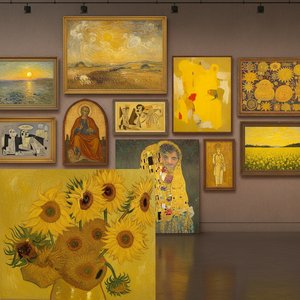
Los 10 cuadros más famosos dominados por el 'amarillo cromo': Arte y decoración
Descubre los 10 cuadros más emblemáticos dominados por el 'amarillo cromo': Van Gogh, Monet y otros maestros. Historia del arte, técnicas y decoración con lienzos impresionistas. ¡Explora la colección completa en ArtsDot.com!

Roy Lichtenstein: Las 25 Obras Maestras del Pop Art que Transformaron el Arte y la Decoración
Descubre las 25 obras maestras de Roy Lichtenstein, ícono del Pop Art. Explora su innovadora técnica, colores vibrantes y el impacto cultural de sus cuadros más famosos. Reproducciones de arte exclusivas en ArtsDot.com.

Los 10 Maestros del Pop Art: Obras Icónicas para Decorar con Estilo
Descubre los 10 iconos del Pop Art: Warhol, Lichtenstein y más. Explora la historia, técnica y significado de estas obras maestras que revolucionaron el arte moderno. Encuentra reproducciones exclusivas en .

The Psychology of the Palette: Decoding Roy Lichtenstein’s Bold Color Theory
Explore the vibrant psychology behind Roy Lichtenstein’s color theory. Discover how Ben-Day dots and primary colors revolutionized Pop Art, transforming mass media into timeless masterpieces for modern collectors and interior design enthusiasts.


