Vista previa
 Compartir
 Compartir
 Ver detalles
 Guía
Guía

 Descargar
 Ver artículos similares
 Radiografía
 Presentación de diapositivas
 Estadísticas
Landscape Mural
 Oil On Canvas
- WallArt
- Hudson River School
 1852
1852 277.0 x 232.0 cm
 Taft Museum of Art
 Leer más
Reproducción al óleo hecha a mano
Óleo sobre lienzo pintado a mano en el tamaño y marco de su elección, realizado por encargo por nuestros artistas. ( Cambiar a formato impreso Ver versión en imagen digital)




P118B €10

P118H €10

P118W €10

P438Z €10

P508JH €12

P508YH €12

P805H €10

P805Z €10

P919BZ €10

P919G €10

P919XJ €10

P959ZH €10

P968JZ €12

W106C €8

W218G €10

W218JH €8

W218Y €10

W307PJ €10

W316G €10

W316PJ €8

W316Y €10

W398PJ €8

W4111J €10

W500HY €15

W500JH €15

W692G €12

W849H €8

W940BG €15

W953PJ €8




Elija entre nuestros tamaños predefinidos que respetan las proporciones originales de la obra.

Escriba el ancho y el alto que necesite para adaptarse a su marco o a su pared. Al ser una obra pintada a mano, para un tamaño con una forma distinta, el artista puede pintar un poco más alrededor de la imagen o recortar un poco; usted elige. Le enviaremos una maqueta digital para su aprobación antes de comenzar la pintura. La imagen que se muestra en esta página no refleja el resultado real; solo la maqueta lo hace.
Tras realizar el pedido, el equipo de ArtsDot.com enviará un correo electrónico al cliente para solicitar instrucciones y proporcionarle una vista previa del boceto.
Envío a todo el mundo () en 3-4 semanas en lugar de las 5 semanas estándar. (21 octubre). Sin comprometer la calidad.

Envío exprés gratuito a todo el mundo

Lienzo de lino de alta calidad

Seguro de envío completo

Garantía de reembolso de impuestos aduaneros

Garantía de fidelidad cromática exacta

Política de devolución de 100 días (solo por defectos)

Garantía de devolución del 100% del dinero

Oferta por volumen
 La opción de vidrio solo está disponible en tamaños inferiores a 110 cm.

Landscape Mural
Técnica de reproducción
Tamaño de la reproducción
-


Precio total
€ 230
A Serene Vision of the Hudson Valley: Robert Seldon Duncanson’s “Landscape Mural”
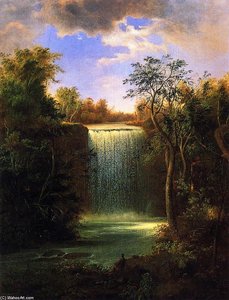
Robert Seldon Duncanson's "Landscape Mural," painted in 1852, isn’t merely a depiction of a river valley; it’s a carefully constructed meditation on nature, memory, and the burgeoning American identity. This monumental work, now residing within the Taft Museum of Art in Cincinnati, Ohio, stands as a pivotal piece of the Hudson River School—a movement that sought to capture the sublime beauty of America's landscapes with scientific precision and Romantic fervor. Duncanson, an African-American artist navigating a deeply segregated society, imbued this painting with layers of meaning, subtly reflecting on themes of race, spirituality, and the relationship between humanity and the natural world.
The scene unfolds beneath a brooding, yet ultimately benevolent, sky – a classic Hudson River School motif. A gently flowing river dominates the composition, its surface mirroring the clouds above in a delicate dance of reflection. The foreground is anchored by a cluster of trees, their branches reaching upwards like supplicating arms, while a distant bridge arches gracefully across the valley, hinting at civilization’s presence without overwhelming the scene's tranquility. Notice the meticulous detail with which Duncanson renders each element – the texture of bark, the ripples in the water, the subtle gradations of color in the foliage. This commitment to realism was paramount for the Hudson River School artists, who sought to elevate landscape painting to a level of scientific accuracy and artistic merit.
The Painter’s Palette: Technique and Materials
Duncanson employed the traditional technique of *fresco secco*, applying his pigments directly onto dry plaster. This method, favored by Renaissance masters, demanded both skill and speed – the artist had to work quickly before the plaster dried and the colors set. The resulting surface is remarkably durable, allowing the painting to retain its vibrancy across centuries. The color palette is predominantly cool—greens, blues, and grays—creating a sense of atmospheric depth and distance. Duncanson masterfully utilizes *chiaroscuro*, the dramatic contrast between light and shadow, to sculpt the forms and heighten the emotional impact of the scene. The subtle variations in tone suggest a soft, diffused light, characteristic of an overcast day – a common occurrence in the Ohio Valley during that period.
A Symbol of Progress and Identity
Beyond its aesthetic beauty, “Landscape Mural” carries significant historical weight. Duncanson’s work emerged during a time of profound social change in America—the abolitionist movement was gaining momentum, and discussions about race and equality were becoming increasingly urgent. While the painting itself doesn't explicitly address these issues, scholars have interpreted it as a subtle commentary on the African-American experience. The river, often associated with journeys and transitions, can be seen as a metaphor for the arduous path to freedom and self-determination. The bridge, representing connection and progress, symbolizes the hope for a more just and equitable future. Furthermore, Duncanson’s decision to depict a serene landscape—a departure from the often-grim realities of life in 19th-century America—suggests a yearning for spiritual renewal and harmony with nature.
Emotional Resonance: A Legacy of Tranquility
Looking at “Landscape Mural” today, one is immediately struck by its profound sense of tranquility. The painting invites the viewer to step into the scene, to breathe in the fresh air, and to lose oneself in the beauty of the natural world. It’s a testament to Duncanson's skill as an artist—his ability to capture not just the appearance of a landscape, but also its emotional essence. The painting’s enduring appeal lies in its capacity to evoke feelings of peace, contemplation, and connection to something larger than oneself. It remains a powerful reminder of the transformative power of art and the importance of preserving our natural heritage.
Preguntas y respuestas
¿Qué tono predominante recorre "Landscape Mural" de Robert Seldon Duncanson?
"Landscape Mural" se inclina hacia un tono Green to Violet Spectrum.
¿De qué está hecho "Landscape Mural"?
"Landscape Mural" está ejecutada en Oil On Canvas.
¿Qué tan saturada es la paleta de "Landscape Mural"?
Los colores de "Landscape Mural" de Robert Seldon Duncanson tienen una saturación Balanced Soft. La saturación describe qué tan vivos o apagados son los colores.
Obras relacionadas


Biografía del artista
Robert Seldon Duncanson: Una Vida y un Legado
- Nacido: Fayetteville, Nueva York (aproximadamente 1821)
- Fallecido: 21 de diciembre de 1872
- Origen: ArtsDot
Primeros Años y Desarrollo Artístico
- La familia de Duncanson era de ascendencia europea y africana. Su padre, John Dean Duncanson, un comerciante negro libre, inculcó en sus hijos el valor del trabajo duro y la educación.
- La familia se mudó a Monroe, Michigan, donde Robert aprendió carpintería y pintura. Demostró un talento artístico temprano, lo que lo llevó a dedicarse al retrato.
- En 1840, se trasladó a Cincinnati, Ohio, un floreciente centro cultural conocido como la "Atenas del Oeste". Este entorno proporcionó oportunidades de crecimiento artístico y exposición.
- Duncanson fue en gran medida autodidacta, estudiando grabados y copias, dibujando desde la naturaleza y copiando obras de otros artistas. Carecía de formación formal pero desarrolló un ojo agudo y una habilidad técnica.
Estilo Artístico e Influencias
- Influencia de la Escuela del Río Hudson: El estilo de Duncanson estuvo fuertemente influenciado por la Escuela del Río Hudson de pintura paisajística, conocida por sus románticas representaciones de la naturaleza americana. Artistas como Thomas Cole fueron inspiraciones significativas.
- Enfoque en el Paisaje: Pasó del retrato a centrarse principalmente en paisajes, capturando escenas del Valle del Río Ohio y más allá.
- Romanticismo: Sus obras a menudo transmitían una sensación de grandeza, tranquilidad y conexión espiritual con la naturaleza, característica del Romanticismo.
- Paleta de Colores y Técnica: Duncanson empleó una rica paleta de colores y un detalle meticuloso en sus pinturas, demostrando un dominio de la técnica.
Logros e Reconocimientos Principales
- Primeras Exposiciones: Sus obras fueron exhibidas en la Academia de Bellas Artes de Cincinnati tan pronto como en 1842, lo que le valió reconocimiento dentro de la comunidad artística local.
- Gira Europea (1853-1854): Un punto de inflexión importante en su carrera fue un viaje a Europa donde estudió a los maestros europeos y amplió sus horizontes artísticos.
- Reconocimiento Internacional: Duncanson logró reconocimiento internacional, exhibiendo sus obras en Inglaterra, Escocia, Canadá y Estados Unidos. Se convirtió en el primer artista afroamericano en obtener tal amplio reconocimiento.
- Tradición del Valle del Río Ohio: Jugó un papel clave en el desarrollo de la tradición paisajística del Valle del Río Ohio, contribuyendo significativamente a su identidad artística.
Significado Histórico y Legado
- Pionero para Artistas Negros: El éxito de Duncanson rompió barreras para los artistas afroamericanos durante una época de prejuicio y discriminación racial. Sirvió como inspiración para futuras generaciones.
- Identidad Racial en el Arte: Los historiadores del arte debaten la medida en que su raza influyó en su expresión artística, con algunos sugiriendo representaciones simbólicas sutiles de temas raciales dentro de sus paisajes.
- Figura Olvidada Redescubierta: Durante muchos años, la obra de Duncanson fue en gran parte pasada por alto. Los estudios y exposiciones recientes han atraído una atención renovada a sus contribuciones a la historia del arte americano.
- Un Testimonio de Resiliencia: Su historia de vida es un testimonio de la resiliencia y el talento de los afroamericanos frente a la adversidad, demostrando su capacidad para lograr la excelencia artística a pesar de los desafíos sistémicos.

Robert Seldon Duncanson
1821 - 1872 , Estados Unidos de América
Datos clave
- Artistas Que Influyeron: ['Thomas Cole']
- Fecha De Fallecimiento: 21 de diciembre de 1872
- Fecha De Nacimiento: c. 1821
- Lugar De Nacimiento: Fayetteville, EE. UU.
- Movimiento Artístico: Escuela del Río Hudson
- Nacionalidad: Estadounidense
- Nombre Completo: Robert Seldon Duncanson
- Obras Notables:
- Roses Still Life
- Waterfall on Mont Morency
- Vulture and Its Prey
- Minnenopa Falls, Minnesota
Artículos relacionados

Robert Spencer: Luminism, Narrative & the American Landscape Tradition
Explore the captivating world of Luminism & the Hudson River School with our expert analysis. Discover the history, artists, and enduring beauty of 19th-century American landscape painting. Find museum-quality reproductions at ArtsDot.

Echoes of Arcadia: Nostalgia & Transformation in Vintage Landscape Art
Explore the evocative world of vintage landscape art! Discover the history, artists & emotional power behind masterpieces from the Hudson River School & beyond. Expert insights for collectors & enthusiasts.
Robert Seldon Duncanson: Landscape, Abolitionism & Shaping American Identity
Discover Robert Seldon Duncanson, the first internationally acclaimed African American landscape artist. Explore his connection to the Hudson River School, abolitionism, and enduring legacy through serene vistas & powerful symbolism.

Los 10 Maestros del Río Hudson: Obras que Definieron un Movimiento Artístico
Descubre los 10 lienzos más emblemáticos de la Escuela del Río Hudson. Explora las obras maestras de Thomas Cole, Church y Bierstadt que capturan la belleza del paisaje americano. Encuentra reproducciones de arte exclusivas en ArtsDot.com.
El Sublime Paisaje Americano: Explorando el Movimiento de la Escuela del Río Hudson
Descubre la Escuela del Río Hudson: un movimiento artístico clave en la historia de la pintura estadounidense. Explora su estética romántica, sus artistas más destacados y el concepto del sublime paisaje americano.