


 Vista previa
 Compartir
 Compartir
 Ver detalles
 Guía
Guía

 Descargar
 Ver artículos similares
 Radiografía
 Presentación de diapositivas
 Estadísticas
El gran siglo


 Leer más
Reproducción al óleo hecha a mano
Óleo sobre lienzo pintado a mano en el tamaño y marco de su elección, realizado por encargo por nuestros artistas. ( Cambiar a formato impreso Ver versión en imagen digital)




P118B $10

P118H $10

P118W $10

P438Z $10

P508JH $12

P508YH $12

P805H $10

P805Z $10

P919BZ $10

P919G $10

P919XJ $10

P959ZH $10

P968JZ $12

W106C $8

W218G $10

W218JH $8

W218Y $10

W307PJ $10

W316G $10

W316PJ $8

W316Y $10

W398PJ $8

W4111J $10

W500HY $15

W500JH $15

W692G $12

W849H $8

W940BG $15

W953PJ $8




Elija entre nuestros tamaños predefinidos que respetan las proporciones originales de la obra.

Puede ingresar sus propias dimensiones para adaptarse a un marco o espacio específico. Si el tamaño seleccionado no coincide con las proporciones de la imagen original, recortaremos la obra o extenderemos la pintura con elementos adicionales pintados a mano. Se le enviará una maqueta digital para su aprobación antes de comenzar la producción.
Tenga en cuenta que la vista previa en pantalla no refleja el recorte o la extensión reales. Solo la maqueta mostrará con precisión la composición final.
Si bien existen tamaños personalizados, recomendamos seleccionar una dimensión de la lista predefinida para preservar las proporciones originales.
Tras realizar el pedido, el equipo de ArtsDot.com enviará un correo electrónico al cliente para solicitar instrucciones y proporcionarle una vista previa del boceto.
Envío a todo el mundo () en 3-4 semanas en lugar de las 5 semanas estándar. (22 septiembre). Sin comprometer la calidad.

Envío exprés gratuito a todo el mundo

Lienzo de lino de alta calidad

Seguro de envío completo

Garantía de reembolso de impuestos aduaneros

Garantía de fidelidad cromática exacta

Política de devolución de 100 días (solo por defectos)

Garantía de devolución del 100% del dinero

Oferta por volumen
 La opción de vidrio solo está disponible en tamaños inferiores a 110 cm.

El gran siglo
Técnica de reproducción
Tamaño de la reproducción
-


Precio total
$ 263
A Window into Uncertainty: Exploring René Magritte’s “The Great Century”
René Magritte's "The Great Century," painted in 1954, isn’t merely a depiction of a landscape; it’s an invitation to contemplate the very nature of perception and reality itself. This surrealist masterpiece encapsulates the anxieties and intellectual curiosity characteristic of its time—the mid-20th century—while simultaneously establishing Magritte as one of the most influential figures in 20th-century art. The painting presents a deceptively simple scene: a man dressed in a bowler hat stands before an open doorway, gazing out at a field dotted with trees. Yet, within this seemingly tranquil tableau lies a profound paradox that continues to fascinate viewers decades later.The Surrealist Landscape and Its Symbolic Resonance
Magritte’s stylistic approach firmly anchors him within the Surrealist movement, spearheaded by André Breton. Rejecting rational thought and embracing dreams and subconscious impulses as sources of artistic inspiration, Surrealists sought to liberate art from the constraints of representational accuracy. “The Great Century” exemplifies this ethos through its deliberate ambiguity. The field itself is rendered in muted tones—a palette reminiscent of Impressionism—creating a sense of distance and stillness. However, it’s precisely this placid surface that conceals a deeper significance. The trees flanking the doorway aren't merely decorative elements; they represent the passage of time and perhaps even mortality, mirroring the melancholic contemplation of the central figure. Breton famously declared that Surrealist art should be “pure psychic automatism,” prioritizing spontaneous expression over conscious control—a principle vividly realized in Magritte’s masterful manipulation of visual cues.Technique and Composition: Mastering Illusion
Magritte employed a meticulous technique honed through years of artistic practice. He utilized oil paints on canvas, applying them with careful brushstrokes to achieve subtle gradations of color and texture. The doorway and window—a recurring motif in Magritte’s work—are rendered with remarkable precision, creating an illusion of depth that draws the eye inward. This masterful use of perspective contributes significantly to the painting's unsettling effect. Magritte deliberately avoids providing definitive answers about what lies beyond the doorway; instead, he presents a visual puzzle that challenges viewers to question their assumptions about how they perceive the world. The placement of the clock on the wall above the doorway is particularly noteworthy—a symbol of time and its relentless march forward, juxtaposed against the stillness of the landscape and the contemplative gaze of the man.Historical Context: Navigating Postwar Anxiety
“The Great Century” emerged during a period marked by considerable upheaval – the aftermath of World War II. The devastation experienced across Europe fueled anxieties about identity, loss, and the fragility of human existence. Surrealism responded to this climate with its exploration of irrationality and subconscious desires—a deliberate rejection of the optimism that characterized the preceding decades. Magritte’s painting reflects these concerns by presenting a figure confronting an unknown future, embodying the existential dilemmas faced by individuals grappling with uncertainty in a rapidly changing world. It speaks to a broader cultural preoccupation with questioning established norms and embracing alternative perspectives.Emotional Impact: A Meditation on Perception
Ultimately, “The Great Century” transcends mere visual representation; it evokes a profound emotional response. The painting’s unsettling stillness compels viewers to confront their own biases about how they interpret reality. Magritte's deliberate obfuscation invites contemplation—a recognition that what we see isn’t necessarily what is truly there. It lingers in the mind long after viewing, prompting questions about consciousness and the elusive nature of experience. This enduring fascination stems from Magritte’s ability to capture a fundamental human condition: our inherent desire to understand the world around us while simultaneously acknowledging its impenetrable mysteries.Obras relacionadas


Biografía del artista
vida temprana y comienzos artísticos
René François Ghislain Magritte, un reconocido artista surrealista belga, nació el 21 de noviembre de 1898 en Lessines, provincia de Hainaut, Bélgica. Su vida temprana permanece algo misteriosa, con poco conocimiento sobre su infancia. Sin embargo, está documentado que comenzó clases de dibujo en 1910.evolución artística e influencias
El estilo artístico de Magritte evolucionó significativamente a lo largo de los años, influenciado por diversos movimientos como el impresionismo, el futurismo y el cubismo. Sus primeras pinturas, datadas alrededor de 1915, eran de estilo impresionista. De 1916 a 1918, estudió en la Academia Real de Bellas Artes de Bruselas, bajo Constant Montald.período surrealista y obras notables
En 1926, Magritte produjo su primer cuadro surrealista, El jinete perdido (Le jockey perdu), marcando el comienzo de su asociación con el movimiento surrealista. Su obra se caracteriza por imágenes provocadoras, a menudo representando objetos ordinarios en contextos inusuales, desafiando las percepciones de la realidad de los observadores.- Les amants (1927-1928), una serie de pinturas que presentan a personas con tela cubriendo sus rostros, se cree que fue inspirada por la historia de la muerte de su madre.
- Los amantes, otra pieza icónica, presenta a una pareja besándose con sus rostros cubiertos por telas blancas, invitando al espectador a reflexionar sobre el amor y la identidad. (disponible para su compra como una reproducción de pintura al óleo hecha a mano o impresión en lienzo en ArtsDot.com)
vida tardía y legado
La obra de Magritte fue exhibida en los Estados Unidos en 1936 y nuevamente en dos exposiciones retrospectivas, una en el Museo de Arte Moderno en 1965 y la otra en el Metropolitan Museum of Art en 1992. Se mantuvo comprometido con la izquierda política pero abogó por la autonomía artística. Museos notables que exhiben la obra de Magritte:- Musée royal des beaux-arts de Belgique, Bruselas, Bélgica (descubra las obras maestras del musée royal des beaux-arts de belgique en ArtsDot.com)
- Musée Magritte, parte del musée royal des beaux-arts de Belgique, que exhibe la colección mundial más grande de obras de Magritte.
Conclusión
El legado de René Magritte como maestro surrealista perdura, con sus imágenes provocadoras que continúan inspirando e intrigando. Su obra, caracterizada por su mezcla única del ordinario y lo inesperado, sigue siendo un pilar fundamental del arte surrealista. Más información sobre René Magritte
René Magritte
1898 - 1967 , bélgica
Datos clave
- Artistas Que Influyeron:
- Impresionismo
- Futurismo
- Cubismo
- Estilo Artístico: Surrealismo
- Fecha De Muerte: 15 de agosto de 1967
- Fecha De Nacimiento: 21 de noviembre de 1898
- Influenciado A Artistas:
- Pop Art
- Minimalismo
- Arte conceptual
- Lugar De Nacimiento: Lessines, Bélgica
- Nacionalidad: Belga
- Nombre Completo: René François Ghislain Magritte
- Obras Notables:
- Le Jockey Perdu
- Les Amants
- La traición de las imágenes
- Tiempo transcurrido
- La condición humana
Artículos relacionados

Anthony Vandyke Copley Fielding: Rediscovering a Master of Romantic Landscape
Discover the captivating landscapes of Anthony Vandyke Copley Fielding, a master of Romantic watercolour painting. Explore his life, technique, and legacy with ArtsDot – your source for museum-quality art reproductions & expert appraisal.

Chromatic Atmospheres: Exploring the Subtleties of Color Field Painting's Emotional Resonance
Explore the profound world of Color Field painting with ArtsDot. Discover key artists like Rothko & Newman, its philosophical roots, and lasting impact on modern art. Expert insights for collectors.
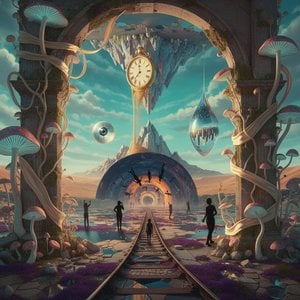
Dreamscapes & Disrupted Realities: Exploring Surrealism's Enduring Influence
Explore the fascinating world of Surrealism! Discover its origins, key artists like Dalí & Magritte, and enduring influence on art & culture. Expert insights & high-quality reproductions at ArtsDot.

Surrealismo: 10 Obras Maestras que Transformaron el Arte y la Decoración
Descubre las 10 obras maestras del Surrealismo con Dalí, Magritte y Miró. Explora la historia, el simbolismo y la técnica de estos íconos del arte moderno. Encuentra reproducciones de alta calidad para tu hogar en .

Atmósferas Cromáticas: Explorando la Evolución e Impacto de la Pintura Color Field
Descubra la evolución y el impacto de la pintura Color Field. Análisis experto de Rothko, Newman y otros maestros. Guía para coleccionistas exigentes en ArtsDot.


