
 Acrylic On Canvas
- WallArt
- Dutch Golden Age
 1645
1645 39.0 x 56.0 cm
 Kunsthistorisches Museum

The picture follows your choices: , .
Descripción del objeto
Experience the serene beauty of Philips Wouwerman's Dune Landscape (1645), a masterful depiction of Dutch Golden Age nature and maritime life housed at Vienna’s Kunsthistorisches Museum.
 Ver más
Biografía del artista
Descubre a Philips Wouwerman (1619-1668), maestro del Siglo de Oro holandés! Caza, paisajes y batallas con escenas dinámicas y caballos excepcionales.
Reproducción al óleo hecha a mano
Óleo sobre lienzo pintado a mano en el tamaño y marco de su elección, realizado por encargo por nuestros artistas. ( Cambiar a impresiones Cambiar a imagen digital)
More about this painting
 Ver en contexto
 Enviar
 Compartir
 Detalles
 Guía
Guía

 Descargar
 Similares
 Radiografía
 Presentación de diapositivas
 Q&A
Q&A Estadísticas
Order your painting in four simple steps
Take your time. You can change any answer; the price in your order card follows each choice.
1 Step one of four
Which size would you like?
These sizes keep the proportions of the original painting. The drawing shows your choice on a wall, above a two-metre sofa.
Or give your own measurements
Elija entre nuestros tamaños predefinidos que respetan las proporciones originales de la obra.

Indique el ancho y el alto que necesite para adaptarse a su marco o pared. Al tratarse de una obra pintada a mano, si requiere un tamaño con una proporción distinta, el artista puede pintar un poco más alrededor de la imagen o recortarla ligeramente; usted elige. Le enviaremos una maqueta digital para su aprobación antes de comenzar la pintura. La imagen que se muestra en esta página no refleja el resultado real; solo la maqueta lo hace.
2 Step two of four
How should it be prepared: rolled, stretched or framed?
The prices below are for the size you chose in step one.
Choose the edges of the stretched canvas
Choose your frame

White €1

Blurside €1

Extended €1

P118B €10

P118H €10

P118W €10

P438Z €10

P508JH €12

P508YH €12

P805H €10

P805Z €10

P919BZ €10

P919G €10

P919XJ €10

P959ZH €10

P968JZ €12

W106C €8

W218G €10

W218JH €8

W218Y €10

W307PJ €10

W316G €10

W316PJ €8

W316Y €10

W398PJ €8

W4111J €10

W500HY €15

W500JH €15

W692G €12

W849H €8

W940BG €15

W953PJ €8

H24-GOLD €30

H24-SILVER €30

H36-GOLD €45

H36-SILVER €45
Con marco
Moulding: . Overall size with the frame: .
3 Step three of four
Would you like anything changed in the painting?
Most people answer no. Because each painting is made by hand, our artist can also adapt it for you.
After order, ArtsDot.com team will email client for instructions and provide a mockup preview
4 Step four of four
A few finishing options
All of them are optional. The answers already selected cost nothing extra.
Who paints it?
Envío a todo el mundo () en 3-4 semanas en lugar de las 5 semanas estándar. (30 octubre). Sin comprometer la calidad.
A nameplate, as in a museum?
Detalles de la placa de bronce grabada
This elegant plaque features the artist's name and the title of the artwork, finely engraved for a timeless presentation.
It is made from bronze with a refined, elegant finish. The text is precisely laser-engraved for a sharp and permanent result. Measuring 9x2 cm, the plaque is compact yet easy to read. It's built to be durable and scratch-resistant, offering a professional, museum-quality look. Mounting is simple thanks to the included adhesive backing.
Detalles de la placa de acrílico transparente
The plaque includes essential engraved details such as the artist's name, the title of the artwork, the date it was created, the type of media used-like oil on canvas or watercolor-a brief description of the piece, and a QR code that links to the complete artwork information.
It is crafted from clear acrylic, offering a sleek, modern appearance. The text is UV-engraved in black to ensure strong visual contrast. With a size of 10x15 cm, it ensures optimal readability. It comes equipped with two metal hooks for secure wall mounting. The plaque is designed to be weather-resistant, making it suitable for various environments, and it includes interactive features that work seamlessly with smartphone scanning.
Detalles de la placa de acrílico negro
This elegant plaque includes engraved information such as the artist's name, the title of the artwork, the date it was created, the type of media used (like oil on canvas or watercolor), a short description of the artwork, and a QR code for quick access to more information.
The plaque itself is made from refined black acrylic with a premium finish. The text is laser-engraved in white for high contrast and readability. Its size is 10x15 cm, designed to be easy to read. It comes with two metal hooks for professional mounting. The design is sleek and fits any interior style. It is also weather-resistant and durable, with built-in digital integration for mobile compatibility.
A protective varnish?
When do you need it?
✓ Check and order
Your painting, as you ordered it

Dune Landscape
Técnica de reproducción
Dimensiones de la reproducción
-

Selección de artistas premium
Mayor nivel de detalle, delicadeza y tiempo de producción adicional
-

Enmarcado de reproducción
-
-
Para obras de arte o reproducciones que midan más de 105 cm (aproximadamente 41 pulgadas) en cualquiera de sus lados, el marco se enviará como un kit desmontado. Este método garantiza una entrega segura y evita daños durante el transporte.
Se requiere montaje profesional: este no es un producto para hacer usted mismo (DIY).
El kit debe ser ensamblado y el lienzo tensado por un enmarcador profesional con experiencia, utilizando cola para madera (no incluida), una tenaza para tensar lienzos y sargentos para mantener los bastidores alineados mientras la cola se seca. Un montaje incorrecto o una tensión desigual del lienzo pueden dañar la obra de arte de forma permanente y no están cubiertos por nuestra garantía.
 Para obras de arte o reproducciones que midan más de 105 cm (aproximadamente 41 pulgadas) en cualquiera de sus lados, el marco se enviará como un kit desmontado. Este método garantiza una entrega segura y evita daños durante el transporte.
Se incluyen todos los listones de madera maciza, cortados con precisión según las medidas.
Se ensambla con los tornillos incluidos, además de cola para madera para las uniones de las esquinas, la cual no se incluye y debe ser proporcionada por su enmarcador.
Se requieren herramientas profesionales que no están incluidas: un alicate para tensar lienzos (tensor) y abrazaderas para mantener los bastidores alineados mientras se seca el pegamento.
Importante:
Las uniones de las esquinas requieren cola para madera, los listones deben sujetarse con prensas hasta que la cola esté completamente seca, y para tensar el lienzo en el bastidor ensamblado se requiere una pinza para tensar lienzos. Ninguno de estos elementos está incluido en el kit. Por favor, contacte con un profesional del enmarcado con experiencia antes de realizar un pedido de este tamaño.

Cartela
-
-

Barniz protector
Barniz brillante (realza los colores y protege contra la luz y la humedad)
-

Personalizar mi obra
Ejemplos de lo que se puede personalizar: sustituir el rostro por una foto del cliente; añadir una mascota (por ejemplo, cambiar un gato por un perro); incluir un mensaje oculto en el fondo; cambiar el paisaje o los elementos del fondo.
-

Envío urgente
Envío a todo el mundo () en 3 o 4 semanas, en lugar de las 5 semanas habituales. (30 octubre). Sin comprometer la calidad.
-
Envío urgente
Envío internacional () en 5 semanas. (6 noviembre).
Incluido
Precio total final
€ 232
La opción de vidrio solo está disponible en tamaños inferiores a 110 cm.
Included with every order
- Envío exprés gratuito a todo el mundo
- Lienzo de lino de alta calidad
- Seguro de envío total
- Garantía de reembolso de aranceles aduaneros
- Garantía de fidelidad cromática exacta
- Política de devolución de 100 días (solo por defectos)
- Garantía de devolución del 100% del dinero
- Descuento por cantidad


A Serene Vista of Dutch Tradition: Exploring Philips Wouwerman’s Dune Landscape
Philips Wouwerman (baptized May 24, 1619 – died May 19, 1668) was a prolific and remarkably adaptable Dutch painter who cemented his place as one of the most celebrated artists of the Dutch Golden Age. Unlike many contemporaries focused on portraiture—though he produced several notable portraits—Wouwerman dedicated himself primarily to capturing the dynamism of the natural world and the visceral thrill of hunting expeditions, establishing him as a pioneer in landscape painting and a master storyteller through visual representation. His Dune Landscape, completed in 1645, exemplifies his distinctive approach and offers a window into the artistic sensibilities of his era.The Painter’s Vision: Style and Technique
Wouwerman's style is characterized by an unparalleled realism combined with expressive brushwork that imbues his canvases with palpable energy. He eschewed idealized depictions favored by some artists, opting instead for meticulous observation and detailed rendering—a hallmark of the *luminist* movement gaining traction during this period. The Dune Landscape showcases this commitment to accuracy; every ripple in the water’s surface, every grain of sand on the dune, is rendered with painstaking detail. His technique involved layering thin glazes of oil paint over a preparatory underpainting, allowing for subtle gradations of color and creating an illusion of depth that transcends mere representation. This masterful manipulation of light—particularly its reflection off the water—is arguably Wouwerman’s greatest achievement, transporting viewers into the very heart of the scene.A Snapshot of Seventeenth-Century Life
The painting depicts a coastal dune landscape populated by figures engaged in leisurely pursuits – men observing the sea and contemplating the beauty of their surroundings. This wasn't merely an aesthetic exercise; it reflected the broader cultural preoccupation with humanist ideals prevalent during the Dutch Golden Age. The inclusion of boats adds another layer of significance, symbolizing trade routes and the economic prosperity that fueled this artistic flourishing. Furthermore, Wouwerman’s depiction captures a moment of quiet contemplation amidst activity, suggesting a harmonious relationship between humanity and nature—a sentiment deeply rooted in Calvinist theology which emphasized God's dominion over creation.Symbolism Within the Frame
Beyond its visual splendor, Dune Landscape carries symbolic weight. The dune itself represents stability and permanence against the backdrop of turbulent seas, mirroring the philosophical debates surrounding predestination and free will that dominated intellectual discourse at the time. The figures on the dune are not simply observers; they embody human intellect and moral contemplation—a deliberate choice by Wouwerman to elevate the subject matter beyond mere visual pleasure. The artist’s careful composition directs the viewer's gaze outwards, encouraging reflection on the grandeur of God’s creation and humanity’s role within it.Legacy and Emotional Resonance
Philips Wouwerman’s Dune Landscape continues to resonate with audiences today because it transcends its historical context. Its luminous palette, masterful brushwork, and evocative depiction of a tranquil seascape evoke feelings of serenity and wonder—qualities that endure across centuries. It stands as a testament to the power of art to capture not only what is seen but also what is felt, cementing Wouwerman’s reputation as one of the most emotionally compelling painters of his generation. Its current residence at the Kunsthistorisches Museum in Vienna ensures its preservation for future generations to appreciate this enduring masterpiece.Preguntas y respuestas
¿Cómo puedo descargar la imagen de "Dune Landscape" de Philips Wouwermans?
Puede descargar la imagen de "Dune Landscape" de Philips Wouwermans en la página de Descargar imagen digital de la obra: descarga de una imagen digital en alta resolución.
¿Cómo se integra "Dune Landscape" en los temas y el estilo de Philips Wouwermans?
"Dune Landscape" comparte con otras obras de Philips Wouwermans su estilo Dutch Golden Age y sus temas recurrentes: dutch tradition, baroque style, hunting imagery, tranquility landscape, genre painting.
¿Qué sentimiento transmite "Dune Landscape" de Philips Wouwermans dentro de Dutch Golden Age?
La emoción Tranquil de "Dune Landscape" acompaña a su estilo Dutch Golden Age.
Obras relacionadas


Philips Wouwermans
1619 - 1668, Países Bajos
Biografía del artista
Philips Wouwerman: Una Vida en el Siglo de Oro Neerlandés
- Nacido: Haarlem, Países Bajos (1619)
- Fallecido: 1668
Philips Wouwerman (bautizado el 24 de mayo de 1619 – fallecido el 19 de mayo de 1668) fue un pintor holandés muy prolífico y versátil, reconocido por sus representaciones de escenas de caza, paisajes y escenas de batalla. Se erige como una figura significativa dentro del panorama artístico del Siglo de Oro Neerlandés.
Vida Temprana y Formación
Nacido en Haarlem, Países Bajos, Philips Wouwerman era hijo de Pouwels Joostsz Wouwerman, también pintor, aunque menos conocido que su hijo. Los detalles sobre su temprana formación artística son algo escasos. Sin embargo, se cree que estudió bajo la tutela de Frans Hals (1581/85–1666), un prominente retratista de Haarlem. Si bien el estilo distintivo de Hals no influyó fuertemente en la obra madura de Wouwerman, la formación fundamental probablemente demostró ser invaluable. Al principio de su carrera, Wouwerman fue influenciado por la tradición *bamboccianti*, particularmente por las obras de Pieter van Laer (1592/99–después de 1642), adoptando su enfoque en la vida cotidiana y las escenas de género.
Desarrollo Artístico y Estilo
- Influencias Tempranas: Imitando inicialmente a los pintores *bamboccianti*, las primeras obras de Wouwerman presentaban representaciones de la vida diaria.
- Estilo Emergente (Mediados de la década de 1640): Surgió un elemento compositivo característico: una pendiente diagonal del terreno, a menudo acompañada por un árbol que actúa como repoussoir (un dispositivo utilizado para crear profundidad). Figuras, frecuentemente acompañadas de caballos, poblaban estas escenas.
- Período Maduro (c. 1650-1660): Wouwerman desarrolló su propio estilo individual, ampliando considerablemente su temática. Pintó escenas de género, paisajes con viajeros, batallas de caballería, campamentos militares y reuniones festivas de campesinos.
- Dominio del Caballo: Wouwerman es particularmente celebrado por su excepcional habilidad para representar caballos de diversas razas en movimiento dinámico. El historiador del arte Frederik J. Duparc ha llamado famosamente a Wouwerman "indudablemente el pintor holandés más logrado y exitoso del siglo XVII de caballos".
- Características Distintivas: Sus pinturas se caracterizan por colores apagados, una atmósfera fresca y una atención meticulosa al detalle, creando narrativas ingeniosas y anecdóticas dentro de sus escenas. A menudo combinaba paisajes imaginarios del sur con un ambiente distintivamente holandés.
Logros Mayores y Legado
Las obras de Wouwerman fueron muy solicitadas durante su vida y continuaron ganando popularidad en el siglo XVIII. Sus pinturas encontraron su camino hacia colecciones prominentes en toda Europa, incluyendo las de casas principescas en Dresde y San Petersburgo, demostrando una admiración generalizada por su arte.
- Producción Prolífica: Wouwerman fue notablemente prolífico; los catálogos tempranos enumeraban alrededor de 800 obras atribuidas a él, superando posteriormente las 1200. Un catálogo raisonné más reciente (Schumacher, 2006) identifica aproximadamente 570 obras auténticas, reconociendo los numerosos seguidores e imitadores que produjeron obras en su estilo.
- Familia de Artistas: Sus hermanos, Jan (1629–1666) y Pieter (1623–1682), también fueron pintores, a menudo inicialmente atribuidos a Philips. Si bien la obra de Pieter reflejaba claramente la influencia de Philips, desarrolló un estilo distintivo. Jan fue reconocido como un pintor paisajista más autónomo.
- Influencia en Artistas Posteriores: El estilo de Wouwerman influyó en numerosos artistas, incluyendo Jan van Huchtenburgh (1647–1733), los hermanos Jan Frans y Joseph van Bredael (1688–1739) y Carel van Falens (1683–1733).
- Membresía de la Cofradía y Rol Cívico: Fue miembro de la Cofradía de San Lucas de Haarlem, ocupando varios cargos oficiales dentro de ella. Más allá de sus actividades artísticas, Wouwerman también sirvió como agente inmobiliario en Haarlem, lo que refleja su participación en la vida cívica.
Significado Histórico
La contribución de Philips Wouwerman al Siglo de Oro Neerlandés radica en su capacidad para capturar una amplia gama de escenas – desde bulliciosos mercados y expediciones de caza hasta campos de batalla dramáticos y paisajes tranquilos – con un detalle y dinamismo notables. Su dominio en la representación de caballos, combinado con su agudo ojo para el relato anecdótico, consolidó su lugar como uno de los pintores más celebrados e influyentes de su tiempo. Una exposición retrospectiva en Kassel y La Haya (2009/2010) destacó aún más su legado perdurable.


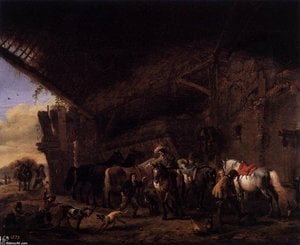


Artículos relacionados
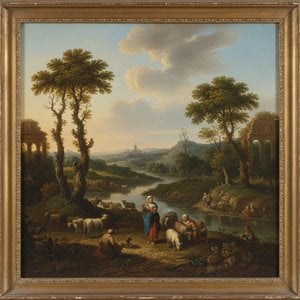
Nicolaes Berchem: Dutch Golden Age Pastoralism & the Evolution of Landscape Painting
Explore the captivating world of Nicolaes Berchem, a leading Dutch Golden Age painter. Discover his idyllic landscapes, masterful technique & lasting influence on art history. Learn more at ArtsDot.

Charles Leickert: Capturing the Dutch Golden Age Light – A Comprehensive Study of Technique, Context, and Legacy
Explore the captivating winter landscapes of Charles Leickert, a master of Dutch Golden Age light & atmosphere. Discover his techniques, symbolism, and lasting legacy – a comprehensive study for art enthusiasts and collectors.

Reflejos de una Época Dorada: La Pintura Barroca Holandesa y la Innovación Cultural
Descubra la riqueza y el detalle de la pintura barroca holandesa del Siglo de Oro. Explore las obras maestras de Rembrandt, Vermeer y otros artistas clave. Análisis experto e historia cultural.