

- 40.0 x 35.0 cm


La imagen se ajusta a sus preferencias: , .
Descripción del objeto
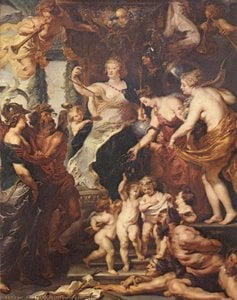
Una impresionante obra maestra barroca de Rubens que captura la pasión y el amor entre Alejandro Magno y Roxana, destacando su maestría en la composición dramática y el uso del color.
 Ver más
Biografía del artista
Sir Peter Paul Rubens: Maestro del Barroco flamenco. Famoso por composiciones dinámicas, colores vibrantes y obras icónicas como 'La Masacre de los Inocentes'. Descubre su vida y arte.
Reproducción al óleo hecha a mano
Óleo sobre lienzo pintado a mano en el tamaño y marco de su elección, realizado por encargo por nuestros artistas. ( Cambiar a impresiones Cambiar a imagen digital)
Más información sobre esta pintura
 Ver en contexto
 Enviar
 Compartir
 Detalles
 Guía
Guía

 Descargar
 Similares
 Radiografía
 Presentación de diapositivas
 Preguntas y respuestas
 Estadísticas
Pida su pintura en cuatro sencillos pasos
Tómese su tiempo. Puede cambiar cualquier respuesta; el precio en su carrito de compra se actualizará según cada elección.
1 Paso uno de cuatro
¿Qué tamaño desea?
Estos tamaños mantienen las proporciones de la pintura original. El dibujo muestra su elección en una pared, sobre un sofá de dos metros.
O introduce tus propias medidas
Elija entre nuestros tamaños predefinidos que respetan las proporciones originales de la obra.

Indique el ancho y el alto que necesite para adaptarse a su marco o pared. Al tratarse de una obra pintada a mano, si requiere un tamaño con una proporción distinta, el artista puede pintar un poco más alrededor de la imagen o recortarla ligeramente; usted elige. Le enviaremos una maqueta digital para su aprobación antes de comenzar la pintura. La imagen que se muestra en esta página no refleja el resultado real; solo la maqueta lo hace.
2 Paso dos de cuatro
¿Cómo desea recibirlo: enrollado, estirado o enmarcado?
Los precios que aparecen a continuación corresponden al tamaño seleccionado en el primer paso.
Elige el acabado de los bordes del lienzo
Elige tu marco

Blanco €1

Bordes difuminados €1

Continuación de imagen €1

P118B €10

P118H €10

P118W €10

P438Z €10

P508JH €12

P508YH €12

P805H €10

P805Z €10

P919BZ €10

P919G €10

P919XJ €10

P959ZH €10

P968JZ €12

W106C €8

W218G €10

W218JH €8

W218Y €10

W307PJ €10

W316G €10

W316PJ €8

W316Y €10

W398PJ €8

W4111J €10

W500HY €15

W500JH €15

W692G €12

W849H €8

W940BG €15

W953PJ €8

H24-GOLD €30

H24-SILVER €30

H36-GOLD €45

H36-SILVER €45
Con marco
Moldura: . Dimensiones totales con marco: .
3 Paso tres de cuatro
¿Desea realizar algún cambio en la pintura?
La mayoría de las personas responden que no. Debido a que cada pintura se realiza a mano, nuestro artista también puede adaptarla para usted.
Tras realizar el pedido, el equipo de ArtsDot.com enviará un correo electrónico al cliente para solicitar instrucciones y proporcionar una vista previa del boceto
4 Paso cuatro de cuatro
Algunas opciones de acabado
Todos ellos son opcionales. Las respuestas ya seleccionadas no tienen ningún coste adicional.
¿Quién lo pinta?
Envío a todo el mundo () en 3-4 semanas en lugar de las 5 semanas estándar. (3 noviembre). Sin comprometer la calidad.
¿Una placa de identificación, como en un museo?
Detalles de la placa de bronce grabada
This elegant plaque features the artist's name and the title of the artwork, finely engraved for a timeless presentation.
It is made from bronze with a refined, elegant finish. The text is precisely laser-engraved for a sharp and permanent result. Measuring 9x2 cm, the plaque is compact yet easy to read. It's built to be durable and scratch-resistant, offering a professional, museum-quality look. Mounting is simple thanks to the included adhesive backing.
Detalles de la placa de acrílico transparente
The plaque includes essential engraved details such as the artist's name, the title of the artwork, the date it was created, the type of media used-like oil on canvas or watercolor-a brief description of the piece, and a QR code that links to the complete artwork information.
It is crafted from clear acrylic, offering a sleek, modern appearance. The text is UV-engraved in black to ensure strong visual contrast. With a size of 10x15 cm, it ensures optimal readability. It comes equipped with two metal hooks for secure wall mounting. The plaque is designed to be weather-resistant, making it suitable for various environments, and it includes interactive features that work seamlessly with smartphone scanning.
Detalles de la placa de acrílico negro
This elegant plaque includes engraved information such as the artist's name, the title of the artwork, the date it was created, the type of media used (like oil on canvas or watercolor), a short description of the artwork, and a QR code for quick access to more information.
The plaque itself is made from refined black acrylic with a premium finish. The text is laser-engraved in white for high contrast and readability. Its size is 10x15 cm, designed to be easy to read. It comes with two metal hooks for professional mounting. The design is sleek and fits any interior style. It is also weather-resistant and durable, with built-in digital integration for mobile compatibility.
¿Un barniz protector?
¿Para cuándo lo necesita?
✓ Revisar y pedir
Su pintura, tal como la solicitó

Alejandro y Roxana
Técnica de reproducción
Dimensiones de la reproducción
-

Selección de artistas premium
Mayor nivel de detalle, delicadeza y tiempo de producción adicional
-

Enmarcado de reproducción
-
-
Para obras de arte o reproducciones que midan más de 105 cm (aproximadamente 41 pulgadas) en cualquiera de sus lados, el marco se enviará como un kit desmontado. Este método garantiza una entrega segura y evita daños durante el transporte.
Se requiere montaje profesional: este no es un producto para hacer usted mismo (DIY).
El kit debe ser ensamblado y el lienzo tensado por un enmarcador profesional con experiencia, utilizando cola para madera (no incluida), una tenaza para tensar lienzos y sargentos para mantener los bastidores alineados mientras la cola se seca. Un montaje incorrecto o una tensión desigual del lienzo pueden dañar la obra de arte de forma permanente y no están cubiertos por nuestra garantía.
 Para obras de arte o reproducciones que midan más de 105 cm (aproximadamente 41 pulgadas) en cualquiera de sus lados, el marco se enviará como un kit desmontado. Este método garantiza una entrega segura y evita daños durante el transporte.
Se incluyen todos los listones de madera maciza, cortados con precisión según las medidas.
Se ensambla con los tornillos incluidos, además de cola para madera para las uniones de las esquinas, la cual no se incluye y debe ser proporcionada por su enmarcador.
Se requieren herramientas profesionales que no están incluidas: un alicate para tensar lienzos (tensor) y abrazaderas para mantener los bastidores alineados mientras se seca el pegamento.
Importante:
Las uniones de las esquinas requieren cola para madera, los listones deben sujetarse con prensas hasta que la cola esté completamente seca, y para tensar el lienzo en el bastidor ensamblado se requiere una pinza para tensar lienzos. Ninguno de estos elementos está incluido en el kit. Por favor, contacte con un profesional del enmarcado con experiencia antes de realizar un pedido de este tamaño.

Cartela
-
-

Barniz protector
Barniz brillante (realza los colores y protege contra la luz y la humedad)
-

Personalizar mi obra
Ejemplos de lo que se puede personalizar: sustituir el rostro por una foto del cliente; añadir una mascota (por ejemplo, cambiar un gato por un perro); incluir un mensaje oculto en el fondo; cambiar el paisaje o los elementos del fondo.
-

Envío urgente
Envío a todo el mundo () en 3 o 4 semanas, en lugar de las 5 semanas habituales. (3 noviembre). Sin comprometer la calidad.
-
Envío urgente
Envío internacional () en 5 semanas. (10 noviembre).
Incluido
Precio total final
€ 235
La opción de vidrio solo está disponible en tamaños inferiores a 110 cm.
Incluido en cada pedido
- Envío exprés gratuito a todo el mundo
- Lienzo de lino de alta calidad
- Seguro de envío total
- Garantía de reembolso de aranceles aduaneros
- Garantía de fidelidad cromática exacta
- Política de devolución de 100 días (solo por defectos)
- Garantía de devolución del 100% del dinero
- Descuento por cantidad


Una obra maestra del Barroco que captura pasión y poder
La obra “Alejandro y Roxana” de Peter Paul Rubens se erige como una piedra angular del Barroco flamenco, encarnando su estilo dramático y su magistral mezcla de ideales clásicos con la observación humanista. Ejecutada alrededor de 1634, esta pintura al óleo sobre tabla —con unas dimensiones de 40 x 35 cm— ofrece una visión sin precedentes de la visión artística de Rubens y su capacidad para transmitir emociones profundas a través de imágenes meticulosamente elaboradas. La pieza reside actualmente en el Kunsthistorisches Museum Wien, en Austria, un testimonio de su perdurable importancia dentro de la historia del arte.El drama narrativo del mito y el matrimonio
La pintura relata la historia del matrimonio de Alejandro Magno con Roxana, hija de Oxiartes, jefe de Balj—una unión diseñada para consolidar su dominio sobre Bactria. Rubens transforma hábilmente este acontecimiento histórico en un espectáculo teatral, poblado por figuras imbuidas de un gran peso simbólico. En su núcleo se encuentra la pareja central: Alejandro, regio y dominante con su armadura dorada, entabla una conversación íntima con Roxancia, quien se sienta serenamente envuelta en lujosos tejidos; una yuxtaposición deliberada que resalta tanto la destreza marcial de él como la gracia tranquila de ella. El ángel que flota sobre ellos simboliza la intervención divina y subraya la santidad del matrimonio como una unión bendecida por Dios.La técnica barroca de Rubens: luz, color y textura
La maestría de Rubens es evidente en cada pincelada. Emplea el tenebrismo, una técnica popularizada por Caravaggio, creando un claroscuro dramático —un marcado contraste entre la luz y la oscuridad— que atrae la mirada del espectador hacia las figuras centrales mientras envuelve los elementos circundantes en sombras. Esta manipulación magistral de la luz realza la intensidad emocional de la escena, enfatizando los rostros de Alejandro y Roxana y transmitiendo su conexión palpable. Rubens utiliza pigmentos ricos —principalmente rojos, dorados y azules— para dotar a la pintura de vitalidad y profundidad. La superficie texturizada del panel contribuye a la impresión general de grandeza y realismo, reflejando el compromiso de Rubens por capturar la fisicidad de sus sujetos.Simbolismo integrado en el detalle
Más allá de su drama narrativo, “Alejandro y Roxana” está repleta de elementos simbólicos. El ángel representa la gracia divina y significa la santidad del matrimonio, una unión ordenada por Dios. Los opulentos tejidos que adornan a Roxana transmiten su estatus real y subrayan la importancia de la nobleza y el refinamiento. Además, el armamento que se muestra alrededor de Alejandro sirve como un recordatorio de sus logros militares y refuerza su papel como rey guerrero. La meticulosa atención al detalle de Rubens asegura que cada elemento contribuya al mensaje global de la pintura: una celebración del amor, el poder y la fe entrelazados dentro del marco de la historia clásica.Un legado que perdura a través de la reproducción
Hoy en día, “Alejandro y Roxana” continúa inspirando admiración por su brillantez artística y su resonancia emocional. Su representación de las relaciones humanas en medio de la grandeza resuena poderosamente con el público a través de los siglos. Para aquellos que buscan experimentar la obra maestra de Rubens de primera mano o adornar sus hogares con una reproducción impresionante, ArtsDot.com ofrece impresiones de calidad excepcional que capturan fielmente los colores luminosos y la composición dramática de la pintura. Explore más obras maestras de Rubens en la sección The Museum Senate of Belgium en ArtsDot.com.Preguntas y respuestas
¿Qué nivel de contraste presenta "Alejandro y Roxana" de Pedro Pablo Rubens?
"Alejandro y Roxana" de Pedro Pablo Rubens presenta un contraste Suave entre sus zonas de luz y sombra.
¿Cómo se relaciona el tema de "Alejandro y Roxana" con la temática habitual de Pedro Pablo Rubens?
Entre los temas recurrentes de Pedro Pablo Rubens —caravaggio’s tenebrism, classical mythology, royal marriage symbolism, human emotion & relationships, rubens’ legacy in flemish baroque, celebration of love & power, iconic representation of alexander's reign— "Alejandro y Roxana" aporta su propio enfoque sobre alexander, roxana, marriage, mythology, renaissance, classical, baroque art, angel.
¿Puedo ver una vista previa de "Alejandro y Roxana" de Pedro Pablo Rubens antes de realizar el pedido?
La página de Vista previa de la obra de "Alejandro y Roxana" le permite previsualizar la obra antes de realizar su pedido.
Obras relacionadas




Pedro Pablo Rubens
1577 - 1640, Alemania
Biografía del artista
A Life Forged in Baroque Splendor
Sir Peter Paul Rubens, a name synonymous with the very essence of Baroque dynamism, was far more than simply a painter; he was a diplomat, a scholar, and a cultural architect who fundamentally reshaped the artistic landscape of 17th-century Europe. Born in Siegen, Germany, in 1577, his early life was marked by displacement—a formative experience that subtly permeated his later work with an undercurrent of drama and emotional depth. His father, Jan Rubens, a lawyer fleeing religious persecution for his Calvinist beliefs, uprooted the family from their native Antwerp, then under Spanish rule. This initial exile instilled in young Peter Paul a sense of resilience and adaptability—qualities that would serve him well throughout his multifaceted career. Following his father’s death in 1587, the family returned to Antwerp, where he received a humanist education before embarking on his artistic training around 1590, apprenticing under Tobias Verhaecht and Adam van Noort, honing foundational skills in drawing and painting techniques. However, it was his time with Otto van Veen that proved pivotal, exposing him to the rich legacy of Italian Renaissance art—a world he would soon embrace wholeheartedly.The Italian Awakening and Artistic Synthesis
In 1600, Rubens embarked on a transformative journey to Italy, a pilgrimage that irrevocably shaped his artistic vision. For eight years, he immersed himself in the masterpieces of Michelangelo, Raphael, and Titian, absorbing their mastery of form, color, and composition. The influence of these Renaissance giants is readily apparent in his early Italian works, characterized by classical themes and idealized figures—a testament to his meticulous study of antiquity. Yet, Rubens didn’t merely imitate; he synthesized these influences with his own innate talent, developing a distinctive style marked by vibrant hues, dynamic compositions, and a sensuous depiction of the human form. He studied anatomy meticulously, resulting in figures that possessed both physical realism and emotional power—robust bodies imbued with life and movement. This period wasn’t solely about artistic development; it was a profound intellectual awakening, fostering a deep appreciation for classical mythology and literature which would become recurring motifs throughout his oeuvre. The intensity of the Italian light, the dramatic use of color, and the sheer scale of the works he encountered profoundly impacted his approach to painting. Upon returning to Antwerp in 1608, Rubens swiftly established himself as the leading artist of his time, receiving a flood of commissions that testified to his burgeoning reputation and solidifying his position at the forefront of Flemish art.A Master of Many Forms: Painting Beyond Boundaries
Rubens’s artistic output was astonishingly diverse and prolific. He didn't confine himself to a single genre; instead, he excelled in history paintings, mythological scenes, portraits, landscapes, and religious works—a testament to his versatility and boundless creativity. His large-scale canvases, often intended for churches, palaces, and public spaces, were breathtaking displays of technical virtuosity and dramatic storytelling. The Descent from the Cross (c. 1616-1617) exemplifies his masterful use of light and shadow to create a scene of profound emotional intensity—a moment of grief and sacrifice rendered with unparalleled drama. The Raising of the Cross (1610-1611), with its swirling figures and dynamic composition, showcases his ability to convey movement and energy—a hallmark of his Baroque style. Even in seemingly static subjects like The Judgement of Paris (c. 1636), Rubens infused a sense of life and vitality through his vibrant color palette and sensual depiction of the human form. His technique was equally remarkable – a masterful command of oil painting, employing impasto to create texture and depth, alongside delicate glazing techniques to achieve luminous effects. He frequently employed allegorical figures and symbolic imagery, layering narratives with complex meanings that invited contemplation and interpretation. Rubens’s workshop produced an astonishing volume of work, often involving numerous assistants who helped him realize his ambitious visions.The Diplomatic Years and Legacy
Beyond his artistic achievements, Rubens played a significant role in the political affairs of Europe. His diplomatic skills were highly sought after by the Southern Netherlands (modern-day Belgium), and he undertook numerous missions to England, France, and Spain, negotiating treaties and fostering political alliances—a unique dual role that afforded him a nuanced perspective on European affairs and further enhanced his reputation as a man of intellect and influence. In 1622, Rubens was commissioned by Maria de Medici, widow of King Henry IV of France, to decorate two entire galleries in her palace at Versailles. This ambitious project proved fraught with difficulties due to the Queen’s unpredictable nature and the interference of Cardinal Richelieu, ultimately leading to its incomplete abandonment. Despite this setback, Rubens continued his diplomatic endeavors, traveling extensively throughout Europe and solidifying his connections with powerful figures. In 1625, a devastating plague swept through Antwerp, claiming the lives of many residents, including Rubens’s beloved wife, Isabella Brant. This profound loss deeply affected him, yet he persevered in his work, continuing to paint and serve as a diplomat until his death in 1640. His legacy extends far beyond his artistic creations; he is remembered as a pioneering figure who bridged the gap between art and politics, leaving an indelible mark on the cultural landscape of Europe.Key Characteristics of Rubens’s Style
- Dynamic Composition: Rubens' paintings are known for their energetic and dramatic arrangements of figures—a hallmark of Baroque art.
- Vibrant Color Palette: He employed a rich, warm color scheme that brought his canvases to life—often utilizing contrasting hues to heighten drama.
- Sensuous Figures: His depictions of the human form were characterized by fullness, vitality, and often, overt sensuality—reflecting the Renaissance ideal of beauty.
- Masterful Use of Light and Shadow: Rubens skillfully manipulated light and shadow to create depth, drama, and emotional impact—a technique known as chiaroscuro.
- Allegorical Symbolism: His works frequently incorporated allegorical figures and symbolic imagery, adding layers of meaning and complexity.


Artículos relacionados

Baroque Classicism: Reconciling Drama & Order in 17th-Century Art
Explore the captivating world of Baroque Classicism! Discover its history, key artists like Caravaggio & Rubens, and defining characteristics. Expert insights & high-quality reproductions at ArtsDot.

Peter Paul Rubens: A Baroque Master's Life, Legacy & Enduring Influence
Discover the life & art of Peter Paul Rubens, the most influential artist of the Flemish Baroque tradition. Explore his masterpieces, legacy, and impact on art history with ArtsDot.

Barroco Sublime: 10 Obras Maestras que Definieron una Época |
Descubre las 10 obras maestras del Barroco que marcaron una época. Caravaggio, Bernini y Velázquez cobran vida en . Reproducciones de arte de calidad museo para decorar tu hogar con elegancia. ¡Explora la colección online!