


 Vista previa
 Compartir
 Compartir
 Ver detalles

 Descargar
 Ver similares
 Radiografía
 Presentación de diapositivas
Abstract Trio


 Leer más
Giclée / Impresión de arte
Impresiones giclée o en lienzo de calidad de museo con producción rápida y opciones de acabado flexibles. ( Cambiar a pintura hecha a mano Cambiar a imagen)




P118B $10

P118H $10

P118W $10

P438Z $10

P508JH $12

P508YH $12

P805H $10

P805Z $10

P919BZ $10

P919G $10

P919XJ $10

P959ZH $10

P968JZ $12

W106C $8

W218G $10

W218JH $8

W218Y $10

W307PJ $10

W316G $10

W316PJ $8

W316Y $10

W398PJ $8

W4111J $10

W500HY $15

W500JH $15

W692G $12

W849H $8

W940BG $15

W953PJ $8




Elija entre nuestros tamaños predefinidos que respetan las proporciones originales de la obra.

Puede introducir sus propias dimensiones para adaptarse a un marco o espacio específico. Si el tamaño seleccionado no coincide con las proporciones de la imagen original, recortaremos la obra de arte o extenderemos la imagen con un borde con efecto espejo o de color sólido. Se enviará una maqueta digital para su aprobación antes de que comience la producción.
Tenga en cuenta que la vista previa en pantalla no refleja el recorte o la extensión real. Solo la maqueta mostrará con precisión la composición final.
Aunque existen tamaños personalizados, recomendamos seleccionar una dimensión de la lista predefinida para preservar las proporciones originales.
Envío a todo el mundo () en 2 semanas en lugar de las 4/5 semanas estándar. (10 agosto)

Envío exprés gratuito a todo el mundo

Lienzo de lino de alta calidad

Seguro de envío completo

Garantía de reembolso de aranceles aduaneros

Garantía de fidelidad cromática exacta

Política de devolución de 60 días (solo por defectos)

Garantía de devolución del 100% del dinero

Oferta por volumen
 La opción de vidrio solo está disponible en tamaños inferiores a 110 cm.

Abstract Trio
Giclée / Impresión de arte
Tamaño de la reproducción
-


Precio total
$ 62
Descripción de la pieza
Abstract Trio – A Meditation on Form and Harmony
Paul Klee’s “Abstract Trio” stands as a testament to his singular vision—a deceptively simple composition brimming with layered meaning and executed with masterful precision. Painted circa 1937, during the artist's prolific period in Murnau, Bavaria, this artwork embodies the core tenets of Klee’s artistic philosophy: an unwavering commitment to exploring the interplay between color, shape, and texture as conduits for emotional expression. The painting depicts three figures positioned within a circular frame, each accompanied by a distinct object – a chair, a bench, and a small geometric form—creating a harmonious balance that transcends literal representation.Style and Technique: Bauhaus Roots Revisited
Klee’s stylistic influences are palpable throughout “Abstract Trio,” drawing heavily from the principles of Bauhaus design, which championed functional aesthetics combined with geometric abstraction. The artist utilizes a delicate watercolor technique, applying thin washes of color to create luminous gradations that imbue the scene with an ethereal quality. Characteristic of Klee's oeuvre is his deliberate avoidance of sharp outlines; instead, forms merge seamlessly into one another, fostering a sense of fluidity and interconnectedness. This approach aligns perfectly with Bauhaus ideals—a rejection of ornamentation in favor of clarity and structural integrity—demonstrating Klee’s enduring fascination with innovative artistic methodologies.Historical Context: Facing Uncertainty Amidst Artistic Innovation
“Abstract Trio” was created during a period marked by significant upheaval – the rise of Nazism in Germany and the burgeoning anxieties surrounding impending war. Yet, despite these turbulent circumstances, Klee continued to pursue his artistic explorations with unwavering conviction. The painting reflects not only the artist’s personal aesthetic sensibilities but also the broader cultural landscape of the time, where artists wrestled with questions of identity, spirituality, and the role of art in confronting existential dilemmas. This juxtaposition of serene visual harmony against a backdrop of societal instability underscores Klee's profound understanding of art as a means of conveying inner experience—a core element of his artistic legacy.Symbolism: Circles, Objects, and the Pursuit of Balance
The circular frame itself is laden with symbolic significance, representing wholeness, unity, and cyclical time – concepts central to Klee’s worldview. Each figure's object serves as a grounding element, anchoring the composition while simultaneously hinting at individual roles or responsibilities within the group dynamic. The geometric form—likely a stylized cube—further reinforces the painting’s structural framework and symbolizes stability amidst perceived chaos. These carefully chosen elements coalesce into a visual meditation on balance, harmony, and the enduring human quest for order in an unpredictable world.Emotional Impact: A Quiet Resonance of Serenity
Ultimately, “Abstract Trio” transcends mere visual representation; it communicates a palpable sense of tranquility and contemplative reflection. The subtle color palette—dominated by muted blues and greens—evokes feelings of calm and serenity, mirroring the artist’s own inner state during its creation. Klee's masterful use of watercolor captures not just form but also atmosphere, inviting viewers to immerse themselves in a space of quiet contemplation. This enduring emotional resonance speaks to the power of abstract art to transcend literal narrative and tap into universal human experiences—a testament to Paul Klee’s unparalleled artistic genius.Obras relacionadas


Biografía del artista
Paul Klee: Una Vida en Color y Forma
Primeros Años y Educación
- Paul Klee nació el 18 de diciembre de 1879, en Münchenbuchsee, Suiza.
- Su padre era profesor de música alemán y su madre una cantante suiza, fomentando una temprana apreciación por las artes.
- Inicialmente, Klee se dedicó al dibujo pero finalmente abandonó la representación realista en favor de formas más expresivas.
- Estudió en la Academia de Bellas Artes de Múnich entre 1898 y 1901.
Desarrollo Artístico e Influencias
- La obra temprana de Klee mostraba influencias del Art Nouveau y el Simbolismo, pero rápidamente comenzó a desarrollar su estilo único.
- Un viaje crucial a Túnez en 1914 impactó profundamente su uso del color y la abstracción – la luz y la atmósfera inspiraron un cambio hacia paletas más audaces.
- Estuvo influenciado por movimientos como el Expresionismo, el Cubismo y el Surrealismo, aunque nunca se alineó completamente con ninguno de ellos.
- Su interés en la música informó profundamente su enfoque artístico, a menudo comparando la pintura con la composición musical.
Los Años Bauhaus y Más Allá
- De 1931 a 1933, Klee enseñó en la influyente escuela Bauhaus de arte, diseño y arquitectura junto a Wassily Kandinsky.
- Este período vio florecer su obra abstracta, explorando la teoría del color y las relaciones formales.
- Con el ascenso del nazismo en Alemania, Klee fue despedido de la Bauhaus en 1933 debido a su “arte degenerado”.
- Regresó a Suiza y continuó pintando, pero su salud se deterioró durante este tiempo.
Temas Principales y Estilo Artístico
- La obra de Klee se caracteriza por una exploración juguetona pero profunda del color, la línea y la forma.
- A menudo empleaba imágenes infantiles y composiciones caprichosas, impregnadas de significado simbólico.
- Temas recurrentes incluyen jardines, paisajes, retratos y arreglos abstractos.
- Sus “Cuadernos de Paul Klee”, publicados póstumamente, revelan sus extensas investigaciones teóricas sobre el color y el diseño.
Legado e Importancia Histórica
- Paul Klee murió el 29 de junio de 1940, en Muralto, Suiza.
- Se considera uno de los artistas más importantes del siglo XX, conectando el abismo entre el arte figurativo y el abstracto.
- Su uso innovador del color y sus escritos teóricos continúan inspirando a artistas e diseñadores hoy en día.
- La obra de Klee sigue siendo muy buscada por coleccionistas y museos de todo el mundo, consolidando su lugar como una figura icónica en la historia del arte moderno.

Paul Klee
1879 - 1940 , Suiza
Datos clave
- Fecha De Fallecimiento: 29 de junio de 1940
- Fecha De Nacimiento: 18 de diciembre de 1879
- Lugar De Nacimiento: Münchenbuchsee, Suiza
- Movimiento Artístico:
- Expresionismo
- Cubismo
- Surrealismo
- Nacionalidad: Suizo-alemán
- Nombre Completo: Paul Klee
- Obras Notables:
- Ritmos RojoVerde y VioletaAmarillo
- Contemplación
- En las casas de Saint Germain
- Nubes sobre Bor
- Hermanos
- Carta Fantasma
- Flora sobre rocas Sol
Artículos relacionados

Paul Klee: Las 25 Obras Maestras que Definen un Genio del Arte Moderno | ArtsDot
Descubre las 25 obras maestras de Paul Klee, el genio del arte moderno. Explora su expresionismo único, composiciones abstractas y vibrantes paletas de colores. Reproducciones de alta calidad y decoración con arte en ArtsDot.com.

Joan Miró: Las 25 Obras Maestras del Genio Catalán | Arte y Decoración
Descubre las 25 obras maestras de Joan Miró, el genio del surrealismo catalán. Explora su arte abstracto, colores vibrantes y la historia detrás de cada cuadro. Reproducciones de alta calidad en ArtsDot.com para transformar tu hogar con arte original.

Paul Klee: A Poetics of Form and Color – Exploring the Inner Landscape of a Modern Master
Explore the captivating world of Paul Klee! Discover his innovative art, Bauhaus influence, & unique symbolic language. Expert analysis & high-quality reproductions at ArtsDot.
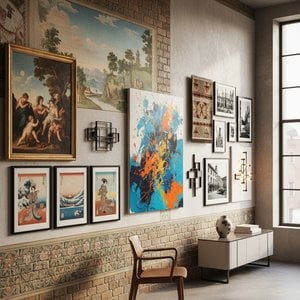
Transforming Spaces: A Comprehensive Exploration of Wall Decor Through Art History & Contemporary Practice
Explore the art of transforming spaces with our comprehensive guide to wall decor. From historical movements to contemporary trends, discover how to curate impactful interiors and commission bespoke artwork for a truly personalized aesthetic.

Acuarelas Legendarias: 10 Obras Maestras que Transformaron el Arte | ArtsDot
Descubre 10 acuarelas legendarias de Turner, Monet y Sargent que revolucionaron el arte. Explora la historia, técnica y belleza de estas obras maestras impresionistas y románticas. Reproducciones de museo en ArtsDot.com.



