

 Ver en contexto
 Enviar
 Compartir
 Detalles
 Guía
Guía

 Descargar
 Similares
 Radiografía
 Presentación de diapositivas
 Preguntas y respuestas
 Estadísticas
Number 23, 1951

- 148.0 x 119.0 cm


 Ver más
Giclée / Impresión de arte
Impresiones giclée o en lienzo de calidad de museo con producción rápida y opciones de acabado flexibles. ( Comprar pintura hecha a mano Cambiar a imagen digital)




P118B €10

P118H €10

P118W €10

P438Z €10

P508JH €12

P508YH €12

P805H €10

P805Z €10

P919BZ €10

P919G €10

P919XJ €10

P959ZH €10

P968JZ €12

W106C €8

W218G €10

W218JH €8

W218Y €10

W307PJ €10

W316G €10

W316PJ €8

W316Y €10

W398PJ €8

W4111J €10

W500HY €15

W500JH €15

W692G €12

W849H €8

W940BG €15

W953PJ €8




Elija entre nuestros tamaños predefinidos que respetan las proporciones originales de la obra.

Introduzca el ancho y el alto que necesite para adaptarse a su marco o pared. Una impresión solo puede recortarse, nunca hacerse más grande que la imagen original, por lo que un tamaño con una forma distinta perderá parte de la obra. Le enviaremos una maqueta digital para su aprobación antes de realizar cualquier impresión. La imagen que se muestra en esta página no refleja el recorte real; solo la maqueta lo hace.
Envío a todo el mundo () en 2 semanas en lugar de las 4/5 semanas estándar. (12 noviembre)

Envío exprés gratuito a todo el mundo

Lienzo de lino de alta calidad

Seguro de envío total

Garantía de reembolso de aranceles aduaneros

Garantía de fidelidad cromática exacta

Política de devolución de 100 días (solo por defectos)

Garantía de devolución del 100% del dinero

Descuento por cantidad
 La opción de vidrio solo está disponible en tamaños inferiores a 110 cm.

Number 23, 1951
Giclée / Impresión de arte
Dimensiones de la reproducción
-


Precio total final
€ 56
The Raw Nerve: Paul Jackson Pollock’s Black Pouring
Paul Jackson Pollock's "Number 23, 1951" isn’t merely a painting; it’s an immersion. Created during a pivotal period of his artistic evolution – the “black pourings” – this work represents a deliberate retreat from the vibrant, all-over drips that initially defined his fame and a profound exploration into the subconscious. It's a piece that vibrates with a potent energy, a visual manifestation of anxiety, introspection, and a burgeoning interest in surrealist imagery and psychological depth. The stark monochrome palette immediately commands attention, stripping away any pretense of representational art and forcing the viewer to confront the raw materiality of paint itself.
- The Technique: Pollock’s method here is strikingly precise yet utterly chaotic. He thinned enamel paint – a material he experimented with extensively – to an almost liquid consistency, then employed a large basting syringe to fling and squirt it onto the unprimed canvas. This wasn't a spontaneous act of abandon; rather, it was a carefully orchestrated process, resulting in swirling patterns that seem to both coalesce and disintegrate before your eyes. The slow drying time allowed for an unexpected merging of colors and textures, creating a layered effect reminiscent of geological strata or even the shifting sands of memory.
- The Figures: Embedded within this turbulent field are enigmatic figures – faces, breasts, hands—fragments that emerge from the swirling chaos with a disconcerting immediacy. These aren’t easily deciphered; they're not portraits in the traditional sense but rather symbolic representations of anxieties and desires lurking beneath the surface. Their fragmented nature mirrors the fractured state of the psyche, suggesting a struggle to articulate inner turmoil.
A Surrealist Awakening: Influences and Intent
Pollock’s exploration of black paint wasn't born in isolation. The period coincided with a renewed interest in surrealism, fueled by his exposure to the works of artists like Joan Miró and Max Ernst. He was captivated by the idea of tapping into the unconscious mind, believing that painting could be a vehicle for accessing hidden emotions and symbolic imagery. “Number 23” is therefore a direct response to this influence, a deliberate attempt to bypass rational thought and delve into the realm of dreams and intuition. The absence of a clear narrative or subject matter further reinforces this surrealist impulse, inviting viewers to project their own interpretations onto the canvas.
Historical Context:The painting was created in 1951, a time of significant global upheaval – the Korean War raged on, and anxieties about the Cold War were escalating. Pollock’s work reflects this atmosphere of uncertainty and tension, capturing a sense of unease and psychological strain.
Decoding the Symbols: Faces and the Unconscious
The recurring presence of faces within “Number 23” is particularly intriguing. These aren't idealized or flattering representations; they are distorted, fragmented, and often obscured by layers of paint. Some scholars interpret them as self-portraits—a visual manifestation of Pollock’s own anxieties and insecurities. Others see them as archetypal figures representing primal instincts and unconscious desires. The ambiguity is deliberate, encouraging viewers to engage in a dialogue with the painting and construct their own meaning.
- The Breast/Hand Motif: The prominent presence of what appears to be a breast or hand—a recurring motif in Pollock’s black pourings—has been interpreted as symbols of vulnerability, creation, and perhaps even mortality.
- Fragmented Forms: The overall fragmentation of the figures suggests a sense of psychological disintegration, reflecting the anxieties of the post-war era.
A Legacy in Monochrome: Reproduction and Appreciation
"Number 23, 1951" stands as a testament to Pollock’s groundbreaking approach to painting—a radical departure from traditional techniques and a profound exploration of the human psyche. ArtsDot offers high-quality reproductions that capture the essence of this iconic work, allowing you to bring its raw energy and enigmatic symbolism into your own space. Consider it not just a decoration, but an invitation to contemplate the complexities of the human experience.
Preguntas y respuestas
¿Cómo se combinan la técnica y el movimiento en "Number 23, 1951"?
En "Number 23, 1951", la técnica de Acrílico sobre lienzo se funde con el movimiento Abstract Expressionism.
¿Qué tan intensos son los colores en "Number 23, 1951" de Jackson Pollock?
"Number 23, 1951" de Jackson Pollock presenta una intensidad de color Monocromático.
¿Cuál es el color predominante en "Number 23, 1951" de Jackson Pollock?
El Gris (#847f6a) es el color predominante de "Number 23, 1951" de Jackson Pollock.
Obras relacionadas


Biografía del artista
Primeros años, familia y formación
La historia de Paul Jackson Pollock comienza en el accidentado paisaje de Cody, Wyoming, donde nació el 28 de enero de 1912. Fue el menor de cinco hermanos, hijo de Stella May McClure y LeRoy Pollock. Su padre trabajaba como agrimensor, una profesión que exigía un movimiento constante a través de la vasta geografía del oeste americano. Esta existencia nómada significó que los primeros años del joven estuvieron marcados por frecuentes traslados, una inquietud que parecía reflejar los horizontes cambiantes del trabajo de su padre. Estos viajes tempranos por el Oeste le proporcionaron un encuentro directo y sin intermediarios con el mundo natural y la resonancia espiritual del arte de los nativos americanos, impresiones que se asentarían silenciosamente en su subconsciente mucho antes de que tomara un pincel por primera vez.
A medida que crecía, la búsqueda de un sentido de pertenencia lo condujo hacia la energía urbana de la costa. Se matriculó en la Manual Arts High School en Los Ángeles, buscando una estructura formal para sus impulsos emergentes. Sin embargo, la verdadera formación de su destreza ocurrió mucho después, cuando se trasladó a la ciudad de Nueva York. Fue allí, en la Art Students League, donde comenzó un largo y transformador periodo de estudio. Desde 1929 hasta 1942, trabajó bajo la tutela de Thomas Hart Benton. Mientras que Benton enfatizaba las composiciones rítmicas y el peso narrativo de la vida estadounidense, el joven estudiante ya comenzaba a derivar hacia sus propias verdades internas, mucho más abstractas.
El desarrollo de una técnica única
Hacia 1947, un cambio profundo se había apoderado de la manera en que abordaba el lienzo. Se alejó del caballete tradicional, optando en su lugar por colocar sus lienzos directamente sobre el suelo. Este cambio le permitió situarse sobre su obra, convirtiéndose en parte del acto creativo mismo. No se limitaba a aplicar pintura; goteaba, salpicaba y lanzaba el pigmento desde arriba, dejando que el líquido cayera en patrones impredecibles. Este método transformó el acto de pintar en una performance física, donde la gravedad y el gesto dictaban la forma final.
Sus herramientas eran tan poco convencionales como sus métodos. Utilizaba palos, cuchillos e incluso jeringuillas para manipular el fluido medio. En ocasiones, empleaba llana o pintura líquida para lograr texturas específicas. A menudo arañaba la superficie o utilizaba objetos extraños para construir una gruesa costra de pintura, añadiendo una cualidad táctil y escultórica a la obra. Este proceso no consistía tanto en un pincelado controlado, sino en una liberación rítmica, casi primitiva, de energía sobre la superficie.
Obras Clave y Expresiones Artísticas
Al alejarse de las restricciones del caballete, sus lienzos comenzaron a reflejar un compromiso mucho más visceral con el medio. En 1943, produjo Mural, una obra monumental de 2,4 por 6,1 metros que demostró su capacidad para dominar una superficie vasta. Durante este periodo, sus exploraciones en el subconsciente y el acto mismo de pintar lo condujeron a obras como Eyes in the Heat, creada alrededor de 1946. Estas piezas no eran meramente imágenes, sino registros de una presencia física, donde el movimiento de todo su cuerpo dictaba la ubicación de cada salpicadura y cada mancha de color.
Los años siguientes lo vieron perfeccionar las composiciones rítmicas de estilo "all-over" que definirían su reputación. Buscaba crear una sensación de espacio infinito, donde ningún punto individual dominara sobre el resto. Este enfoque es evidente en Number 1, 1949, una obra que captura un torrente de energía pura, y en Lavender Mist, Number 1, 1950, que permanece como una pieza fundamental de su producción. En estas obras, el juego entre el control y el azar crea un equilibrio delicado, como si la pintura fuera liberada en lugar de simplemente aplicada.
Sus experimentos tardíos continuaron desafiando los límites de cómo se podía manipular la pintura sobre una superficie horizontal. A menudo utilizaba palos, cuchillos o incluso los propios botes para lanzar el pigmento, dando como resultado complejas redes de líneas. Este método se aprecia claramente en Blue Poles, Number 11, 1952 y en la enérgica Convergence. A través de estas obras, Jackson Pollock alcanzó un estado en el que la pintura parecía poseer vida propia, emergiendo de una profunda inmersión en su propia imaginación.
Patrocinadores, taller y encargos
El camino de su carrera fue moldeado tanto por la necesidad pública como por la generosidad de unos pocos y vitales colaboradores. Entre 1938 y 1942, encontró un trabajo estable como pintor para el WPA Federal Art Project, un periodo que aportó un ritmo necesario a su práctica en desarrollo. Esta estabilidad dio paso a una alianza más personal y transformadora cuando Peggy Guggenheim le ofreció un contrato de galería en julio de 1943. Su apoyo resultó ser algo más que profesional; en 1945, ella le proporcionó un pago inicial de 2.000 dólares para ayudarle a asegurar un hogar, un gesto que entrelazó profundamente su vida personal con su supervivencia artística.
Su vida creativa acabó encontrando su centro en East Hampton, Nueva York. Allí, en la Casa y Estudio Pollock-Krasner, vivió y trabajó junto a su esposa, Lee Krasner. El estudio era un lugar de intenso movimiento físico, donde los límites entre el artista y el lienzo se disolvían. A menudo se alejaba del caballete tradicional, prefiriendo extender sus lienzos sobre el suelo para interactuar con la pintura desde todos los ángulos. Este espacio de trabajo no era simplemente una sala de producción, sino un escenario de una energía profunda e inquieta donde tuvieron lugar sus experimentos más radicales.
Últimos años y muerte
La vida personal del artista estuvo profundamente entrelazada con sus luchas creativas. En 1945, se casó con la artista Lee Krasner, una unión que supuso una presencia significativa en su vida durante sus años más transformadores. Sin embargo, bajo la superficie de su ascenso profesional, persistía una sombra constante. Jackson Pollock luchó contra la adicción al alcohol durante toda su vida, una batalla que a menudo complicaba su existencia y su capacidad para navegar las presiones de su creciente fama.
Esta turbulencia, tanto interna como externa, alcanzó un final trágico en East Hampton, Nueva York, EE. UU. El 11 de agosto de 1956, a la edad de 44 años, su vida se vio truncada en un repentino y violento accidente. Mientras conducía, se vio involucrado en una colisión de un solo vehículo causada por el alcohol. El choque resultó fatal, dejando tras de sí un legado tan tumultuoso como la pintura que lanzaba sobre sus lienzos.
Legado e influencia en el arte moderno
Las ondas expansivas de sus métodos radicales alcanzaron mucho más allá de las paredes de su estudio en East Hampton. Al romper el vínculo tradicional entre el pincel y el caballete, Jackson Pollock se convirtió en una figura central del movimiento Expresionista Abstracto, un cambio que alteró fundamentalmente la trayectoria de la creatividad estadounidense. Su presencia ayudó a consolidar la posición de la ciudad de Nueva York como un centro global para el arte moderno, desplazando el corazón de la vanguardia del dominio europeo. Fue uno de los primeros pintores estadounidenses en ser reconocido como un igual de los grandes maestros europeos del siglo XX, demostrando que un lenguaje nuevo y visceral podía emerger de la tierra de los Estados Unidos.
Su influencia actuó como un catalizador para muchos de los movimientos artísticos posteriores que siguieron su estela. La forma en que se involucró con el lienzo —tratándolo como una arena para la acción física en lugar de una mera superficie para la representación— abrió puertas para muchos que buscaban expresar el subconsciente a través del gesto. Este énfasis en el proceso de creación mismo dejó una huella permanente en la historia del arte moderno, asegurando que lo espontáneo y lo imprevisto ocuparan para siempre un lugar en el arsenal del artista.
- Number 1, 1949
- Blue Poles: Number 11, 1952
- Convergence
- Autumn Rhythm. Number 30, 1950
Dónde ver sus obras hoy en día
Para ser testigos de los rastros físicos de su movimiento, es necesario viajar hacia las grandes instituciones que preservaron su energía radical. En la ciudad de Nueva York, el Museum of Modern Art alberga varios de sus lienzos, permitiendo a los espectadores erguirse ante las vastas composiciones descentradas que definieron su era. La National Gallery of Art en Washington D.C. también conserva sus obras, ofreciendo un espacio para observar las intrincadas redes de color que logró a través de sus métodos únicos. Al otro lado del Atlántico, la Tate Gallery en Londres mantiene viva su presencia dentro de sus colecciones, asegurando que su influencia alcance mucho más allá de las costas americanas.
Para aquellos que buscan una conexión más íntima con su proceso, la Pollock-Krasner House and Studio en East Hampton ofrece un profundo sentido de pertenencia. Este sitio, declarado Monumento Histórico Nacional, fue el espacio donde él y su esposa, Lee Krasner, vivieron y trabajaron. La propiedad sigue siendo un vínculo vital con su vida, preservando el entorno que nutrió su transición desde las formas tradicionales hacia los métodos espontáneos sobre el suelo que cambiaron el curso de la pintura moderna. Recorrer estos espacios proporciona una sensación de la escala y la realidad física de su lucha creativa.
- Number 1, 1949
- Blue Poles: Number 11, 1952
- Mural (1943)
- Convergence

Jackson Pollock
1912 - 1956 , Estados Unidos
Datos clave
- Artistic Movement Or Style: Expresionismo Abstracto
- Artists Or Movements Influenced By This Artist:
- Pintura de campos de color
- Expresionismo abstracto
- Artists Who Influenced This Artist:
- Thomas Hart Benton
- José Clemente Orozco
- David Alfaro Siqueiros
- Date Of Birth: 1912
- Date Of Death: 1956
- Full Name: Paul Jackson Pollock
- Nationality: Estadounidense
- Notable Artworks:
- Number 1, 1950 (Lavender Mist)
- One: Number 31, 1950
- Blue Poles: Number 11, 1952
- Convergence
- Place Of Birth: Cody, Estados Unidos de América
Artículos relacionados

Caos y Pasión: Las 25 Obras Maestras de Francis Bacon
Explora las 25 obras maestras de Francis Bacon y el expresionismo. Descubre su legado en ArtsDot.com.
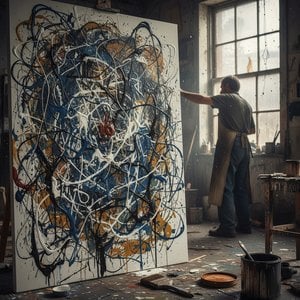
Paul Jackson Pollock: A Radical Departure – Exploring Abstract Expressionism's Pioneering Figure and His Enduring Legacy
Explore the revolutionary art of Jackson Pollock & Abstract Expressionism. Discover his iconic drip paintings, lasting impact, and considerations for collecting this pivotal American artist. Expert insights at ArtsDot.

Más allá de las formas: 10 obras maestras del arte abstracto que redefinen la realidad
Explora 10 obras maestras del arte abstracto que transforman la emoción en color y forma. Desde Pollock hasta Kandinsky, descubre historias de genios y encuentra reproducciones de calidad museo para tu hogar. Explora la colección completa en ArtsDot.com.

Beyond Reality: Exploring Symbolism's Influence on Modern Art & Psychological Expression
Explore the captivating world of Symbolism! Discover key artists, psychological themes & its lasting impact on modern art. Expert insights for collectors and enthusiasts at ArtsDot.

Expresionismo Abstracto: 10 Obras Maestras que Transformaron el Arte |
Descubre las 10 obras maestras del Expresionismo Abstracto: Pollock, Rothko y más. Explora la historia, técnica y significado de estos lienzos icónicos. Reproducciones de arte exclusivas en .


