


 Ver en contexto
 Enviar
 Compartir
 Detalles

 Descargar
 Similares
 Radiografía
 Presentación de diapositivas
Crucifixion (detail)


 Ver más
Giclée / Impresión de arte
Impresiones giclée o en lienzo de calidad de museo con producción rápida y opciones de acabado flexibles. ( Comprar pintura hecha a mano Comprar imagen)




P118B $10

P118H $10

P118W $10

P438Z $10

P508JH $12

P508YH $12

P805H $10

P805Z $10

P919BZ $10

P919G $10

P919XJ $10

P959ZH $10

P968JZ $12

W106C $8

W218G $10

W218JH $8

W218Y $10

W307PJ $10

W316G $10

W316PJ $8

W316Y $10

W398PJ $8

W4111J $10

W500HY $15

W500JH $15

W692G $12

W849H $8

W940BG $15

W953PJ $8




Elija entre nuestros tamaños predefinidos que respetan las proporciones originales de la obra.

Puede introducir sus propias dimensiones para adaptarse a un marco o espacio específico. Si el tamaño seleccionado no coincide con las proporciones de la imagen original, recortaremos la obra de arte o extenderemos la imagen con un borde con efecto espejo o de color sólido. Se enviará una maqueta digital para su aprobación antes de que comience la producción.
Tenga en cuenta que la vista previa en pantalla no refleja el recorte o la extensión real. Solo la maqueta mostrará con precisión la composición final.
Aunque existen tamaños personalizados, recomendamos seleccionar una dimensión de la lista predefinida para preservar las proporciones originales.
Envío a todo el mundo () en 2 semanas en lugar de las 4/5 semanas estándar. (4 septiembre)

Envío exprés gratuito a todo el mundo

Lienzo de lino de alta calidad

Seguro de envío total

Garantía de reembolso de impuestos aduaneros

Garantía de fidelidad cromática exacta

Política de devolución de 60 días (solo por defectos)

Garantía de devolución del 100% del dinero

Descuento por cantidad
 La opción de vidrio solo está disponible en tamaños inferiores a 110 cm.

Crucifixion (detail)
Giclée / Impresión de arte
Dimensiones de la reproducción
-


Precio total final
$ 62
A Tapestry of Medieval Grandeur
This evocative scene transports the viewer directly into the heart of a dramatic medieval epoch. Though titled Crucifixion (detail), the visual evidence presents a far grander tableau—a bustling, action-filled moment set against the imposing backdrop of a castle under a brooding sky. One is immediately struck by the sheer energy captured in the composition; it feels less like a static painting and more like a frozen breath taken from a vibrant historical pageant. The presence of knights, mounted upon powerful steeds, suggests narratives of chivalry, conflict, or perhaps even solemn procession. The air itself seems thick with anticipation, charged by the dramatic sweep of the stormy heavens above.
The Mastery of Veronese's Palette and Spectacle
Attributed to Paolo Veronese, this work showcases the Venetian master’s unparalleled gift for color and opulent spectacle. Veronese, a painter whose life was intertwined with the dazzling richness of 16th-century Venice, possessed an almost theatrical understanding of light and shadow. Here, his technique allows every fold of fabric, every glint on polished steel, and every muscle tension in the horses to leap out at the viewer. The handling of the figures is masterful; they are not merely placed within a scene but inhabit it fully. Whether observing the poised readiness of a knight holding a sword or the grounded power emanating from the central horses, Veronese ensures that the human and animal elements contribute equally to the overall sense of monumental drama.
Symbolism in Steel and Stone
The juxtaposition of the martial figures against the permanence of the castle walls suggests a dialogue between transient human conflict and enduring structures of power. The knights, armed and arrayed, embody themes of valor, duty, and earthly struggle. Meanwhile, the stormy sky serves as a potent symbolic element—a reflection of internal turmoil or divine judgment looming over the terrestrial action below. For the collector or designer, this depth allows for endless contemplation: is the scene celebrating martial glory, or is it foreshadowing inevitable change? The very act of capturing such a moment suggests that even in the height of action, there is an underlying narrative weight.
Bringing Renaissance Drama Home
Owning a reproduction of this piece by Veronese offers more than just decoration; it offers a portal to another age of heightened drama and breathtaking artistry. The scale and complexity inherent in the original work—the interplay between foreground action, middle-ground architecture, and dramatic sky—make it a commanding focal point for any grand hall or richly appointed study. Reproducing this level of detail allows modern interiors to absorb the grandeur of Renaissance spectacle, lending an air of storied history and vibrant narrative energy to contemporary living spaces.
Obras relacionadas


Biografía del artista
Primeros años y formación
Paolo Caliari, conocido como Paolo Veronese, nació en 1528 en Verona, Italia. Era el quinto hijo de un cantero, Gabriele, y su esposa Caterina. La vida temprana de Veronese se caracterizó por su aprendizaje con Antonio Badile y posteriormente con Giovanni Francesco Caroto, ambos pintores líderes en Verona.Estilo artístico e influencias
Veronese desarrolló un estilo pictórico naturalista, influenciado por Tiziano, y es conocido por su uso de colores vibrantes. Su obra se caracteriza por su estilo dramático y colorido, a menudo presentando majestuosas ambientaciones arquitectónicas y pagantry. Las grandes pinturas de Veronese de banquetes bíblicos, llenas de figuras, son especialmente famosas, y también fue el principal pintor veneciano de techos.Obras destacadas y legado
Algunas de las obras más notables de Veronese incluyen:- La boda de Cana (1563), una pintura a gran escala que muestra su uso del color y la composición.
- El banquete en casa de Levi (1573), una obra maestra que demuestra su capacidad para equilibrar el drama y la elegancia.
- Lucrezia: Una impresionante obra maestra del Renacimiento con detalles opulentos y colores ricos.
- Honra (1557): Una obra maestra barroca que presenta tonos cálidos, luz dramática y detalles intrincados.
- Respeto (1575): Una impresionante obra maestra barroca rica en intensidad emocional, realismo y luz dramática.
Influencia cultural e impacto
La influencia de Veronese se puede ver en varios aspectos de la cultura italiana, desde los westerns espagueti hasta la rica tradición del drama y la commedia. Su trabajo continúa inspirando a artistas, incluyendo aquellos que aparecen en ArtsDot, una plataforma que muestra una amplia gama de talento artístico.- Explore más obras de Veronese y la escena artística veneciana en ArtsDot.
- Descubra el patrimonio cultural de Italia, desde sus civilizaciones antiguas hasta su impacto moderno, en Wikipedia.
- 1528: Nació en Verona, Italia
- 1541-1544: Aprendizaje con Antonio Badile y Giovanni Francesco Caroto
- 1563: Finalización de La boda de Cana
- 1573: Finalización del banquete en casa de Levi
- 1588: Falleció, dejando atrás un legado en la pintura veneciana

Paolo Veronese
1528 - 1588 , Italia
Datos clave
- Artistas Que Influyeron: ['Tiziano']
- Estilo Artístico: Naturalista, Veneciano
- Fecha De Nacimiento: 1528
- Influencia En Artistas: ['Artistas de WahooArt']
- Lugar De Nacimiento: Verona, Italia
- Nacionalidad: Italiana
- Nombre Completo: Paolo Veronese
- Nombres Alternativos: Paolo Caliari
- Obras Notables:
- La Boda de Caná (1563)
- El Banquete en la casa de Levi (1573)
Artículos relacionados

Las 10 Obras Maestras del Alto Medieval: Arte, Historia y Decoración Exclusiva
Descubre las 10 obras maestras del Alto Medieval. Explora la historia, el simbolismo y la belleza de la pintura románica y gótica. Reproducciones exclusivas en ArtsDot.com para decorar tu hogar con arte atemporal.

Giclée Prints: Archival Quality & Aesthetic Nuances for the Discerning Collector
Explore the world of giclée prints with ArtsDot. Learn about archival quality, aesthetic nuances & investment potential. Expert guidance for discerning art collectors seeking museum-quality reproductions and lasting value.
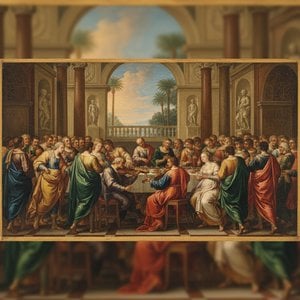
Paolo Veronese: A Renaissance Master of Color, Composition, and Venetian Splendor
Explore the vibrant world of Paolo Veronese, a Renaissance master renowned for his opulent compositions, masterful use of color, and dramatic Venetian scenes. Discover key artworks & legacy.
Transforming Spaces: A Comprehensive Exploration of Wall Decor Through Art History & Contemporary Practice
Explore the art of transforming spaces with our comprehensive guide to wall decor. From historical movements to contemporary trends, discover how to curate impactful interiors and commission bespoke artwork for a truly personalized aesthetic.

Jacopo Tintoretto: Las 25 Obras Maestras del Genio Veneciano | Arte y Decoración en ArtsDot
Descubre las 25 obras maestras de Jacopo Tintoretto, el genio veneciano del Renacimiento. Explora su arte dramático, composiciones innovadoras y paleta vibrante. Reproducciones de alta calidad en ArtsDot.com para transformar tu hogar.



