


 Ver en contexto
 Enviar
 Compartir
 Detalles

 Descargar
 Similares
 Radiografía
 Presentación de diapositivas
La Musa 1935


 Ver más
Giclée / Impresión de arte
Impresiones giclée o en lienzo de calidad de museo con producción rápida y opciones de acabado flexibles. ( Comprar pintura hecha a mano Comprar imagen)




P118B $10

P118H $10

P118W $10

P438Z $10

P508JH $12

P508YH $12

P805H $10

P805Z $10

P919BZ $10

P919G $10

P919XJ $10

P959ZH $10

P968JZ $12

W106C $8

W218G $10

W218JH $8

W218Y $10

W307PJ $10

W316G $10

W316PJ $8

W316Y $10

W398PJ $8

W4111J $10

W500HY $15

W500JH $15

W692G $12

W849H $8

W940BG $15

W953PJ $8




Elija entre nuestros tamaños predefinidos que respetan las proporciones originales de la obra.

Puede introducir sus propias dimensiones para adaptarse a un marco o espacio específico. Si el tamaño seleccionado no coincide con las proporciones de la imagen original, recortaremos la obra de arte o extenderemos la imagen con un borde con efecto espejo o de color sólido. Se enviará una maqueta digital para su aprobación antes de que comience la producción.
Tenga en cuenta que la vista previa en pantalla no refleja el recorte o la extensión real. Solo la maqueta mostrará con precisión la composición final.
Aunque existen tamaños personalizados, recomendamos seleccionar una dimensión de la lista predefinida para preservar las proporciones originales.
Envío a todo el mundo () en 2 semanas en lugar de las 4/5 semanas estándar. (29 agosto)

Envío exprés gratuito a todo el mundo

Lienzo de lino de alta calidad

Seguro de envío total

Garantía de reembolso de impuestos aduaneros

Garantía de fidelidad cromática exacta

Política de devolución de 60 días (solo por defectos)

Garantía de devolución del 100% del dinero

Descuento por cantidad
 La opción de vidrio solo está disponible en tamaños inferiores a 110 cm.

La Musa 1935
Giclée / Impresión de arte
Dimensiones de la reproducción
-


Precio total final
$ 62
A Window Into Picasso’s Inner World: Exploring ‘The Muse’ (1935)
‘The Muse’ (1935) by Pablo Picasso is more than just a portrait; it's a profound exploration of form, emotion, and the very act of creation. This captivating oil painting offers a compelling glimpse into the artist’s personal life and his revolutionary approach to Cubism. The work centers on Marie-Thérèse Walter, Picasso’s lover and frequent muse, depicted not as a literal representation but as a fragmented, reassembled vision of feminine beauty and artistic inspiration. Her presence in Picasso’s life and art was a source of joy and creative energy—a beacon guiding him through periods of intense introspection and experimentation.Deconstructing Form: A Masterclass in Cubist Technique
Picasso's mastery of Cubism is brilliantly showcased in ‘The Muse’. The painting abandons traditional perspective, presenting Walter from multiple viewpoints simultaneously. Her features are broken down into geometric shapes – curves and angles interlock and overlap – creating a dynamic composition that challenges the viewer’s perception. This isn’t about *seeing* her as she is, but rather experiencing her essence through a fractured lens. The use of oil paint allows for rich textures and subtle gradations of color, enhancing the sense of depth within the fragmented forms. Notice how Picasso employs both bold outlines and soft blending to define shapes and create visual interest. Consider the deliberate layering of pigment—a technique characteristic of Cubism—that reveals underlying structures and contributes to the painting’s overall complexity. The artist meticulously analyzes Walter's form, dissecting it into constituent parts before reconstructing it in a way that transcends conventional realism.Historical Context: A Pivotal Moment in Artistic Innovation
Painted in 1935, ‘The Muse’ falls within a fascinating period in Picasso’s career. While he had already established Cubism with Georges Braque decades earlier, the 1930s saw him pushing its boundaries further. This era was marked by personal turmoil and artistic experimentation—reflected in the increasingly expressive and emotionally charged nature of his work. The painting stands as a testament to Picasso’s relentless pursuit of new ways to represent reality and capture the complexities of human experience. It also reflects the broader cultural shifts occurring at the time – a rejection of traditional values and an embrace of modernism, mirroring the spirit of the Harlem Renaissance and its celebration of Black artistry and culture. Picasso's exploration of Walter embodies this movement’s desire for artistic freedom and innovation.Symbolism & Interpretation: Unveiling Hidden Meanings
The choice of Marie-Thérèse Walter as the subject is significant. She represents not only romantic love but also artistic inspiration itself—a catalyst for Picasso's creative process. Her presence in Picasso’s life and art was a source of joy and transformative energy. The fragmented form can be interpreted as a metaphor for the artist’s process – breaking down ideas, analyzing them from different angles, and then reassembling them into something new. Consider the muted blues and pinks dominating the palette—colors that evoke tranquility yet hint at underlying passion. Some art historians suggest that the painting also reflects Picasso’s internal struggles and anxieties during this period—a confrontation with his own vulnerabilities amidst artistic triumph. The artist seeks to capture not just Walter's appearance but her spirit, conveying a sense of vulnerability and beauty simultaneously.Emotional Resonance: A Dialogue Between Artist & Viewer
‘The Muse’ evokes a range of emotions – from curiosity and intrigue to a sense of unease and disorientation. The fragmented form challenges our expectations, forcing us to actively engage with the artwork and construct our own meaning. It's a painting that demands attention and rewards careful contemplation. Its enduring appeal lies in its ability to tap into universal themes of love, desire, and the search for artistic truth—a quest Picasso himself undertook throughout his extraordinary life. Let ‘The Muse’ inspire you to embrace complexity and find beauty within unexpected perspectives. Photo Description: --Overall Impression-- The artwork is a Cubist-inspired still life depicting a woman seated at a table, engaged in the act of painting. The composition is fragmented and geometric, characteristic of the Cubist style, with multiple viewpoints presented simultaneously. The subject matter focuses on domestic activities – painting, reading, and the presence of objects like a vase of flowers, a mirror, and various papers. There’s an emphasis on form and structure over realistic representation. Color plays a significant role in conveying mood and shape. The palette is predominantly cool with hints of warmer tones. Lines are angular and broken, defining shapes rather than outlining them realistically. The use of texture appears to be achieved through brushstrokes that create a slightly rough surface. Lighting seems diffused, casting soft shadows and contributing to the overall sense of depth. Perspective is flattened, typical of Cubism, where spatial relationships are distorted for artistic effect. The style is clearly Cubist, utilizing simplified forms, multiple perspectives, and an emphasis on geometric shapes. The technique involves layering paint in a manner that reveals underlying forms and colors. Materials appear to be oil paints on canvas. Symbolically, the painting suggests themes of creativity, introspection, and domesticity. It’s a study of form and perception rather than a literal depiction of reality -- Size: Unknown Date: Unknown ARTIST INFORMATION: ================== Artist: Pablo Ruiz Picasso Birth Year: 1881 Death Year: 1973 Birth City: Malaga Birth Country: Spain Biography:A Revolutionary Spirit: The Life and Art of Pablo Picasso
Pablo Ruiz Picasso, a name that resonates through the annals of art history, was born in Málaga, Spain, in 1881—a nation poised on the cusp of profound change. His life, spanning nearly a century, became an extraordinary mirror reflecting this transformation, a relentless exploration of form, perspective, and the very essence of human experience. From his earliest artistic training under his father, José Ruiz y Blasco, a painter himself, Picasso displayed a precocious talent that quickly surpassed even his mentor’s abilities. This early mastery wasn't merely technical; it hinted at an insatiable curiosity and a willingness to challenge convention—qualities destined to define his entire career. The family’s subsequent moves to A Coruña and then Barcelona proved pivotal, immersing the young artist in vibrant cultural environments where he honed his skills and began to forge hiObras relacionadas


Biografía del artista
Pablo Picasso: Un Artista Revolucionario
Vida Temprana y Formación (1881-1904)
- Nacido el 25 de octubre de 1881 en Málaga, España, Pablo Ruiz y Picasso demostró un talento artístico desde muy temprana edad.
- Su padre, José Ruiz y Blasco, era profesor de arte quien proporcionó a su hijo una formación inicial. Se dice que las primeras palabras de Picasso fueron “piz, piz” – intentando decir ‘lápiz’.
- Picasso rápidamente superó las habilidades de su padre, mostrando una habilidad notable en representaciones naturalistas.
- La familia se mudó a A Coruña y luego a Barcelona tras la trágica pérdida de la hermana de Picasso.
- En Barcelona, asistió a la Escuela de Bellas Artes pero a menudo chocaba con las instrucciones académicas tradicionales. Estudió brevemente en la Real Academia de San Fernando en Madrid, encontrándola sofocante y prefiriendo estudiar a los maestros como Velázquez y Goya por su cuenta.
Los Períodos Azul y Rosa (1901-1906)
- El Período Azul (aproximadamente 1901-1904) se caracteriza por pinturas sombrías dominadas por tonos de azul y verde azulado.
- Estas obras a menudo representan figuras marginadas – mendigos, ciegos, prostitutas – reflejando melancolía y comentario social. Ejemplos clave incluyen La Vie (1903) y El Guitarrista Viejo (1903-1904).
- Después de esto, surgió el Período Rosa (1904-1906) con tonos más cálidos – rosas, naranjas y rojos.
- Este período refleja una perspectiva más optimista, a menudo representando artistas de circo, harlequines y acróbatas. Familia de Saltimbanques (1905) ejemplifica este cambio.
Los Años Revolucionarios: Cubismo y Más Allá (1907-1919)
- 1907 marcó un momento decisivo con Les Demoiselles d'Avignon, influenciado por la escultura iberica y las máscaras africanas. Esta pintura rompió con la perspectiva tradicional, allanando el camino para el Cubismo.
- Trabajando en estrecha colaboración con Georges Braque, Picasso cofundó el Cubismo, alterando fundamentalmente la forma en que los artistas representaban la realidad.
- Cubismo Analítico (1909-1912) presentaba formas fragmentadas, colores apagados y una disección de objetos en formas geométricas.
- Cubismo Sintético (1912-1919) incorporó elementos de collage – recortes de periódicos, retazos de tela – para crear superficies texturizadas y nuevas capas visuales.
Neoclasicismo y Surrealismo (Década de 1920 - Década de 1930)
- La década de 1920 vio a Picasso explorar estilos neoclásicos con figuras monumentales que enfatizaban las formas clásicas.
- También se involucró con el movimiento surrealista, aunque nunca se alineó completamente con sus principios. Su obra combinaba estilos anteriores con imágenes surrealistas y perspectivas distorsionadas.
Años Posteriores y Legado (1940-1973)
- Durante la Segunda Guerra Mundial, Picasso permaneció en Francia, produciendo declaraciones anti-guerra poderosas como Guernica (1937), una respuesta visceral al bombardeo de Guernica durante la Guerra Civil Española.
- Guernica se convirtió en un símbolo perdurable del horror de la guerra y sigue siendo una de sus obras más celebradas.
- A lo largo de las décadas de 1950 y 60, Picasso continuó experimentando con diversos medios – cerámica, escultura, grabado – demostrando una versatilidad notable.
- Se casó con Jacqueline Roque en 1961. Murió el 8 de abril de 1973 en Mougins, Francia.
Influencias y Significado Histórico
- El desarrollo artístico de Picasso estuvo moldeado por los maestros españoles como Velázquez y Goya, la escultura iberica, el arte africano y Henri Matisse.
- Su impacto en el arte del siglo XX es inmenso. Co-fundó el Cubismo, pionero en el collage y la escultura construida, y desafió constantemente las convenciones artísticas.
- La experimentación incansable de Picasso rediseñó el arte moderno y continúa inspirando a los artistas hoy en día.
- Su prolífica producción – estimada en más de 50.000 obras – consolida su posición como uno de los artistas más importantes e influyentes de la historia.

Pablo Picasso
1881 - 1973 , España
Datos clave
- Artistas Que Influyeron:
- Velázquez
- Goya
- Henri Matisse
- Fecha De Muerte: 8 de abril de 1973
- Fecha De Nacimiento: 25 de octubre de 1881
- Influencia En Artistas: ['Numerosos artistas modernos']
- Lugar De Nacimiento: Málaga, España
- Movimiento Artístico: Cubismo, Surrealismo
- Nacionalidad: Española
- Nombre Completo: Pablo Ruiz y Picasso
- Obras Notables:
- Guernica
- La Vie
- El Guitarrista Viejo
- Familia de Saltimbanques
- Les Demoiselles d'Avignon
Artículos relacionados

Los 10 Maestros del Cubismo: Obras que Revolucionaron el Arte | ArtsDot
Descubre los 10 lienzos cubistas que revolucionaron el arte moderno. Explora las obras maestras de Picasso, Braque y Gris en ArtsDot.com. Reproducciones de alta calidad para tu hogar.

Los 10 Retratos Cubistas Esenciales que Revolucionaron el Arte Moderno | ArtsDot
Descubre los 10 retratos cubistas esenciales de Picasso, Braque y otros maestros. Explora la historia, técnica y significado de este revolucionario movimiento artístico. Encuentra reproducciones de arte exclusivas en ArtsDot.com.
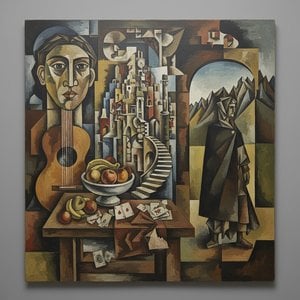
Los 10 Maestros del Cubismo Expresionista: Obras que Transformaron el Arte | ArtsDot
Descubre los 10 lienzos cubistas más influyentes de Picasso, Braque y otros maestros. Explora la historia, técnica y significado del movimiento artístico que revolucionó el arte moderno. Reproducciones de alta calidad en ArtsDot.com.
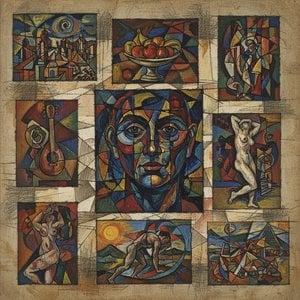
Cubismo Expresionista: 10 Obras Maestras que Transformaron el Arte | ArtsDot
Descubre las 10 obras maestras del Cubismo Expresionista con ArtsDot. Explora la historia de Picasso, Braque y otros artistas clave. Encuentra reproducciones de arte exclusivas para transformar tu hogar. ¡Explora la colección completa en ArtsDot.com!

Expresionismo Abstracto: 10 Obras Maestras que Transformaron el Arte |
Descubre las 10 obras maestras del Expresionismo Abstracto: Pollock, Rothko y más. Explora la historia, técnica y significado de estos lienzos icónicos. Reproducciones de arte exclusivas en .



