

 Ver en contexto
 Enviar
 Compartir
 Detalles
 Guía
Guía

 Descargar
 Similares
 Radiografía
 Presentación de diapositivas
 Preguntas y respuestas
 Estadísticas
Boat with Two Figures

- 61.0 x 51.0 cm


 Ver más
Giclée / Impresión de arte
Impresiones giclée o en lienzo de calidad de museo con producción rápida y opciones de acabado flexibles. ( Comprar pintura hecha a mano Cambiar a imagen digital)




P118B €10

P118H €10

P118W €10

P438Z €10

P508JH €12

P508YH €12

P805H €10

P805Z €10

P919BZ €10

P919G €10

P919XJ €10

P959ZH €10

P968JZ €12

W106C €8

W218G €10

W218JH €8

W218Y €10

W307PJ €10

W316G €10

W316PJ €8

W316Y €10

W398PJ €8

W4111J €10

W500HY €15

W500JH €15

W692G €12

W849H €8

W940BG €15

W953PJ €8




Elija entre nuestros tamaños predefinidos que respetan las proporciones originales de la obra.

Introduzca el ancho y el alto que necesite para adaptarse a su marco o pared. Una impresión solo puede recortarse, nunca hacerse más grande que la imagen original, por lo que un tamaño con una forma distinta perderá parte de la obra. Le enviaremos una maqueta digital para su aprobación antes de realizar cualquier impresión. La imagen que se muestra en esta página no refleja el recorte real; solo la maqueta lo hace.
Envío a todo el mundo () en 2 semanas en lugar de las 4/5 semanas estándar. (5 noviembre)

Envío exprés gratuito a todo el mundo

Lienzo de lino de alta calidad

Seguro de envío total

Garantía de reembolso de aranceles aduaneros

Garantía de fidelidad cromática exacta

Política de devolución de 100 días (solo por defectos)

Garantía de devolución del 100% del dinero

Descuento por cantidad
 La opción de vidrio solo está disponible en tamaños inferiores a 110 cm.

Boat with Two Figures
Giclée / Impresión de arte
Dimensiones de la reproducción
-


Precio total final
€ 56
The Dreamscape of Companionship: Exploring Odilon Redon's "Boat with Two Figures"
To gaze upon Odilon Redon’s Boat with Two Figures is to step across the threshold into a realm woven from twilight and memory. This painting, executed in 1902, transcends a mere depiction of leisure on the water; it is an intimate meditation on companionship, shared silence, and the enigmatic beauty that resides just beyond the reach of clear daylight. Redon, forever drawn to the unseen currents of the human imagination, captures here not just two women in a boat, but perhaps the very essence of connection itself—a moment suspended between conversation and contemplation.
Symbolism and the Allure of the Submerged World
Redon’s oeuvre is steeped in Symbolist undertones, an artistic language that favored suggestion over statement. In Boat with Two Figures, the water acts as much a psychological space as it is a physical one. The boat itself becomes a fragile vessel carrying two souls adrift on the vast expanse of feeling. Notice the subtle interplay between the figures; while they share this intimate journey, their gazes and postures suggest individual depths. One woman, perhaps highlighted by the suggestion of red in her gown, anchors the composition, while the other drifts slightly into the mystery of the background. These are not portraits of reality, but rather embodiments of emotional states—a quiet dialogue played out against the backdrop of an undefined, dreamlike landscape.
Mastery of Tone and Form
Technically, Redon employs a masterful handling of tone, even when the original work is viewed in monochrome or muted palettes. The composition is balanced by the strong horizontal sweep of the boat contrasting with the verticality of the figures' long dresses. His technique allows the forms to emerge from shadow and suggestion rather than being sharply delineated. This soft focus, characteristic of his later period works, lends an ethereal quality to the scene. For those considering a reproduction for your space, understanding this delicate tonal balance is key; it ensures that the piece will interact with ambient light in a way that mimics its original, haunting luminescence.
A Touch of Fin-de-Siècle Melancholy
Painted at the turn of the 20th century, this work resonates with the lingering spirit of Symbolism—a period grappling with industrial change and the search for deeper meaning. The mood is one of beautiful melancholy; it suggests moments of profound connection that are inherently fleeting. It speaks to the quiet understanding shared between companions who do not need grand gestures to validate their bond. Owning this piece, or a high-quality reproduction thereof, invites a sense of reflective calm into any room, transforming it into a sanctuary for thought and gentle reminiscence.
Preguntas y respuestas
¿Cuál es el formato de "Boat with Two Figures"?
"Boat with Two Figures" de Odilon Redon tiene un formato Portrait. El formato describe las proporciones de la composición.
¿Cómo se integra "Boat with Two Figures" en los temas y el estilo de Odilon Redon?
"Boat with Two Figures" pertenece a la etapa Symbolism de Odilon Redon, cuyos temas recurrentes incluyen dreamlike figures on water, symbolist exploration of inner life, genre scene with enigmatic mood.
¿Qué color predomina en "Boat with Two Figures"?
El Driftwood (#a37852) es el color predominante de "Boat with Two Figures" de Odilon Redon.
Obras relacionadas


Biografía del artista
Vida Temprana y Formación
Odilon Redon (Bertrand-Jean Redon), nació el 20 de abril de 1840 en Burdeos, Aquitania, en una familia próspera. Su padre amasó su fortuna en el comercio de esclavos en Luisiana. Redon recibió el apodo "Odilon" de su madre, Odile. Demostró talento artístico desde temprana edad; a los diez años ganó un premio de dibujo en la escuela. Inicialmente estudió arquitectura, pero a instancias de su padre, cambió de rumbo. Tras no aprobar los exámenes de ingreso a la École des Beaux-Arts de París en 1864, brevemente estudió pintura bajo la tutela de Jean-Léon Gérôme. Posteriormente, se dedicó a la escultura y perfeccionó sus habilidades en grabado y litografía bajo la guía de Rodolphe Bresdin. Su servicio militar durante la Guerra Franco-Prusiana (1870-1871) interrumpió su carrera artística por un tiempo.Evolución Artística y el Período de los "Noirs"
Tras la guerra, Redon se trasladó a París y retomó su trabajo principalmente en carboncillo y litografía, creando lo que se conoce como sus “noirs” (negros). Estas obras, caracterizadas por imágenes oníricas y simbólicas en tonos oscuros, exploraban temas de misterio, miedo y la psique humana. Ganó reconocimiento inicial con "Espíritu Guardián de las Aguas" en 1878 y publicó su primer álbum de litografías, "Dans le Rêve," en 1879. Su obra fue catapultada a la fama tras ser mencionada en la novela cultista “Contra Naturaleza” (À rebours) de Joris-Karl Huysmans en 1884, lo que atrajo la atención del público y los coleccionistas. Durante este período, Redon experimentó con diferentes técnicas y estilos, influenciado por el arte japonés y las corrientes simbolistas de la época.Madurez: Pastel, Óleo e Influencias Orientales
En la década de 1890, Redon comenzó a trabajar en pastel y óleo, abandonando casi por completo los "noirs" después de 1900. Desarrolló un profundo interés en la religión hindú y el budismo, lo que se reflejó cada vez más en su obra. La influencia del japonismo es evidente en pinturas como “La Muerte de Buda” (alrededor de 1899), "El Buda" (1906) y "Jacobo y el Ángel" (1905). En 1900-1901, recibió un importante encargo del Barón Robert de Domecy para crear 17 paneles decorativos para el Château de Domecy-sur-le-Vault. Estos trabajos marcaron una transición hacia la pintura más abstracta y ornamental.Logros Destacados y Legado
Redon fue condecorado con la Legión de Honor en 1903, un reconocimiento a su contribución al arte francés. Su popularidad se disparó tras la publicación de un catálogo de grabados y litografías por André Mellerio en 1913, seguido de una exposición retrospectiva en la Armería de Nueva York. Su obra es hoy reconocida como precursora del Surrealismo por su exploración del inconsciente y sus imágenes oníricas. Redon falleció el 6 de julio de 1916, dejando un legado artístico significativo que continúa inspirando a artistas y amantes del arte en todo el mundo.Referencias

Odilon Redon
1840 - 1916 , Francia
Datos clave
- Artistas Que Influyeron:
- Rodolphe Bresdin
- Jean-Léon Gérôme
- Fecha De Fallecimiento: 6 de julio de 1916
- Fecha De Nacimiento: 20 de abril de 1840
- Influenciado A Artistas: ['Surrealismo']
- Lugar De Nacimiento: Burdeos, Francia
- Movimiento Artístico: Simbolismo
- Nacionalidad: Francesa
- Nombre Completo: Odilon Redon
- Obras Notables:
- El espíritu guardián de las aguas
- La muerte del Buda
- Jacobo y el ángel
Artículos relacionados

The Enduring Legacy of Fine Art Prints: Technique, History & Aesthetic Impact
Explore the rich history & techniques of fine art prints. Discover investment potential, assess authenticity, and learn how to preserve your collection with expert guidance. Trusted insights for discerning collectors.
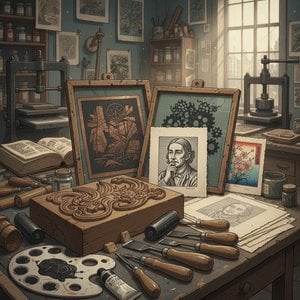
The Enduring Legacy of Printmaking: Techniques, Themes & Artistic Innovation Across Centuries
Explore the rich history of printmaking with ArtsDot. Discover techniques from intaglio to lithography, learn about collecting valuable prints & find museum-quality reproductions. Expert insights for art enthusiasts and collectors.

Impresiones Giclée: Guía Técnica sobre Pigmentos de Archivo y Calidad de Soporte para Coleccionistas
Domina la técnica Giclée y el uso de pigmentos de archivo para coleccionismo. Descubre cómo evaluar la calidad de tus reproducciones hoy.

Echoes of Time: Exploring the Enduring Appeal & Historical Context of Vintage Art Prints
Explore the captivating world of vintage art prints! Discover their history, collecting tips & enduring appeal. Expert insights on chromolithography and building a legacy collection with ArtsDot.

El Arte del Grabado en Madera: Historia, Técnica y la Tradición del Ukiyo-e
Descubre la fascinante historia y técnica del grabado Ukiyo-e. Explora el legado de Hokusai y el arte japonés ahora.


