


 Vista previa
 Compartir
 Compartir
 Ver detalles
 Guía
Guía

 Descargar
 Ver artículos similares
 Radiografía
 Presentación de diapositivas
 Estadísticas
Aurora


 Leer más
Giclée / Impresión de arte
Impresiones giclée o en lienzo de calidad de museo con producción rápida y opciones de acabado flexibles. ( Encargar reproducción pintada a mano Ver versión en imagen digital)




P118B €10

P118H €10

P118W €10

P438Z €10

P508JH €12

P508YH €12

P805H €10

P805Z €10

P919BZ €10

P919G €10

P919XJ €10

P959ZH €10

P968JZ €12

W106C €8

W218G €10

W218JH €8

W218Y €10

W307PJ €10

W316G €10

W316PJ €8

W316Y €10

W398PJ €8

W4111J €10

W500HY €15

W500JH €15

W692G €12

W849H €8

W940BG €15

W953PJ €8




Elija entre nuestros tamaños predefinidos que respetan las proporciones originales de la obra.

Introduzca el ancho y el alto que necesite para adaptarse a su marco o pared. Una impresión solo puede recortarse, nunca hacerse más grande que la imagen original, por lo que un tamaño con una forma distinta perderá parte de la obra. Le enviaremos una maqueta digital para su aprobación antes de realizar cualquier impresión. La imagen que se muestra en esta página no refleja el recorte real; solo la maqueta lo hace.
Envío a todo el mundo () en 2 semanas en lugar de las 4/5 semanas estándar. (18 octubre)

Envío exprés gratuito a todo el mundo

Lienzo de lino de alta calidad

Seguro de envío completo

Garantía de reembolso de impuestos aduaneros

Garantía de fidelidad cromática exacta

Política de devolución de 100 días (solo por defectos)

Garantía de devolución del 100% del dinero

Oferta por volumen
 La opción de vidrio solo está disponible en tamaños inferiores a 110 cm.

Aurora
Giclée / Impresión de arte
Tamaño de la reproducción
-


Precio total
€ 54
A Dreamscape of Dawn: The Ethereal Vision of Odilon Redon
In the quiet intersection where the waking world meets the realm of dreams, Odilon Redon’s Aurora resides. Created in 1910, this mesmerizing oil on canvas serves as a profound testament to the Symbolist movement, offering a window into a psyche that sought to transcend the mere observation of nature. Unlike the Impressionists, who were captivated by the fleeting dance of light upon water, Redon turned his gaze inward, painting not what the eye sees, but what the soul feels. In Aurora, we encounter a scene of profound stillness and mystical transition, where the boundaries between reality and myth dissolve into a soft, luminous haze.
The composition centers on a woman resting in the gentle embrace of sleep, her form nestled within a bed that seems to exist outside of time. Above her, a bird takes flight, its movement a delicate punctuation mark in the silent atmosphere, while horses—symbols of primal energy and the inevitable passage of time—frame the scene. This arrangement is far from accidental; it is a carefully orchestrated mythological allegory. The woman represents Aurora herself, the personification of the dawn, whose arrival signals the triumph of light over the shadows of night. The presence of the horses suggests the rhythmic, unstoppable movement of the sun across the heavens, bridging the gap between the nocturnal subconscious and the clarity of day.
Technique and the Alchemy of Color
Redon’s technical evolution is beautifully captured in this late masterpiece. Having spent much of his earlier career immersed in the "noirs"—his famous charcoal drawings and lithographs characterized by deep, somber shadows—Redon underwent a radical transformation around 1900. In Aurora, we witness the full flowering of his mastery over color. The artist employs a vibrant, almost hallucinogenic palette that breathes warmth and vitality into the canvas. His use of oil paint allows for a rich, layered texture that creates a sense of depth and luminosity, making the light appear as though it is emanating from within the painting itself rather than reflecting off its surface.
The interplay of colors serves to heighten the emotional resonance of the piece. Soft, glowing tones mingle with more saturated hues, creating a sense of atmospheric pressure that feels both heavy with mystery and light with hope. For the discerning collector or interior designer, this painting offers a unique decorative power; it possesses the ability to transform a room into a sanctuary of contemplation. The warmth of the palette can anchor a space, providing a focal point that invites long periods of gazing, while the dreamlike subject matter provides an intellectual depth that transcends simple ornamentation.
A Legacy of Symbolism and Emotional Resonance
To possess or display a reproduction of Aurora is to invite the enigmatic spirit of the Belle Époque into one's surroundings. Redon’s work remains eternally relevant because it speaks to the universal human experience of dreaming, longing, and the search for meaning beneath the surface of the visible world. The painting does not demand attention through shock or aggression; instead, it seduces the viewer through its quiet intensity and its ability to evoke a sense of wonder.
For those seeking to curate an environment filled with art that inspires thought and provides emotional solace, Redon’s Aurora stands as an incomparable choice. It is more than a depiction of a mythological moment; it is an invitation to explore the mysteries of the human psyche. Whether placed in a private study, a sophisticated living area, or a curated gallery space, this work continues to act as a bridge between the tangible and the transcendent, reminding us that even in the deepest sleep, there is a dawn waiting to break.
Preguntas y respuestas
¿Es "Aurora" representativo de lo que Odilon Redon solía crear?
"Aurora" representa woman, horse, bird, bed, vase, pillow, mientras que los temas recurrentes de Odilon Redon son symbolist dreamlike visions, mythological dawn themes, subconscious and mystical realms, transition from night to day, evolution from his noirs. Al comparar ambos, se observa cómo la obra se relaciona con los temas habituales del artista.
¿Dónde puedo descargar "Aurora" de Odilon Redon?
Hay una descarga disponible para "Aurora": la página de Descargar de la obra ofrece descarga de una imagen digital en alta resolución.
¿Qué tipo de colores utiliza "Aurora"?
Los colores de "Aurora" conforman una paleta Earthy. Esta clasificación describe las familias de colores dominantes.
Obras relacionadas


Biografía del artista
Vida Temprana y Formación
Odilon Redon (Bertrand-Jean Redon), nació el 20 de abril de 1840 en Burdeos, Aquitania, en una familia próspera. Su padre amasó su fortuna en el comercio de esclavos en Luisiana. Redon recibió el apodo "Odilon" de su madre, Odile. Demostró talento artístico desde temprana edad; a los diez años ganó un premio de dibujo en la escuela. Inicialmente estudió arquitectura, pero a instancias de su padre, cambió de rumbo. Tras no aprobar los exámenes de ingreso a la École des Beaux-Arts de París en 1864, brevemente estudió pintura bajo la tutela de Jean-Léon Gérôme. Posteriormente, se dedicó a la escultura y perfeccionó sus habilidades en grabado y litografía bajo la guía de Rodolphe Bresdin. Su servicio militar durante la Guerra Franco-Prusiana (1870-1871) interrumpió su carrera artística por un tiempo.Evolución Artística y el Período de los "Noirs"
Tras la guerra, Redon se trasladó a París y retomó su trabajo principalmente en carboncillo y litografía, creando lo que se conoce como sus “noirs” (negros). Estas obras, caracterizadas por imágenes oníricas y simbólicas en tonos oscuros, exploraban temas de misterio, miedo y la psique humana. Ganó reconocimiento inicial con "Espíritu Guardián de las Aguas" en 1878 y publicó su primer álbum de litografías, "Dans le Rêve," en 1879. Su obra fue catapultada a la fama tras ser mencionada en la novela cultista “Contra Naturaleza” (À rebours) de Joris-Karl Huysmans en 1884, lo que atrajo la atención del público y los coleccionistas. Durante este período, Redon experimentó con diferentes técnicas y estilos, influenciado por el arte japonés y las corrientes simbolistas de la época.Madurez: Pastel, Óleo e Influencias Orientales
En la década de 1890, Redon comenzó a trabajar en pastel y óleo, abandonando casi por completo los "noirs" después de 1900. Desarrolló un profundo interés en la religión hindú y el budismo, lo que se reflejó cada vez más en su obra. La influencia del japonismo es evidente en pinturas como “La Muerte de Buda” (alrededor de 1899), "El Buda" (1906) y "Jacobo y el Ángel" (1905). En 1900-1901, recibió un importante encargo del Barón Robert de Domecy para crear 17 paneles decorativos para el Château de Domecy-sur-le-Vault. Estos trabajos marcaron una transición hacia la pintura más abstracta y ornamental.Logros Destacados y Legado
Redon fue condecorado con la Legión de Honor en 1903, un reconocimiento a su contribución al arte francés. Su popularidad se disparó tras la publicación de un catálogo de grabados y litografías por André Mellerio en 1913, seguido de una exposición retrospectiva en la Armería de Nueva York. Su obra es hoy reconocida como precursora del Surrealismo por su exploración del inconsciente y sus imágenes oníricas. Redon falleció el 6 de julio de 1916, dejando un legado artístico significativo que continúa inspirando a artistas y amantes del arte en todo el mundo.Referencias

Odilon Redon
1840 - 1916 , Francia
Datos clave
- Artistas Que Influyeron:
- Rodolphe Bresdin
- Jean-Léon Gérôme
- Fecha De Fallecimiento: 6 de julio de 1916
- Fecha De Nacimiento: 20 de abril de 1840
- Influenciado A Artistas: ['Surrealismo']
- Lugar De Nacimiento: Burdeos, Francia
- Movimiento Artístico: Simbolismo
- Nacionalidad: Francesa
- Nombre Completo: Odilon Redon
- Obras Notables:
- El espíritu guardián de las aguas
- La muerte del Buda
- Jacobo y el ángel
Artículos relacionados

Echoes of Olympus: Mythological Narratives in Western Art Through the Ages
Explore the captivating history of mythological narratives in Western art! From ancient Greece to modern masterpieces, discover iconic artworks & symbolism. Expert analysis and high-quality reproductions at ArtsDot.
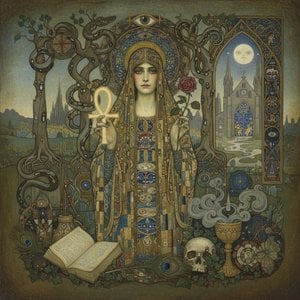
El Reino Evocador del Simbolismo: Explorando el Significado y el Misticismo en el Arte de Finales del Siglo XIX
Descubre el fascinante mundo del Simbolismo en el arte de finales del siglo XIX. Análisis profundo de sus características, artistas clave como Moreau y Musatov, y su legado perdurable. ¡Explora la belleza oculta!

Simbolismo en el Arte: 10 Obras Maestras que Marcaron una Época | ArtsDot
Descubre las 10 obras maestras del Simbolismo: Moreau, Redon y más. Explora la historia, el significado y la belleza de este movimiento artístico en ArtsDot.com. Reproducciones de arte de calidad museo para tu hogar.

The Ethereal Realm on Canvas: Exploring Themes of Fantasy & Imagination in Art History
Explore the captivating world of fantasy & surreal art history with ArtsDot. Discover iconic artists like De Chirico & Moreau, and expert guidance for collecting timeless masterpieces. Find your dream artwork today!

Mitologías Personales: La Transmutación de Experiencias en Composiciones Simbólicas a través del Arte Pictórico
Descubre cómo transformar tus experiencias en arte significativo. Expertos en curaduría y obras personalizadas. Inversión segura, calidad garantizada. ¡Inspírate!


