Vista previa
 Compartir
 Compartir
 Ver detalles

 Descargar
 Ver similares
 Radiografía
 Presentación de diapositivas
Stylites


 Leer más
Giclée / Impresión de arte
Impresiones giclée o en lienzo de calidad de museo con producción rápida y opciones de acabado flexibles. ( Cambiar a pintura hecha a mano Cambiar a imagen)




P118B $10

P118H $10

P118W $10

P438Z $10

P508JH $12

P508YH $12

P805H $10

P805Z $10

P919BZ $10

P919G $10

P919XJ $10

P959ZH $10

P968JZ $12

W106C $8

W218G $10

W218JH $8

W218Y $10

W307PJ $10

W316G $10

W316PJ $8

W316Y $10

W398PJ $8

W4111J $10

W500HY $15

W500JH $15

W692G $12

W849H $8

W940BG $15

W953PJ $8




Elija entre nuestros tamaños predefinidos que respetan las proporciones originales de la obra.

Puede introducir sus propias dimensiones para adaptarse a un marco o espacio específico. Si el tamaño seleccionado no coincide con las proporciones de la imagen original, recortaremos la obra de arte o extenderemos la imagen con un borde con efecto espejo o de color sólido. Se enviará una maqueta digital para su aprobación antes de que comience la producción.
Tenga en cuenta que la vista previa en pantalla no refleja el recorte o la extensión real. Solo la maqueta mostrará con precisión la composición final.
Aunque existen tamaños personalizados, recomendamos seleccionar una dimensión de la lista predefinida para preservar las proporciones originales.
Envío a todo el mundo () en 2 semanas en lugar de las 4/5 semanas estándar. (10 agosto)

Envío exprés gratuito a todo el mundo

Lienzo de lino de alta calidad

Seguro de envío completo

Garantía de reembolso de aranceles aduaneros

Garantía de fidelidad cromática exacta

Política de devolución de 60 días (solo por defectos)

Garantía de devolución del 100% del dinero

Oferta por volumen
 La opción de vidrio solo está disponible en tamaños inferiores a 110 cm.

Stylites
Giclée / Impresión de arte
Tamaño de la reproducción
-


Precio total
$ 62
Descripción de la pieza
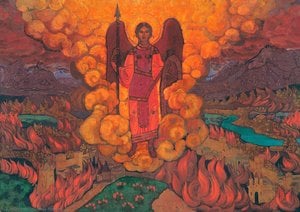
The Silent Sentinel – An Exploration of “Stylites” by Nicholas Roerich
Nicholas Roerich’s “Stylites,” painted in 1917, isn't merely a depiction of a solitary figure; it’s an invitation to contemplate the profound intersection of spirituality, isolation, and the enduring human quest for connection. This arresting image, rendered in a palette of evocative blues and purples – colors often associated with introspection and the ethereal – immediately draws the viewer into a scene both starkly simple and deeply resonant. The central figure, seated before a monumental rock formation that dominates the landscape, embodies a quiet dignity and an almost unnerving stillness. He’s not gazing outward, but inward, suggesting a journey of profound self-reflection.
Roerich's artistic lineage is complex and fascinating. Initially influenced by Russian Symbolism – a movement characterized by its exploration of the mystical and spiritual realms through art – he evolved into an artist deeply connected to Eastern philosophies, particularly Theosophy and Vedanta. This confluence of influences profoundly shaped his work, imbuing it with layers of symbolism and a sense of timelessness. “Stylites” exemplifies this evolution; the figure’s posture and the surrounding landscape evoke ancient ascetic traditions, hinting at a deliberate detachment from worldly concerns in pursuit of enlightenment.
The Pillar – A Symbol of Perseverance and Spiritual Ascent
The most striking element of the painting is undoubtedly the pillar itself. It's not simply a geological feature; it’s a potent symbol of endurance, sacrifice, and spiritual ascent. The legend of Simeon Stylites, the Syrian monk who spent nearly four decades standing atop a pillar in the desert, served as a powerful inspiration for Roerich. This historical figure became a metaphor within his work for those who choose to dedicate their lives to a singular pursuit – whether it be artistic creation, philosophical inquiry, or spiritual practice. The painting subtly references this legend, prompting us to consider what it means to commit oneself fully to a path of self-discipline and inner transformation.
Roerich’s technique is notable for its expressive brushwork and masterful use of color. He employs loose, gestural strokes that convey both the solidity of the rock formation and the ethereal quality of the figure's presence. The blues and purples are not applied uniformly; they shift and blend, creating a sense of depth and atmosphere. Notice how he uses light to sculpt the form of the pillar, suggesting its immense weight and the challenges it represents. The subtle details – the bird in flight, the trees – add layers of narrative without overwhelming the central theme.
Historical Context & Roerich’s Vision
“Stylites” was created during a period of tremendous upheaval in Russia—the aftermath of World War I and the tumultuous events surrounding the Bolshevik Revolution. Roerich, deeply concerned with preserving cultural heritage and promoting peace, saw art as a powerful tool for spiritual renewal. He believed that through artistic expression, one could transcend the limitations of the material world and connect with something larger than oneself. This conviction is evident in his work’s emphasis on symbolism, mythology, and the exploration of universal themes.
The painting's connection to Simeon Stylites reflects Roerich’s fascination with Eastern asceticism and its potential for spiritual growth. He saw in the monk’s solitary existence a model for those seeking to overcome ego and achieve enlightenment. Furthermore, Roerich was deeply interested in the Himalayas, viewing them as a sacred landscape imbued with ancient wisdom. “Stylites” can be interpreted as an attempt to capture the essence of this mystical realm – a place where the boundaries between the earthly and the divine blur.
A Timeless Reflection - The Emotional Resonance
Ultimately, "Stylites" is a profoundly moving work that invites contemplation. It’s not simply a portrait; it's an allegory of the human condition—a testament to the enduring power of faith, perseverance, and the search for meaning in a world often characterized by chaos and uncertainty. The painting’s quiet intensity and symbolic richness resonate with viewers on a deep emotional level, prompting us to reflect on our own journeys of self-discovery and the choices we make along the way. It serves as a reminder that even in solitude, there is an opportunity for profound connection – not just with others, but with something far greater than ourselves.


Biografía del artista
Nicholas Roerich: Vida, Arte y Legado
Primeros Años y Educación
- Nikolai Konstantinovich Roerich nació el 9 de octubre de 1874 en San Petersburgo, Rusia.
- Su padre, un notario alemán del Báltico, y su madre, una mujer rusa, fomentaron una temprana apreciación por las artes en él.
- Roerich estudió tanto derecho como arte simultáneamente, matriculándose en la Universidad de San Petersburgo y la Academia Imperial de Artes en 1893.
- Recibió el título de “Artista” en 1897 y un título de abogado al año siguiente.
Deseos Artísticos e Influencias
- El desarrollo artístico de Roerich fue significativamente influenciado por el Simbolismo Ruso, un movimiento que enfatizaba la espiritualidad y la profundidad emocional.
- Se involucró con la sociedad “Arte del Mundo” de Serguéi Diáguilev, eventualmente convirtiéndose en su presidente desde 1910 hasta 1916.
- Su trabajo temprano mostró una fascinación por la arqueología y el diseño teatral, lo que llevó a colaboraciones en producciones para los Ballets Russes.
- También se vio influenciado por apócrifos y escrituras secretistas medievales como el Libro de la Paloma.
Colaboración con los Ballets Russes
- Los diseños de Roerich para los Ballets Russes fueron muy elogiados, particularmente su trabajo en Príncipe Igor de Alexander Borodin (1909) e El Ritual de la Primavera de Igor Stravinsky (1913).
- Sus diseños escénicos combinaban la investigación histórica con el arte imaginativo, creando producciones visualmente impresionantes.
- Esta colaboración lo estableció como una figura destacada en el diseño teatral a principios del siglo XX.
Desarrollo Artístico y Temas
- Las pinturas de Roerich evolucionaron para incorporar temas cada vez más místicos y espirituales, reflejando su creciente interés en la Teosofía y las religiones orientales.
- Su serie Estudios Arquitectónicos (1904–1905) demostró su destreza arquitectónica y su compromiso con la preservación del patrimonio cultural.
- Motivos recurrentes en su obra incluyen paisajes majestuosos, ciudades antiguas y figuras religiosas como San Panteleimon y Kuan Yin.
- A menudo representaba el Himalaya, una región que tenía un profundo significado espiritual para él.
Logros y Reconocimientos Principales
- Roerich fue un defensor dedicado de la protección del arte y la arquitectura durante los tiempos de guerra.
- Sus esfuerzos llevaron a la creación del Pacto Roerich (1935), un tratado internacional para la preservación de objetos culturales, lo que le valió múltiples nominaciones al Premio Nobel de la Paz.
- Viajó extensamente por Asia Central, realizando investigaciones arqueológicas y documentando culturas antiguas.
- Su obra se exhibe en importantes colecciones museísticas en todo el mundo, incluida la Galería de Pinturas Estatal de Astrakhan.
Significado Histórico y Legado
- El impacto de Nicholas Roerich en el arte y la cultura rusos es inmensurable.
- Puenteó la brecha entre la expresión artística y la exploración espiritual, influyendo a generaciones de artistas e intelectuales.
- Su compromiso con la preservación cultural sigue siendo relevante hoy en día, destacando la importancia de proteger nuestro patrimonio compartido.
- El legado de Roerich se extiende más allá de sus pinturas; es recordado como un artista visionario, erudito y humanitario.

Nicolás Roerich
1874 - 1947 , Rusia
Datos clave
- Artistas Que Influyeron:
- León Tolstói
- Arjip Kuindzhi
- Fecha De Muerte: 13 de diciembre de 1947
- Fecha De Nacimiento: 9 de octubre de 1874
- Influenciado A Artistas: ['Artistas e intelectuales']
- Lugar De Nacimiento: San Petersburgo, Rusia
- Movimiento Artístico: Simbolismo Ruso
- Nacionalidad: Ruso
- Nombre Completo: Nicolás Roerich
- Obras Notables:
- Camino al Kailas 4
- Monte de cinco tesoros
- Puente de Gloria
- Lago de las Nagas
- Tempe-jal-tzen-baykin
Artículos relacionados

Gustave Moreau: Symbolism's Enigmatic Visionary & Precursors of Modern Fantasy Art
Explore the captivating world of Gustave Moreau, the leading Symbolist painter. Discover his iconic masterpieces, influences, and lasting legacy. Expert analysis for collectors & art enthusiasts.

Navigating Symbolism & Sentiment: A Comprehensive Exploration of Boats in Art History
Explore the rich history of boats in art! Discover symbolism & style from ancient myths to Impressionist masterpieces. Expert insights for collectors at ArtsDot.

Jan van Eyck: Innovation, Symbolism & the Dawn of Early Netherlandish Painting
Explore the revolutionary art of Jan van Eyck! Discover his groundbreaking oil painting techniques, hidden symbolism, and lasting impact on the Early Netherlandish Renaissance. A deep dive for art enthusiasts.

Cultivating Ambiance: A Curatorial Guide to Art Selection for Wine Cellars and Tasting Rooms – Enhancing Oenological Experience Through Landscape, Symbolism, and Interior Harmony
Elevate your wine cellar or tasting room with curated art! Expert guidance on landscape paintings, symbolism & lighting to enhance the oenological experience. Discover how art transforms spaces and tells your winery's story.
Simbolismo en el Arte: 10 Obras Maestras para Inspirar tu Hogar
Descubre 10 obras maestras del Simbolismo, desde Klimt hasta Munch. Explora el significado oculto de sus símbolos y colores en ArtsDot.com. Reproducciones de arte de calidad museo para inspirar tu hogar. ¡Explora la colección online!