


 Vista previa
 Compartir
 Compartir
 Ver detalles
 Guía
Guía

 Descargar
 Ver artículos similares
 Radiografía
 Presentación de diapositivas
 Estadísticas
Everest
 Acrylic
- WallArt
- Russian Symbolism
 1931
1931 30.0 x 46.0 cm
 Leer más
Reproducción al óleo hecha a mano
Óleo sobre lienzo pintado a mano en el tamaño y marco de su elección, realizado por encargo por nuestros artistas. ( Cambiar a formato impreso Ver versión en imagen digital)




P118B €10

P118H €10

P118W €10

P438Z €10

P508JH €12

P508YH €12

P805H €10

P805Z €10

P919BZ €10

P919G €10

P919XJ €10

P959ZH €10

P968JZ €12

W106C €8

W218G €10

W218JH €8

W218Y €10

W307PJ €10

W316G €10

W316PJ €8

W316Y €10

W398PJ €8

W4111J €10

W500HY €15

W500JH €15

W692G €12

W849H €8

W940BG €15

W953PJ €8




Elija entre nuestros tamaños predefinidos que respetan las proporciones originales de la obra.

Escriba el ancho y el alto que necesite para adaptarse a su marco o a su pared. Al ser una obra pintada a mano, para un tamaño con una forma distinta, el artista puede pintar un poco más alrededor de la imagen o recortar un poco; usted elige. Le enviaremos una maqueta digital para su aprobación antes de comenzar la pintura. La imagen que se muestra en esta página no refleja el resultado real; solo la maqueta lo hace.
Tras realizar el pedido, el equipo de ArtsDot.com enviará un correo electrónico al cliente para solicitar instrucciones y proporcionarle una vista previa del boceto.
Envío a todo el mundo () en 3-4 semanas en lugar de las 5 semanas estándar. (23 octubre). Sin comprometer la calidad.

Envío exprés gratuito a todo el mundo

Lienzo de lino de alta calidad

Seguro de envío completo

Garantía de reembolso de impuestos aduaneros

Garantía de fidelidad cromática exacta

Política de devolución de 100 días (solo por defectos)

Garantía de devolución del 100% del dinero

Oferta por volumen
 La opción de vidrio solo está disponible en tamaños inferiores a 110 cm.

Everest
Técnica de reproducción
Tamaño de la reproducción
-


Precio total
€ 231
A Symphony in Blue and Crimson: Exploring Nicholas Roerich’s Everest
Nicholas Roerich's 'Everest,' completed in 1931, stands as a poignant emblem of Russian Symbolism—a movement that sought to transcend literal representation and delve into the realm of spiritual experience. Measuring 30 x 46 cm, this tempera on panel artwork isn’t simply a depiction of the Himalayan mountain range; it's an invitation to contemplate its grandeur and imbue it with profound meaning. The painting captures a breathtaking vista of snow-capped peaks bathed in hues of azure and scarlet—colors deliberately chosen to evoke feelings of serenity and majesty, mirroring Roerich’s unwavering belief in the interconnectedness of humanity and nature.Technique and Medium: Tempera's Enduring Legacy
Roerich skillfully employed tempera paint—a technique favored by artists throughout history—known for its luminosity and durability. Unlike oil paints which require solvents and can darken over time, tempera adheres to the surface without cracking or peeling, ensuring that ‘Everest’ retains its vibrancy and beauty for generations to come. This meticulous approach reflects Roerich's dedication to preserving his artistic vision and honoring the traditions of Russian art. The layering of thin glazes contributes to the painting’s ethereal quality, capturing the subtle nuances of light and shadow on the mountain slopes—a testament to Roerich’s mastery of color and texture.Symbolism Rooted in Eastern Philosophy
The composition itself is laden with symbolic resonance. Positioned near a body of water – likely representing the subconscious mind – the mountain range embodies resilience, aspiration, and the pursuit of spiritual enlightenment. Roerich drew heavily from Hindu and Buddhist cosmology, incorporating motifs reminiscent of sacred mountains and celestial realms into his artwork. The dominant blues symbolize tranquility, wisdom, and the boundless expanse of consciousness, while reds convey passion, vitality, and the transformative power of inner transformation. These colors aren’t merely decorative; they are conduits for conveying profound spiritual concepts.Historical Context: Roerich's Vision Amidst Artistic Movements
‘Everest’ emerged during a period of significant artistic experimentation in Russia—the Symbolist movement—which reacted against realism and championed subjective experience as paramount. Artists like Roerich sought to express inner truths rather than outward appearances, utilizing evocative imagery and symbolic language to communicate spiritual ideas. Alongside Zarathustra and Bhagavan, ‘Everest’ exemplifies Roerich's broader artistic philosophy: a harmonious blend of observation and intuition aimed at fostering understanding and reverence for the natural world. Its presence in the State Museum of Oriental Art underscores its importance as a cornerstone of Russian Symbolism and continues to inspire admiration for its beauty and depth.Emotional Resonance: A Window into Roerich’s Soul
Ultimately, ‘Everest’ transcends mere visual representation; it speaks to the viewer's emotions—inspiring contemplation on themes of perseverance, faith, and the sublime grandeur of existence. Like many of Roerich’s works, this painting invites us to reconnect with our inner selves and appreciate the profound beauty inherent in the natural world. It serves as a reminder that art can illuminate not only what we see but also what we feel—a legacy that resonates powerfully even today.Preguntas y respuestas
¿Puedo ver "Everest" de Nicolás Roerich bajo diferentes luces?
La página Rayos X de "Everest" de Nicolás Roerich es un visor interactivo que permite desplazarse a través de once capas ópticas de la imagen de la obra, incluyendo una vista de estilo radiografía.
¿Qué aporta "Everest" de Nicolás Roerich a un espacio interior?
"Everest" de Nicolás Roerich tiene una atmósfera Serene y se recomienda para un/a Living Room. El estado de ánimo es lo que la obra aporta al espacio que la rodea.
¿Hay una presentación de diapositivas para "Everest" de Nicolás Roerich?
Hay una presentación de diapositivas disponible: la página Presentación de diapositivas de "Everest" de Nicolás Roerich.
Obras relacionadas


Biografía del artista
Nicholas Roerich: Vida, Arte y Legado
Primeros Años y Educación
- Nikolai Konstantinovich Roerich nació el 9 de octubre de 1874 en San Petersburgo, Rusia.
- Su padre, un notario alemán del Báltico, y su madre, una mujer rusa, fomentaron una temprana apreciación por las artes en él.
- Roerich estudió tanto derecho como arte simultáneamente, matriculándose en la Universidad de San Petersburgo y la Academia Imperial de Artes en 1893.
- Recibió el título de “Artista” en 1897 y un título de abogado al año siguiente.
Deseos Artísticos e Influencias
- El desarrollo artístico de Roerich fue significativamente influenciado por el Simbolismo Ruso, un movimiento que enfatizaba la espiritualidad y la profundidad emocional.
- Se involucró con la sociedad “Arte del Mundo” de Serguéi Diáguilev, eventualmente convirtiéndose en su presidente desde 1910 hasta 1916.
- Su trabajo temprano mostró una fascinación por la arqueología y el diseño teatral, lo que llevó a colaboraciones en producciones para los Ballets Russes.
- También se vio influenciado por apócrifos y escrituras secretistas medievales como el Libro de la Paloma.
Colaboración con los Ballets Russes
- Los diseños de Roerich para los Ballets Russes fueron muy elogiados, particularmente su trabajo en Príncipe Igor de Alexander Borodin (1909) e El Ritual de la Primavera de Igor Stravinsky (1913).
- Sus diseños escénicos combinaban la investigación histórica con el arte imaginativo, creando producciones visualmente impresionantes.
- Esta colaboración lo estableció como una figura destacada en el diseño teatral a principios del siglo XX.
Desarrollo Artístico y Temas
- Las pinturas de Roerich evolucionaron para incorporar temas cada vez más místicos y espirituales, reflejando su creciente interés en la Teosofía y las religiones orientales.
- Su serie Estudios Arquitectónicos (1904–1905) demostró su destreza arquitectónica y su compromiso con la preservación del patrimonio cultural.
- Motivos recurrentes en su obra incluyen paisajes majestuosos, ciudades antiguas y figuras religiosas como San Panteleimon y Kuan Yin.
- A menudo representaba el Himalaya, una región que tenía un profundo significado espiritual para él.
Logros y Reconocimientos Principales
- Roerich fue un defensor dedicado de la protección del arte y la arquitectura durante los tiempos de guerra.
- Sus esfuerzos llevaron a la creación del Pacto Roerich (1935), un tratado internacional para la preservación de objetos culturales, lo que le valió múltiples nominaciones al Premio Nobel de la Paz.
- Viajó extensamente por Asia Central, realizando investigaciones arqueológicas y documentando culturas antiguas.
- Su obra se exhibe en importantes colecciones museísticas en todo el mundo, incluida la Galería de Pinturas Estatal de Astrakhan.
Significado Histórico y Legado
- El impacto de Nicholas Roerich en el arte y la cultura rusos es inmensurable.
- Puenteó la brecha entre la expresión artística y la exploración espiritual, influyendo a generaciones de artistas e intelectuales.
- Su compromiso con la preservación cultural sigue siendo relevante hoy en día, destacando la importancia de proteger nuestro patrimonio compartido.
- El legado de Roerich se extiende más allá de sus pinturas; es recordado como un artista visionario, erudito y humanitario.

Nicolás Roerich
1874 - 1947 , Rusia
Datos clave
- Artistas Que Influyeron:
- León Tolstói
- Arjip Kuindzhi
- Fecha De Muerte: 13 de diciembre de 1947
- Fecha De Nacimiento: 9 de octubre de 1874
- Influenciado A Artistas: ['Artistas e intelectuales']
- Lugar De Nacimiento: San Petersburgo, Rusia
- Movimiento Artístico: Simbolismo Ruso
- Nacionalidad: Ruso
- Nombre Completo: Nicolás Roerich
- Obras Notables:
- Camino al Kailas 4
- Monte de cinco tesoros
- Puente de Gloria
- Lago de las Nagas
- Tempe-jal-tzen-baykin
Artículos relacionados

Vasily Polenov: A Pioneer of Landscape Impressionism & Russian National Identity
Explore the captivating landscapes of Vasily Polenov, a pivotal figure in Russian art history. Discover his lyrical realism, biblical series & influence on Impressionism. Learn about the 'Knight of Beauty' and his enduring legacy.

Evocations of Place: A Historical Journey Through Landscape Art
Explore the rich history of landscape art with ArtsDot. Discover renowned artists, movements like Impressionism & Romanticism, and expert guidance for collecting timeless pieces. Find your perfect serene escape today!
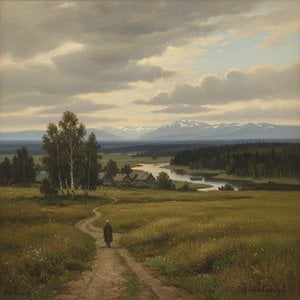
Fyodor Vasilyev: A Poetic Vision of Russian Landscape – Life, Legacy, and the Transience of Nature
Explore the captivating world of Fyodor Vasilyev, a pioneering Russian landscape painter. Discover his lyrical style, influential works like 'Clouds' & lasting legacy. Learn about his life, artistic journey & impact on Russian art history.

Nicholas Roerich: Mysticism, Mountains & the Search for Ageless Wisdom in Art
Explore the captivating art of Nicholas Roerich – a visionary painter whose Himalayan landscapes blend spiritual mysticism with cultural preservation. Discover his legacy & symbolism.

Paisajes Románticos: 10 Obras Maestras que Definieron un Movimiento Artístico
Descubre los 10 paisajes románticos más influyentes de artistas como Caspar David Friedrich y Turner. Explora la belleza, el simbolismo y las técnicas del movimiento romántico. Reproducciones de arte exclusivas en ArtsDot.com.


