

 Ver en contexto
 Enviar
 Compartir
 Detalles
 Guía
Guía

 Descargar
 Similares
 Radiografía
 Presentación de diapositivas
 Preguntas y respuestas
 Estadísticas
Gračanica Monastery


 Ver más
Giclée / Impresión de arte
Impresiones giclée o en lienzo de calidad de museo con producción rápida y opciones de acabado flexibles. ( Comprar pintura hecha a mano Cambiar a imagen digital)




P118B €10

P118H €10

P118W €10

P438Z €10

P508JH €12

P508YH €12

P805H €10

P805Z €10

P919BZ €10

P919G €10

P919XJ €10

P959ZH €10

P968JZ €12

W106C €8

W218G €10

W218JH €8

W218Y €10

W307PJ €10

W316G €10

W316PJ €8

W316Y €10

W398PJ €8

W4111J €10

W500HY €15

W500JH €15

W692G €12

W849H €8

W940BG €15

W953PJ €8




Elija entre nuestros tamaños predefinidos que respetan las proporciones originales de la obra.

Introduzca el ancho y el alto que necesite para adaptarse a su marco o pared. Una impresión solo puede recortarse, nunca hacerse más grande que la imagen original, por lo que un tamaño con una forma distinta perderá parte de la obra. Le enviaremos una maqueta digital para su aprobación antes de realizar cualquier impresión. La imagen que se muestra en esta página no refleja el recorte real; solo la maqueta lo hace.
Envío a todo el mundo () en 2 semanas en lugar de las 4/5 semanas estándar. (4 noviembre)

Envío exprés gratuito a todo el mundo

Lienzo de lino de alta calidad

Seguro de envío total

Garantía de reembolso de aranceles aduaneros

Garantía de fidelidad cromática exacta

Política de devolución de 100 días (solo por defectos)

Garantía de devolución del 100% del dinero

Descuento por cantidad
 La opción de vidrio solo está disponible en tamaños inferiores a 110 cm.

Gračanica Monastery
Giclée / Impresión de arte
Dimensiones de la reproducción
-


Precio total final
€ 56
Preguntas y respuestas
¿Cómo se combinan el contraste y la armonía en "Gračanica Monastery"?
La composición cromática de "Gračanica Monastery" de Nadežda Petrović combina un contraste Gentle con una armonía Discordant Palette.
¿Con qué técnica se realizó "Gračanica Monastery"?
Nadežda Petrović utilizó la técnica de Oil para "Gračanica Monastery". La técnica define la naturaleza material de la obra original.
¿De qué manera "Gračanica Monastery" de Nadežda Petrović vincula el Expressionism con el país de origen del artista?
"Gračanica Monastery" vincula el movimiento Expressionism con Serbia a través del lugar de nacimiento de su creador.
Obras relacionadas


Biografía del artista
Nadežda Petrović (1873–1915): Serbia’s Expressionist Visionary
Nadežda Petrović (Serbian Cyrillic: Надежда Петровић; 11/12 October 1873 – 3 April 1915) was a Serbian painter and one of the women war photography pioneers in the region. Considered Serbia’s most famous expressionist and fauvist, she was the most important Serbian female painter of the period. Born in Čačak, Serbia, Petrović moved to Belgrade in her youth and attended the women's school of higher education there. Graduating in 1891, she taught there for a period beginning in 1893 before moving to Munich to study with Slovenian artist Anton Ažbe. Between 1901 and 1912, she exhibited her work in many cities throughout Europe. Her artistic journey culminated in a tragically premature death during World War I, leaving behind an indelible mark on Serbian art history.Early Life and Education
Nadežda Petrović was born into a family of intellectuals—her father Dimitrije Petrović was a professor of mathematics and her mother Mileva Petrović was a teacher—providing her with a privileged upbringing steeped in culture and artistic appreciation. Growing up in Čačak, she experienced the hardships of Serbian life under Austro-Hungarian rule, fostering resilience and shaping her worldview. Recognizing her talent for art early on, her parents encouraged her pursuit of education beyond the conventional roles expected of women at the time. She excelled academically, earning a degree from Belgrade’s Women's School of Higher Education in 1891, marking a pivotal moment in her life and establishing her foundation for artistic endeavors. Her subsequent teaching position allowed her to nurture young minds and disseminate knowledge—a testament to her dedication and commitment to education.Munich and Artistic Influences
Petrović’s relocation to Munich in 1901 proved transformative, exposing her to the burgeoning avant-garde movements of Expressionism and Fauvism. Studying under Anton Ažbe, a Slovenian artist who championed innovative techniques and stylistic experimentation, she absorbed influences from artists like Edvard Munch and Henri Matisse. These encounters ignited her creative spirit and propelled her artistic style toward bold color palettes, distorted forms, and emotionally charged compositions—characteristics that would define her oeuvre. The Munich environment fostered intellectual discourse and challenged established artistic conventions, encouraging Petrović to forge her own distinctive path as an artist. She also befriended Ivan Mestrovic, Miroslav Kraljević, Milan Milovanović and others who shared similar artistic interests.Artistic Style and Notable Works
Petrović’s artistic style is characterized by Expressionism and Fauvism, movements that prioritized emotional intensity over realistic representation. Her paintings frequently employed vibrant hues—particularly crimson—and exaggerated brushstrokes to convey profound feelings and capture the essence of her subjects. Among her most celebrated works are “Ksenija Atanasijević,” a portrait imbued with melancholic beauty and psychological depth, and “Gračanica Monastery,” which exemplifies her masterful use of color and texture to depict Serbian Orthodox spirituality. These paintings stand as enduring symbols of Serbian artistic heritage and continue to inspire admiration for Petrović’s visionary approach to art. Furthermore, she contributed significantly to the preservation of Serbian cultural identity through her depictions of sacred sites and historical narratives. Her canvases pulsate with emotion, reflecting a deep understanding of human experience—a hallmark of her distinctive artistic vision.War Photography and Humanitarian Service
Beyond her painting achievements, Nadežda Petrović demonstrated remarkable courage and compassion by volunteering as a nurse during the Balkan Wars (1912–1913) and subsequently during World War I. Driven by an unwavering commitment to humanitarian service, she tirelessly cared for wounded soldiers—often under perilous conditions—risking her own safety for the benefit of others. Her dedication earned her recognition from Serbian authorities and cemented her reputation as a selfless advocate for human dignity. Petrović’s bravery was honored with a Medal for Bravery and an Order of the Red Cross, acknowledging her extraordinary contribution to alleviating suffering during wartime. She continued nursing Serbian soldiers until 1913, when she contracted typhus and cholera. Her unwavering compassion extended beyond professional duties; she actively engaged in charitable endeavors, supporting vulnerable communities and fostering solidarity among citizens.Legacy and Recognition
Nadežda Petrović's legacy extends beyond her artistic output; she remains a symbol of Serbian resilience, creativity, and humanitarian spirit. Her paintings are housed in prominent museums across Serbia, including the National Museum of Serbia and the Pavle Beljanski Memorial Collection, ensuring that her artistic vision continues to resonate with audiences today. Moreover, her work is available for purchase as prints or hand-painted replicas on ArtsDot.com, allowing enthusiasts worldwide to experience the beauty and emotional power of her masterpieces. Petrović’s pioneering role as a woman artist in Serbia—and as a war photographer—serves as an inspiration for future generations striving to honor artistic excellence alongside social responsibility. Her contribution to Serbian art history is undeniable, securing her place among the most influential figures of her time.
Nadežda Petrović
1873 - 1915 , Serbia
Datos clave
- Artistic Movement Or Style: Expressionism & Fauvism
- Artists Or Movements Influenced By This Artist: ['Fauvism']
- Artists Who Influenced This Artist: ['Anton Ažbe']
- Date Of Birth: 1873-10-11
- Date Of Death: 1915-04-03
- Full Name: Nadežda Petrović
- Nationality: Serbian
- Notable Artworks:
- Ksenija Atanasijević
- Gračanica Monastery
- Place Of Birth: Čačak, Serbia
Artículos relacionados

The Subdued Radiance of Pastel Palettes: Exploring Emotional Resonance in Art History
Explore the emotional power of pastel palettes in art history! Discover Impressionism, Post-Impressionism & color psychology insights. Find museum-quality reproductions at ArtsDot.

The Subdued Radiance of Pastel: Exploring Nuance & Emotion in Art
Explore the nuanced world of pastel art! Discover its history, techniques & emotional power with expert insights from ArtsDot.com. Find museum-quality reproductions and learn about collecting this delicate medium.
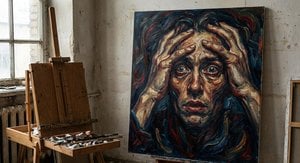
Expresionismo Figurado: Intensidad Emocional y Realidad Subjetiva en el Arte del Siglo XX
Explora la intensidad emocional del Expresionismo Figurado alemán. Descubre sus orígenes, artistas clave como Munch y Kirchner, y su legado en el arte moderno. Análisis experto y profundo.

The Raw Emotion of Expressionism: A Deep Dive into its History, Characteristics & Enduring Influence
Explore the raw emotion of Expressionism with ArtsDot. Discover its history, key artists like Kirchner & Munch, and lasting influence on modern art. Expert insights for collectors & enthusiasts.

La Sutileza del Pastel: Técnica, Historia y Resonancia Emocional en el Arte
Descubre la sutileza del pastel: técnica, historia y artistas clave como Degas y Renoir. Guías expertas sobre materiales, conservación y cómo expresar emociones a través de este bello arte.