


 Vista previa
 Compartir
 Compartir
 Ver detalles
 Guía
Guía

 Descargar
 Ver artículos similares
 Radiografía
 Presentación de diapositivas
 Estadísticas
David


 Leer más
Giclée / Impresión de arte
Impresiones giclée o en lienzo de calidad de museo con producción rápida y opciones de acabado flexibles. ( Encargar reproducción pintada a mano Ver versión en imagen digital)




P118B €10

P118H €10

P118W €10

P438Z €10

P508JH €12

P508YH €12

P805H €10

P805Z €10

P919BZ €10

P919G €10

P919XJ €10

P959ZH €10

P968JZ €12

W106C €8

W218G €10

W218JH €8

W218Y €10

W307PJ €10

W316G €10

W316PJ €8

W316Y €10

W398PJ €8

W4111J €10

W500HY €15

W500JH €15

W692G €12

W849H €8

W940BG €15

W953PJ €8




Elija entre nuestros tamaños predefinidos que respetan las proporciones originales de la obra.

Introduzca el ancho y el alto que necesite para adaptarse a su marco o pared. Una impresión solo puede recortarse, nunca hacerse más grande que la imagen original, por lo que un tamaño con una forma distinta perderá parte de la obra. Le enviaremos una maqueta digital para su aprobación antes de realizar cualquier impresión. La imagen que se muestra en esta página no refleja el recorte real; solo la maqueta lo hace.
Envío a todo el mundo () en 2 semanas en lugar de las 4/5 semanas estándar. (23 octubre)

Envío exprés gratuito a todo el mundo

Lienzo de lino de alta calidad

Seguro de envío completo

Garantía de reembolso de impuestos aduaneros

Garantía de fidelidad cromática exacta

Política de devolución de 100 días (solo por defectos)

Garantía de devolución del 100% del dinero

Oferta por volumen
 La opción de vidrio solo está disponible en tamaños inferiores a 110 cm.

David
Giclée / Impresión de arte
Tamaño de la reproducción
-


Precio total
€ 54
David: A Renaissance Icon Embodied in Marble
The Galleria dell'Accademia Carrara, nestled within the vibrant cultural landscape of Bergamo, Italy, houses one of the most revered sculptures of the Renaissance—Michelangelo Buonarroti’s David. More than just a depiction of biblical heroism, this monumental statue transcends its narrative origins to become an emblem of Florentine republican ideals and a testament to artistic mastery that continues to inspire awe centuries later. Its presence commands attention, inviting contemplation on beauty, strength, and the enduring power of human aspiration.The Genesis of Genius: Michelangelo’s Vision
Michelangelo Buonarroti (1475-1564), arguably the greatest sculptor of his era, conceived David between 1501 and 1504 as part of a commission for Florence Cathedral—a project that ultimately prioritized public display over ecclesiastical grandeur. Initially envisioned as one of four prophets adorning the cathedral roofline, Michelangelo’s artistic sensibilities swiftly steered him toward Piazza della Signoria, where he would place David at the heart of Florentine civic life. This decision reflected Michelangelo's profound understanding of art’s role in shaping political discourse and bolstering national identity. The statue’s genesis is rooted in a fervent embrace of classical ideals—particularly those championed by humanist scholars like Leonardo Bruni—who sought to revive the grandeur of ancient Greece and Rome. Michelangelo meticulously studied sculptures from antiquity, absorbing their anatomical precision and expressive dynamism, informing his approach to David with unparalleled accuracy.A Symphony of Proportion and Emotion
The statue’s remarkable achievement lies in its breathtaking embodiment of Renaissance artistic principles. Standing at an imposing 5.17 meters tall, David is carved from a single block of Carrara marble—a material Michelangelo selected for its purity and luminosity—demonstrating his unparalleled technical skill. The sculptor achieved astonishing anatomical realism, capturing the musculature of David’s body with breathtaking detail, mirroring the meticulous observation of human anatomy practiced by artists like Leonardo da Vinci. Yet, David is not merely a celebration of physical perfection; Michelangelo imbued him with palpable emotion—a gaze directed toward Rome that conveys determination and defiance against tyranny—capturing the psychological complexity characteristic of Renaissance art. This expressive gesture underscores the statue’s symbolic significance as an assertion of republican liberty against papal authority.Symbolism Beyond Scripture
David's posture—holding his slingshot poised to strike Goliath—is laden with symbolism. It represents courage, resilience, and righteous indignation in the face of overwhelming odds—themes that resonated deeply within Florentine society during the turbulent years preceding Michelangelo’s commission. The sling symbolizes humility and reliance on divine providence—a deliberate contrast to the pompous grandeur of papal iconography. Furthermore, David's gaze toward Rome serves as a potent reminder of Florence’s republican spirit and its unwavering commitment to defending its freedoms against external threats. This visual declaration solidified David’s status as an icon of Florentine identity and artistic excellence.David Today: An Enduring Legacy
Today, David continues to captivate audiences worldwide—drawing millions of visitors annually to the Accademia Gallery in Florence. Its influence extends far beyond the realm of art history, permeating popular culture and inspiring countless artists across generations. The meticulous reproduction offered by ArtsDot.com allows enthusiasts to experience Michelangelo’s masterpiece firsthand, bringing its timeless beauty and profound symbolism into their homes—a testament to the enduring power of art to transcend time and inspire contemplation on human potential and artistic achievement.Preguntas y respuestas
¿A qué periodo histórico pertenece "David" de Miguel Ángel?
"David" pertenece a la época Renacimiento.
¿Dónde debería colgarse una reproducción de "David" de Miguel Ángel?
Con su formato Verticalmente alargado, se sugiere una reproducción de "David" para un Salón principal.
¿Con qué sentimiento se asocia "David"?
El tono emocional registrado para "David" de Miguel Ángel es Poderoso. Este resume el sentimiento que expresa la obra.
Obras relacionadas


Biografía del artista
Miguel Ángel Buonarroti: Un Titán del Renacimiento
Vida Temprana y Formación (1475-1496)
- Miguel ángel de Lodovico Buonarroti Simoni nació el 6 de marzo de 1475, en Caprese Michelangelo, Toscana.
- Inicialmente, su padre resistió una carrera artística, pero accedió al excepcional talento de su hijo para dibujar.
- A los 13 años, se hizo aprendiz de Domenico Ghirlandaio, aprendiendo técnicas de fresco y dibujo.
- Pronto se inclinó hacia la escultura, estudiando obras clásicas en los jardines de los Medici – una influencia decisiva.
Periodo Temprano: Estableciendo el Dominio (1490-1505)
- Alrededor de 1496, recibió su primera comisión importante: la escultura de la Piedad, completada en 1499.
- La Piedad, ubicada en la Basílica de San Pedro, demostró su maestría en el tallado del mármol y su profundidad emocional.
- Su siguiente obra maestra fue la colosal estatua de David (1501-1504), que simbolizaba los ideales republicanos florentinos.
- El David, más de 17 pies de alto, demostró su comprensión anatómica y su capacidad para dar vida a la piedra.
El Alto Renacimiento: Pinturas de la Capilla Sixtina (1505-1520)
- Papa Julio II encargó a Miguel ángel pintar el techo de la Capilla Sixtina en 1508.
- Durante cuatro años, pintó más de 300 figuras que representan escenas del Génesis, incluyendo La Creación de Adán.
- Este ciclo monumental de frescos es un logro destacado en el arte occidental, demostrando su habilidad compositiva y su poder narrativo.
- También comenzó a trabajar en la tumba de Papa Julio II – un proyecto que abarcaría décadas pero permanecería sin terminar según lo concebido originalmente.
Años Tardíos: Arquitectura y el ‘Juicio Final’ (1520-1564)
- En 1520, Miguel ángel se convirtió en arquitecto de la Basílica de San Pedro, alterando significativamente el diseño de Bramante.
- Entre 1536 y 1541, pintó El Juicio Final en la pared del altar de la Capilla Sixtina.
- Este vasto fresco representaba la Segunda Venida de Cristo con una composición dramática e intensidad emocional, reflejando un cambio hacia el Manierismo.
Influencias y Desarrollo Artístico
- Antigüedad Clásica: El estudio de las esculturas griegas y romanas impactó profundamente su comprensión de la anatomía y la proporción.
- Humanismo Renacentista: La énfasis en el potencial humano es evidente en su celebración de la forma humana.
- Tradición Florentina: Construyó sobre el legado de artistas como Donatello y Masaccio.
- Su estilo evolucionó desde el idealismo clásico a un manierismo más dinámico y expresivo.
Significado Histórico y Legado
- Miguel ángel es considerado uno de los mayores artistas de todos los tiempos, encarnando al “hombre del Renacimiento”.
- Sus esculturas, pinturas y arquitectura han inspirado a generaciones y continúan cautivando al público en todo el mundo.
- Influyó profundamente tanto en los movimientos artísticos del Alto Renacimiento como del Manierismo.
- Su precisión anatómica, sus composiciones dramáticas y su profundidad emocional establecieron nuevos estándares de excelencia artística.
Años Finales
- Miguel ángel murió el 18 de febrero de 1564, en Roma, dejando atrás una obra incomparable.
- Su legado continúa dando forma a nuestra comprensión de la belleza, el poder y el potencial humano.

Miguel Ángel
1475 - 1564 , Italia
Datos clave
- Artistas Que Influyeron:
- Donatello
- Masaccio
- Estilo Artístico: Alto Renacimiento, Manierismo
- Fecha De Muerte: 18 de febrero de 1564
- Fecha De Nacimiento: 6 de marzo de 1475
- Influenciado A Artistas: ['Manierismo']
- Lugar De Nacimiento: Caprese Michelangelo, Italia
- Nacionalidad: Italiana
- Nombre Completo: Miguel Ángel Buonarroti
- Obras Notables:
- La Piedad
- David
- Techo de la Capilla Sixtina
- El Juicio Final
Artículos relacionados

The Enduring Form: Exploring Themes & Techniques in Sculpture Across Historical Periods
Explore the rich history of sculpture from ancient masterpieces to contemporary innovations. Discover key techniques, influential artists & investment potential for discerning art collectors.

Esculturas de Bronce Legendarias: 10 Obras Maestras que Transformaron el Arte | ArtsDot
Descubre las 10 esculturas de bronce más legendarias que revolucionaron el arte. Explora la historia de Rodin, Degas y otros maestros del bronce. Encuentra reproducciones de alta calidad e inspiración para tu hogar en ArtsDot.com.
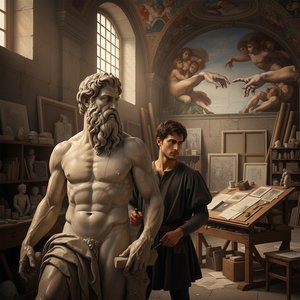
Michelangelo Buonarroti: A Renaissance Titan – Life, Works & Enduring Legacy
Explore the life, works & enduring legacy of Michelangelo Buonarroti, a Renaissance titan. Discover his iconic sculptures, frescoes, and architectural achievements. Expert art consultation & high-quality reproductions at ArtsDot.

Michelangelo Buonarroti: Las 25 Obras Maestras que Definen un Genio del Renacimiento | ArtsDot
Descubre las 25 obras maestras de Michelangelo Buonarroti: del David a la Capilla Sixtina. Explora su historia, técnica y significado en el Renacimiento italiano. Reproducciones de arte exclusivas para tu hogar en ArtsDot.com.

Las 10 Obras Maestras de Bronce que Revolucionaron la Historia del Arte | ArtsDot
Descubre las 10 esculturas de bronce más influyentes de la historia del arte. Explora obras maestras de Rodin, Degas y otros genios. Encuentra reproducciones de arte de calidad museo en ArtsDot.com.


