- Inicio

- Impresión en lienzo
- Max Ernst
- untitled (8131)
 Encargar reproducción Comprar imagen en alta resolución
 Enviar
 Compartir
 Detalles
 Añadir a favoritos

 Descargar
 Similares
 Radiografía
 Presentación de diapositivas
untitled (8131)


 Ver más
Giclée / Impresión de arte
Impresión giclée o en lienzo de calidad de museo con producción rápida y opciones de acabado flexibles.




P118B $10

P118H $10

P118W $10

P438Z $10

P508JH $12

P508YH $12

P805H $10

P805Z $10

P919BZ $10

P919G $10

P919XJ $10

P959ZH $10

P968JZ $12

W106C $8

W218G $10

W218JH $8

W218Y $10

W307PJ $10

W316G $10

W316PJ $8

W316Y $10

W398PJ $8

W4111J $10

W500HY $15

W500JH $15

W692G $12

W849H $8

W940BG $15

W953PJ $8




Elija entre nuestros tamaños predefinidos que respetan las proporciones originales de la obra.

Puede introducir sus propias dimensiones para adaptarse a un marco o espacio específico. Si el tamaño seleccionado no coincide con las proporciones de la imagen original, recortaremos la obra de arte o extenderemos la imagen con un borde con efecto espejo o de color sólido. Se enviará una maqueta digital para su aprobación antes de que comience la producción.
Tenga en cuenta que la vista previa en pantalla no refleja el recorte o la extensión real. Solo la maqueta mostrará con precisión la composición final.
Aunque existen tamaños personalizados, recomendamos seleccionar una dimensión de la lista predefinida para preservar las proporciones originales.
Entrega mundial () en 2 semanas en lugar de las 4/5 semanas estándar. (20 julio)

Envío exprés gratuito a todo el mundo

Lienzo de lino de alta calidad

Seguro de envío total

Garantía de reembolso de impuestos aduaneros

Garantía de fidelidad de color

Política de devolución de 60 días (solo por defectos)

Garantía de devolución del 100% del dinero

Descuento por pedido múltiple
 La opción de vidrio solo está disponible en tamaños inferiores a 110 cm.

untitled (8131)
Giclée / Impresión de arte
Tamaño de la reproducción
-


Precio total final
-
Descripción de la obra
Unveiling the Enigma: An Exploration of Max Ernst’s “Untitled (8131)”
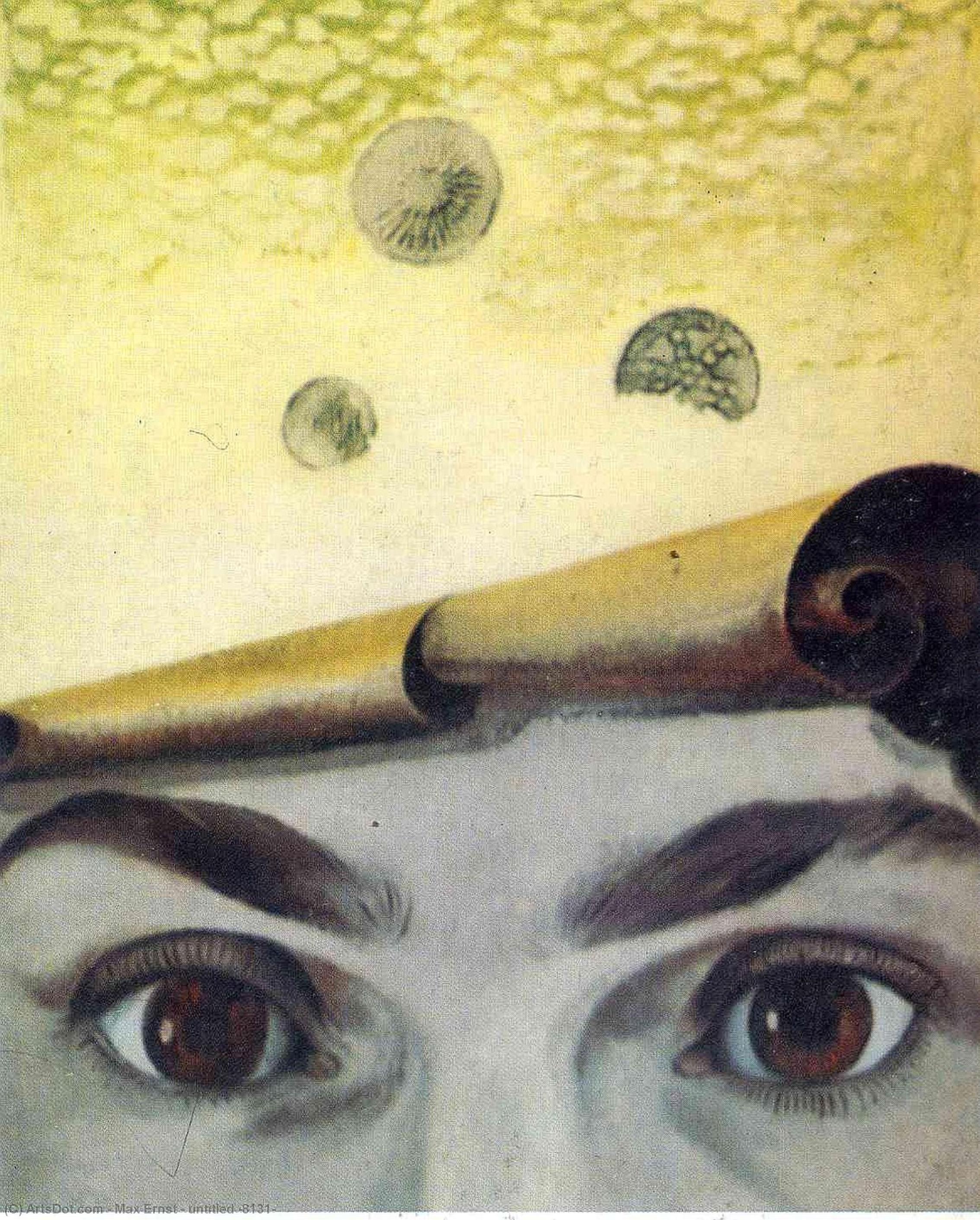
Max Ernst's "Untitled (8131)" presents a deceptively simple portrait – a face dominated by intense, crimson eyes and a subtly unsettling composition. Yet, within this apparent austerity lies a complex tapestry woven from the threads of Surrealism, psychological exploration, and a profound questioning of reality itself. Painted by one of the most influential artists of the 20th century, this work embodies Ernst’s lifelong fascination with the subconscious mind and his rejection of traditional artistic conventions.
A Portrait of the Psyche
The subject's face, rendered with a stark realism that quickly dissolves into ambiguity, immediately draws the viewer in. The most striking element is undoubtedly the eyes – pools of vibrant red, devoid of natural pupils, they possess an unnerving intensity. This deliberate distortion isn’t merely stylistic; it reflects Ernst’s interest in exploring the darker aspects of human perception and emotion. The artist's use of color, particularly this bold crimson, suggests a heightened state of awareness or perhaps even a descent into dreamlike imagery. The subtle inclusion of two small circles within the background adds another layer of intrigue, prompting speculation about their significance – are they distant planets, symbolic representations of inner worlds, or simply visual anomalies designed to disrupt our expectations?
Surrealist Techniques and Ernst’s Vision
Ernst's approach to painting was deeply rooted in the principles of Surrealism, a movement that sought to liberate art from rational control and tap into the realm of dreams and the unconscious. “Untitled (8131)” exemplifies this through techniques such as automatism – a method where the artist relinquishes conscious control, allowing the subconscious to guide their hand. While the precise application of automatism in this particular piece isn't definitively documented, it’s highly probable that Ernst employed variations of this technique to achieve its unsettling and evocative quality. His meticulous attention to detail, combined with his willingness to embrace irrationality, creates a powerful tension between order and chaos.
Historical Context and Symbolism
Created during the interwar period in Germany – a time of immense social and political upheaval – “Untitled (8131)” reflects the anxieties and uncertainties of the era. The rise of psychoanalysis, championed by figures like Sigmund Freud, profoundly influenced artistic thought, leading artists to explore the hidden depths of the human psyche. Ernst’s work aligns with this intellectual current, utilizing symbolism to convey complex ideas about identity, perception, and the nature of reality. The red eyes can be interpreted as symbols of passion, danger, or perhaps even a warning – a reflection of the turbulent times in which Ernst was working.
Emotional Impact and Artistic Legacy
"Untitled (8131)" remains a compelling work due to its ability to evoke a visceral response. The painting’s unsettling gaze, combined with its ambiguous symbolism, invites viewers to confront their own fears and anxieties. Max Ernst's legacy extends far beyond his individual creations; he was instrumental in shaping the course of 20th-century art, paving the way for subsequent generations of Surrealist artists and challenging conventional notions of representation. A hand-painted reproduction offers a unique opportunity to experience the full power of this enigmatic masterpiece.
Obras similares


Biografía del artista
Max Ernst: Una Vida en el Surrealismo
Juventud y Educación
- Nacido: 1 de abril de 1891, en Brühl, Alemania.
- El padre de Ernst, Philipp Ernst, era maestro de sordos y pintor aficionado, fomentando el interés temprano de Max por el arte.
- Estudió filosofía, historia del arte, literatura, psicología y psiquiatría en la Universidad de Bonn desde 1909.
- Esta diversa formación académica influyó profundamente en sus posteriores exploraciones artísticas.
Desarrollo Artístico e Influencias
- Un momento decisivo fue la exposición Sonderbund en Colonia (1912), donde conoció obras de Pablo Picasso, Vincent van Gogh, y Paul Gauguin.
- En 1914, conoció a Hans Arp, comenzando una amistad que duró toda la vida e influyó significativamente en su trayectoria artística.
- La Primera Guerra Mundial impactó profundamente a Ernst; sus experiencias como soldado llevaron al desencanto y a una visión crítica de la sociedad.
- Se sintió influenciado por las obras de Sigmund Freud, explorando temas de la mente inconsciente en su arte.
Dada y Surrealismo
- Ernst se convirtió en una figura clave del grupo Dada de Colonia después de la Primera Guerra Mundial, rechazando las convenciones artísticas tradicionales.
- Pionero en técnicas innovadoras como frottage (frotar lápiz sobre superficies texturizadas) y grattage (raspar pintura para revelar capas subyacentes).
- En la década de 1920, se unió al movimiento Surrealista en París, colaborando con artistas como Paul Éluard.
- Su obra durante este período exploró imágenes oníricas y temas psicológicos.
Obras Principales y Técnicas
- Frottage: Una técnica utilizada para crear texturas e imágenes inesperadas, ejemplificada en muchas de sus obras.
- Collage: Ernst empleó con frecuencia el collage, combinando elementos dispares para crear composiciones surrealistas.
- Obras Notables:
- La Ciudad Entera
- Euclides
- De Esto Ninguno Debería Saber
- Bosque y Paloma
- Sus pinturas a menudo presentan imágenes simbólicas, incluyendo pájaros (particularmente su alter ego Loplop), paisajes y yuxtaposiciones inquietantes.
Vida Tardía y Legado
- Ernst se trasladó a Estados Unidos durante la Segunda Guerra Mundial, continuando pintando y experimentando con nuevas técnicas.
- Regresó a Francia después de la guerra y permaneció activo hasta su muerte el 1 de abril de 1976, en París.
- Significado Histórico: Las contribuciones de Max Ernst a Dada y Surrealismo fueron innovadoras. Desafió las normas artísticas, exploró la mente subconsciente e inventó técnicas innovadoras que continúan inspirando a los artistas de hoy en día.
- Sigue siendo una de las figuras más importantes e influyentes del arte del siglo XX.

Max Ernst
1891 - 1976 , Alemania
Datos clave
- Artistas Influenciados: ['Muchos artistas posteriores']
- Artistas Que Influyeron:
- Pablo Picasso
- Vincent van Gogh
- Paul Gauguin
- Sigmund Freud
- Fecha De Muerte: 1 de abril de 1976
- Fecha De Nacimiento: 1 de abril de 1891
- Lugar De Nacimiento: Brühl, Alemania
- Movimiento Artístico: Dadaísmo y Surrealismo
- Nacionalidad: Alemán/Americano/Francés
- Nombre Completo: Max Ernst
- Obras Notables:
- La Ciudad Entera
- Euclides
- Bosque y Paloma
- El Elefante de Célebes
Artículos relacionados

Surrealismo Expresionista: 10 Obras Maestras que Transformaron el Arte | ArtsDot
Descubre las 10 obras maestras del Surrealismo Expresionista con ArtsDot. Explora la historia de Dalí, Magritte y Miró, su técnica y significado. Encuentra reproducciones de arte exclusivas para transformar tu hogar. ¡Explora la colección completa en ArtsDot.com!

Salvador Dalí: Las 25 Obras Maestras del Genio Surrealista | ArtsDot
Descubre las 25 obras maestras de Salvador Dalí, el genio del surrealismo. Explora su arte onírico, técnicas innovadoras y simbolismo único. Reproducciones de alta calidad para decorar tu hogar con estilo en ArtsDot.com.
Max Ernst: Las 25 Obras Maestras del Surrealismo para Decorar tu Hogar con Arte
Descubre las 25 obras maestras de Max Ernst, el rey del surrealismo. Explora su arte onírico, técnicas innovadoras y simbolismo profundo. Reproducciones de alta calidad para decorar tu hogar con estilo en ArtsDot.com

Joan Miró: Las 25 Obras Maestras del Genio Catalán | Arte y Decoración
Descubre las 25 obras maestras de Joan Miró, el genio del surrealismo catalán. Explora su arte abstracto, colores vibrantes y la historia detrás de cada cuadro. Reproducciones de alta calidad en ArtsDot.com para transformar tu hogar con arte original.

Surrealismo: 10 Obras Maestras que Transformaron el Arte y la Decoración
Descubre las 10 obras maestras del Surrealismo con Dalí, Magritte y Miró. Explora la historia, el simbolismo y la técnica de estos íconos del arte moderno. Encuentra reproducciones de alta calidad para tu hogar en .