Vista previa
 Compartir
 Compartir
 Ver detalles

 Descargar
 Ver similares
 Radiografía
 Presentación de diapositivas
untitled (4345)


 Leer más
Giclée / Impresión de arte
Impresiones giclée o en lienzo de calidad de museo con producción rápida y opciones de acabado flexibles. ( Encargar reproducción pintada a mano Comprar descarga)




































Elija entre nuestros tamaños predefinidos que respetan las proporciones originales de la obra.

Puede introducir sus propias dimensiones para adaptarse a un marco o espacio específico. Si el tamaño seleccionado no coincide con las proporciones de la imagen original, recortaremos la obra de arte o extenderemos la imagen con un borde con efecto espejo o de color sólido. Se enviará una maqueta digital para su aprobación antes de que comience la producción.
Tenga en cuenta que la vista previa en pantalla no refleja el recorte o la extensión real. Solo la maqueta mostrará con precisión la composición final.
Aunque existen tamaños personalizados, recomendamos seleccionar una dimensión de la lista predefinida para preservar las proporciones originales.
Envío a todo el mundo () en 2 semanas en lugar de las 4/5 semanas estándar. (16 agosto)

Envío exprés gratuito a todo el mundo

Lienzo de lino de alta calidad

Seguro de envío completo

Garantía de reembolso de aranceles aduaneros

Garantía de fidelidad cromática exacta

Política de devolución de 60 días (solo por defectos)

Garantía de devolución del 100% del dinero

Oferta por volumen
 La opción de vidrio solo está disponible en tamaños inferiores a 110 cm.

untitled (4345)
Giclée / Impresión de arte
Tamaño de la reproducción
-


Precio total
$ 62
Descripción de la pieza
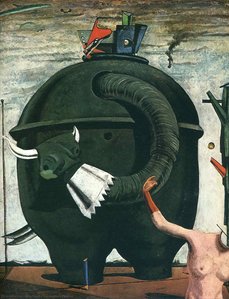
Max Ernst’s “Untitled (4345): A Descent into Surrealist Reverie”
Max Ernst's "Untitled (4345)" isn’t merely a painting; it’s an invitation to step through a looking glass, a plunge into the unsettling yet profoundly beautiful realm of the surreal. Executed with meticulous detail and imbued with the spirit of one of 20th-century art’s most visionary figures, this artwork captures a moment suspended between logic and dream, inviting contemplation on themes of identity, time, and the subconscious.
The image depicts a striking scene dominated by two key elements: a figure clad in goggles, positioned with an air of focused observation, and a mechanical form – perhaps a mannequin or early automaton – standing in stark contrast. Surrounding these central figures are smaller, almost spectral forms, adding to the painting’s layered complexity. Two clocks punctuate the composition, their presence immediately drawing attention to the theme of time's distortion and its impact on perception. The overall effect is one of controlled chaos, a carefully orchestrated dissonance that mirrors the anxieties and fascinations of Ernst’s era.
The Roots of Surrealism: Ernst’s Intellectual Journey
To fully appreciate “Untitled (4345),” it's crucial to understand Max Ernst’s intellectual background. Born in Brühl, Germany, in 1891, Ernst was a voracious reader and thinker, deeply influenced by the philosophical currents of his time – particularly those of Nietzsche and Freud. His academic pursuits at Bonn University—spanning philosophy, art history, psychology, and psychiatry—were not simply academic exercises; they were integral to his artistic process. He wasn’t interested in replicating reality but in exploring the hidden landscapes of the mind, utilizing techniques like frottage and decalcomania to tap into unconscious imagery.
Ernst's early work was heavily influenced by Dadaism, a movement that rejected traditional aesthetic values and embraced absurdity as a means of social critique. However, he quickly evolved beyond Dada’s nihilistic tendencies, developing his own distinct approach within the broader framework of Surrealism. This evolution is powerfully evident in “Untitled (4345),” where the seemingly random arrangement of figures and objects reveals a deliberate attempt to disrupt conventional visual order.
Symbolic Layers: Decoding the Dreamscape
The symbolism embedded within "Untitled (4345)" is rich and open to interpretation, reflecting the core tenets of Surrealist art. The goggles worn by the central figure suggest a desire for clarity, an attempt to pierce through illusion and perceive reality with unadulterated honesty – a futile endeavor, perhaps, given the dreamlike quality of the scene. The mechanical form could represent humanity’s increasing reliance on technology, or conversely, a critique of its dehumanizing effects. The clocks are potent symbols of time's relentless march, hinting at mortality and the subjective nature of experience.
Ernst frequently employed recurring motifs in his work – distorted figures, fragmented landscapes, and symbolic objects – to evoke powerful emotional responses and challenge viewers’ assumptions about the world. “Untitled (4345)” is a prime example of this technique, inviting us to confront our own anxieties and desires through its unsettling imagery.
A Hand-Painted Reproduction: Bringing Surrealism Home
This exquisite reproduction captures the essence of Ernst's original vision with remarkable fidelity. Each detail – from the textures of the figures’ clothing to the subtle gradations of color – has been meticulously rendered by skilled artisans, ensuring a faithful representation of this iconic artwork. More than just a decorative piece, it is an investment in art history and a portal into the mind of one of the 20th century's most influential artists.
Whether adorning a contemporary living space or gracing a collector’s gallery, “Untitled (4345)” will undoubtedly spark conversation and inspire contemplation. Its evocative power lies in its ability to transport us beyond the confines of everyday reality, inviting us to explore the boundless possibilities of the human imagination.
Obras relacionadas


Biografía del artista
Max Ernst: Una Vida en el Surrealismo
Juventud y Educación
- Nacido: 1 de abril de 1891, en Brühl, Alemania.
- El padre de Ernst, Philipp Ernst, era maestro de sordos y pintor aficionado, fomentando el interés temprano de Max por el arte.
- Estudió filosofía, historia del arte, literatura, psicología y psiquiatría en la Universidad de Bonn desde 1909.
- Esta diversa formación académica influyó profundamente en sus posteriores exploraciones artísticas.
Desarrollo Artístico e Influencias
- Un momento decisivo fue la exposición Sonderbund en Colonia (1912), donde conoció obras de Pablo Picasso, Vincent van Gogh, y Paul Gauguin.
- En 1914, conoció a Hans Arp, comenzando una amistad que duró toda la vida e influyó significativamente en su trayectoria artística.
- La Primera Guerra Mundial impactó profundamente a Ernst; sus experiencias como soldado llevaron al desencanto y a una visión crítica de la sociedad.
- Se sintió influenciado por las obras de Sigmund Freud, explorando temas de la mente inconsciente en su arte.
Dada y Surrealismo
- Ernst se convirtió en una figura clave del grupo Dada de Colonia después de la Primera Guerra Mundial, rechazando las convenciones artísticas tradicionales.
- Pionero en técnicas innovadoras como frottage (frotar lápiz sobre superficies texturizadas) y grattage (raspar pintura para revelar capas subyacentes).
- En la década de 1920, se unió al movimiento Surrealista en París, colaborando con artistas como Paul Éluard.
- Su obra durante este período exploró imágenes oníricas y temas psicológicos.
Obras Principales y Técnicas
- Frottage: Una técnica utilizada para crear texturas e imágenes inesperadas, ejemplificada en muchas de sus obras.
- Collage: Ernst empleó con frecuencia el collage, combinando elementos dispares para crear composiciones surrealistas.
- Obras Notables:
- La Ciudad Entera
- Euclides
- De Esto Ninguno Debería Saber
- Bosque y Paloma
- Sus pinturas a menudo presentan imágenes simbólicas, incluyendo pájaros (particularmente su alter ego Loplop), paisajes y yuxtaposiciones inquietantes.
Vida Tardía y Legado
- Ernst se trasladó a Estados Unidos durante la Segunda Guerra Mundial, continuando pintando y experimentando con nuevas técnicas.
- Regresó a Francia después de la guerra y permaneció activo hasta su muerte el 1 de abril de 1976, en París.
- Significado Histórico: Las contribuciones de Max Ernst a Dada y Surrealismo fueron innovadoras. Desafió las normas artísticas, exploró la mente subconsciente e inventó técnicas innovadoras que continúan inspirando a los artistas de hoy en día.
- Sigue siendo una de las figuras más importantes e influyentes del arte del siglo XX.

Max Ernst
1891 - 1976 , Alemania
Datos clave
- Artistas Influenciados: ['Muchos artistas posteriores']
- Artistas Que Influyeron:
- Pablo Picasso
- Vincent van Gogh
- Paul Gauguin
- Sigmund Freud
- Fecha De Muerte: 1 de abril de 1976
- Fecha De Nacimiento: 1 de abril de 1891
- Lugar De Nacimiento: Brühl, Alemania
- Movimiento Artístico: Dadaísmo y Surrealismo
- Nacionalidad: Alemán/Americano/Francés
- Nombre Completo: Max Ernst
- Obras Notables:
- La Ciudad Entera
- Euclides
- Bosque y Paloma
- El Elefante de Célebes
Artículos relacionados
Max Ernst: Las 25 Obras Maestras del Surrealismo para Decorar tu Hogar con Arte
Descubre las 25 obras maestras de Max Ernst, el rey del surrealismo. Explora su arte onírico, técnicas innovadoras y simbolismo profundo. Reproducciones de alta calidad para decorar tu hogar con estilo en ArtsDot.com

René Magritte: Las 25 Obras Maestras del Surrealismo para Inspirar tu Hogar
Descubre las 25 obras maestras de René Magritte, el rey del surrealismo. Explora su arte moderno, significado oculto y técnica única. Encuentra reproducciones de alta calidad e inspira tu hogar con ArtsDot.com.

Salvador Dalí: Las 25 Obras Maestras del Genio Surrealista | ArtsDot
Descubre las 25 obras maestras de Salvador Dalí, el genio del surrealismo. Explora su arte onírico, técnicas innovadoras y simbolismo único. Reproducciones de alta calidad para decorar tu hogar con estilo en ArtsDot.com.

The Enduring Legacy of Masterpieces: A Comprehensive Exploration of Fine Art Reproduction Techniques
Discover museum-quality art reproductions & custom paintings at ArtsDot. Expert craftsmanship, personalized service, and a satisfaction guarantee. Bring timeless beauty to your home today!

De Lienzo a Legado: Un Examen Detallado de las Técnicas de Reproducción al Óleo Artesanal para Galerías y Entornos Hoteleros
Descubre el arte de la reproducción al óleo artesanal con ArtsDot. Reproducciones fieles hechas a mano por expertos, personalización y asesoramiento profesional para galerías y hoteles. ¡Invierte en belleza duradera!